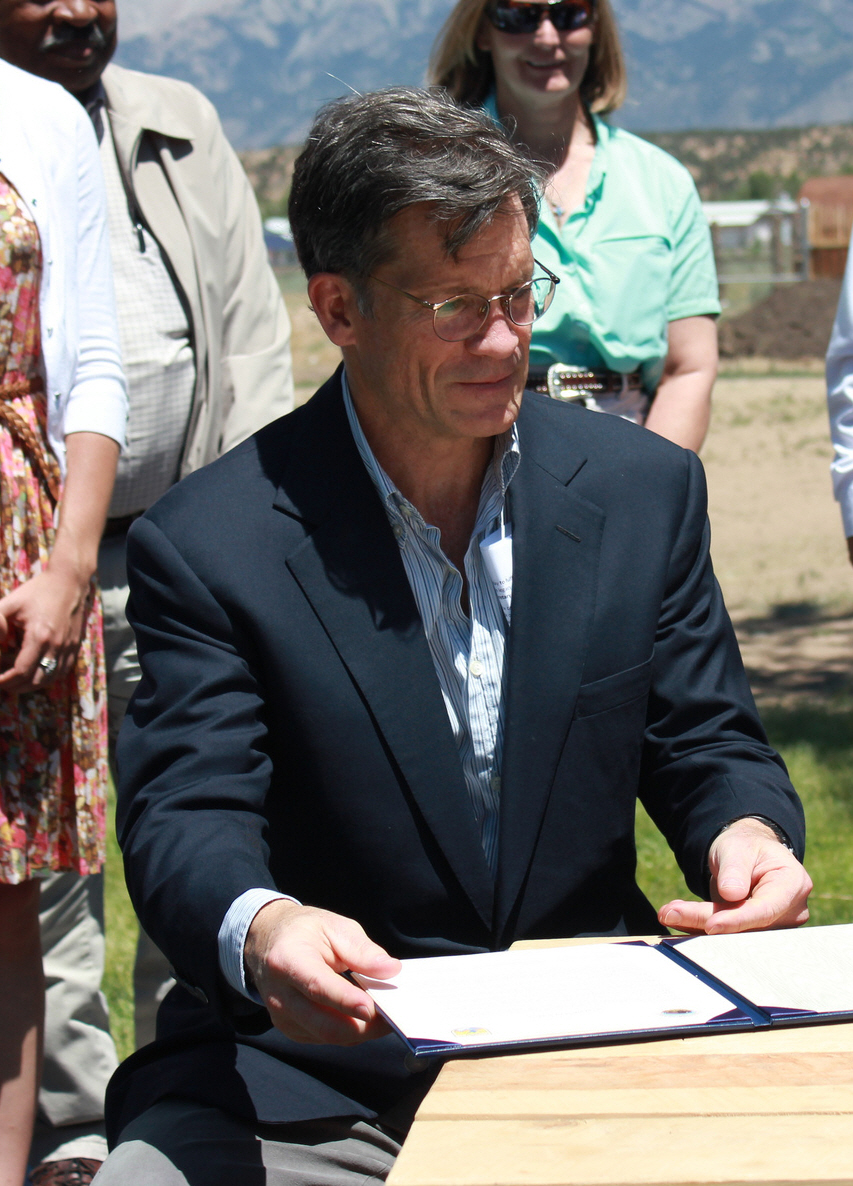
LOUIS BACON
Running Moore Capital Management and calling the Gulf War trade in 1990 — one of the most profitable macro bets in hedge fund history.
Louis Bacon saw Saddam Hussein invade Kuwait in August 1990 and immediately went long oil, long defense stocks, and short equities. Moore Capital returned 86% that year. He's been one of the most respected global macro traders alive ever since, quietly compounding returns while the rest of Wall Street chases headlines. He doesn't do interviews. He doesn't do CNBC. He just trades. The silence is part of the strategy.
Net Worth
$1.8 billion
Nationality
American
Time Horizon
Medium-Term
Risk Appetite
7 / 10
Fund
Moore Capital Management LP
Net Worth Context
- · Still a billionaire — just the quiet kind at the end of the table.
CAREER & BACKGROUND
Louis Moore Bacon grew up in Raleigh, North Carolina, the son of a real estate developer. He was surrounded by money but not Wall Street money — the kind that builds things, not trades them.
He studied at Middlebury College and then got his MBA at Columbia Business School, which is where he first encountered the world of markets seriously.
His first real job was on the floor of the New York Cotton Exchange in the early 1980s, which is about as unglamorous a starting point as you can get in finance. Hot, chaotic, and manual.
But the floor taught him something that no classroom could: markets are made of human emotion, and emotion has patterns.
After stints at various commodity trading desks, he launched Moore Capital Management in 1989 with $25 million. He was 33 years old.
One year later, he pulled off the Gulf War trade — shorting markets and going long oil ahead of the invasion — and posted an 86% return. Word got out fast.
Assets flooded in.
Through the 1990s, Moore Capital grew into one of the most respected macro funds in the world. Bacon developed a reputation for reading geopolitical events the way other traders read earnings reports.
He saw political instability as a pricing inefficiency. He made money in the Asian financial crisis, the Russian default, and the dot-com unwind.
His consistency across wildly different market regimes was what separated him from most macro traders, who tend to be right once and then wrong for a decade.
He returned outside capital from Moore in 2019, effectively closing the fund to external investors. At that point, he'd been running outside money for three decades and had made more than enough.
The fund now manages his own capital and that of close associates. It was a quiet exit for a man who'd spent his career being quiet.
COMPANIES & ROLES
Moore Capital Management is the whole story. Founded in 1989, it was a global macro hedge fund that traded currencies, commodities, interest rates, equities, and anything else that moved in response to macroeconomic or geopolitical events.
At its peak, Moore Capital managed around $15 billion in assets — a major force in global markets.
Bacon also had interests in conservation and land. He's one of the largest private landowners in Colorado and owns significant tracts in the Adirondacks in New York.
These aren't investment plays in any traditional sense — they're more about his well-documented passion for environmental conservation. He founded the Moore Charitable Foundation, which focuses on habitat preservation and sustainable fisheries.
He's also been involved in various real estate holdings and has a notable art collection, but these are lifestyle assets, not business ventures. Moore Capital was always his one vehicle.
He's never tried to build a financial empire — just one very well-run fund.
INVESTING STYLE & PHILOSOPHY
Bacon is a global macro trader. That means he bets on big-picture economic and geopolitical trends — not individual companies.
He doesn't care whether Apple is going to beat earnings. He cares whether the Federal Reserve is going to raise rates, whether oil supply is about to get disrupted, whether the dollar is overvalued relative to the yen.
The whole world is his trading universe.
His specific edge is the geopolitical angle. Where most macro traders are economists looking at data, Bacon is more like a historian reading a chessboard.
He thinks about who benefits when a country destabilizes. He thinks about how commodity flows change when borders shift.
He was famously early on the Gulf War because he read the political signals before the military signals.
He's also intensely risk-aware in a way that distinguishes him from flashier macro traders. George Soros and Stanley Druckenmiller are known for enormous, concentrated bets.
Bacon runs a more diversified macro book — he's sizing positions carefully, always aware that geopolitical events can surprise even the best-informed trader. He's been described as having a 'Darwinian' approach to risk: the positions that aren't working get cut fast, without ego.
He runs both trend-following and discretionary macro strategies, which is unusual. Most funds pick one or the other.
Bacon blends them — using quantitative signals to confirm what his discretionary read is telling him. It's not one thing.
It's a combination of gut, data, and decades of pattern recognition.
THE PLAYBOOK
Risk Approach
Bacon has a healthy terror of being wrong and staying wrong. That's different from being afraid of risk — he takes plenty of it.
But he has a deep aversion to the kind of stubborn conviction that kills macro traders. When a position moves against him, he doesn't double down and give a press conference about why he's still right.
He cuts it and moves on.
This comes partly from his commodity trading floor background. On the floor, you learn fast that the market doesn't care about your thesis.
It does what it does. Survival requires accepting that quickly.
He's also structurally cautious about leverage. Moore Capital was never the most leveraged fund in its peer group, which is one reason it survived crises that destroyed other macro funds.
His view is that leverage is what turns a bad trade into a fatal one. He'd rather make 20% with modest leverage than bet the house on 100%.
He talks about geopolitical risk as the one thing that can genuinely blindside you — the event that has no precedent and no price signal. His response to that isn't to avoid macro trading, but to keep position sizes manageable enough that even a catastrophic surprise doesn't wipe out the fund.
Money Habits
Bacon is one of the most private billionaires in American finance. He doesn't appear on television.
He rarely gives interviews. He doesn't tweet.
For a man who spent decades moving global markets, he has maintained an almost remarkable level of personal obscurity.
He lives primarily between his properties in New York and Colorado, and has been known to spend time at his estates in the UK and the Adirondacks. His land holdings are vast — he owns approximately 170,000 acres of land in the western United States, some of which he has donated or placed into conservation easements.
He's a passionate fly fisherman and conservationist, and has spent serious money on it — not as a hobby but as a cause. His Moore Charitable Foundation has donated tens of millions to environmental causes, particularly around ocean health and freshwater fisheries.
This is where his philanthropy is concentrated.
He has one of the more notable art collections in private hands, with particular interest in contemporary works. He's also known as a serious wine collector.
These are the indulgences of a man who made a fortune and has quiet, expensive tastes — but nothing about his lifestyle is ostentatious in the way that other hedge fund billionaires tend to be.
BIGGEST WIN
The Gulf War trade in 1990 is the defining moment of his career. Saddam Hussein invaded Kuwait on August 2, 1990.
Most traders were confused about what it meant for markets. Bacon wasn't.
He went long oil — correctly predicting the supply shock that would follow. He went long defense stocks — correctly predicting that the US military response would be massive.
He shorted equities — correctly predicting that the uncertainty would crash broader markets. Moore Capital returned 86% in 1990.
On a fund that was already managing hundreds of millions by that point, that's a staggering absolute return. It made his reputation overnight.
The Wall Street Journal wrote about it. The money flooded in.
He went from 'promising macro trader' to 'must-know name' in twelve months.
BIGGEST MISTAKE
Bacon has been more open about operational and structural mistakes than trading mistakes — which is itself telling. In 2010, Moore Capital was fined $25 million by the CFTC for market manipulation related to platinum and palladium trading by a portfolio manager at the firm.
The firm didn't admit wrongdoing, but it paid the fine and settled. It was reputationally damaging in a way that pure trading losses aren't — it suggested a failure of internal controls, not just a bad bet.
Bacon also reportedly struggled with performance in the post-2008 environment. The era of quantitative easing by global central banks suppressed the volatility that macro traders need to generate returns.
Several years in the early 2010s were flat or negative for Moore Capital. He returned outside capital in 2019 partly because the macro environment had become genuinely difficult for discretionary traders.
That's not quite a mistake — it's an honest read of the situation — but it was a quiet acknowledgment that the world had changed.
FINANCIAL PHILOSOPHY
Bacon believes markets are fundamentally driven by human behavior, and human behavior is driven by incentives and fear. Understanding who's scared and who's greedy at any given moment — and why — is more useful than any economic model.
He thinks most people in finance are too focused on what's already priced in. The edge is always in what the market hasn't figured out yet.
And markets are usually slow to price in geopolitical events because most financial analysts aren't trained to read political risk the way he is.
He's a strong believer in cutting losers fast and letting winners run — the classic trend-following mantra, but applied with discretionary judgment rather than mechanically. The discipline isn't in the entry, it's in the exit.
Most traders know when to buy. The good ones know when to sell.
He also has a philosophy about information. He's famously private, which isn't just a personality trait — it's strategic.
The less you tell the market about what you're thinking, the less it can front-run you. Silence is a competitive advantage in this business.
FAMILY & PERSONAL LIFE
Bacon has been married multiple times. His divorce from his second wife, Gabrielle Bacon, in the early 2000s was contentious and became public in a way he clearly didn't enjoy — reports of disputes over properties and finances made the tabloids.
He has children from his marriages and is reportedly a devoted father, though he keeps his family life strictly private.
His brother Zachary Bacon is also in finance, having worked in the investment industry for years. His family background is old-money Southern — the kind of family with long roots and quiet wealth, not new money flash.
He's deeply connected to the conservation community through his philanthropy and is known personally to a number of prominent environmental activists and scientists. That world — rivers, fish, open land — seems to be where he actually relaxes.
EDUCATION
Bacon attended Middlebury College in Vermont, graduating in 1979 with a degree in American literature. Then he got his MBA at Columbia Business School in 1981 — which is where the finance world started.
Columbia has a history of producing serious value investors (Benjamin Graham taught there), but Bacon took a different path entirely: commodities and macro, not equities.
BOOKS & RESOURCES
Bacon is not a prolific writer or recommender of books — part of the mystique
He's never written a book himself and rarely surfaces in interviews where he'd recommend reading lists
's work on geography and power — particularly 'The Revenge of Geography' — is the closest thing to a framework for how Bacon seems to see the world. Markets are downstream of politics, and politics is downstream of geography
As an Amazon Associate, Netfigo earns from qualifying purchases. Book links above may be affiliate links.
QUOTES (5)
The market is a device for transferring money from the impatient to the patient — but in macro, the patient still have to be fast.
Geopolitical events are the most underpriced risk in financial markets because most analysts are economists, not historians.
The discipline isn't getting into a trade. It's getting out of the one that isn't working.
Silence in this business is a competitive advantage. The more people know what you're thinking, the harder it becomes to execute.
Conservation and capital allocation aren't that different. In both cases, you're trying to preserve something worth preserving.
NETFIGO SCORE
Proprietary 5-dimension investor rating
Risk Appetite
Contrarian Index
Track Record
Accessibility
Time Horizon
Related Profiles
Investors
Paul Tudor Jones
Paul Tudor Jones and Louis Bacon are the two defining figures of American global macro trading — both emerged in the 1980s commodity pits, both made their names on big geopolitical and macro calls, and both have maintained decades-long track records while most peers flamed out.
Stanley Druckenmiller
Druckenmiller and Bacon operated in the same macro universe for decades — both discretionary traders reading big-picture economic and political signals, though Druckenmiller is known for more concentrated bets while Bacon runs a tighter risk book.
Head-to-Head
Compare Louis Bacon vs another investor.