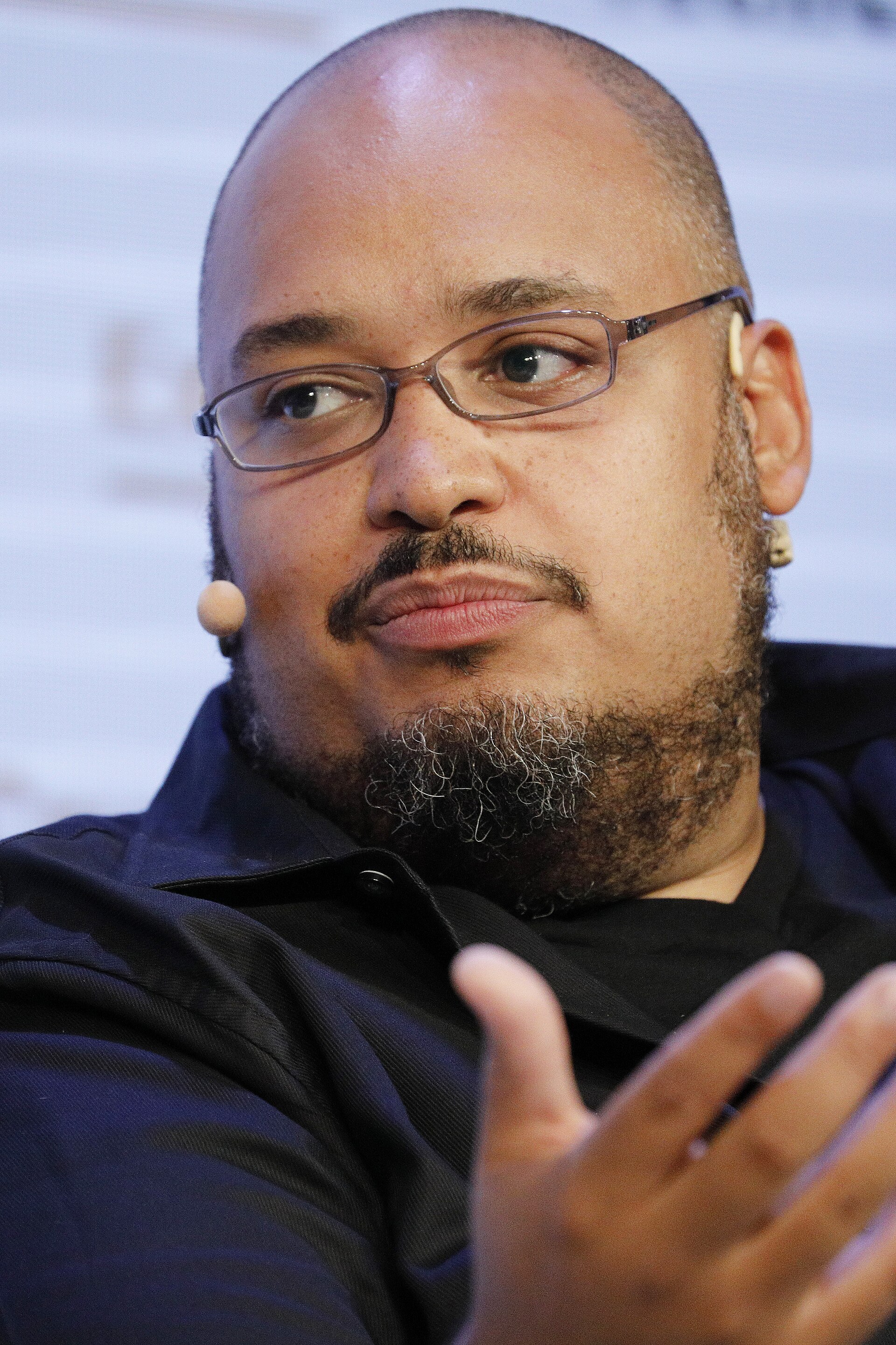
MICHAEL SEIBEL
Co-founder of Twitch and the most influential gatekeeper in startup world as Y Combinator's longtime CEO.
Michael Seibel co-founded the company that became Twitch, sold it to Amazon for $970 million in 2014, and then spent the next decade helping other founders do something similar. He's the person at Y Combinator who sits across from terrified founders and tells them whether their idea is worth their life. He joined YC as a partner in 2013 before becoming CEO in 2016, and has since advised more early-stage startups than almost anyone alive. The guy who helped build one of the internet's most important platforms now spends his time helping the next generation build theirs — which is either very generous or very smart, and probably both.
Net Worth
$100 million
Nationality
American
Time Horizon
Long-Term
Risk Appetite
7 / 10
CAREER & BACKGROUND
Michael Seibel grew up in New Haven, Connecticut, and graduated from Yale in 2005 with a degree in Political Science. He went straight into politics — working as the finance director for a Senate campaign in Virginia.
It didn't last. He moved to San Francisco, met Justin Kan, and in 2007 they launched Justin.tv, a live-streaming platform where Justin wore a camera on his head and broadcast his entire life 24/7.
It was weird. It was ahead of its time.
It also happened to be the foundation for one of the most valuable media acquisitions in internet history.
Justin.tv let users create their own channels and stream whatever they wanted. One category exploded: video games.
Gamers were broadcasting themselves playing, and people were watching in huge numbers. In 2011, the team spun that category out into a standalone product called Twitch.
Seibel was CEO of Justin.tv while this was happening, helping manage the parent company as Twitch grew into something much bigger than anyone expected.
In 2014, Amazon bought Twitch for $970 million in cash. Not bad for a pivot from a guy live-streaming his commute.
Seibel had already left the company by then, but his early work building and running Justin.tv was foundational to what Twitch became.
After the sale, Seibel joined Y Combinator as a part-time partner in 2013 — still during the Justin.tv years. He became a full partner after the Amazon deal, was named CEO of YC in 2016, stepped down from the CEO role in 2020, and has continued as a partner and Group Partner since.
He's now one of the most recognizable faces in the YC ecosystem, known for his direct, no-nonsense advice to founders and his willingness to say things out loud that most investors only think.
He also co-founded Socialcam in 2011, a mobile video-sharing app that Autodesk acquired in 2012 for $60 million. That was less than a year after it launched.
Two exits in two years from two different companies isn't a coincidence — it's a pattern.
COMPANIES & ROLES
Justin.tv was the original live-streaming experiment — a platform built around the slightly insane idea of streaming your entire life online. It sounds gimmicky, but the infrastructure they built to handle that live video at scale turned out to be incredibly valuable.
Justin.tv eventually wound down as a platform in 2014, but by then it had already spawned Twitch, which was all that mattered.
Twitch started as the gaming vertical of Justin.tv before being spun out as its own platform in 2011. It became the dominant destination for live game streaming, and Amazon bought it in August 2014 for $970 million.
Today it has tens of millions of daily active users and is one of the most-watched live content platforms on the internet. Seibel was there from the beginning.
Socialcam was a mobile video app built on the idea that sharing video from your phone should be as easy as sharing a photo on Instagram. It got traction fast — 16 million users — and Autodesk acquired it in 2012 for $60 million.
The acquisition was unusually fast for a consumer app, and Seibel was co-founder and CEO.
Y Combinator is the most famous startup accelerator in the world, having backed Airbnb, Dropbox, Stripe, Reddit, DoorDash, and hundreds of others. Seibel joined as a partner in 2013, became CEO in 2016, and stepped back from the CEO role in 2020 to focus on early-stage investing and advising as a Group Partner.
His role at YC has been less about writing checks and more about what happens in the room when founders are figuring out whether their company has a future.
INVESTING STYLE & PHILOSOPHY
Seibel's approach to investing is really an approach to founder evaluation. He's not a fund manager running a portfolio of public equities or making macro bets.
He's a person who sits down with early-stage founders — often before they have much more than an idea and a co-founder — and tries to figure out whether they can build something real.
His framework is intensely founder-focused. He cares less about the market size slide and more about whether the people in the room can actually execute.
He's said repeatedly that the two things that kill most early startups are building something nobody wants and not being able to talk to users honestly about what they're building. Both are people problems, not product problems.
He likes founders who have an unfair advantage — whether that's deep domain expertise, a personal experience with the problem, or just an unusual level of obsession. He's skeptical of founders who are 'excited about startups' in the abstract.
The ones who make it are usually excited about one specific problem they can't stop thinking about.
His investing philosophy also has a strong emphasis on speed and simplicity. Get something in front of users as fast as possible.
Learn. Adjust.
The product isn't the point — the learning loop is the point. He's a known advocate for launching ugly, getting feedback, and iterating.
Founders who want to spend a year building a perfect v1 before showing anyone tend not to get along with this view.
He also talks a lot about the difference between founders who are good at talking about their company and founders who are good at building it. In his experience, those are two very different skill sets, and the second one matters more.
THE PLAYBOOK
Risk Approach
Seibel's relationship with risk is shaped by having bet years of his life on companies before they were worth anything. Justin.tv wasn't obviously going to work.
Twitch wasn't obvious until it was. He lived through the part of the startup process where you genuinely don't know if it's going to be a billion-dollar acquisition or a quiet shutdown, and that experience informs how he talks about risk with founders.
He doesn't romanticize risk. He's pretty direct that most startups fail, that failure is genuinely painful, and that founders should go in clear-eyed about the odds.
But he also thinks the fear of failure is responsible for a lot of bad decisions — moving too slowly, over-engineering a product before showing it to anyone, avoiding hard conversations with users because the feedback might be bad.
His view is essentially: the biggest risk for an early-stage founder isn't making a wrong decision — it's taking six months to make any decision at all. Speed is a form of risk management.
The faster you learn what doesn't work, the faster you get to what does. The founders who manage risk well aren't the ones who are most careful.
They're the ones who learn fastest.
Money Habits
Seibel is not a flashy spender by Silicon Valley standards. He doesn't maintain a high public profile around lifestyle or wealth, which is consistent with the advice he gives founders — the money is not the point, the building is the point.
He's been based in the Bay Area for most of his career, first in San Francisco and then in the broader YC ecosystem around the Peninsula. His public appearances tend to be at YC Demo Days, startup events, and the occasional podcast — not yacht shows or celebrity galas.
He does invest personally in startups outside of YC, though the full extent of that portfolio isn't publicly documented. His net worth comes primarily from his Twitch co-founder equity (the Amazon acquisition was $970 million), the Socialcam acquisition, and his equity in YC.
He is not in the 'nine-figure club' because he made a big trade — he's there because he built things that got acquired and then joined one of the best-performing institutions in startup history early.
His most visible financial habit is probably the way he talks about compensation at YC-backed companies: pay founders and early employees enough to do their best work, but don't let cash compensation become the point. He practices what he preaches — his public speaking and podcast appearances focus almost entirely on building companies, not on accumulating wealth.
BIGGEST WIN
The Amazon acquisition of Twitch in August 2014 for $970 million in cash is the headline. Seibel didn't run Twitch at the time of the acquisition — he'd transitioned out — but he was co-founder of Justin.tv, the parent company, and was there for the years of infrastructure-building and strategic decisions that made Twitch possible.
The real win is actually the setup. Justin.tv launched in 2007 as a genuinely weird experiment in life-streaming.
It generated real traffic and built real infrastructure for handling live video at scale. When the gaming community started using it in ways the founders hadn't anticipated, the team had the self-awareness to recognize what was happening and spin it out.
That's the decision that led to the $970 million. Most founders would have protected the original vision.
The Justin.tv team let the data overrule the plan.
Socialcam is the underrated win. Launched in 2011, acquired by Autodesk in 2012 for $60 million.
That's a nine-figure acquisition less than a year after launch. It didn't change the world, but it showed that the first exit wasn't a fluke — Seibel could find a market need, build toward it fast, and get to an outcome.
Two acquisitions, two years, two companies. That's the track record that got him into YC.
BIGGEST MISTAKE
Seibel has been publicly honest about the mistakes made during the Justin.tv years. The biggest one, by his own account, was taking too long to understand what the product actually was.
Justin.tv launched as a life-streaming platform and stayed that way far longer than the data suggested it should. Gamers were using the platform in their own way from early on, and the team was slower to respond to that signal than they could have been.
He's also talked about early mistakes in how Justin.tv thought about the business model. Live streaming was technically hard and expensive, and the team spent significant time and resources building infrastructure for a product category that never fully took off commercially.
The cost of that misdirection is hard to quantify precisely, but by the time Twitch was spun out in 2011, the parent company had been burning money for four years on something that ultimately needed to be rebuilt as a different product.
He's described the lesson as: listen to your users earlier and harder than feels comfortable. The gaming community was telling Justin.tv what it needed.
The founders heard it eventually. But 'eventually' in a startup often means months of wasted capital and energy.
FINANCIAL PHILOSOPHY
Seibel doesn't talk about personal wealth much publicly, but his financial philosophy for founders is clearly articulated and pretty consistent.
His first principle is that equity is the thing that matters. Early startup decisions that feel like they're about money — taking the higher salary, diluting slightly less, optimizing for a small acquisition offer — are usually wrong if they compromise equity upside.
He's seen enough outcomes to know that the difference between a $50M exit and a $500M exit is almost never the decisions founders made about salary.
His second principle is that you shouldn't raise money you don't need. There's a prevailing culture in startup-land that more funding equals more validation equals more progress.
He thinks this is backwards. Funding is a tool.
Raising too much too early usually just means you burn more money figuring out what you should have figured out leaner.
His third principle is around speed and focus. Spend money on the things that make you learn faster.
Everything else is optional. New office?
Wait. Team trip?
Maybe later. Infrastructure at scale you don't have yet?
Definitely wait. The goal in the early stages is learning velocity, and most spending slows that down rather than accelerating it.
He also has a strong view that founders should pay themselves enough to not be distracted by money stress, but no more. A founder spending mental energy worrying about rent is a founder not spending mental energy on their product.
A founder spending mental energy on lifestyle is also a problem. The goal is a salary that removes the distraction — not high, not uncomfortably low.
FAMILY & PERSONAL LIFE
Seibel grew up in New Haven, Connecticut. His father is William Seibel, who was a professor at Southern Connecticut State University.
His mother is Sybil Madison-Boyd, a professor at Quinnipiac University. He comes from an academic household, which might explain both his comfort with ideas and his unusual ability to explain complex startup concepts in plain language.
He's been in a long-term relationship and keeps his personal life relatively private — consistent with his generally low-key public persona. He's talked in interviews about the difficulty of maintaining relationships when you're in the pressure cooker of an early-stage startup, and about the importance of founders being honest with the people in their lives about what they're actually signing up for.
He's spoken about being one of the few Black executives in senior roles in venture capital, and has been vocal about the structural barriers that make it harder for underrepresented founders to access early-stage capital. He launched a dedicated effort at YC to improve diversity in the program, and that work has been a consistent part of his public identity alongside the straight startup advice.
EDUCATION
Seibel graduated from Yale University in 2005 with a degree in Political Science. He's talked about Yale giving him a solid foundation in how to think and argue clearly, but he's not someone who leads with his educational credentials.
The degree in Political Science is notable mainly because it's so disconnected from what he ended up doing — no CS, no engineering, no business. He figured out the technology side by doing it, not by studying it.
That trajectory is one reason he's sympathetic to non-technical founders who are learning on the job.
BOOKS & RESOURCES
Seibel doesnt have his own published book, but hes produced an enormous amount of free written and video content through YC
The YC blog, the Startup School video library, and his personal essays on topics like how to get into YC, how to talk to users, and how to evaluate co-founders are widely considered some of the best free startup education available anywhere
Specifically because it's honest about the parts of building a company that most business books sanitize. He appreciates that Horowitz doesn't pretend there's a clean framework for every hard decision
Hes also pointed people toward Paul Grahams essays, which are technically free online but feel like a book
If you want to understand the YC worldview on startups — what makes a good founder, what makes a good idea, what makes a good pitch — PG's essays are the primary source text. Seibel has been steeped in that thinking for over a decade and it shows in how he talks about companies
For anyone trying to understand what YC actually looks for, Seibels own YouTube content and his appearances on the YC podcast are more useful than most books
He's unusually direct in those formats about what works and what doesn't, and the advice is grounded in having seen thousands of companies at the earliest stage
As an Amazon Associate, Netfigo earns from qualifying purchases. Book links above may be affiliate links.
QUOTES (6)
The number one job of a CEO is to not run out of money. The number two job is to not run out of talent.
Most founders build their product in a vacuum and then are surprised that nobody wants it. Talk to your users before you build. Talk to them while you build. Then talk to them again.
The best founders I've seen are obsessed with a specific problem, not with being a founder. If you're excited about startups in the abstract, that's a yellow flag.
Speed is your biggest advantage as an early-stage startup. The goal is to learn faster than everyone else. That requires moving faster than feels comfortable.
Fundraising is not the goal. It's a tool. The goal is to build something people want. Founders who confuse the two end up with money and no product.
If you can't explain what you do in two sentences, that's not a communication problem — it's a clarity problem about what you're building.
NETFIGO SCORE
Proprietary 5-dimension investor rating
Risk Appetite
Contrarian Index
Track Record
Accessibility
Time Horizon
Related Profiles
Investors
Head-to-Head
Compare Michael Seibel vs another investor.