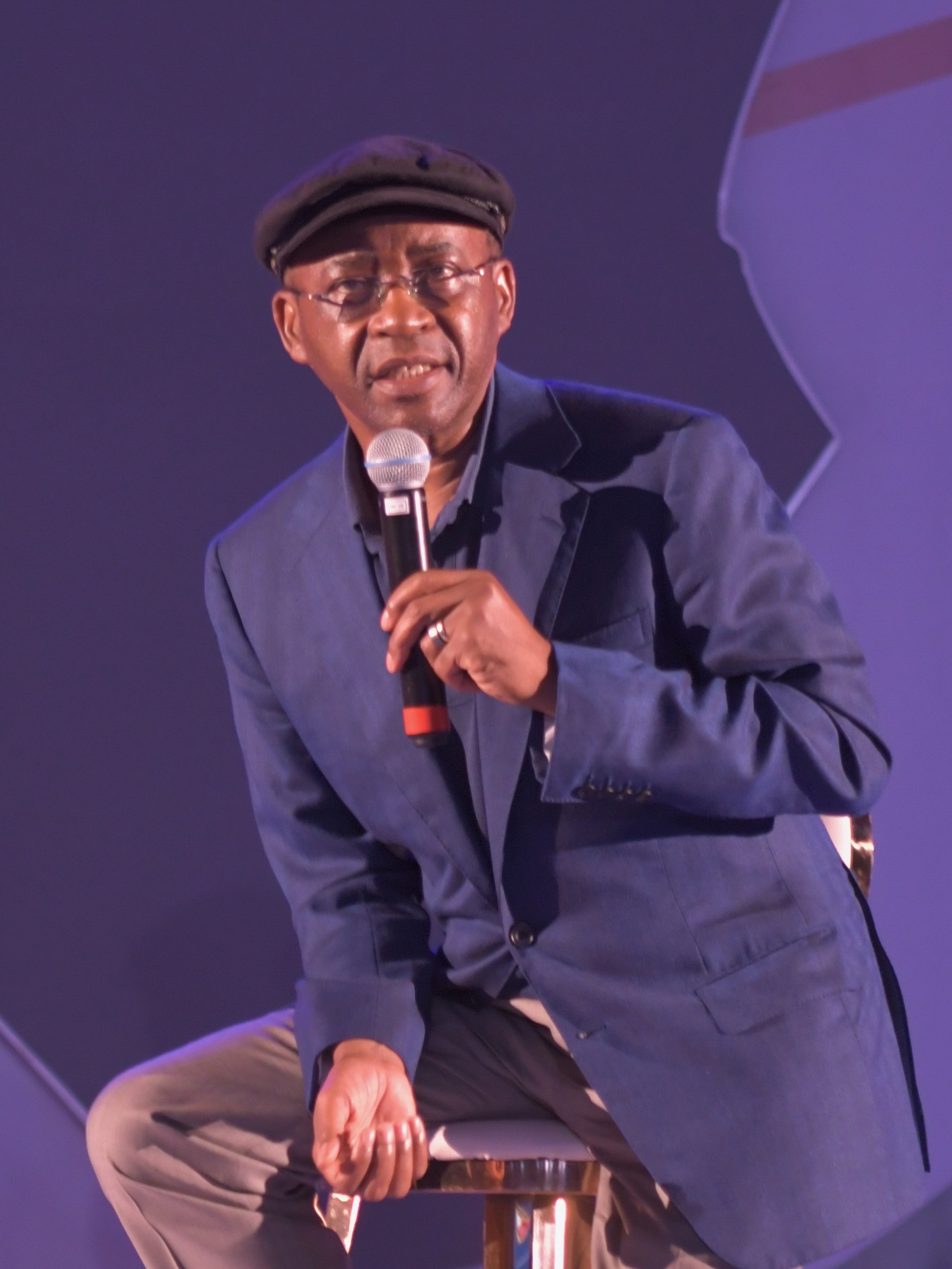
STRIVE MASIYIWA
Econet founder — Africa's telecom pioneer who fought a government monopoly and won
The man who sued his own government for five years to get a telecom license, won, and then built the largest independent telecom company in Africa. Masiyiwa did this from Zimbabwe — a country that went through hyperinflation so severe they printed $100 trillion banknotes. While the currency collapsed, Masiyiwa built an empire across 29 African countries. He is possibly the most underrated billionaire entrepreneur alive.
Net Worth
$2.7 billion
Nationality
Zimbabwean
Time Horizon
Long-Term
Risk Appetite
9 / 10
Net Worth Context
- · Still a billionaire — just the quiet kind at the end of the table.
CAREER & BACKGROUND
Born in 1961 in Mutare, Zimbabwe (then Rhodesia). Fled Zimbabwe during the civil war as a child, grew up partly in Zambia and the UK.
Returned to Zimbabwe after independence in 1980. Served in the Zimbabwean army as a telecommunications engineer.
Founded Retrofit Engineering in 1988 (electrical engineering firm). Applied for a mobile phone license in 1993 — the Mugabe government refused, claiming telecom was a state monopoly.
Fought the government in court for five years. Won the license through a constitutional challenge in 1998.
Founded Econet Wireless Zimbabwe. Expanded across Africa — Econet now operates in 29 countries.
Invested in Liquid Intelligent Technologies (fiber-optic infrastructure across Africa). Became a board member at Unilever, Netflix, and the Rockefeller Foundation.
Estimated net worth of $2.7 billion makes him one of Africa's richest people.
COMPANIES & ROLES
Econet Wireless (founder and chairman), Liquid Intelligent Technologies (undersea and terrestrial fiber across Africa), Cassava Technologies (fintech — mobile money platform), Sasai (super-app for Africa). Board member at Netflix, Unilever.
Founder of the Higher Life Foundation (education charity).
INVESTING STYLE & PHILOSOPHY
Masiyiwa invests where others see only risk — specifically in African infrastructure and technology. His thesis is simple: Africa's 1.4 billion people need connectivity, financial services, and digital infrastructure, and whoever builds it first wins.
He's patient with returns because infrastructure takes decades to pay off. He doesn't invest in the US or Europe — his entire portfolio is African businesses.
He combines telecom infrastructure with fintech, understanding that mobile money is how Africa will bank.
THE PLAYBOOK
Risk Approach
Extremely high. Masiyiwa started a telecom company in a country run by an authoritarian government that actively tried to destroy him.
Robert Mugabe's regime harassed his family, threatened his employees, and tried to bankrupt him through the courts. He left Zimbabwe to run his business from South Africa, then London.
He expanded into countries with civil wars, unstable governments, and virtually no existing infrastructure. Most of these bets worked because the demand for mobile phones in Africa was so overwhelming that even bad conditions couldn't stop it.
Money Habits
Masiyiwa lives in London but spends significant time across Africa. He and his wife Tsitsi run the Higher Life Foundation, which has provided scholarships to over 250,000 students across Africa — one of the largest private education initiatives on the continent.
He was one of the first African billionaires to sign the Giving Pledge. He's active on social media (particularly Facebook, where he has millions of followers) and regularly posts about entrepreneurship, faith, and African business.
He's unusually accessible for a billionaire — he answers questions from young African entrepreneurs on his social media.
BIGGEST WIN
Econet's mobile money platform, EcoCash, became the dominant payment system in Zimbabwe — at one point processing over 80% of all transactions in the country. In a nation where the banking system had collapsed and cash was scarce, EcoCash became the actual currency.
Liquid Intelligent Technologies built Africa's largest independent fiber network — over 100,000 km of terrestrial and submarine cable connecting African nations to each other and to the global internet. This infrastructure play is worth billions.
BIGGEST MISTAKE
Masiyiwa's investment in Neotel (a South African fixed-line operator) didn't perform as expected. He also faced significant challenges in Nigeria, where regulatory issues and intense competition from MTN and Airtel made it harder to scale profitably.
Some of his super-app ambitions (Sasai) have been slow to gain traction against established players. But his biggest recurring challenge isn't any single investment — it's the political risk of operating across 29 African countries with frequently changing governments and regulations.
FINANCIAL PHILOSOPHY
Masiyiwa is deeply guided by his Christian faith, which he integrates openly into his business philosophy. He believes business should solve social problems, not just generate returns.
He's said "wealth is not about how much you accumulate but about how much you distribute." He views African entrepreneurship as a form of nation-building. He also believes in long-term ownership — he's never sold his core Econet stake despite multiple opportunities to cash out at premium valuations.
FAMILY & PERSONAL LIFE
Married to Tsitsi Masiyiwa. They have multiple children and run the Higher Life Foundation together.
Tsitsi is a significant philanthropist in her own right and manages much of the foundation's educational work. The family divides time between London, Johannesburg, and various African cities.
EDUCATION
Studied electrical engineering at the University of Wales in the UK. His military background in telecommunications engineering gave him the technical foundation to understand mobile networks.
He holds honorary degrees from several universities.
BOOKS & RESOURCES
Masiyiwa has recommended the Bible as his most important business book. He also recommends biographies of African independence leaders like Nelson Mandela and Kwame Nkrumah
For business specifically, he's referenced Peter Drucker's management works
QUOTES (6)
I sued my own government for five years to get a telecom license. Everyone said I was crazy. But I knew the law was on my side, and the law eventually prevailed. That's the power of democracy — even an imperfect one.
Africa doesn't need charity. It needs connectivity, capital, and competent entrepreneurs. Give a village internet access and watch what happens — you don't need to tell them what to do with it.
The biggest risk is not investing in Africa. 1.4 billion people are going online, getting bank accounts, and building businesses — and most global investors are still looking the other way.
Wealth is not about how much you accumulate but about how much you distribute. I have never met a happy hoarder.
When Mugabe's government tried to shut me down, my employees kept showing up to work every morning. That told me everything I needed to know about the business — and about the people.
I answer questions from young entrepreneurs on Facebook because someone answered mine when I was young. The cycle of mentorship is the most important investment any successful person can make.
NETFIGO SCORE
Proprietary 5-dimension investor rating
Risk Appetite
Contrarian Index
Track Record
Accessibility
Time Horizon
Head-to-Head
Compare Strive Masiyiwa vs another investor.