Compare / Bill Ackman vs Timothy Sykes
NETFIGO SCORE BATTLE
ORIGINAL DATARisk Appetite
Contrarian Index
Track Record
Accessibility
Time Horizon
AT A GLANCE
INVESTING STYLE
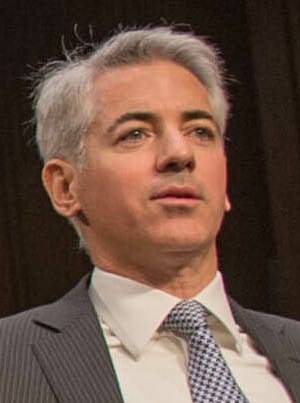
Bill Ackman
Ackman is a concentrated, long-hold, activist investor. He typically owns 5–10 positions at a time — sometimes fewer.
Each one involves exhaustive research. If he's buying, he has usually already built a 100-slide deck explaining exactly what's wrong with the company and exactly what needs to change to fix it.
His style is the opposite of index investing. He wants a controlling voice at the table.
He wants to talk to the CEO. He wants the board to change.
That's the "activist" part — he's not just buying a stock and hoping it goes up. He's buying it with a plan to force the thing that will make it go up.
The strategy works until it doesn't. When the thesis is right, he wins massively.
When the thesis is wrong and he's also very public about it, the losses are spectacular.
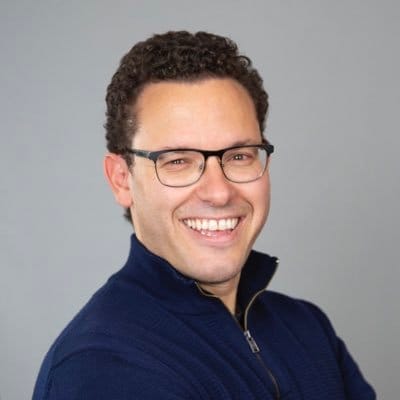
Timothy Sykes
Sykes specializes in low-priced, highly volatile stocks — often called penny stocks or small-cap momentum plays — and trades both the long and short side. His long strategy focuses on stocks spiking on news catalysts, bought early and sold quickly into the spike.
His short strategy focuses on the same stocks after the spike, shorting them as they fade back to reality. He has said repeatedly that most penny stocks are garbage companies that temporarily spike on hype and then collapse.
His edge is understanding that cycle and positioning accordingly.
FINANCIAL PHILOSOPHY
Bill Ackman
Ackman's core belief is that markets frequently misprice assets when the story around them is either too negative or too complicated. He looks for businesses he can understand deeply, with a gap between what the market thinks they're worth and what he thinks they're worth.
He's talked extensively about asymmetric bets — situations where you can be wrong and lose a small amount, but right and make a lot. He believes activist investing works because most company boards are too comfortable and most CEOs have too little accountability.
He thinks public pressure, when backed by real analysis, is a legitimate tool for creating value. Whether that makes him a hero or a villain depends on which company you ask.
Timothy Sykes
Sykes believes the penny stock market is structurally exploitable because it attracts unsophisticated investors who chase momentum without understanding that most penny stock companies are worthless. His philosophy is to be on the right side of that dynamic — buying into hype early and selling before it fades, or shorting the aftermath.
He is not a fundamental investor in any sense. He invests in the predictability of human behavior around speculative, low-quality assets.
RISK TOLERANCE
Bill Ackman
Ackman runs highly concentrated books and uses leverage. That's the opposite of conservative.
He'll put 20–30% of the fund in a single position if he believes in it. He also uses options and credit derivatives — his March 2020 COVID hedge was built using credit default swaps, instruments most retail investors have never heard of.
He famously described his risk approach as: "I only invest when the downside is zero and the upside is unlimited" — which sounds great until you lose $4 billion on one trade. The honest version is: he's a high-conviction investor with a high tolerance for pain on the way to being right.
Timothy Sykes
Sykes operates with defined position sizes and stops, and emphasizes cutting losses quickly above everything else. He has publicly documented losses alongside wins, and stresses that small losses are the price of staying in the game.
He does not use heavy leverage. He avoids holding overnight positions where possible — the gap risk on volatile small-cap stocks overnight is extreme.
His risk model is conservative relative to the volatility of the instruments he trades.
THE PLAYBOOK
Bill Ackman
Ackman has a taste for the finer things and doesn't pretend otherwise. He owns a large Manhattan apartment, he's been photographed at high-end charity events, and his social circle overlaps with New York media, finance, and political elite.
He and his second wife, Neri Oxman, have a high public profile — she's a former MIT professor and design pioneer. He is a Harvard alumnus, twice over, and gave to the school for years, though the relationship became famously strained in 2023 when he led a very public campaign against Harvard's president over campus antisemitism, ultimately contributing to her resignation.
He is not a guy who stays quiet about anything.
Timothy Sykes
Sykes is the most conspicuously lifestyle-oriented trader in his category. He has photographed himself on yachts, in Lamborghinis, in luxury hotels, and with stacks of cash — marketing imagery that his critics cite as manipulative and his defenders cite as authentic success documentation.
He lives part-time in Miami and part-time internationally. He is genuinely philanthropic: he has funded the building of dozens of schools in developing countries through Karmagawa, the charity he co-founded, donating a share of his course revenue to it.
BIGGEST WIN
Bill Ackman
The COVID hedge in March 2020 is the one. As markets started selling off in late February, Ackman quietly spent $27 million buying credit default swaps — basically insurance on corporate bonds defaulting if the economy collapsed.
He then went on CNBC on March 18, 2020, visibly emotional, and said "hell is coming." The market kept dropping. Three weeks later, he unwound the trade.
The $27 million had turned into $2.6 billion. That's roughly a 100x return in under a month.
He used the proceeds to buy stocks at the market bottom. He then made another fortune as markets recovered.
The whole sequence — hedge, cry on TV, buy the dip, profit — is one of the more remarkable individual trade sequences in recent hedge fund history.
Timothy Sykes
The original bar mitzvah money trade — $12,415 to $1.65 million — is the defining story. It is verifiable through SEC filings from his college hedge fund days.
More recently, his Millionaire Challenge has produced documented seven-figure earners: students like Tim Grittani, who turned $1,500 into over $13 million using Sykes''s methodology. Grittani''s success is probably the strongest external validation of the teaching model — a student who took the framework and surpassed the teacher.
BIGGEST MISTAKE
Bill Ackman
The Valeant Pharmaceuticals disaster is the one. Ackman built a massive position in Valeant starting in 2015, eventually owning about $4 billion worth of shares.
His thesis was that Valeant's model — aggressively raising drug prices and cutting R&D — was brilliant. Congress, journalists, and eventually the SEC had a different view.
The stock collapsed from $260 to under $10. Ackman spent months publicly defending the position, appearing on CNBC repeatedly to explain why it would recover.
It didn't. He finally sold in 2017 at a loss of approximately $4 billion.
It's the most expensive public loss in hedge fund activism history. The lesson he's cited: don't get emotionally attached to a position, and be faster to recognize when the fundamental thesis has broken.
Timothy Sykes
The hedge fund period is the honest low point. After college, Sykes ran Cilantro Fund Management and struggled significantly — the strategies that worked trading his own small account did not scale to managing institutional capital in the same volatile instruments.
He has acknowledged that his edge in penny stocks is partly size-dependent: he can move in and out of small positions quickly in ways that are impossible with millions under management. The fund underperformed and he eventually returned to trading only his own capital.
CAREER HIGHLIGHTS
Bill Ackman
Bill Ackman grew up in Chappaqua, New York, the son of a real estate finance chairman. He was a history major at Harvard — class of 1988 — then went straight to Harvard Business School.
His first venture was Gotham Partners, a real estate and value investing fund he started in 1992 with a Harvard classmate. It was a disaster.
The fund made concentrated bets on illiquid real estate and had to be wound down by 2003 under serious investor pressure and SEC scrutiny.
He didn't quit. In 2004 he launched Pershing Square Capital Management, this time with a clearer focus: take large stakes in companies, go public with his thesis, and use activist pressure to force management changes.
The approach worked. His reputation was built on detailed, public investment presentations — sometimes running 100+ slides — that became must-reads on Wall Street.
He turned activist investing into something that felt more like journalism than finance: research a company, find what's broken, publish everything, and bet heavily on being right.
Timothy Sykes
Sykes grew up in Greenwich, Connecticut, in a financially comfortable family. He received $12,415 as bar mitzvah gift money and, at age 17, started using it to trade stocks.
By the time he was a junior at Tulane University, he had turned it into approximately $1.65 million — primarily through trading volatile, low-priced stocks that most Wall Street firms ignored entirely.
He graduated in 2003 and briefly ran Cilantro Fund Management, a hedge fund, before returning to his roots in penny stock trading. In 2008 he wrote "An American Hedge Fund," documenting his college trading story.
He then launched the Millionaire Challenge, his flagship mentorship program. He built one of the first large-scale day trading education platforms on the internet, with thousands of paying students, multiple millionaire challenge graduates, and a media presence that includes books, DVDs, webinars, and social media.
COMPANIES & ROLES
Bill Ackman
Pershing Square Capital Management is his flagship hedge fund, managing around $16 billion. His most famous public positions have included Canadian Pacific Railway, where he pushed successfully for a new CEO and a turnaround that made Pershing Square hundreds of millions.
He held a massive position in Valeant Pharmaceuticals from 2015 to 2017 — which will come up again. He took a huge bet on General Growth Properties during the 2008 financial crisis when no one else would touch it.
That one returned over $1 billion.
He has also done business on the other side: Pershing Square Holdings is his publicly listed vehicle on Euronext Amsterdam, which lets retail investors access his fund — unusual for a hedge fund of this size. He's been a major Burger King and Restaurant Brands International investor, and he backed Fannie Mae and Freddie Mac preferred shares in a long-running legal battle with the government.
Timothy Sykes
Sykes runs several interconnected businesses under the Millionaire Challenge umbrella. The core is a subscription community offering trade alerts, video lessons, a live chatroom, and direct mentorship.
He has produced multiple millionaire students — traders who completed his program and went on to earn seven-figure trading profits — which he documents publicly and markets heavily.
He also runs Profit.ly, a trade tracking and verification platform that attempts to provide auditable performance records for traders. He has been vocal about the importance of trade verification in an industry full of unverifiable claims — something he applies to himself, publishing every trade publicly.
EDUCATION
Bill Ackman
Harvard College, BA in History, 1988. Harvard Business School, MBA, 1992.
He's been a major Harvard donor — and major Harvard critic — throughout his career. The irony of his most public fight being with his own alma mater was not lost on anyone.
Timothy Sykes
Tulane University, BA in Philosophy and Psychology, 2003. He has been dismissive of traditional finance education as preparation for the kind of trading he does — the academic curriculum does not cover penny stock dynamics or short-term momentum.
His real education was the college trading years, which were simultaneously his proof of concept.
BOOKS & RESOURCES
Bill Ackman
Ackman hasnt written a book, but his annual letters and investment presentations are some of the most-read documents in the hedge fund world
His 334-slide Herbalife short presentation from 2012 is a masterclass in short-selling research — and in being publicly, expensively wrong for several years before eventually being right
For understanding his world: read Confidence Game by Christine Richard, which covers his early career and the MBIA short
It's a tight, compelling read about how activist investing actually works, including the messy parts
As an Amazon Associate, Netfigo earns from qualifying purchases. Book links above may be affiliate links.
Timothy Sykes
An American Hedge Fund (2008) is his memoir of the college trading era
It covers the bar mitzvah money story in full, including the hedge fund failure. It is more honest about the failures than most trading books
The Complete Penny Stock Course by Jamil Ben Alluch, written in collaboration with the Sykes methodology, is a more systematic treatment of the trading strategy. For anyone curious about penny stock dynamics
Why these stocks spike, why they collapse, and how the cycle repeats — it covers the mechanics clearly