
NETFIGO SCORE BATTLE
ORIGINAL DATARisk Appetite
Contrarian Index
Track Record
Accessibility
Time Horizon
AT A GLANCE
INVESTING STYLE
Cathie Wood
Wood is a pure-conviction thematic investor. She identifies technologies she believes will fundamentally change the world — genomics, AI, robotics, blockchain, autonomous vehicles — and concentrates heavily in the companies building those technologies, often before those companies are profitable.
Her time horizon is explicitly five years. She does not care about quarterly earnings.
She cares about whether the technological path is intact.
The approach is genuinely different from most of Wall Street. She is not doing DCF models on current cash flows.
She is forecasting where industries will be in a decade. When she is right about the technology and right about the timing, the returns are extraordinary.
When she is right about the technology but wrong about the timing — or wrong about which companies will win — the losses are severe. 2020 showed the first scenario.
2021–2022 showed the second.
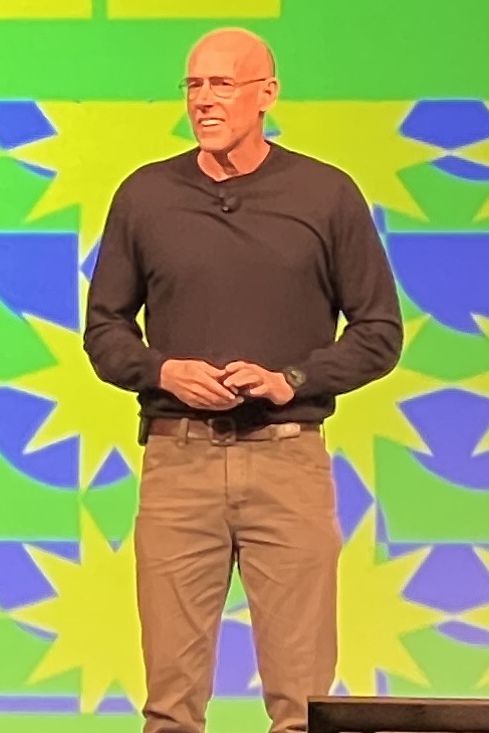
Scott Galloway
Galloway's personal investing style is relatively conservative given how loud he is. He keeps a heavy allocation in index funds and real estate.
He does make concentrated bets on individual stocks when he has conviction — he famously held Amazon for years. He angel invests occasionally but is not prolific.
His real wealth comes from business exits and media income, not portfolio management.
FINANCIAL PHILOSOPHY
Cathie Wood
Wood's philosophy is that the market systematically undervalues disruptive innovation because traditional analysts use short time horizons and conventional valuation methods that don't apply to exponential-growth businesses. She believes five-year time horizons are necessary to capture the full value of technological change.
She also believes concentration is a feature, not a bug: if you're right about a technology platform, owning 20% of your portfolio in it is more rational than owning 1%. She has said repeatedly that she would rather be early and wrong for a period than miss the technology entirely.
Scott Galloway
Diversify, own assets, and do not confuse being smart with being lucky. Galloway preaches that the most reliable path to wealth is boring — buy index funds, own property in growing cities, and let time do the work.
He is deeply skeptical of anyone who claims they can consistently beat the market.
RISK TOLERANCE
Cathie Wood
Wood runs concentrated, leveraged-conviction portfolios with almost no hedging. Her funds can hold 30–50 positions but the top 10 often represent 60–70% of assets.
She does not short. She does not hold cash as a defensive measure.
When the market declines, her funds decline more, because she owns high-beta, high-growth, often unprofitable companies that get hit hardest in risk-off environments. She is explicit about this: if you cannot stomach 50% drawdowns, ARK is not for you.
Many investors found this out the hard way in 2022.
Scott Galloway
Moderate. Galloway has experienced the full spectrum — he had a company go public and then go bankrupt (Red Envelope), which taught him that financial ruin is always closer than you think.
Post-L2 sale, he became much more conservative. Heavy real estate holdings in New York and Florida.
He preaches diversification publicly and mostly follows his own advice, with occasional concentrated stock positions.
THE PLAYBOOK
Cathie Wood
Wood is a devout Christian and has spoken publicly about faith informing her long-term orientation — she genuinely believes she is investing in technologies that will improve human lives, not just make money. She is a major donor to her church and to Christian educational causes.
She lives relatively modestly for someone running a multi-billion-dollar firm. She does not appear in tabloids.
She is not known for lavish spending. What she is known for is being relentlessly, publicly bullish — even when her funds are down 75%.
Scott Galloway
Galloway owns significant real estate in New York and Florida. He talks openly about his wealth and spending — nice apartments, good restaurants, private school for his kids.
He is not frugal and does not pretend to be. But he is very intentional about where money goes.
He has said his biggest financial luxury is "buying back his time" — paying for convenience so he can focus on what matters.
BIGGEST WIN
Cathie Wood
Tesla is the defining win. Wood started buying Tesla in 2018 when the stock was around $18 adjusted for splits and the financial press was writing endless stories about whether the company would survive.
She published a price target of $4,000 (split-adjusted $800) that was mocked widely. Tesla's stock went to $400 at its peak — a gain of roughly 2,000% from her early purchases.
ARKK returned 150% in 2020 alone, driven heavily by Tesla. The fund went from $1.9 billion in assets to $17 billion in one year.
The Tesla call is one of the most accurate and most profitable individual stock calls in modern ETF history.
Scott Galloway
Selling L2 to Gartner for an estimated $134 million in 2017. He built L2 into the go-to benchmarking firm for digital competence of luxury and consumer brands.
The exit, combined with his media career taking off simultaneously, catapulted him from "NYU professor" to "famous rich guy who yells about tech on the internet."
BIGGEST MISTAKE
Cathie Wood
The 2021–2022 collapse is the biggest mistake — or more accurately, the biggest risk that came due. After ARKK's extraordinary 2020, Wood did not meaningfully de-risk or trim winners.
She continued buying high-growth, unprofitable tech companies into 2021 as they became more expensive. When interest rates rose in 2022, those companies — which depend on cheap money to fund future growth — were hit extremely hard.
ARKK fell approximately 75% from its February 2021 peak. Investors who bought near the top lost three quarters of their money.
Wood maintained conviction and bought more on the way down. Whether that turns out to be smart or stubborn will depend on what happens to these technologies over the next five years.
Scott Galloway
Red Envelope. Full stop.
Galloway has been brutally honest about this — he took a gift e-commerce company public, it was valued at hundreds of millions, and then it went bankrupt. He has called it the most painful experience of his career and has said it took years to emotionally recover.
He lost a significant amount of personal wealth in the collapse.
CAREER HIGHLIGHTS
Cathie Wood
Cathie Wood grew up in Los Angeles, the daughter of Irish immigrants. She studied economics and finance at the University of Southern California under Arthur Laffer — yes, the Laffer Curve guy — who she credits as a formative influence on her thinking.
She started her career at Capital Group in 1977 as an assistant economist, then moved to Jennison Associates where she spent 18 years managing equity portfolios.
In 2001 she joined AllianceBernstein as chief investment officer for global thematic strategies. There she developed the early framework for what would become ARK: thematic investing around transformative technologies.
She pitched the idea internally. They passed.
In 2014, at age 58, she left and started ARK Invest from scratch with $6 million of seed money. That is either inspiring or terrifying depending on how old you are and how risk-tolerant you are.
Scott Galloway
Scott Galloway is a serial entrepreneur and NYU Stern School of Business professor who became famous for his brutally honest takes on Big Tech. He founded nine companies over his career, including L2 (a business intelligence firm sold to Gartner in 2017), Red Envelope (an e-commerce company that went public then bankrupt), and Prophet (a brand strategy firm).
His 2017 book The Four, about Amazon, Apple, Facebook, and Google, became a bestseller. His YouTube channel and Prof G podcast reach millions.
He called Amazon buying Whole Foods before it happened. He also co-hosts Pivot with Kara Swisher, one of the most popular tech podcasts in the world.
He teaches brand strategy at NYU and is known for his profanity-laced, data-heavy lectures that go viral every semester.
COMPANIES & ROLES
Cathie Wood
ARK Invest is the company she founded in 2014 and the vehicle through which all her major positions have been run. ARK operates several actively managed ETFs, the most famous being ARKK (ARK Innovation ETF), which holds concentrated positions in companies she believes are driving technological disruption.
At its peak in February 2021, ARKK had over $27 billion in assets under management. By 2022 that had fallen below $7 billion as the fund declined roughly 75% from its high.
Her major individual positions have included Tesla (she was buying when it was under $20 adjusted. It went to $400), Coinbase, Roku, Zoom, Teladoc, and Palantir.
She publishes all her trades publicly every day — unusual for an active manager — and shares her full investment theses openly. She also hosts a weekly podcast, runs a public research blog, and appears on television regularly.
Scott Galloway
L2 Inc (founder, sold to Gartner), Red Envelope (founder, IPO then bankruptcy), Prophet (co-founder), Section4 (founder, online education), Prof G Media (founder)
EDUCATION
Cathie Wood
University of Southern California, BS in Economics and Finance, 1981. She studied under Arthur Laffer, the economist behind supply-side economics, who she credits with shaping her long-term, structural view of markets.
She has said the Laffer Curve and its implications about incentives and growth informed how she thinks about technology and innovation.
Scott Galloway
UCLA (BA), UC Berkeley Haas School of Business (MBA).
BOOKS & RESOURCES
Cathie Wood
ARK publishes free research at ark-invest.com, including their Big Ideas annual report, which is a genuinely useful survey of disruptive technology trends with supporting data
It is free and more substantive than most paid research. Regardless of your view on ARK's funds, the research is worth reading
As an Amazon Associate, Netfigo earns from qualifying purchases. Book links above may be affiliate links.
Scott Galloway
The Algebra of Happiness by Scott Galloway, Prof G Pod (podcast), Pivot with Kara Swisher (podcast), No Mercy / No Malice (his weekly blog)
As an Amazon Associate, Netfigo earns from qualifying purchases. Book links above may be affiliate links.