Compare / Dave Ramsey vs Stig Brodersen

NETFIGO SCORE BATTLE
ORIGINAL DATARisk Appetite
Contrarian Index
Track Record
Accessibility
Time Horizon
AT A GLANCE
INVESTING STYLE
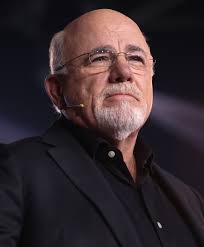
Dave Ramsey
Ramsey does not teach investing strategy in the way that hedge fund managers do. His investment philosophy is: get completely out of debt first (including your mortgage), then invest 15% of your income in good growth stock mutual funds inside a Roth IRA and 401(k).
He recommends actively managed mutual funds — specifically four types of funds (growth, growth and income, aggressive growth, international) — rather than index funds. He assumes 12% average annual returns, which is significantly higher than what most financial planners use.
Stig Brodersen
Pure value investing in the Buffett-Graham tradition. Stig looks for companies trading below intrinsic value with strong competitive advantages, honest management, and a margin of safety.
He takes a concentrated approach — he'd rather own 10-15 well-understood positions than 50 diversified ones. He does deep fundamental analysis: reading annual reports, understanding unit economics, and calculating intrinsic value using discounted cash flow models.
He has an international perspective that most American value investors lack — he actively looks at companies in Europe, Asia, and emerging markets. He believes international markets are less efficiently priced than US markets, creating more opportunities for value investors.
FINANCIAL PHILOSOPHY
Dave Ramsey
Ramsey''s philosophy is built on behavior, not math. He knows the debt avalanche (paying off highest-interest debt first) is mathematically optimal.
He recommends the debt snowball (paying off smallest balances first) anyway, because the psychology of quick wins keeps people on track. He has said explicitly: if people made financial decisions based on math, they wouldn''t be in debt.
His entire system is designed for people who need behavioral support as much as financial instruction.
Stig Brodersen
Stig believes that investing should be approached with intellectual humility and continuous learning. His core philosophy: understand what you own, buy it at a price that gives you a margin of safety, and be patient.
He thinks most investors trade too frequently and react too emotionally to short-term market movements. He values international diversification more than most American investors, arguing that US-centric portfolios miss significant opportunities.
He also believes strongly in the democratization of financial education — TIP was built on the principle that world-class investing knowledge should be free.
RISK TOLERANCE
Dave Ramsey
Ramsey's approach to risk is unusual: he believes debt is the greatest financial risk of all, and that eliminating it is the primary risk management strategy. He is strongly opposed to all consumer debt, to borrowing to invest, and to any financial product that involves leverage.
He avoids options, leveraged ETFs, and anything he cannot explain to a caller in two minutes. He is conservative on financial product complexity and aggressive on the emotional/behavioral side of money management.
Stig Brodersen
Moderate. Stig is concentrated but disciplined.
He won't buy something unless his downside analysis shows limited risk of permanent capital loss. He's willing to hold cash when he can't find cheap stocks — sometimes 20-30% of his portfolio.
He's less speculative than Preston and has stayed closer to the original value investing framework. He manages risk through deep understanding of each position rather than through broad diversification.
THE PLAYBOOK
Dave Ramsey
Ramsey built a $5.5 million cash-purchased mansion in Franklin, Tennessee — a deliberate statement that you can buy luxury without debt. He drives Corvettes.
He has seven figure annual income from his media empire. He practices what he preaches on the debt side: no borrowing, no mortgages.
He is genuinely aligned with his brand on the core debt elimination message, even if his lifestyle is far beyond what most listeners will achieve.
Stig Brodersen
Stig is methodical and disciplined. He reads extensively — annual reports, investing books, economic history, and academic research.
He maintains a structured process for evaluating potential investments and doesn't deviate from it based on market emotions. He lives in Denmark and maintains a lower public profile than many financial media personalities.
He reinvests podcast income into both his business and his personal investment portfolio.
BIGGEST WIN
Dave Ramsey
Financial Peace University is the defining win. The structured 9-week program has helped millions of families get out of debt in a systematic, accountable way.
The program has processed an estimated $3 billion in debt elimination by its participants. The weekly debt-free screams — callers who have paid off their debt and yell "We''re debt-free!" on his show — have become one of the most emotionally resonant moments in financial media.
The behavioral component of his teaching is genuinely effective for the audience it serves.
Stig Brodersen
Co-building The Investor's Podcast Network into a global phenomenon. The show's reach — 100 million+ downloads — means Stig has directly contributed to the financial education of millions of people across dozens of countries.
His interviews with top investors have created a free archive of investing wisdom that rivals any MBA curriculum. On a personal investment level, his consistent application of value principles across international markets has produced solid long-term returns.
BIGGEST MISTAKE
Dave Ramsey
The 12% return assumption is the most consistent criticism. Most financial planners use 6–8% for long-term planning.
Ramsey uses 12%, based on historical stock market averages that include unusually strong decades and ignore inflation adjustment. This leads listeners to underestimate how much they need to save for retirement.
He has also been criticized for recommending actively managed funds over index funds despite decades of evidence showing index funds outperform after fees. His response has been consistent: he believes active management in his preferred fund categories outperforms.
Most independent research disagrees.
Stig Brodersen
Stig has been open about early investment mistakes where he bought companies that were cheap for a reason — value traps where the low price reflected genuine business deterioration rather than market mispricing. He's talked about the importance of distinguishing between "cheap" and "good value," which is one of the hardest lessons in value investing.
He's also acknowledged that running a media business while managing a personal portfolio creates time allocation challenges.
CAREER HIGHLIGHTS
Dave Ramsey
Ramsey grew up in Antioch, Tennessee, in an entrepreneurial family. He got his real estate license at 18 and by his mid-20s had built a real estate portfolio worth $4 million using a network of short-term bank loans.
The loans were 90-day commercial notes, not mortgages, which meant the bank could demand everything back on three months notice. When his main lender was sold in the late 1980s, the new owners did exactly that.
He filed Chapter 7 in September 1988 at age 28, with a pregnant wife and a toddler. That experience became the foundation of everything he teaches.
He started a financial counseling practice, then a radio show in Nashville in 1992. The show grew.
He syndicated it nationally. By the 2000s, The Dave Ramsey Show was one of the most listened-to radio programs in America, reaching over 16 million weekly listeners.
He built Ramsey Solutions — a financial education company — around the radio brand, producing books, courses, live events, and personal finance apps.
Stig Brodersen
Stig Brodersen grew up in Denmark and studied business and finance. He earned his MBA and worked in corporate finance before deciding his real passion was investing education.
He connected with Preston Pysh online through their shared love of Warren Buffett and Benjamin Graham, and they launched The Investor's Podcast in 2014. The concept was brilliantly simple: read the classic investing books that every successful investor recommends, break them down chapter by chapter in plain language, and give them away for free as a podcast.
It worked beyond anyone's expectations. The show grew into The Investor's Podcast Network, now hosting multiple shows including We Study Billionaires, Millennial Investing, and Bitcoin Fundamentals.
The network has surpassed 100 million total downloads. When Preston shifted his focus to Bitcoin, Stig took the lead on We Study Billionaires, conducting in-depth interviews with legendary investors.
He's interviewed Howard Marks, Mohnish Pabrai, Guy Spier, Tobias Carlisle, and dozens of other investing heavyweights. He also co-authored books with Preston on Buffett's investment methods.
COMPANIES & ROLES
Dave Ramsey
Ramsey Solutions is his Nashville-based company, employing over 1,000 people and generating estimated revenues of over $300 million annually. It produces The Dave Ramsey Show (now also a podcast and YouTube show), EveryDollar (a budgeting app), Financial Peace University (a structured debt-elimination program), and Ramsey+ (a subscription financial education platform).
He also publishes books that have sold tens of millions of copies collectively and hosts live events that fill arenas. Several of his employees, including George Kamel and Rachel Cruze (his daughter), have built their own financial media careers under the Ramsey brand.
Stig Brodersen
The Investor's Podcast Network — co-founded with Preston Pysh, one of the largest financial media networks in the world. We Study Billionaires — the flagship podcast, now primarily hosted by Stig.
He co-authored books on Warren Buffett's investment frameworks with Preston Pysh. He also runs his own investment portfolio following value investing principles.
EDUCATION
Dave Ramsey
University of Tennessee, BS in Finance and Real Estate, 1982. He has said his real education was going bankrupt at 26 and having to figure out how money actually works without a lender propping him up.
Stig Brodersen
Stig earned an MBA with a focus on finance and business. His academic background in business gives him a structured analytical framework for evaluating companies.
He's also self-educated through hundreds of investing books that he's read and discussed on the podcast — the show itself has been his ongoing graduate education in investing.
BOOKS & RESOURCES
Dave Ramsey
As an Amazon Associate, Netfigo earns from qualifying purchases. Book links above may be affiliate links.
Stig Brodersen
The foundation of Stig's entire investing approach
The more technical deep-dive that Stig considers essential for serious investors
A book about unconventional CEOs that Stig frequently recommends
As an Amazon Associate, Netfigo earns from qualifying purchases. Book links above may be affiliate links.