NETFIGO SCORE BATTLE
ORIGINAL DATARisk Appetite
Contrarian Index
Track Record
Accessibility
Time Horizon
AT A GLANCE
INVESTING STYLE
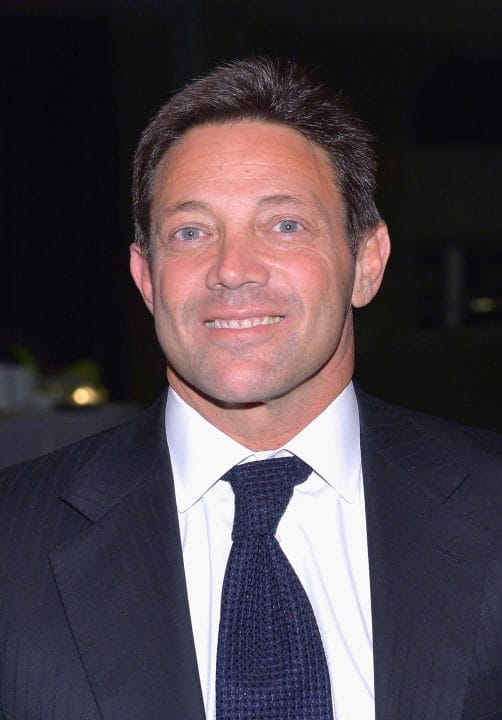
Jordan Belfort
Belfort's original "investing style" was securities fraud — buying penny stocks in bulk, artificially inflating prices through high-pressure sales, then dumping shares on unsuspecting retail investors. This is a pump-and-dump scheme, and it's a federal crime.
His current advice is more conventional. He now recommends long-term investing in quality companies, diversification, and avoiding get-rich-quick schemes — which is a bit like an arsonist giving fire safety tips, but the advice itself is actually sound.
He talks a lot about the psychology of selling — both in business and in how Wall Street sells products to retail investors. His main message: the system is rigged against retail investors, and the best defense is financial education.
He's not wrong about this, even if he was personally one of the people doing the rigging.
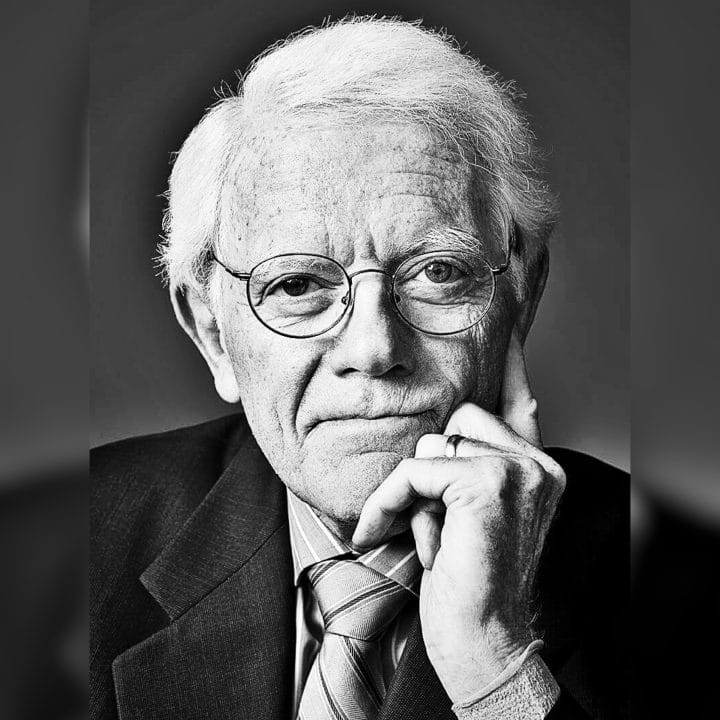
Peter Lynch
Lynch invented the phrase "tenbagger" — a stock that returns ten times your money. He was specifically looking for companies that could do that.
His method was deceptively simple: invest in what you know. Not what you know about macroeconomics or interest rates — what you know about everyday life.
What stores are you shopping at? What products are your kids obsessed with?
What new thing are you using that feels like it could be everywhere in five years? If you're noticing a company before Wall Street analysts have caught on, you have a real edge.
He categorized stocks into six types: slow growers (stable, boring), stalwarts (big companies, modest returns), fast growers (small and aggressive — where the tenbaggers live), cyclicals (tied to economic cycles), turnarounds (troubled companies that might recover), and asset plays (companies with hidden value the market hasn't priced in). His genius was applying rigorous fundamental analysis to companies most Wall Street analysts dismissed as too small or too mundane to bother with.
FINANCIAL PHILOSOPHY
Jordan Belfort
Belfort's current financial philosophy is essentially: don't do what I did. Be ethical.
Build real businesses that create real value. Invest for the long term.
Don't chase shortcuts.
More specifically, he teaches that sales skills are the most valuable financial skill anyone can develop. His argument: everything in life is a sale — getting a job, raising capital, convincing a partner to join your startup.
If you can sell, you can always make money.
He also stresses the difference between income and wealth. At Stratton, he had massive income but zero real wealth — it all went to drugs, toys, legal fees, and restitution.
Real wealth, he says, is about building assets that generate income while you sleep.
On the market itself: he thinks most retail investors should stick to index funds and avoid individual stock picking. He believes actively managed funds mostly underperform because of fees.
Coming from a guy who ran a boiler room, this is actually pretty good advice.
Peter Lynch
He believed the average person has a real edge over professional fund managers — specifically the access to everyday life that analysts in offices don't have. You know which stores are packed on Saturday afternoon.
You know which new products your kids are obsessed with. Wall Street analysts often don't.
His most repeated principle: invest in what you know. His second: loving a company's product is not enough on its own — you still have to understand the fundamentals.
Third: stomach matters more than brain in investing. The biggest thing separating successful investors from unsuccessful ones isn't intelligence — it's the ability to stay calm when the market drops 20 percent and everything feels like it's ending.
RISK TOLERANCE
Jordan Belfort
In his Stratton days, his risk tolerance was effectively infinite — he was leveraging illegal schemes and spending money faster than he made it. There was no risk management because the "strategy" was fraud.
Now, he describes himself as much more conservative. He's said he keeps a significant cash reserve, invests in real estate, and avoids anything he doesn't fully understand.
Prison will do that to you.
He's also said that true risk isn't financial — it's ethical. The real risk he took wasn't losing money.
It was losing his freedom, his family, and his reputation. He frames his entire cautionary tale around this idea: the biggest risk in any deal isn't the money, it's whether you can sleep at night.
Peter Lynch
Lynch ran a very diversified portfolio — sometimes over 1,000 positions — which cuts against the concentration gospel of Buffett and Munger. He justified it simply: if you find enough genuinely great small companies, you don't need to pick just one.
Some will fail. The tenbaggers more than compensate.
He wasn't reckless — he did detailed fundamental research on every holding. But he was comfortable owning things that looked messy or unfamiliar on the surface if the numbers told a better story.
His rule was that you should never own more companies than you can actually keep track of. He could track hundreds because researching them was his full-time job.
For everyone else the honest number is far smaller, and he said so.
THE PLAYBOOK
Jordan Belfort
During the Stratton years, Belfort's spending was legendary and absurd. He owned a 167-foot yacht (originally owned by Coco Chanel) that he sank off the coast of Sardinia.
He had a helicopter he crashed while high on Quaaludes. He owned multiple mansions.
He spent an estimated $700,000 per week on drugs alone. He literally threw money around.
Post-prison, his lifestyle is more restrained — but still comfortable. He lives in a beachfront property in Manhattan Beach, California.
He drives luxury cars. He dresses well.
He travels for speaking gigs constantly.
He still owes restitution — $110 million to the victims of his fraud. He's paid back roughly $14 million as of the most recent public records.
The movie deal alone reportedly earned him over $1 million. His victims have pointed out, with some justification, that he's profiting from the story of how he robbed them.
Peter Lynch
After retiring from Magellan in 1990, Lynch has spent most of his time on philanthropy. He and his wife Carolyn donated tens of millions to education through the Lynch Foundation, focusing on Catholic education and scholarship programs in Massachusetts.
He lives quietly for someone worth hundreds of millions. He speaks at Fidelity events occasionally, plays golf, and is generally not seeking attention.
He has said that the best decision he ever made was retiring at 46 — that no amount of money is worth missing your kids grow up.
BIGGEST WIN
Jordan Belfort
The movie deal is probably the biggest "win" of his post-prison life. Selling the rights to Scorsese and having Leonardo DiCaprio play you is a level of rehabilitation that most convicted felons can only dream of.
The film made $392 million globally and turned Belfort into a household name — in a weirdly aspirational way.
At Stratton, the raw numbers were staggering: he was reportedly earning $1 million per week at the firm's peak. But since most of that money was obtained through fraud and was subsequently seized or spent, it doesn't really count as a "win" in any legitimate sense.
His Straight Line Selling system is a legitimate post-prison success. He built a multimillion-dollar training business from a prison cell, essentially monetizing the one skill that was genuinely his: the ability to sell anything to anyone.
Peter Lynch
Fannie Mae. Lynch bought it heavily in the mid-1980s when almost nobody wanted it.
It was a housing finance company drowning in problem mortgages. Lynch dug into the fundamentals and decided the problems were fixable and the underlying business was genuinely valuable.
He was right. The stock went from roughly $2 to $40.
That single position generated hundreds of millions for the fund. His Chrysler bet was similar — he bought heavily when the company was a bankruptcy rumor and almost no one else would touch it.
Both worked because Lynch was willing to do the research on things everyone else had already decided were too ugly to look at.
BIGGEST MISTAKE
Jordan Belfort
The whole thing. Stratton Oakmont defrauded roughly 1,500 investors out of approximately $200 million.
Belfort personally pleaded guilty to securities fraud and money laundering. He was sentenced to 4 years in federal prison (served 22 months), ordered to pay $110.4 million in restitution, and was banned from the securities industry for life.
He lost everything — his money, his first marriage, his freedom, and very nearly his life (he overdosed multiple times during the Stratton years). His 167-foot yacht sank in a storm off Italy.
His helicopter was destroyed when he tried to land it on his lawn while high.
The lesson he teaches now: "I was the richest man I knew, and I was the most miserable. Money made through dishonesty isn't wealth — it's a ticking bomb." Whether you believe his redemption arc is genuine or just another sales pitch is up to you.
Peter Lynch
Selling great companies too soon. He got into Walmart early and sold too soon.
He did the same with several other retailers that went on to become enormous. By his own account, his biggest mistake pattern was taking profits on genuine multi-decade compounders before they had compounded enough.
He also acknowledged that managing a $14 billion fund was fundamentally different from managing $18 million. The sheer size limited which companies he could meaningfully invest in — you can't move the needle on a $14 billion fund by buying a $50 million company.
He burned himself out keeping up with over a thousand positions. He retired at 46.
He's said he doesn't regret it.
CAREER HIGHLIGHTS
Jordan Belfort
Jordan Belfort grew up in Queens, New York. His parents were both accountants — middle class, nothing flashy.
After high school, he briefly tried selling Italian ices on the beach (made $20,000 in one summer, which gave him the taste) and then went to dental school at the University of Maryland. He dropped out on the first day after a professor told the class that the golden age of dentistry was over.
He drifted into Wall Street in the late 1980s. His first job was at L.F.
Rothschild, where he was trained as a stockbroker. He was literally on the job for his first day when Black Monday hit — October 19, 1987, the biggest one-day market crash in history.
He was immediately laid off.
So he pivoted to selling meat and seafood door to door on Long Island. No joke.
He was good at it — reportedly earning $3,000–$4,000 a week. But the stock market kept calling.
In 1989, he co-founded Stratton Oakmont, a brokerage firm in Lake Success, Long Island.
Stratton Oakmont became one of the most notorious boiler rooms in Wall Street history. The firm specialized in penny stock fraud — buying huge blocks of cheap, nearly worthless stocks, then having an army of aggressive salespeople call investors and push the price up through manipulation.
Once the price was inflated, Belfort and his partners would dump their shares. Classic pump-and-dump.
At its peak, Stratton Oakmont had over 1,000 brokers and was moving millions of dollars daily. Belfort was making an estimated $1 million per week.
The office was famous for its insane culture — drugs, parties, dwarf-tossing contests, and an atmosphere that made a frat house look like a monastery.
The SEC and FBI were circling for years. Stratton was shut down in 1996.
Belfort was indicted in 1998 for securities fraud and money laundering. He cooperated with the FBI (wore a wire to help catch other fraudsters), pleaded guilty, and was sentenced to 4 years in federal prison.
He served 22 months at a minimum-security facility in Nevada.
After prison, he reinvented himself. He wrote two memoirs — "The Wolf of Wall Street" and "Catching the Wolf of Wall Street." Martin Scorsese turned the first one into a movie starring Leonardo DiCaprio in 2013.
The film grossed $392 million worldwide and turned Belfort from a convicted felon into a celebrity. He now runs a sales training company and charges $50,000–$100,000 per speaking engagement.
Peter Lynch
Peter Lynch grew up in Newton, Massachusetts. His father died when Lynch was 10, and his mother had to work to keep the family going.
Lynch caddied at the Brae Burn Country Club to help out. One of his regular clients was D.
George Sullivan, president of Fidelity Investments. Sullivan eventually offered Lynch a summer job at Fidelity — the kind of break you earn by showing up and doing the work.
Lynch studied history, psychology, and philosophy at Boston College — not finance — and said later that was probably an advantage. Too many finance students learn to look at spreadsheets and miss the obvious things happening in front of them.
He got an MBA from the Wharton School, joined Fidelity full-time in 1969, and took over the Magellan Fund in 1977. At the time, Magellan had $18 million in assets and was closed to new investors.
When Lynch retired at 46 in 1990, it had $14 billion and was the largest actively managed mutual fund in the world. He beat the S&P 500 in 11 of his 13 years managing it.
He's been a vice chairman at Fidelity in an advisory capacity ever since.
COMPANIES & ROLES
Jordan Belfort
Stratton Oakmont was the main act — a brokerage firm that was really a fraud factory. At its peak, it employed over 1,000 stockbrokers and took dozens of companies public (most of them worthless or nearly so).
The firm was shut down by regulators in 1996 after years of violations.
His current company is Jordan Belfort Global — a sales training and motivational speaking business. He teaches his "Straight Line Selling" system, which is essentially the sales methodology he developed at Stratton, minus the illegal parts.
He sells courses, coaching, and live events.
He's also been involved in crypto promotion — he's given talks and endorsements for various blockchain projects, which is ironic given that his original crime was essentially selling worthless assets to unsuspecting buyers. He's been criticized for this, and he's pushed back by saying crypto itself isn't a scam, just some of the projects are.
Peter Lynch
His entire professional life ran through Fidelity Investments. He managed the Magellan Fund from 1977 to 1990 — 13 years of sustained outperformance that has never been matched at that scale.
His major holdings during that run included Fannie Mae, which he rode from $2 to $40. Chrysler, which he bought near bankruptcy.
And various retailers that nobody on Wall Street wanted to touch.
He was famous for finding companies in everyday life before analysts noticed them. He found Dunkin' Donuts because his wife liked the coffee.
He investigated L'eggs pantyhose after his wife bought them at a grocery store. He'd walk through a shopping mall and watch which stores were packed and which were empty — and then go home and read the financials to see if the story held up.
EDUCATION
Jordan Belfort
Belfort attended American University in Washington, D.C., where he earned a degree in biology. He then enrolled in the University of Maryland School of Dentistry but famously dropped out on the first day.
No MBA, no finance degree, no Series 7 at the time — he got into Wall Street purely through hustle and the ability to sell.
Peter Lynch
Boston College, class of 1965 — history, psychology, philosophy. Wharton School of Business, MBA.
He's on record saying studying history at Boston College was more useful for investing than anything he learned at Wharton. The historical pattern recognition, the ability to contextualize events — that showed up in how he thought about cycles and companies.
BOOKS & RESOURCES
Jordan Belfort
For understanding the psychology of persuasion — ironic, given that he used those same principles to defraud people
As an Amazon Associate, Netfigo earns from qualifying purchases. Book links above may be affiliate links.
Peter Lynch
The book Lynch himself points to as foundational — it's where his framework for thinking about intrinsic value comes from
The other major influence. Fisher was the one who formalized the idea of looking at qualitative factors — management quality, competitive position — not just balance sheets. Lynch synthesised Graham and Fisher into something more accessible than either
It's the best modern book on why smart people make bad investing decisions
As an Amazon Associate, Netfigo earns from qualifying purchases. Book links above may be affiliate links.