NETFIGO SCORE BATTLE
ORIGINAL DATARisk Appetite
Contrarian Index
Track Record
Accessibility
Time Horizon
AT A GLANCE
INVESTING STYLE
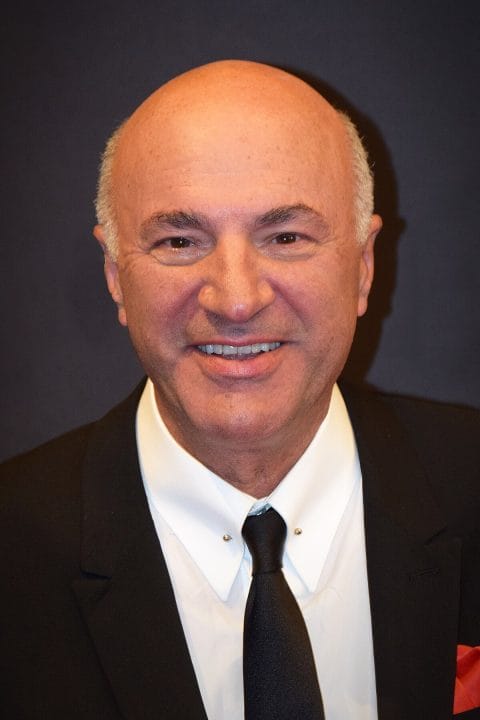
Kevin O'Leary
O'Leary is famous for royalty deals. On Shark Tank, he frequently offers founders a deal where he gets a royalty per unit sold rather than (or in addition to) equity.
His logic: royalties start paying immediately, do not depend on an exit event, and give him guaranteed cash flow regardless of whether the company gets acquired. He also invests in ETFs and dividend-paying equities through his O'Shares brand.
He is very publicly diversified — he does not concentrate bets. He likes to say he treats every dollar as a soldier that goes out and brings back more soldiers.
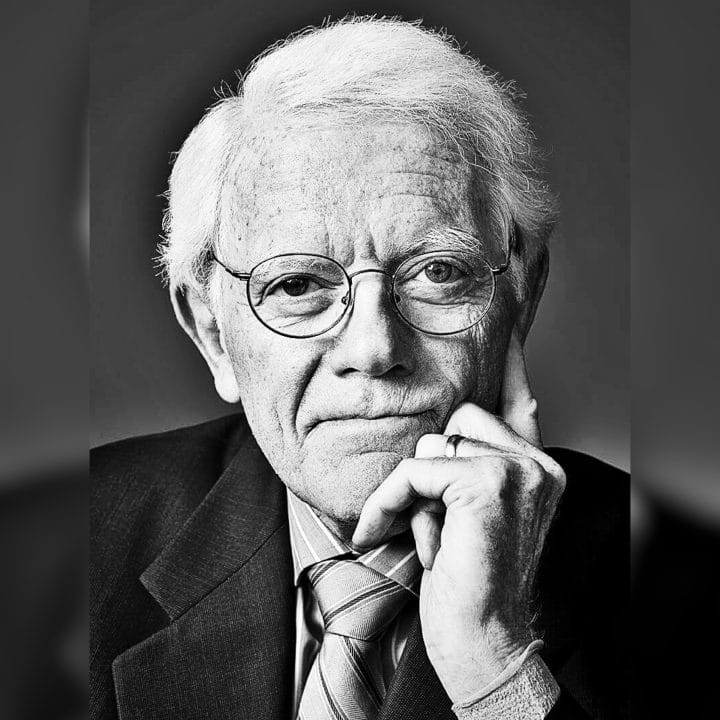
Peter Lynch
Lynch invented the phrase "tenbagger" — a stock that returns ten times your money. He was specifically looking for companies that could do that.
His method was deceptively simple: invest in what you know. Not what you know about macroeconomics or interest rates — what you know about everyday life.
What stores are you shopping at? What products are your kids obsessed with?
What new thing are you using that feels like it could be everywhere in five years? If you're noticing a company before Wall Street analysts have caught on, you have a real edge.
He categorized stocks into six types: slow growers (stable, boring), stalwarts (big companies, modest returns), fast growers (small and aggressive — where the tenbaggers live), cyclicals (tied to economic cycles), turnarounds (troubled companies that might recover), and asset plays (companies with hidden value the market hasn't priced in). His genius was applying rigorous fundamental analysis to companies most Wall Street analysts dismissed as too small or too mundane to bother with.
FINANCIAL PHILOSOPHY
Kevin O'Leary
Every dollar is a soldier. Send it out to bring back more soldiers.
O'Leary's philosophy is entirely about cash flow and capital efficiency. He wants money working for him at all times.
He is against speculative investments that do not produce income. He is famously anti-debt for personal use but comfortable with leverage in business when the numbers work.
His mother taught him to save 10% of everything — he still follows that rule.
Peter Lynch
He believed the average person has a real edge over professional fund managers — specifically the access to everyday life that analysts in offices don't have. You know which stores are packed on Saturday afternoon.
You know which new products your kids are obsessed with. Wall Street analysts often don't.
His most repeated principle: invest in what you know. His second: loving a company's product is not enough on its own — you still have to understand the fundamentals.
Third: stomach matters more than brain in investing. The biggest thing separating successful investors from unsuccessful ones isn't intelligence — it's the ability to stay calm when the market drops 20 percent and everything feels like it's ending.
RISK TOLERANCE
Kevin O'Leary
O'Leary caps any single position at 5% of his total portfolio. When something appreciates beyond that, he trims.
He never lets conviction turn into concentration. His royalty deal preference on Shark Tank is itself a risk management tool — royalties pay regardless of whether the company ever gets acquired or goes public, while equity only pays on an exit that may never come.
He has said the single biggest mistake retail investors make is falling in love with a stock and watching a 5% position quietly become 40% of their net worth before they notice.
Peter Lynch
Lynch ran a very diversified portfolio — sometimes over 1,000 positions — which cuts against the concentration gospel of Buffett and Munger. He justified it simply: if you find enough genuinely great small companies, you don't need to pick just one.
Some will fail. The tenbaggers more than compensate.
He wasn't reckless — he did detailed fundamental research on every holding. But he was comfortable owning things that looked messy or unfamiliar on the surface if the numbers told a better story.
His rule was that you should never own more companies than you can actually keep track of. He could track hundreds because researching them was his full-time job.
For everyone else the honest number is far smaller, and he said so.
THE PLAYBOOK
Kevin O'Leary
O'Leary is flashy on camera — he wears a signature watch, talks about wine and luxury — but has spoken about being more measured in private. He collects fine wine and has a wine brand (O'Leary Fine Wines).
He runs every financial decision through a "what does this dollar do for me" filter. He has said he wakes up early, spends mornings on markets and email, and treats content creation and Shark Tank as businesses in themselves.
Peter Lynch
After retiring from Magellan in 1990, Lynch has spent most of his time on philanthropy. He and his wife Carolyn donated tens of millions to education through the Lynch Foundation, focusing on Catholic education and scholarship programs in Massachusetts.
He lives quietly for someone worth hundreds of millions. He speaks at Fidelity events occasionally, plays golf, and is generally not seeking attention.
He has said that the best decision he ever made was retiring at 46 — that no amount of money is worth missing your kids grow up.
BIGGEST WIN
Kevin O'Leary
Selling SoftKey / The Learning Company to Mattel for $4.2 billion. The fact that Mattel destroyed most of that value after the acquisition does not change the outcome for O'Leary — he negotiated the sale, collected his share, and moved on.
The deal remains one of the largest educational technology exits in history.
Peter Lynch
Fannie Mae. Lynch bought it heavily in the mid-1980s when almost nobody wanted it.
It was a housing finance company drowning in problem mortgages. Lynch dug into the fundamentals and decided the problems were fixable and the underlying business was genuinely valuable.
He was right. The stock went from roughly $2 to $40.
That single position generated hundreds of millions for the fund. His Chrysler bet was similar — he bought heavily when the company was a bankruptcy rumor and almost no one else would touch it.
Both worked because Lynch was willing to do the research on things everyone else had already decided were too ugly to look at.
BIGGEST MISTAKE
Kevin O'Leary
The SoftKey-Mattel deal is simultaneously his biggest win and his most controversial chapter. Critics have argued that the company was aggressively managed for the sale rather than for long-term health — and that the $3.6 billion write-down at Mattel was foreseeable.
O'Leary disputes this and says the operational problems were Mattel's responsibility after the acquisition.
Peter Lynch
Selling great companies too soon. He got into Walmart early and sold too soon.
He did the same with several other retailers that went on to become enormous. By his own account, his biggest mistake pattern was taking profits on genuine multi-decade compounders before they had compounded enough.
He also acknowledged that managing a $14 billion fund was fundamentally different from managing $18 million. The sheer size limited which companies he could meaningfully invest in — you can't move the needle on a $14 billion fund by buying a $50 million company.
He burned himself out keeping up with over a thousand positions. He retired at 46.
He's said he doesn't regret it.
CAREER HIGHLIGHTS
Kevin O'Leary
Kevin O'Leary was born in Montreal in 1954 to an Irish-Canadian father and a Lebanese mother. His mother taught him about money early — she literally forced him to save a portion of every dollar he ever received.
He studied environmental science and then got an MBA from Western University (Ivey Business School). He co-founded SoftKey International in 1986, an educational software company.
Through aggressive acquisitions — buying The Learning Company, Broderbund, and others — SoftKey became the dominant educational software company in North America. It was sold to Mattel in 1999 for $4.2 billion.
Mattel subsequently wrote down $3.6 billion of that purchase price, calling it one of the worst acquisitions in corporate history. O'Leary was already cashed out.
He moved into TV, joining Canada's Dragon's Den in 2006 and Shark Tank in 2009. He also launched O'Leary Funds (mutual funds and ETFs), O'Shares ETFs, and various venture investments.
Peter Lynch
Peter Lynch grew up in Newton, Massachusetts. His father died when Lynch was 10, and his mother had to work to keep the family going.
Lynch caddied at the Brae Burn Country Club to help out. One of his regular clients was D.
George Sullivan, president of Fidelity Investments. Sullivan eventually offered Lynch a summer job at Fidelity — the kind of break you earn by showing up and doing the work.
Lynch studied history, psychology, and philosophy at Boston College — not finance — and said later that was probably an advantage. Too many finance students learn to look at spreadsheets and miss the obvious things happening in front of them.
He got an MBA from the Wharton School, joined Fidelity full-time in 1969, and took over the Magellan Fund in 1977. At the time, Magellan had $18 million in assets and was closed to new investors.
When Lynch retired at 46 in 1990, it had $14 billion and was the largest actively managed mutual fund in the world. He beat the S&P 500 in 11 of his 13 years managing it.
He's been a vice chairman at Fidelity in an advisory capacity ever since.
COMPANIES & ROLES
Kevin O'Leary
SoftKey International / The Learning Company (co-founder, sold to Mattel for $4.2B in 1999). O'Shares ETFs (financial products).
O'Leary Ventures. Dragon's Den (2006-2014).
Shark Tank (2009-present). Books: Cold Hard Truth on Business, Money & Life.
Cold Hard Truth on Family, Kids & Money.
Peter Lynch
His entire professional life ran through Fidelity Investments. He managed the Magellan Fund from 1977 to 1990 — 13 years of sustained outperformance that has never been matched at that scale.
His major holdings during that run included Fannie Mae, which he rode from $2 to $40. Chrysler, which he bought near bankruptcy.
And various retailers that nobody on Wall Street wanted to touch.
He was famous for finding companies in everyday life before analysts noticed them. He found Dunkin' Donuts because his wife liked the coffee.
He investigated L'eggs pantyhose after his wife bought them at a grocery store. He'd walk through a shopping mall and watch which stores were packed and which were empty — and then go home and read the financials to see if the story held up.
EDUCATION
Kevin O'Leary
University of Waterloo — Bachelor of Science in environmental studies and psychology. Western University (Ivey Business School) — MBA.
Peter Lynch
Boston College, class of 1965 — history, psychology, philosophy. Wharton School of Business, MBA.
He's on record saying studying history at Boston College was more useful for investing than anything he learned at Wharton. The historical pattern recognition, the ability to contextualize events — that showed up in how he thought about cycles and companies.
BOOKS & RESOURCES
Kevin O'Leary
As an Amazon Associate, Netfigo earns from qualifying purchases. Book links above may be affiliate links.
Peter Lynch
The book Lynch himself points to as foundational — it's where his framework for thinking about intrinsic value comes from
The other major influence. Fisher was the one who formalized the idea of looking at qualitative factors — management quality, competitive position — not just balance sheets. Lynch synthesised Graham and Fisher into something more accessible than either
It's the best modern book on why smart people make bad investing decisions
As an Amazon Associate, Netfigo earns from qualifying purchases. Book links above may be affiliate links.