
NETFIGO SCORE BATTLE
ORIGINAL DATARisk Appetite
Contrarian Index
Track Record
Accessibility
Time Horizon
AT A GLANCE
INVESTING STYLE
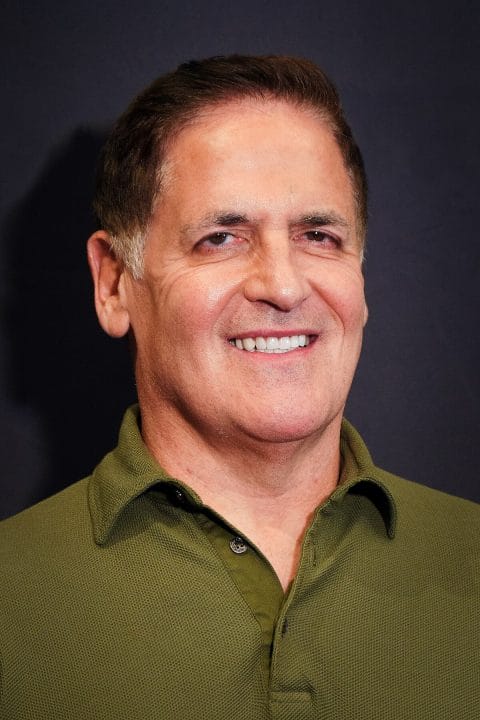
Mark Cuban
Cuban is an opportunist in the best sense of the word. He doesn't have a fixed strategy like Buffett or a formula like Simons.
He looks for asymmetric bets — situations where the upside is massive and the downside is limited.
He's big on understanding the business deeply before investing. His rule: never invest in something you don't understand.
But unlike Buffett, he defines "understand" broadly — he'll dive into crypto, AI, biotech, whatever, as long as he can wrap his head around the mechanics.
He values effort and hustle in founders more than credentials. On Shark Tank, he routinely passes on MBAs with polished decks and bets on scrappy founders who clearly live and breathe their business.
He's also a contrarian by nature. He bought the Mavericks when everyone said NBA teams were bad investments.
He launched Cost Plus Drugs when everyone said you can't fight Big Pharma. He loaded up on tech in the late '90s when people were skeptical of the internet.
He doesn't go against consensus to be edgy — he just doesn't care what consensus thinks.
Stig Brodersen
Pure value investing in the Buffett-Graham tradition. Stig looks for companies trading below intrinsic value with strong competitive advantages, honest management, and a margin of safety.
He takes a concentrated approach — he'd rather own 10-15 well-understood positions than 50 diversified ones. He does deep fundamental analysis: reading annual reports, understanding unit economics, and calculating intrinsic value using discounted cash flow models.
He has an international perspective that most American value investors lack — he actively looks at companies in Europe, Asia, and emerging markets. He believes international markets are less efficiently priced than US markets, creating more opportunities for value investors.
FINANCIAL PHILOSOPHY
Mark Cuban
Cuban's financial philosophy boils down to a few core beliefs. First: the best investment you can make is in yourself.
He reads constantly, teaches himself new industries, and believes the edge comes from knowing more than the next person.
Second: don't follow trends, follow effort. He's said repeatedly that the one thing you can control is how hard you work.
Talent matters, but being the most prepared person in the room matters more.
Third: cash is king — not in the Dave Ramsey sense, but in the "having cash means you can pounce on opportunities when everyone else is scared" sense. He kept massive cash reserves after the dot-com sale specifically so he'd never be a forced seller.
Fourth: be willing to look stupid. Every major bet he's made — the Mavericks, Cost Plus Drugs, early internet streaming — looked dumb at the time.
He says the best deals are the ones that smart people think are dumb.
And fifth: transparency matters. He answers his own emails, engages on social media, and is more accessible than virtually any other billionaire.
He thinks the era of the mysterious, untouchable rich guy is over.
Stig Brodersen
Stig believes that investing should be approached with intellectual humility and continuous learning. His core philosophy: understand what you own, buy it at a price that gives you a margin of safety, and be patient.
He thinks most investors trade too frequently and react too emotionally to short-term market movements. He values international diversification more than most American investors, arguing that US-centric portfolios miss significant opportunities.
He also believes strongly in the democratization of financial education — TIP was built on the principle that world-class investing knowledge should be free.
RISK TOLERANCE
Mark Cuban
Cuban is comfortable with big, concentrated bets — but he's not reckless about it. The broadcast.com sale proved he knows when to protect gains.
He immediately hedged his Yahoo stock with derivative contracts, which is why he kept his billions when the dot-com bubble popped. Most people in his position rode the wave down to nothing.
He's said he'd rather take a big swing and lose than play it safe and miss out. But he also diversifies across asset classes — stocks, real estate, crypto, private companies, cash.
He keeps enough cash to never be forced to sell at the wrong time.
His approach to risk: do the homework, size the bet based on your conviction, and protect the downside when you can. He's not a gambler.
He's a calculated risk-taker who happens to have very high risk tolerance.
Stig Brodersen
Moderate. Stig is concentrated but disciplined.
He won't buy something unless his downside analysis shows limited risk of permanent capital loss. He's willing to hold cash when he can't find cheap stocks — sometimes 20-30% of his portfolio.
He's less speculative than Preston and has stayed closer to the original value investing framework. He manages risk through deep understanding of each position rather than through broad diversification.
THE PLAYBOOK
Mark Cuban
Despite being worth over $6 billion, Cuban is famously not flashy about spending — at least not in the stereotypical billionaire way. He doesn't collect yachts or private islands.
He does own a Gulfstream V — bought it online in 2002, which was the largest e-commerce transaction in history at the time.
He lives in a 24,000-square-foot mansion in Dallas that he bought in 1999 for $13 million. It's big, sure, but it's not a compound in the Hamptons or a Monaco penthouse.
He wears t-shirts and jeans to most things. He answers his own emails.
He's been known to respond to random people on Twitter and Reddit. He tips well and pays for his employees' education.
His biggest splurge was probably the Mavericks — $285 million on a terrible basketball team because he loved basketball. That turned out to be one of the best investments he ever made, but at the time, people thought he was crazy.
Stig Brodersen
Stig is methodical and disciplined. He reads extensively — annual reports, investing books, economic history, and academic research.
He maintains a structured process for evaluating potential investments and doesn't deviate from it based on market emotions. He lives in Denmark and maintains a lower public profile than many financial media personalities.
He reinvests podcast income into both his business and his personal investment portfolio.
BIGGEST WIN
Mark Cuban
The Broadcast.com sale to Yahoo in 1999 for $5.7 billion is the defining win. Not just because of the number — because of the timing.
He sold at the absolute peak of the dot-com bubble, hedged his Yahoo shares immediately, and kept every dollar when the crash came.
To put this in context: Yahoo's stock dropped 97% from its peak. Everyone who held Yahoo stock through the crash got wiped out.
Cuban cashed out and used derivative hedging contracts to lock in his price. It wasn't luck — it was a deliberate, calculated move to protect his gains.
The Mavericks were also a massive win. Bought for $285 million, sold for $3.5 billion.
He turned a bottom-five NBA franchise into a championship team and a 12x financial return over 23 years.
Stig Brodersen
Co-building The Investor's Podcast Network into a global phenomenon. The show's reach — 100 million+ downloads — means Stig has directly contributed to the financial education of millions of people across dozens of countries.
His interviews with top investors have created a free archive of investing wisdom that rivals any MBA curriculum. On a personal investment level, his consistent application of value principles across international markets has produced solid long-term returns.
BIGGEST MISTAKE
Mark Cuban
His biggest public loss was in crypto. In 2021, Cuban was vocal about DeFi and yield farming.
He invested in a token called Iron Finance (TITAN), which collapsed to near zero in what's called a "bank run" scenario. He lost an undisclosed amount — estimated in the hundreds of thousands, which is pocket change for him, but the embarrassment was real.
He also took heat for promoting several crypto projects that tanked. He later acknowledged that DeFi needs more regulation and that he should have done more due diligence on some of the projects he endorsed.
On Shark Tank, he's had duds too. Several of his investments have gone to zero — which he's open about.
His take: if you're not losing money on some deals, you're not taking enough risk. The Shark Tank losses don't bother him because the winners more than pay for them.
Stig Brodersen
Stig has been open about early investment mistakes where he bought companies that were cheap for a reason — value traps where the low price reflected genuine business deterioration rather than market mispricing. He's talked about the importance of distinguishing between "cheap" and "good value," which is one of the hardest lessons in value investing.
He's also acknowledged that running a media business while managing a personal portfolio creates time allocation challenges.
CAREER HIGHLIGHTS
Mark Cuban
Mark Cuban grew up in Pittsburgh. His dad did car upholstery.
There was no trust fund, no connections, no Ivy League pedigree. He was hustling from the start — selling garbage bags door to door at 12, giving disco lessons at 16, running a bar in college (he wasn't old enough to drink in it).
After graduating from Indiana University in 1981, he moved to Dallas with basically nothing. Took a job as a bartender.
Got fired. Took a job selling software at a company called Your Business Software.
Got fired again — this time because he closed a deal instead of opening the store on time. So he started his own company, MicroSolutions, a PC consulting firm.
He built it up, sold it to CompuServe in 1990 for $6 million, and walked away with $2 million after taxes.
Then came the big one. In 1995, Cuban and Todd Wagner started AudioNet — an internet radio company.
They wanted to listen to Indiana Hoosiers basketball games online. That was literally the idea.
AudioNet became Broadcast.com, went public in 1998, and in 1999 Yahoo bought it for $5.7 billion in stock. Cuban immediately hedged his Yahoo shares with a collar trade.
When Yahoo's stock cratered in the dot-com bust, he kept his billions. Most dot-com millionaires lost everything.
Cuban didn't lose a dime.
He bought the Dallas Mavericks in 2000 for $285 million when they were one of the worst teams in the NBA. He turned them into contenders, won a championship in 2011, and sold the team in 2023 for $3.5 billion.
Along the way, he racked up over $2 million in NBA fines for arguing with refs, criticizing officials, and generally being the loudest person in any building. The NBA had never seen an owner like him.
In 2022, he launched Cost Plus Drugs — a company that sells generic medications at cost plus a 15% markup. Drugs that cost $300 at a pharmacy sell for $5 on his site.
It was the most un-billionaire move a billionaire had made in years. And it actually worked.
Stig Brodersen
Stig Brodersen grew up in Denmark and studied business and finance. He earned his MBA and worked in corporate finance before deciding his real passion was investing education.
He connected with Preston Pysh online through their shared love of Warren Buffett and Benjamin Graham, and they launched The Investor's Podcast in 2014. The concept was brilliantly simple: read the classic investing books that every successful investor recommends, break them down chapter by chapter in plain language, and give them away for free as a podcast.
It worked beyond anyone's expectations. The show grew into The Investor's Podcast Network, now hosting multiple shows including We Study Billionaires, Millennial Investing, and Bitcoin Fundamentals.
The network has surpassed 100 million total downloads. When Preston shifted his focus to Bitcoin, Stig took the lead on We Study Billionaires, conducting in-depth interviews with legendary investors.
He's interviewed Howard Marks, Mohnish Pabrai, Guy Spier, Tobias Carlisle, and dozens of other investing heavyweights. He also co-authored books with Preston on Buffett's investment methods.
COMPANIES & ROLES
Mark Cuban
The Dallas Mavericks were his baby for 23 years. Bought them in 2000 when they were laughingstock-level bad, turned them into a championship team by 2011, and sold them in 2023 for $3.5 billion — a 12x return.
Broadcast.com was the company that made him a billionaire. It doesn't exist anymore — Yahoo essentially killed it — but the $5.7 billion sale is still one of the most perfectly timed exits in tech history.
Cost Plus Drugs is his current obsession. It's a pharmacy company that sells generics at cost plus 15% plus a pharmacist fee.
The whole point is to expose how insanely marked up prescription drugs are. It's not his biggest money-maker, but it might be his most impactful company.
On Shark Tank, he's invested in over 85 companies across 15 seasons. His biggest Shark Tank investment was in Luminaid — inflatable solar lights — which expanded from disaster relief into mainstream outdoor gear.
He tends to go for tech-heavy or disruptive companies and stays away from anything he considers a lifestyle business.
He's also been active in crypto — invested in several blockchain projects, NFTs, and was an early advocate for DeFi. That said, he also lost money when some of those bets went sideways.
Stig Brodersen
The Investor's Podcast Network — co-founded with Preston Pysh, one of the largest financial media networks in the world. We Study Billionaires — the flagship podcast, now primarily hosted by Stig.
He co-authored books on Warren Buffett's investment frameworks with Preston Pysh. He also runs his own investment portfolio following value investing principles.
EDUCATION
Mark Cuban
Cuban studied at Indiana University, where he graduated from the Kelley School of Business in 1981. He's said college taught him how to think about business but the real education was working his way through school — bartending, running a bar, and selling things.
He briefly attended the University of Pittsburgh before transferring to Indiana. No MBA, no finance degree, no Wall Street training.
Everything he knows about investing he learned by doing it — and by reading voraciously.
Stig Brodersen
Stig earned an MBA with a focus on finance and business. His academic background in business gives him a structured analytical framework for evaluating companies.
He's also self-educated through hundreds of investing books that he's read and discussed on the podcast — the show itself has been his ongoing graduate education in investing.
BOOKS & RESOURCES
Mark Cuban
Which shaped his views on individualism and going against the crowd
For anyone building a company — he likes its emphasis on iteration over perfection
Which he's cited multiple times as influential on how he thinks about disruption
As an Amazon Associate, Netfigo earns from qualifying purchases. Book links above may be affiliate links.
Stig Brodersen
The foundation of Stig's entire investing approach
The more technical deep-dive that Stig considers essential for serious investors
A book about unconventional CEOs that Stig frequently recommends
As an Amazon Associate, Netfigo earns from qualifying purchases. Book links above may be affiliate links.