
NETFIGO SCORE BATTLE
ORIGINAL DATARisk Appetite
Contrarian Index
Track Record
Accessibility
Time Horizon
AT A GLANCE
INVESTING STYLE
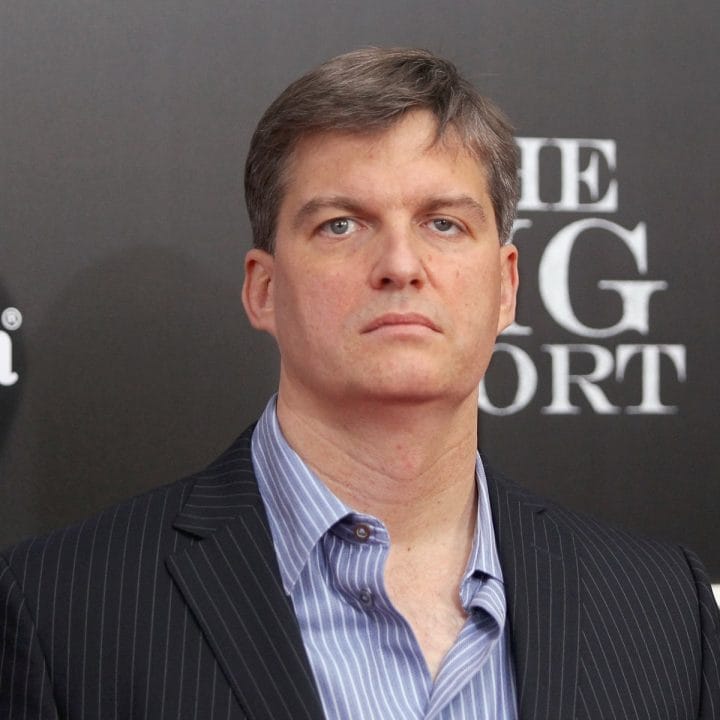
Michael Burry
Burry is a pure fundamental analyst. He reads the actual documents.
Not the analyst summary. Not the ratings agency report.
The actual prospectus, the loan files, the footnotes. For the Big Short trade, he read thousands of individual mortgage loan documents.
Nobody else was doing that. Analysts were looking at aggregate statistics.
The aggregate statistics looked fine. The individual loans were a disaster.
His basic method: find something everyone is ignoring, do the work to understand why it''s mispriced, take a position, and wait. The waiting is the hard part.
He was short the housing market for two years before it collapsed. During those two years his investors were losing money on paper and threatening legal action.
He locked redemptions to prevent forced liquidation. He was right and it cost him two years of misery to prove it.
Stig Brodersen
Pure value investing in the Buffett-Graham tradition. Stig looks for companies trading below intrinsic value with strong competitive advantages, honest management, and a margin of safety.
He takes a concentrated approach — he'd rather own 10-15 well-understood positions than 50 diversified ones. He does deep fundamental analysis: reading annual reports, understanding unit economics, and calculating intrinsic value using discounted cash flow models.
He has an international perspective that most American value investors lack — he actively looks at companies in Europe, Asia, and emerging markets. He believes international markets are less efficiently priced than US markets, creating more opportunities for value investors.
FINANCIAL PHILOSOPHY
Michael Burry
Read the documents. That is basically the whole philosophy.
Not the summary. Not the analyst report.
The actual documents. Most investors don''t do this because it''s tedious and slow and it requires a tolerance for complexity that most people don''t want to develop.
His second rule: be willing to be lonely. His housing short was a deeply contrarian position that most finance professionals thought was ridiculous.
He didn''t need their validation. He needed the math to work.
His third: factor in time when sizing a position. The housing market stayed wrong for two years.
Size your position so you can survive being right too early.
Stig Brodersen
Stig believes that investing should be approached with intellectual humility and continuous learning. His core philosophy: understand what you own, buy it at a price that gives you a margin of safety, and be patient.
He thinks most investors trade too frequently and react too emotionally to short-term market movements. He values international diversification more than most American investors, arguing that US-centric portfolios miss significant opportunities.
He also believes strongly in the democratization of financial education — TIP was built on the principle that world-class investing knowledge should be free.
RISK TOLERANCE
Michael Burry
He concentrates heavily. When he has a thesis, he puts a large portion of the fund into it.
He also used leverage on the housing trade — borrowing to buy credit default swaps amplified both the wait and the eventual payoff. His risk tolerance is high in the sense that he can hold a losing position for years if the fundamental analysis is intact.
It is low in the sense that he won''t touch anything he doesn''t deeply understand. He doesn''t trade momentum or narratives.
If the math doesn''t work, he''s not interested.
Stig Brodersen
Moderate. Stig is concentrated but disciplined.
He won't buy something unless his downside analysis shows limited risk of permanent capital loss. He's willing to hold cash when he can't find cheap stocks — sometimes 20-30% of his portfolio.
He's less speculative than Preston and has stayed closer to the original value investing framework. He manages risk through deep understanding of each position rather than through broad diversification.
THE PLAYBOOK
Michael Burry
He lives in Saratoga, California. He is notoriously private — he has opened and deleted social media accounts multiple times after his market commentary attracted more attention than he wanted.
He occasionally posts about market risks and then goes quiet for months. He has a son with Asperger''s syndrome, and the experience led him to recognise similar traits in himself and pursue his own autism diagnosis as an adult.
He doesn''t do conferences. He doesn''t do interviews.
He files his quarterly 13F and lets the positions speak.
Stig Brodersen
Stig is methodical and disciplined. He reads extensively — annual reports, investing books, economic history, and academic research.
He maintains a structured process for evaluating potential investments and doesn't deviate from it based on market emotions. He lives in Denmark and maintains a lower public profile than many financial media personalities.
He reinvests podcast income into both his business and his personal investment portfolio.
BIGGEST WIN
Michael Burry
The housing trade. In 2005, Burry read thousands of subprime mortgage loan documents and concluded the US housing market was built on loans that would eventually default in large numbers.
He persuaded Goldman Sachs and Deutsche Bank to sell him credit default swaps on mortgage-backed securities — essentially insurance that paid out when the mortgages defaulted. The banks thought he was wrong.
They were happy to take his premiums. In 2007–2008 the mortgages defaulted.
His investors made $700 million. Burry personally made about $100 million.
The banks that sold him the swaps needed government bailouts to survive.
Stig Brodersen
Co-building The Investor's Podcast Network into a global phenomenon. The show's reach — 100 million+ downloads — means Stig has directly contributed to the financial education of millions of people across dozens of countries.
His interviews with top investors have created a free archive of investing wisdom that rivals any MBA curriculum. On a personal investment level, his consistent application of value principles across international markets has produced solid long-term returns.
BIGGEST MISTAKE
Michael Burry
The trade nearly destroyed him before it paid off. He locked investor redemptions to prevent forced liquidation of his position — probably the right call, but it created a legal and emotional nightmare that he''s described as one of the worst periods of his life.
He also closed Scion to outside investors after winning, which in hindsight was leaving behind an institutional money management career after one of the greatest trades in history. He''s never explained that decision fully.
It may have been the right one. It may not have been.
Stig Brodersen
Stig has been open about early investment mistakes where he bought companies that were cheap for a reason — value traps where the low price reflected genuine business deterioration rather than market mispricing. He's talked about the importance of distinguishing between "cheap" and "good value," which is one of the hardest lessons in value investing.
He's also acknowledged that running a media business while managing a personal portfolio creates time allocation challenges.
CAREER HIGHLIGHTS
Michael Burry
Michael Burry was born in San Jose, California in 1971. He lost his left eye to retinoblastoma as a child and has worn a prosthetic eye since.
He studied economics at UCLA and then went to Vanderbilt University School of Medicine. During his medical residency at Stanford, he posted detailed stock analysis on investor message boards between midnight and 3 AM.
The quality was consistently good enough that people in finance started paying attention.
He left his residency in 2000 — one year from finishing — to start Scion Capital with $1.1 million in loans from his family. No finance credentials.
Just a public track record and conviction. In his first full year, the S&P 500 fell 11.9%.
Scion returned 55%. From 2001 to 2008, Scion returned over 489% against the S&P 500's 3%.
Then he made the trade.
Stig Brodersen
Stig Brodersen grew up in Denmark and studied business and finance. He earned his MBA and worked in corporate finance before deciding his real passion was investing education.
He connected with Preston Pysh online through their shared love of Warren Buffett and Benjamin Graham, and they launched The Investor's Podcast in 2014. The concept was brilliantly simple: read the classic investing books that every successful investor recommends, break them down chapter by chapter in plain language, and give them away for free as a podcast.
It worked beyond anyone's expectations. The show grew into The Investor's Podcast Network, now hosting multiple shows including We Study Billionaires, Millennial Investing, and Bitcoin Fundamentals.
The network has surpassed 100 million total downloads. When Preston shifted his focus to Bitcoin, Stig took the lead on We Study Billionaires, conducting in-depth interviews with legendary investors.
He's interviewed Howard Marks, Mohnish Pabrai, Guy Spier, Tobias Carlisle, and dozens of other investing heavyweights. He also co-authored books with Preston on Buffett's investment methods.
COMPANIES & ROLES
Michael Burry
Scion Capital ran from 2000 to 2008. He closed it to outside investors after the Big Short trade — partly because managing money for clients who were screaming at him to reverse a position he knew was right was a genuinely miserable experience, and partly because he didn't need to anymore.
He relaunched as Scion Asset Management, a personal vehicle he still runs today. His current investing is more conventional — value picks, occasional activist positions, portfolio bets that get attention when his 13F filings come out.
He bought GameStop before Reddit did. He shorted Tesla.
He has positioned in water rights and farmland. He tends to be early, which is both his gift and his problem.
Stig Brodersen
The Investor's Podcast Network — co-founded with Preston Pysh, one of the largest financial media networks in the world. We Study Billionaires — the flagship podcast, now primarily hosted by Stig.
He co-authored books on Warren Buffett's investment frameworks with Preston Pysh. He also runs his own investment portfolio following value investing principles.
EDUCATION
Michael Burry
BA in Economics, UCLA. MD, Vanderbilt University School of Medicine, 1999.
He completed three years of his medical residency at Stanford before leaving to start Scion Capital. He is technically a licensed physician who never practiced.
Stig Brodersen
Stig earned an MBA with a focus on finance and business. His academic background in business gives him a structured analytical framework for evaluating companies.
He's also self-educated through hundreds of investing books that he's read and discussed on the podcast — the show itself has been his ongoing graduate education in investing.
BOOKS & RESOURCES
Michael Burry
Burry doesnt write books.
It''s the clearest narrative account of the housing trade and covers Burry in more depth than any other source
The Greatest Trade Ever by Gregory Zuckerman is specifically about Paulsons housing bet and gives useful parallel context on how different people saw the same opportunity.
The book Burry treated as foundational — it''s where he learned to read financial documents the way he does
Together explain the environment Burry was betting against
As an Amazon Associate, Netfigo earns from qualifying purchases. Book links above may be affiliate links.
Stig Brodersen
The foundation of Stig's entire investing approach
The more technical deep-dive that Stig considers essential for serious investors
A book about unconventional CEOs that Stig frequently recommends
As an Amazon Associate, Netfigo earns from qualifying purchases. Book links above may be affiliate links.