Compare / Morgan Housel vs Anas Sefrioui
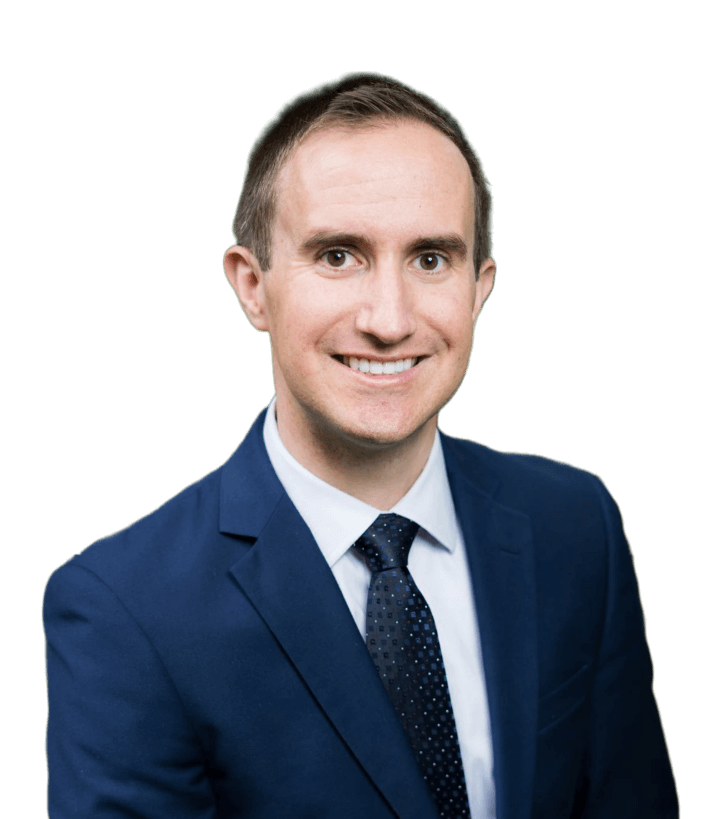
MORGAN HOUSEL
The Psychology of Money, Same as Ever, partner at Collaborative Fund, former Motley Fool columnist
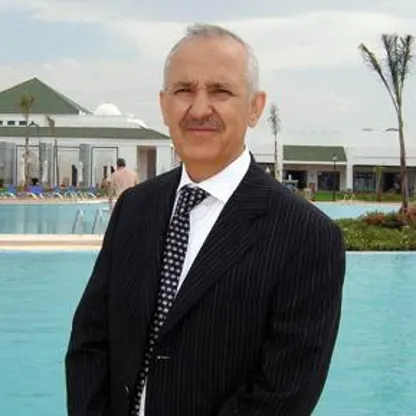
ANAS SEFRIOUI
Building Morocco’s largest real estate empire from scratch and constructing over 300,000 affordable homes acro…
NETFIGO SCORE BATTLE
ORIGINAL DATARisk Appetite
Contrarian Index
Track Record
Accessibility
Time Horizon
AT A GLANCE
INVESTING STYLE
Morgan Housel
Housel is a passive, long-term, index-fund investor in his personal portfolio. He's been transparent about this: he owns index funds, has no individual stock positions, and plans to hold essentially forever.
His approach is radically simple by design. He doesn't try to beat the market.
He doesn't time entries or exits. He saves a high percentage of his income, invests it in broad market index funds, and lets compounding do the work over decades.
What makes his perspective unique is the behavioral emphasis. He argues that the biggest risk in investing isn't a bad stock pick — it's panicking and selling at the bottom, or getting greedy and concentrating at the top.
The best strategy is the one you can actually stick with when everything goes sideways.
He writes about "tail events" — the idea that a small number of investments or decisions drive the vast majority of results. In venture capital, 1% of investments generate most of the returns.
In your career, a handful of decisions matter more than everything else combined. His investment philosophy is built around this: stay in the game long enough for the tail events to work in your favor.
Anas Sefrioui
Sefrioui is a real estate operator first, investor second. He builds companies, not portfolios.
His growth approach has always been organic — acquire land, develop it, sell units, reinvest. No interest in financial markets or passive allocation.
The Africa expansion was the one big strategic bet beyond his home market. Bold in concept.
Mixed in execution.
FINANCIAL PHILOSOPHY
Morgan Housel
Housel's philosophy centers on the gap between knowing and doing. His core insight: financial success is not a hard science — it's a soft skill.
How you behave matters more than what you know.
Key principles: First, wealth is what you don't see. Rich people have nice things.
Wealthy people have freedom. The distinction matters because spending to look rich is the fastest way to not be wealthy.
Second, compound interest is unintuitive. Warren Buffett made 99% of his wealth after age 50.
The math makes sense on paper, but emotionally, waiting 30 years for the payoff is almost impossible for most people. That's why behavior beats knowledge.
Third, room for error is the most important financial concept. No plan survives reality perfectly, so the best plans have huge margins of safety built in.
That's why he holds more cash than an optimizer would recommend — it's not about maximizing returns, it's about surviving surprises.
Fourth, no one is crazy. Everyone makes financial decisions based on their unique life experience.
A person who grew up during the Depression invests differently than someone who came of age in the '90s boom. Understanding this makes you less judgmental and more effective.
Anas Sefrioui
Build where people actually need to live. Volume beats margin.
The goal is not the most impressive building but the most buildings. He has consistently argued that Africa’s housing deficit — running into the hundreds of millions of units — is the biggest real estate opportunity on earth.
RISK TOLERANCE
Morgan Housel
Very conservative in practice. Housel keeps a higher cash allocation than most financial advisors would recommend.
His reasoning: cash isn't about returns, it's about independence. Having cash means you never have to sell stocks at the worst time, never have to take a job you hate, and never have to make desperate financial decisions.
He's talked about keeping enough cash to cover several years of expenses — far more than the standard 3-6 month emergency fund. He considers this the price of sleeping well at night.
He doesn't use leverage. He doesn't make concentrated bets.
He accepts lower potential returns in exchange for the near-certainty of not blowing up. His risk philosophy in one sentence: "The ability to do what you want, when you want, for as long as you want, is the highest dividend money pays."
Anas Sefrioui
High on operational bets, low on financial market speculation. Building in emerging markets involves real currency exposure, regulatory uncertainty, and infrastructure gaps — Sefrioui leaned into all of them.
The 2020 legal troubles showed that close proximity to political capital can also become a liability overnight.
THE PLAYBOOK
Morgan Housel
Housel lives well below his means — and he's clear that this is a deliberate choice, not deprivation. He drives a modest car, lives in a normal house (by wealthy-person standards), and doesn't display wealth publicly.
He's said that his savings rate is high not because he's frugal, but because he's found that the things that make him happy don't cost much.
He invests consistently and automatically. No timing, no active management, no checking his portfolio daily.
He's said he spends maybe 15 minutes per year thinking about his investments.
He gives generously — both to charity and through his writing, which he provides for free on the Collaborative Fund blog. He sees writing as a form of giving: sharing ideas that help people make better financial decisions.
Anas Sefrioui
Not known for conspicuous consumption. His wealth has been largely tied up in Addoha shares and land holdings rather than liquid assets.
He is a builder, not a spender.
BIGGEST WIN
Morgan Housel
"The Psychology of Money" is the defining win. Five million copies sold.
It became one of the bestselling personal finance books in history, up there with "Rich Dad Poor Dad" and "The Intelligent Investor." It made him independently wealthy from book royalties alone — which is ironic for a book that argues money is more about behavior than income.
The book also elevated his platform to a level where he can influence how millions of people think about money. He's not just a writer anymore — he's essentially a public intellectual on the topic of financial behavior.
Anas Sefrioui
The 2006 Casablanca Stock Exchange IPO. Raising 6 billion Moroccan dirhams on the back of a simple affordable housing story, in a market that was not yet sophisticated, was a remarkable capital markets achievement.
It funded the next decade of growth.
BIGGEST MISTAKE
Morgan Housel
Housel has been honest about the limits of his own approach. He's acknowledged that his ultra-passive, high-cash strategy will underperform in raging bull markets.
During the 2020-2021 boom, when everything from meme stocks to crypto was printing money, his boring index fund approach looked pedestrian.
He's also noted the irony of writing a bestselling book about financial behavior while acknowledging that knowing the right thing to do doesn't make it easy. He's admitted to moments of doubt during market downturns — the same emotional reactions he writes about so clearly.
The difference, he says, is having a plan that doesn't require you to be emotionally perfect.
Anas Sefrioui
Expanding into Sub-Saharan Africa too quickly, without enough local partnerships and local capital structures, created operational strain. The 2020 legal case may also trace back to financial engineering under pressure from the Africa overextension.
Governance did not scale as fast as ambition.
CAREER HIGHLIGHTS
Morgan Housel
Morgan Housel grew up in a middle-class family in the Pacific Northwest. He's been private about his early life, but what matters is what he did with it: he became one of the most widely read financial writers of his generation without managing a hedge fund, running a TV show, or having a famous last name.
He started at The Motley Fool as a financial columnist in 2007 — right before the financial crisis. Writing about markets during the worst crash since the Great Depression gave him a front-row seat to how people actually behave with money when fear takes over.
That experience shaped everything he's written since.
At the Motley Fool, he won the Best in Business Award from the Society of American Business Editors and Writers twice. He was also a two-time finalist for the Gerald Loeb Award, the highest honor in financial journalism.
His columns stood out because they didn't focus on stock tips — they focused on why people make terrible decisions with money even when they know better.
In 2016, he joined Collaborative Fund as a partner. The firm is a venture capital fund investing in companies focused on the future of consumption and health.
His role is less about picking stocks and more about thinking and writing — he's essentially the firm's philosopher-in-residence.
Then came "The Psychology of Money" in 2020. The book became a monster.
Over 5 million copies sold. Translated into 50+ languages.
It spent years on bestseller lists. The premise was deceptively simple: financial success isn't about intelligence or knowledge — it's about behavior.
How you handle fear, greed, ego, and patience determines your financial outcome more than any spreadsheet ever will.
He followed it with "Same as Ever" in 2023 — a book about the things that never change in human behavior and markets. Less focused on money specifically, more on the patterns of history and psychology that repeat regardless of the era.
Anas Sefrioui
Anas Sefrioui was born in 1956 in Fez, Morocco. He started in real estate in the 1980s with small construction projects in Casablanca.
In 1988 he formally founded Groupe Addoha — later incorporated as Douja Promotion Group. For two decades he focused exclusively on affordable and mid-range housing, staying far from the luxury segment.
The strategy paid off. The 2006 Casablanca Stock Exchange IPO raised around 6 billion dirhams, was heavily oversubscribed, and pushed his personal wealth to an estimated billion, briefly making him one of the richest people in Africa.
Through the 2010s he expanded into Sub-Saharan Africa — Ivory Coast, Senegal, Ghana, and Cameroon — targeting the same underserved affordable housing market. Then came the turbulence.
A restructuring of Morocco’s affordable housing subsidy program hit margins hard. In 2020, Moroccan authorities charged him in connection with a mortgage fraud case linked to Crédit Immobilier.
He denied the charges. The Addoha stock price fell sharply.
The Africa expansion slowed. He remains one of the most significant real estate figures the continent has produced.
COMPANIES & ROLES
Morgan Housel
Collaborative Fund is where he works — a venture capital firm that invests in companies at the intersection of technology, sustainability, and health. He's a partner but his primary contribution is thinking and writing, not deal sourcing.
The firm uses his writing as a platform to attract entrepreneurs and LPs.
He doesn't run a personal fund or manage outside money. He's an investor in the sense that he invests his own money, but he's not managing other people's portfolios.
His writing is his main product. His Collaborative Fund blog posts get millions of reads.
His books have sold over 5 million copies combined. He's one of the few people in finance who became wealthy primarily through writing about money, not managing it.
Anas Sefrioui
Groupe Addoha (Douja Promotion Group) is the whole story. Listed on the Casablanca Stock Exchange under the ticker ADH, its market cap peaked near 25 billion dirhams.
The company builds residential properties across four segments: affordable, mid-range, upper mid-range, and a small luxury slice — though the bread and butter has always been the lower two. At its height, Addoha delivered tens of thousands of housing units per year across Morocco and several Sub-Saharan African markets.
Sefrioui also built out logistics and manufacturing businesses tied to construction supply chains.
EDUCATION
Morgan Housel
Housel graduated from the University of Southern California. He studied economics, which gave him the analytical framework, but he credits his writing ability — not his economics degree — as the skill that actually built his career.
He didn't go to business school, didn't get an MBA, and didn't do a Wall Street training program.
Anas Sefrioui
Educated in Morocco in real estate and construction. Not known for Western business school credentials.
He built his expertise in the field, not the classroom.
BOOKS & RESOURCES
Morgan Housel
As foundational for understanding how cognitive biases drive financial decisions
As an Amazon Associate, Netfigo earns from qualifying purchases. Book links above may be affiliate links.
Anas Sefrioui
Stripped of the politics, it captures the land-banker mindset he has always embodied
Introduced millions to the idea that real estate builds wealth in ways employment never can
The Intelligent Entrepreneur by Bill Murphy Jr. speaks to the relentless, opportunity
Driven building Sefrioui exemplifies
Africa Rising by Vijay Mahajan laid out the case for Africa’s emerging consumer class years before it became consensus — and is the best intellectual framework for understanding his Africa strategy.
As an Amazon Associate, Netfigo earns from qualifying purchases. Book links above may be affiliate links.