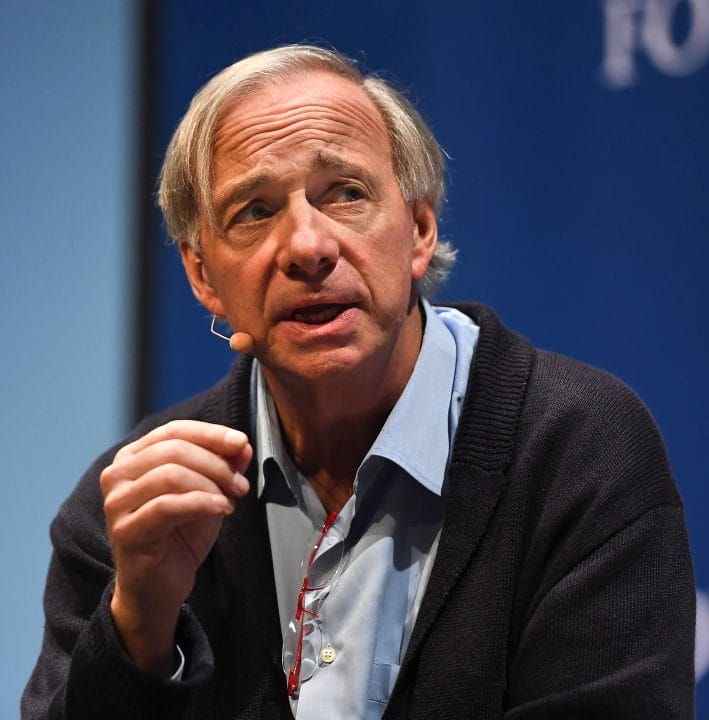
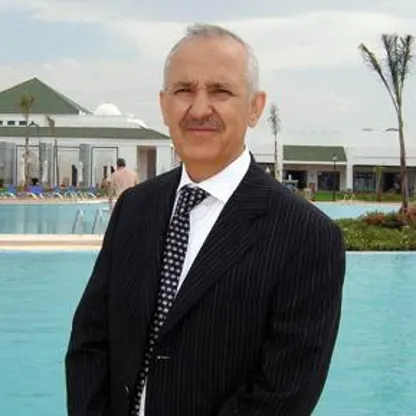
Compare / Ray Dalio vs Anas Sefrioui
NETFIGO SCORE BATTLE
ORIGINAL DATARisk Appetite
Contrarian Index
Track Record
Accessibility
Time Horizon
AT A GLANCE
INVESTING STYLE
Ray Dalio
Dalio thinks in cycles — economic cycles, debt cycles, historical cycles that repeat over decades and centuries. His core belief: everything in markets has happened before.
Study history deeply enough and you can anticipate what comes next. He called the long-term decline of US dollar dominance a slow, inevitable process — not a crisis tomorrow, but not permanent either.
His All Weather approach is built for radical uncertainty. Instead of predicting what will happen, build a portfolio that does okay no matter what.
Stocks, bonds, gold, and commodities tend to move in different directions across different economic environments. Own a smart mix and you're never completely wrong.
Anas Sefrioui
Sefrioui is a real estate operator first, investor second. He builds companies, not portfolios.
His growth approach has always been organic — acquire land, develop it, sell units, reinvest. No interest in financial markets or passive allocation.
The Africa expansion was the one big strategic bet beyond his home market. Bold in concept.
Mixed in execution.
FINANCIAL PHILOSOPHY
Ray Dalio
His most important principle: pain plus reflection equals progress. He applied this to investing, management, and life.
Most people's biggest problem is they avoid pain instead of learning from it. His second idea: diversification is the holy grail of investing.
Not 15 correlated stocks — real diversification across asset classes, geographies, and economic environments that actually move differently. Third: everything is a machine.
Markets, economies, relationships — they all operate by rules that can be understood if you study them. He documented all his rules in a book called Principles.
Whether or not you agree with him, very few investors have been this explicit about writing everything down.
Anas Sefrioui
Build where people actually need to live. Volume beats margin.
The goal is not the most impressive building but the most buildings. He has consistently argued that Africa’s housing deficit — running into the hundreds of millions of units — is the biggest real estate opportunity on earth.
RISK TOLERANCE
Ray Dalio
He hates overconfidence in any single bet. The 1982 disaster cured him of that.
His solution: systematically stress-test every idea. Hire people to argue against you.
Find the best counterargument to your own position, then decide. He called this "believability-weighted decision making" — the person who has been right more often on a specific topic gets more weight in any disagreement.
At Bridgewater, this became formalized into actual systems and algorithms. His personal risk profile is moderate.
He doesn't use excessive leverage, and All Weather is explicitly designed to reduce volatility rather than maximize return.
Anas Sefrioui
High on operational bets, low on financial market speculation. Building in emerging markets involves real currency exposure, regulatory uncertainty, and infrastructure gaps — Sefrioui leaned into all of them.
The 2020 legal troubles showed that close proximity to political capital can also become a liability overnight.
THE PLAYBOOK
Ray Dalio
He lives in Westport, Connecticut. He practices transcendental meditation daily and says it's one of the most important habits in his life.
He runs and practices yoga. He and his wife Barbara pledged to give away more than half their wealth through the Dalio Philanthropies, focusing on ocean conservation, education reform in Connecticut, and mental health research.
He posts long essays on LinkedIn about global macro trends — which is either a public service or unsolicited geopolitical commentary, depending on how you feel about him.
Anas Sefrioui
Not known for conspicuous consumption. His wealth has been largely tied up in Addoha shares and land holdings rather than liquid assets.
He is a builder, not a spender.
BIGGEST WIN
Ray Dalio
2008. While most hedge funds were losing 20 to 30 percent, Bridgewater's Pure Alpha fund returned +9.5% and the All Weather fund was roughly flat.
This wasn't luck. Dalio had been warning about the debt bubble for years.
Clients who followed his framework avoided the worst of it. By 2010, Bridgewater managed $80 billion.
The win wasn't a single trade — it was being structurally right about the entire environment when almost everyone else was wrong.
Anas Sefrioui
The 2006 Casablanca Stock Exchange IPO. Raising 6 billion Moroccan dirhams on the back of a simple affordable housing story, in a market that was not yet sophisticated, was a remarkable capital markets achievement.
It funded the next decade of growth.
BIGGEST MISTAKE
Ray Dalio
1982. He predicted a depression caused by Mexico's debt default.
He was wrong. He lost his own money, had to lay off all his staff, and borrowed $4,000 from his father.
He's talked about it publicly as the most formative experience of his life. The lesson he drew: strong conviction without aggressive stress-testing is just expensive confidence.
He also admitted later that his radical transparency culture at Bridgewater went too far in some ways. Recording every conversation and requiring every decision to be challenged in real time worked as a philosophy.
As a daily workplace experience, multiple lawsuits and employee complaints suggested it could become oppressive rather than honest.
Anas Sefrioui
Expanding into Sub-Saharan Africa too quickly, without enough local partnerships and local capital structures, created operational strain. The 2020 legal case may also trace back to financial engineering under pressure from the Africa overextension.
Governance did not scale as fast as ambition.
CAREER HIGHLIGHTS
Ray Dalio
Ray Dalio grew up in a middle-class family in Jackson Heights, Queens. At 12, he bought shares in Northeast Airlines for $300 using money earned caddying.
The airline was taken over shortly after and his shares tripled. That was the moment.
He studied finance at Long Island University, got an MBA from Harvard Business School in 1973, then worked at Merrill Lynch and a commodities firm. In 1975 he started Bridgewater Associates out of a two-bedroom New York apartment.
Just him and a phone. By the late 1980s Bridgewater was advising pension funds, sovereign wealth funds, and central banks.
By 2012 it was the largest hedge fund in the world.
The 1982 disaster shaped everything. Dalio publicly predicted a depression triggered by Mexico's debt default.
He was wrong. He lost so much that he laid off his entire staff and borrowed $4,000 from his father to cover expenses.
He rebuilt completely from that near-failure. The experience taught him that strong conviction without aggressive stress-testing is just expensive confidence.
Anas Sefrioui
Anas Sefrioui was born in 1956 in Fez, Morocco. He started in real estate in the 1980s with small construction projects in Casablanca.
In 1988 he formally founded Groupe Addoha — later incorporated as Douja Promotion Group. For two decades he focused exclusively on affordable and mid-range housing, staying far from the luxury segment.
The strategy paid off. The 2006 Casablanca Stock Exchange IPO raised around 6 billion dirhams, was heavily oversubscribed, and pushed his personal wealth to an estimated billion, briefly making him one of the richest people in Africa.
Through the 2010s he expanded into Sub-Saharan Africa — Ivory Coast, Senegal, Ghana, and Cameroon — targeting the same underserved affordable housing market. Then came the turbulence.
A restructuring of Morocco’s affordable housing subsidy program hit margins hard. In 2020, Moroccan authorities charged him in connection with a mortgage fraud case linked to Crédit Immobilier.
He denied the charges. The Addoha stock price fell sharply.
The Africa expansion slowed. He remains one of the most significant real estate figures the continent has produced.
COMPANIES & ROLES
Ray Dalio
Bridgewater Associates is the whole story. He founded it in 1975, built it to $150 billion in assets under management, and stepped back from day-to-day management in 2017 before stepping down as co-CEO in 2022.
The fund runs two main strategies. Pure Alpha seeks to outperform markets through active macro bets.
All Weather is designed to perform adequately in any economic environment — regardless of whether growth is rising or falling, inflation is high or low. The All Weather approach has been widely copied under the name "risk parity." He has also invested personally in various companies and become a prominent voice on global debt cycles and geopolitics.
Anas Sefrioui
Groupe Addoha (Douja Promotion Group) is the whole story. Listed on the Casablanca Stock Exchange under the ticker ADH, its market cap peaked near 25 billion dirhams.
The company builds residential properties across four segments: affordable, mid-range, upper mid-range, and a small luxury slice — though the bread and butter has always been the lower two. At its height, Addoha delivered tens of thousands of housing units per year across Morocco and several Sub-Saharan African markets.
Sefrioui also built out logistics and manufacturing businesses tied to construction supply chains.
EDUCATION
Ray Dalio
BA from C.W. Post College (now Long Island University), 1971.
MBA from Harvard Business School, 1973. He's talked about not being a great student — he got into Harvard on determination and test scores rather than academic polish.
Anas Sefrioui
Educated in Morocco in real estate and construction. Not known for Western business school credentials.
He built his expertise in the field, not the classroom.
BOOKS & RESOURCES
Ray Dalio
And The Big Short by Michael Lewis — the latter being the best narrative account of the 2008 crisis his fund navigated so well
As an Amazon Associate, Netfigo earns from qualifying purchases. Book links above may be affiliate links.
Anas Sefrioui
Stripped of the politics, it captures the land-banker mindset he has always embodied
Introduced millions to the idea that real estate builds wealth in ways employment never can
The Intelligent Entrepreneur by Bill Murphy Jr. speaks to the relentless, opportunity
Driven building Sefrioui exemplifies
Africa Rising by Vijay Mahajan laid out the case for Africa’s emerging consumer class years before it became consensus — and is the best intellectual framework for understanding his Africa strategy.
As an Amazon Associate, Netfigo earns from qualifying purchases. Book links above may be affiliate links.