Compare / Tony Robbins vs Anas Sefrioui
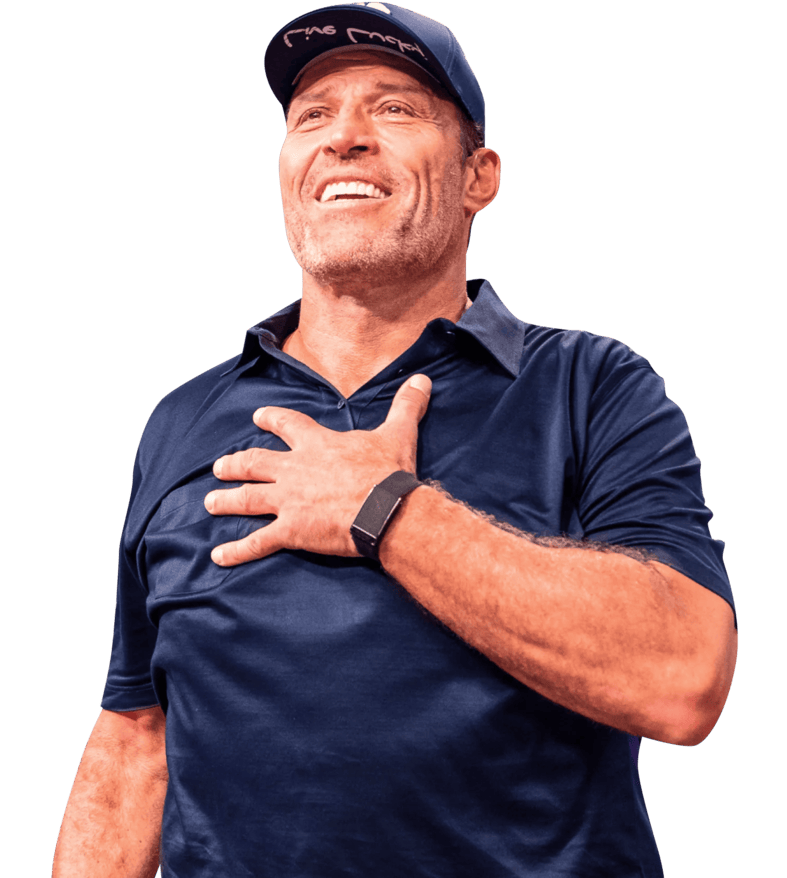
TONY ROBBINS
Motivational speaker, author of Money: Master the Game and Unshakeable, personal finance educator
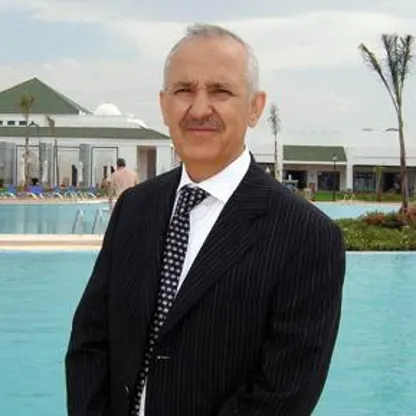
ANAS SEFRIOUI
Building Morocco’s largest real estate empire from scratch and constructing over 300,000 affordable homes acro…
NETFIGO SCORE BATTLE
ORIGINAL DATARisk Appetite
Contrarian Index
Track Record
Accessibility
Time Horizon
AT A GLANCE
INVESTING STYLE
Tony Robbins
Robbins is not a stock picker or a trader. He's a long-term, diversified, asset-allocation guy — heavily influenced by the people he interviewed for his books.
His big takeaway from interviewing billionaires: most of them agree on a few core principles. Diversify across asset classes.
Keep fees low. Don't try to time the market.
Own a mix of stocks, bonds, real estate, and alternatives. Rebalance periodically.
He's a huge advocate for index funds — a direct result of spending time with Jack Bogle. He tells people: you're not going to beat the market consistently, so stop trying and just own the whole thing for almost nothing.
He also pushes Ray Dalio's "All Weather Portfolio" concept — a portfolio designed to perform reasonably well in any economic environment (growth, recession, inflation, deflation). He devoted an entire chapter of "Money" to it.
His approach is less about picking winners and more about building a system that doesn't require you to be right about any single bet. In other words: the opposite of a hedge fund manager, and he's fine with that.
Anas Sefrioui
Sefrioui is a real estate operator first, investor second. He builds companies, not portfolios.
His growth approach has always been organic — acquire land, develop it, sell units, reinvest. No interest in financial markets or passive allocation.
The Africa expansion was the one big strategic bet beyond his home market. Bold in concept.
Mixed in execution.
FINANCIAL PHILOSOPHY
Tony Robbins
Robbins' philosophy is about behavior more than strategy. He believes the biggest barrier to wealth isn't lack of information — it's psychology.
Fear, procrastination, ego, and emotional decision-making destroy more wealth than bad stock picks ever could.
His core rules: automate your savings so you can't sabotage yourself. Keep investment fees as close to zero as possible — he calls high fees "a wealth destroyer hiding in plain sight." Diversify so no single event can wipe you out.
And most importantly: start now, because compound interest is the only force in finance that actually works for regular people.
He often quotes Einstein (possibly apocryphally): "Compound interest is the eighth wonder of the world. He who understands it, earns it.
He who doesn't, pays it."
Anas Sefrioui
Build where people actually need to live. Volume beats margin.
The goal is not the most impressive building but the most buildings. He has consistently argued that Africa’s housing deficit — running into the hundreds of millions of units — is the biggest real estate opportunity on earth.
RISK TOLERANCE
Tony Robbins
Robbins preaches moderation. Not conservative, not aggressive — just smart about risk management.
His philosophy is that most people take too much risk without realizing it because they're 100% in stocks and don't understand what happens in a crash.
He's big on asymmetric risk/reward — find investments where you can't lose much but could gain a lot. He learned this from Paul Tudor Jones and repeats it in almost every finance talk.
He also stresses having a "freedom fund" — money that's invested and compounding, separate from money you spend. The idea is that once passive income from your investments covers your expenses, you're free.
He's very specific about this: calculate the exact number, then work backward.
Anas Sefrioui
High on operational bets, low on financial market speculation. Building in emerging markets involves real currency exposure, regulatory uncertainty, and infrastructure gaps — Sefrioui leaned into all of them.
The 2020 legal troubles showed that close proximity to political capital can also become a liability overnight.
THE PLAYBOOK
Tony Robbins
Robbins lives big. He owns properties in Palm Beach, Sun Valley, Fiji (he owns an entire resort — Namale), and a compound in Manalapan, Florida, that he bought for $26 million.
He also has a place in Whistler, Canada.
He travels by private jet — a lot. His speaking schedule is insane, and he's on the road much of the year.
His energy output at events is legendary — he'll go for 12-14 hours straight, jumping, shouting, and somehow maintaining that intensity the entire time. He's 6'7" and moves like he's trying to outrun his own exhaustion.
He gives away a significant chunk of his wealth. His foundation has provided over 850 million meals through Feeding America.
He's pledged to provide a billion meals. He also funds clean water projects and youth programs.
He doesn't talk about personal luxury much in public — the brand is about helping others, not flaunting wealth. But the Fiji resort and the private jets make it clear he's not exactly living modestly.
Anas Sefrioui
Not known for conspicuous consumption. His wealth has been largely tied up in Addoha shares and land holdings rather than liquid assets.
He is a builder, not a spender.
BIGGEST WIN
Tony Robbins
The biggest win isn't a single investment — it's the Creative Planning partnership. By lending his name, audience, and promotional machine to a well-run RIA, he helped grow it from $36 billion to $245+ billion in assets under management.
His stake in the firm is reportedly worth hundreds of millions.
The other win is the books. "Money: Master the Game" alone sold over 3 million copies and established him as a credible voice in finance, not just self-help.
It opened a completely new revenue stream and audience segment that his competitors couldn't touch.
Anas Sefrioui
The 2006 Casablanca Stock Exchange IPO. Raising 6 billion Moroccan dirhams on the back of a simple affordable housing story, in a market that was not yet sophisticated, was a remarkable capital markets achievement.
It funded the next decade of growth.
BIGGEST MISTAKE
Tony Robbins
The biggest criticism of Robbins is that he profits from selling access to advice he got for free. The billionaires he interviewed gave their time voluntarily.
He then packaged their advice into books and seminars that cost money. Some people find that brilliant.
Others find it ethically questionable.
He's also taken heat for the fire-walking events — multiple attendees have been hospitalized with burns over the years. In 2016, over 30 people were treated for burns at a single event in Dallas.
He's called it a tiny percentage of participants, but the optics aren't great.
On the investing side, his All Weather Portfolio recommendation — while solid in theory — underperformed a simple 60/40 stock/bond portfolio during the 2010s bull market. The lesson: a portfolio built for all conditions performs okay in all conditions but spectacularly in none.
Anas Sefrioui
Expanding into Sub-Saharan Africa too quickly, without enough local partnerships and local capital structures, created operational strain. The 2020 legal case may also trace back to financial engineering under pressure from the Africa overextension.
Governance did not scale as fast as ambition.
CAREER HIGHLIGHTS
Tony Robbins
Tony Robbins grew up in Azusa, California, in a household that was broke and chaotic. His mother was an alcoholic, his father left, and he cycled through three different stepfathers by his teens.
He's said he started working at 11 to help feed the family, and the experience of going hungry at Thanksgiving — until a stranger showed up with groceries — became the origin story he references in every speech he gives.
He never went to college. Instead, at 17, he started promoting seminars for motivational speaker Jim Rohn.
That was his real education — he learned sales, public speaking, and the psychology of influence from one of the best in the business. By his early 20s, he was running his own seminars.
The breakthrough came with "Unlimited Power" in 1986, then "Awaken the Giant Within" in 1991. Both became massive bestsellers.
He became the go-to personal development guru — clients included Bill Clinton, Serena Williams, Oprah, and Paul Tudor Jones. He filled arenas.
He walked on fire. He became a brand.
The finance pivot came in 2014 with "Money: Master the Game." He interviewed 50 of the world's top investors — Ray Dalio, Carl Icahn, Jack Bogle, Warren Buffett — and distilled their advice into a book aimed at everyday people. The book sold millions.
He followed it up with "Unshakeable" in 2017 and "The Holy Grail of Investing" in 2024.
He also co-founded Creative Planning — a wealth management firm that now manages over $245 billion in assets. He didn't build the firm from scratch.
He partnered with existing RIA Peter Mallouk and used his platform to drive client acquisition. It worked spectacularly.
Anas Sefrioui
Anas Sefrioui was born in 1956 in Fez, Morocco. He started in real estate in the 1980s with small construction projects in Casablanca.
In 1988 he formally founded Groupe Addoha — later incorporated as Douja Promotion Group. For two decades he focused exclusively on affordable and mid-range housing, staying far from the luxury segment.
The strategy paid off. The 2006 Casablanca Stock Exchange IPO raised around 6 billion dirhams, was heavily oversubscribed, and pushed his personal wealth to an estimated billion, briefly making him one of the richest people in Africa.
Through the 2010s he expanded into Sub-Saharan Africa — Ivory Coast, Senegal, Ghana, and Cameroon — targeting the same underserved affordable housing market. Then came the turbulence.
A restructuring of Morocco’s affordable housing subsidy program hit margins hard. In 2020, Moroccan authorities charged him in connection with a mortgage fraud case linked to Crédit Immobilier.
He denied the charges. The Addoha stock price fell sharply.
The Africa expansion slowed. He remains one of the most significant real estate figures the continent has produced.
COMPANIES & ROLES
Tony Robbins
Creative Planning is the big one — a registered investment advisory firm managing $245+ billion. Robbins partnered with CEO Peter Mallouk in 2016, and the firm has grown massively, partly through acquisitions and partly through Robbins' massive audience funneling clients in.
Robbins Research International is his core company — the umbrella for his seminars, coaching programs, books, and events. He runs events like "Unleash the Power Within" (4-day seminar, thousands of attendees, includes the famous fire walk) and "Date with Destiny" (6-day immersive).
These events alone generate tens of millions annually.
He's also an investor in over 100 companies through his private holdings — including early stakes in companies like Bodybuilding.com and several tech startups. He doesn't publicize most of these investments.
Anas Sefrioui
Groupe Addoha (Douja Promotion Group) is the whole story. Listed on the Casablanca Stock Exchange under the ticker ADH, its market cap peaked near 25 billion dirhams.
The company builds residential properties across four segments: affordable, mid-range, upper mid-range, and a small luxury slice — though the bread and butter has always been the lower two. At its height, Addoha delivered tens of thousands of housing units per year across Morocco and several Sub-Saharan African markets.
Sefrioui also built out logistics and manufacturing businesses tied to construction supply chains.
EDUCATION
Tony Robbins
No formal education beyond high school. He's said this is actually one of his advantages — he doesn't approach finance like an academic, so he can translate complex concepts into language normal people understand.
His education was working for Jim Rohn starting at age 17, reading hundreds of books on psychology and business, and spending decades coaching CEOs and billionaires.
Anas Sefrioui
Educated in Morocco in real estate and construction. Not known for Western business school credentials.
He built his expertise in the field, not the classroom.
BOOKS & RESOURCES
Tony Robbins
As an Amazon Associate, Netfigo earns from qualifying purchases. Book links above may be affiliate links.
Anas Sefrioui
Stripped of the politics, it captures the land-banker mindset he has always embodied
Introduced millions to the idea that real estate builds wealth in ways employment never can
The Intelligent Entrepreneur by Bill Murphy Jr. speaks to the relentless, opportunity
Driven building Sefrioui exemplifies
Africa Rising by Vijay Mahajan laid out the case for Africa’s emerging consumer class years before it became consensus — and is the best intellectual framework for understanding his Africa strategy.
As an Amazon Associate, Netfigo earns from qualifying purchases. Book links above may be affiliate links.