NETFIGO SCORE BATTLE
ORIGINAL DATARisk Appetite
Contrarian Index
Track Record
Accessibility
Time Horizon
AT A GLANCE
INVESTING STYLE
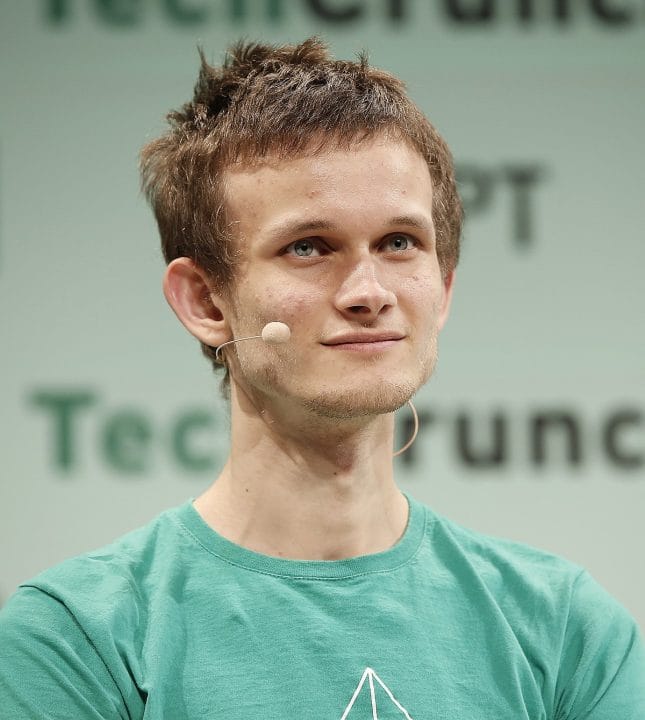
Vitalik Buterin
Buterin''s personal investment approach is deliberately simple and aligned with his own creation. He holds primarily ETH and has been transparent about not trading actively or making complex financial moves.
He donated a substantial portion of his meme coin holdings — including a SHIB donation to the India Covid-Crypto Relief Fund that was worth about $1 billion on paper, though the fund realised closer to $400 million once it actually sold — when developers sent him tokens to increase their perceived legitimacy. He has said he does not feel entitled to wealth beyond what he needs to live and fund work he cares about.
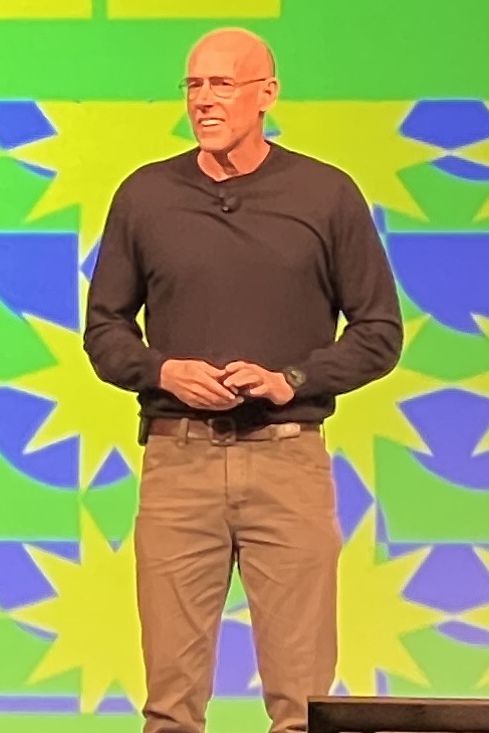
Scott Galloway
Galloway's personal investing style is relatively conservative given how loud he is. He keeps a heavy allocation in index funds and real estate.
He does make concentrated bets on individual stocks when he has conviction — he famously held Amazon for years. He angel invests occasionally but is not prolific.
His real wealth comes from business exits and media income, not portfolio management.
FINANCIAL PHILOSOPHY
Vitalik Buterin
Buterin believes that decentralized systems — where no single entity can control, censor, or inflate — create better outcomes for society than centralized ones. His philosophy extends beyond money to governance, identity, and social coordination.
He has written extensively about "credible neutrality" — the idea that a system is most valuable when no participant can manipulate it for their own benefit. He is genuinely trying to build infrastructure for a more fair and open world, not just technology for technology''s sake.
Scott Galloway
Diversify, own assets, and do not confuse being smart with being lucky. Galloway preaches that the most reliable path to wealth is boring — buy index funds, own property in growing cities, and let time do the work.
He is deeply skeptical of anyone who claims they can consistently beat the market.
RISK TOLERANCE
Vitalik Buterin
Buterin''s financial risk is concentrated entirely in the crypto space — primarily ETH. He has experienced 80%+ drawdowns in ETH price multiple times and continued working regardless.
He is not a risk manager in the portfolio sense. He is a technologist whose compensation happens to be denominated in a volatile asset.
His approach to personal finances appears to be minimal engagement rather than active management.
Scott Galloway
Moderate. Galloway has experienced the full spectrum — he had a company go public and then go bankrupt (Red Envelope), which taught him that financial ruin is always closer than you think.
Post-L2 sale, he became much more conservative. Heavy real estate holdings in New York and Florida.
He preaches diversification publicly and mostly follows his own advice, with occasional concentrated stock positions.
THE PLAYBOOK
Vitalik Buterin
Buterin lives extremely modestly for someone with a net worth exceeding $1 billion. He has stated his annual personal spending is approximately $100,000.
He rents rather than owns. He does not own a car.
He travels extensively but simply. He donated the majority of the meme coins he received to charity rather than selling them.
He has stated publicly that he does not want to become a billionaire philanthropist in the traditional sense — he wants to stay involved in technical work.
Scott Galloway
Galloway owns significant real estate in New York and Florida. He talks openly about his wealth and spending — nice apartments, good restaurants, private school for his kids.
He is not frugal and does not pretend to be. But he is very intentional about where money goes.
He has said his biggest financial luxury is "buying back his time" — paying for convenience so he can focus on what matters.
BIGGEST WIN
Vitalik Buterin
Co-founding Ethereum is the win, full stop. The network processes trillions of dollars in transaction value annually.
It enabled DeFi — decentralized finance, a parallel financial system built on smart contracts. It enabled NFTs — however one feels about them.
It enabled DAOs. It is the infrastructure layer on which most of the innovative blockchain applications since 2015 have been built.
Its market cap has exceeded $500 billion. He created this at 20.
That is the win.
Scott Galloway
Selling L2 to Gartner for an estimated $134 million in 2017. He built L2 into the go-to benchmarking firm for digital competence of luxury and consumer brands.
The exit, combined with his media career taking off simultaneously, catapulted him from "NYU professor" to "famous rich guy who yells about tech on the internet."
BIGGEST MISTAKE
Vitalik Buterin
The DAO hack of 2016 is the most consequential crisis Buterin has navigated. The DAO — a decentralized autonomous organization built on Ethereum — was hacked for $60 million in ETH shortly after launch.
Buterin helped lead the decision to hard fork the Ethereum blockchain to reverse the hack, which was philosophically controversial: the entire point of "code is law" in blockchain is that transactions are irreversible. The fork split the community, creating Ethereum Classic as a separate chain.
It was the right pragmatic decision and the wrong philosophical one — a tension Buterin has never fully resolved.
Scott Galloway
Red Envelope. Full stop.
Galloway has been brutally honest about this — he took a gift e-commerce company public, it was valued at hundreds of millions, and then it went bankrupt. He has called it the most painful experience of his career and has said it took years to emotionally recover.
He lost a significant amount of personal wealth in the collapse.
CAREER HIGHLIGHTS
Vitalik Buterin
Buterin was born in Kolomna, Russia, in 1994 and moved to Canada with his family at age six. His father was a computer scientist, and Buterin showed early mathematical gifts.
He discovered Bitcoin at 17 through his father and became obsessed — writing for Bitcoin Magazine starting in 2011 as a teenager, developing a reputation as one of the most thoughtful analysts of the nascent blockchain space.
He proposed Ethereum in a 2013 whitepaper, arguing that Bitcoin''s scripting language was too limited and that a more general-purpose blockchain — one that could run arbitrary programs called smart contracts — would unlock far more value. He was 19.
Bitcoin''s developers declined to implement his ideas, so he built Ethereum separately. He received a Thiel Fellowship in 2014 and dropped out of University of Waterloo to launch the project.
Ethereum launched in 2015. It became the second-largest cryptocurrency by market cap and the foundation of DeFi, NFTs, and most blockchain applications built since.
Scott Galloway
Scott Galloway is a serial entrepreneur and NYU Stern School of Business professor who became famous for his brutally honest takes on Big Tech. He founded nine companies over his career, including L2 (a business intelligence firm sold to Gartner in 2017), Red Envelope (an e-commerce company that went public then bankrupt), and Prophet (a brand strategy firm).
His 2017 book The Four, about Amazon, Apple, Facebook, and Google, became a bestseller. His YouTube channel and Prof G podcast reach millions.
He called Amazon buying Whole Foods before it happened. He also co-hosts Pivot with Kara Swisher, one of the most popular tech podcasts in the world.
He teaches brand strategy at NYU and is known for his profanity-laced, data-heavy lectures that go viral every semester.
COMPANIES & ROLES
Vitalik Buterin
Ethereum Foundation is the non-profit organization that funds core Ethereum development. Buterin is the most prominent figure associated with it but is not its CEO — he functions more as its chief architect and public intellectual.
He has no formal ownership of Ethereum the network. It is decentralized.
He holds Ethereum tokens (ETH) that he has accumulated since the genesis block.
He has also written extensively for the Ethereum blog and his personal blog (vitalik.ca), which covers cryptography, mechanism design, social coordination, and political philosophy. His blog posts are read by thousands of researchers and developers.
He serves on the boards of several organizations in the blockchain space.
Scott Galloway
L2 Inc (founder, sold to Gartner), Red Envelope (founder, IPO then bankruptcy), Prophet (co-founder), Section4 (founder, online education), Prof G Media (founder)
EDUCATION
Vitalik Buterin
University of Waterloo, Computer Science — dropped out in 2014 after receiving a Thiel Fellowship. He has said the fellowship gave him the financial runway to work on Ethereum full time at a moment when the project would otherwise have been impossible to pursue.
Scott Galloway
UCLA (BA), UC Berkeley Haas School of Business (MBA).
BOOKS & RESOURCES
Vitalik Buterin
Buterins own writing is the essential primary source
His blog at vitalik.ca covers cryptography, game theory, mechanism design, and political philosophy with a depth and clarity that most academic papers do not match. His Ethereum whitepaper (2013) is the founding document of the smart contract era
Provides the investment framework for understanding Ethereum as an asset rather than just a technology
As an Amazon Associate, Netfigo earns from qualifying purchases. Book links above may be affiliate links.
Scott Galloway
The Algebra of Happiness by Scott Galloway, Prof G Pod (podcast), Pivot with Kara Swisher (podcast), No Mercy / No Malice (his weekly blog)
As an Amazon Associate, Netfigo earns from qualifying purchases. Book links above may be affiliate links.