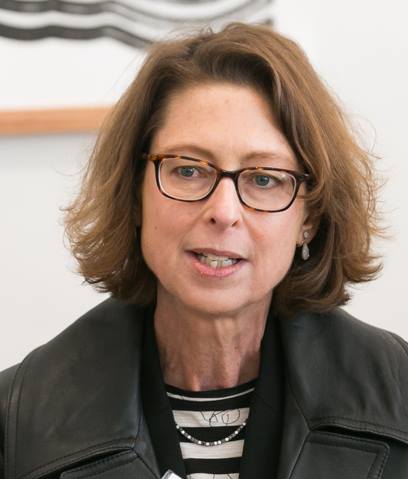
ABIGAIL JOHNSON
Running the world's second-largest mutual fund company — and proving that inheriting a throne doesn't mean you can't rebuild it from scratch.
Abigail Johnson inherited Fidelity Investments from her father — and then spent the next two decades quietly dismantling every assumption that she was just a caretaker. She cut fees before anyone else dared. She pushed Fidelity into crypto when Bitcoin was still a punchline to serious finance people. She launched zero-expense-ratio index funds in 2018, giving Vanguard its first real taste of its own medicine. She manages $12 trillion in assets and gives almost no interviews. The most powerful woman in finance you've probably never heard speak.
Net Worth
$21 billion
Nationality
American
Time Horizon
Generational
Risk Appetite
6 / 10
Fund
Fidelity Management & Research Company LLC
Net Worth Context
- · That's the GDP of a small country — around the size of Greenland.
- · Enough to buy an NBA team and keep $17B for snacks.
CAREER & BACKGROUND
Abigail Johnson didn't walk into Fidelity through the front door — she started in the back, as a portfolio analyst in 1988. Her grandfather, Edward Johnson II, founded the firm.
Her father, Edward Johnson III, built it into a giant. She was the third Johnson in line, and Wall Street spent years wondering whether she had what it took or was just holding a seat warm.
She proved them wrong methodically. She became president of Fidelity's mutual fund division in 2001, then president of the entire company in 2012, then CEO in 2014, and finally chairman in 2016 — the same year her father stepped back.
She now controls roughly 49% of Fidelity's private shares, which at a company worth around $45 billion, makes the math fairly straightforward.
But the interesting part isn't that she climbed the org chart. It's what she did once she got there.
She oversaw a brutal internal reckoning in the early 2010s when star fund managers like Peter Lynch's successors were consistently losing to passive index funds. Rather than protect the old model, she pivoted.
She launched Fidelity ZERO funds in 2018 — index funds with literally zero expense ratios, no minimums. It was the first salvo in the fee war that Vanguard had been winning for decades.
She also made an early and sustained bet on cryptocurrency. Fidelity launched its digital assets division in 2018, well before most of her peers considered it legitimate.
She personally held Bitcoin. She let institutional clients custody crypto through Fidelity.
While other CEOs were calling Bitcoin a fraud, she was quietly building the infrastructure to hold it for them.
Fidelity now manages approximately $12 trillion in assets. It employs around 75,000 people across 11 countries.
It remains privately held — one of the last major financial institutions that doesn't have to answer to quarterly earnings calls. That was a deliberate choice.
COMPANIES & ROLES
Fidelity Investments is the center of everything. It's one of the largest financial services companies in the world — mutual funds, brokerage accounts, retirement plans, wealth management, institutional services, and now crypto custody.
If you have a 401(k) through your employer, there's a real chance it's administered by Fidelity. That's not an exaggeration — Fidelity administers retirement plans for more than 43,000 businesses.
Fidelity Digital Assets is the piece that gets less attention but matters enormously. Launched in 2018, it lets institutional investors — hedge funds, family offices, corporate treasuries — buy, hold, and trade Bitcoin and Ethereum through Fidelity's infrastructure.
This wasn't a press release play. It was a multi-year infrastructure build that started when most financial institutions were still pretending crypto didn't exist.
Fidelity also runs Fidelity Charitable, one of the largest donor-advised funds in the country, and has significant stakes in several private companies through its venture arms. The company is structured to keep everything in-house and private — Abigail has shown zero interest in taking Fidelity public, despite its scale.
INVESTING STYLE & PHILOSOPHY
Abigail Johnson is not a stock picker in the way that, say, Peter Lynch was. She's an operator and allocator — someone who thinks about where the entire system is going, and positions Fidelity to be on the right side of it before everyone else catches up.
Her biggest philosophical move has been accepting that active fund management is largely a losing game for retail investors. That sounds like a strange thing for the CEO of a fund company to believe, but she acted on it.
The ZERO fund launch in 2018 was essentially an admission: in the long run, cheap passive exposure beats expensive stock picking for most people. So instead of fighting that trend, she joined it aggressively and used cost as the weapon.
At the same time, she's not a passive-only convert. Fidelity still runs enormous active strategies — her view seems to be that the right answer depends on the asset class and the time horizon.
In emerging markets or private assets, good active management can still add value. In US large-cap equities?
Probably not worth the fee.
On crypto, her instinct was contrarian and early. She started mining Bitcoin herself in the early 2010s — on her personal computer, which is honestly remarkable given her net worth.
Her view is that Bitcoin is a legitimate asset class with properties that no traditional financial instrument has, and that institutional access to it was a matter of when, not if. She built Fidelity Digital Assets to be ready when that moment arrived.
THE PLAYBOOK
Risk Approach
Johnson's relationship with risk is institutional rather than personal. She's not someone who bets her own money on individual stocks and talks about it — she manages systemic risk at a scale where a single bad decision can affect millions of retirement savers.
That said, her crypto pivot showed genuine personal risk tolerance. When she launched Fidelity Digital Assets in 2018, Bitcoin was coming off an 80% crash and the institutional finance world was loudly skeptical.
She proceeded anyway. She later said she started mining Bitcoin on her personal computer just to understand it from the inside.
That's not something you do if you're afraid of looking foolish.
She also carried enormous reputational risk when she cut fees to zero. The ZERO funds cannibalized Fidelity's own existing index products.
Internally, that was a controversial call. The logic was that it was better to cannibalize yourself than let Vanguard or Schwab do it for you — a classic Clayton Christensen disrupt-yourself move.
It worked. Fidelity saw billions in inflows almost immediately after the launch.
Money Habits
Johnson is notoriously private about her personal life, but the public record does offer some data points. She is worth approximately $21 billion — she got there by holding a ~49% equity stake in a private company that keeps growing, not by making flashy personal investments.
She is not known for conspicuous spending. No yacht stories.
No celebrity philanthropy galas. She lives in Boston, close to Fidelity's headquarters.
Her lifestyle, by the standards of people worth $21 billion, appears deliberately understated.
The clearest window into her actual habits is the technical hobby: in the early 2010s, she was running Bitcoin mining software on her personal computer at home. This is not a billionaire thing to do.
It's a curious-person-who-wants-to-understand-the-technology thing to do. For context, this was around the time when Bitcoin was trading for a few hundred dollars and most people in serious finance were refusing to say the word out loud.
She's also an avid sailor — a hobby that rewards patience, technical knowledge, and comfort with uncertainty in uncontrolled conditions. Not a metaphor.
Just a fact. But also probably not an accident.
BIGGEST WIN
The Fidelity ZERO fund launch in August 2018 is the cleanest example of a big swing landing exactly right. Fidelity introduced four index funds with zero expense ratios and no minimum investment — the first such funds in the industry.
Vanguard, which had spent decades owning the low-cost investing narrative, suddenly had competition that was literally cheaper than them.
The immediate result: Fidelity attracted over $1 billion in new assets within the first week. Net new accounts spiked.
The move forced Schwab, Vanguard, and others to cut their own fees dramatically, which was actually good for the industry even if it hurt everyone's short-term margins.
The longer-term result: Fidelity positioned itself as the value option in a category where it had previously been seen as the expensive active-management shop. It kept younger investors from defaulting to Vanguard purely on cost grounds.
The ZERO funds became a customer acquisition engine.
For Johnson personally, it validated her willingness to disrupt her own business model before a competitor forced her to. That's a rare thing for a leader to actually do.
BIGGEST MISTAKE
The clearest stumble on Johnson's watch was Fidelity's handling of sexual harassment complaints in its equity research division, which became public in a damaging 2017 Wall Street Journal investigation. Multiple portfolio managers were accused of serious misconduct.
The reporting suggested Fidelity had known about some complaints and moved slowly. Several high-profile managers departed.
The reputational damage was real.
Fidelity settled some related disputes without admitting wrongdoing — the financial cost was not publicly disclosed, but the cultural cost was significant. Johnson was personally criticized for not acting faster once the complaints surfaced.
For a CEO who had otherwise been precise and deliberate in her decision-making, it was an uncharacteristic failure of institutional response speed.
She made public statements about strengthening HR processes and culture reviews. Whether those changes were sufficient is still debated.
The episode was a reminder that even the best-run private institutions can have serious blind spots that only become visible when external pressure arrives.
FINANCIAL PHILOSOPHY
Johnson doesn't publish philosophical treatises or go on podcasts to explain her worldview. You have to read it in the decisions.
But a few principles come through clearly.
First: stay private. Fidelity being private is not an accident — it's a strategic philosophy.
Public companies answer to quarterly earnings. That pressure makes you optimize for the next 90 days, not the next 10 years.
Keeping Fidelity private gives Johnson the latitude to make 10-year bets on things like crypto infrastructure or zero-fee funds that would absolutely tank a stock price in the short term.
Second: cannibalize yourself before someone else does. The ZERO fund launch hurt Fidelity's existing revenue in the short term.
She did it anyway because the alternative — defending high-fee products until they collapsed — was worse. This is a principle that most leaders agree with in theory and almost never act on in practice.
Third: understand what you're investing in from the inside. The fact that she personally mined Bitcoin before launching a Bitcoin custody business isn't a fun anecdote.
It's a methodology. She apparently spent real time learning how the technology worked, not just reading white papers.
Fourth: don't manage to consensus. Fidelity's crypto push happened when the consensus in institutional finance was loudly negative.
Her career is a long series of bets against what was comfortable or fashionable.
FAMILY & PERSONAL LIFE
The Johnson family is one of the most interesting dynasties in American finance. Abigail's grandfather Edward Johnson II founded Fidelity in 1946.
Her father Edward Johnson III turned it into one of the largest financial institutions in the world. Abigail is the third generation — and unlike most third-generation inheritors of family businesses, she's made the company larger and arguably more relevant than she found it.
She's been married to Christopher McKown, and the couple have kept their personal life almost completely out of the press. She has two daughters.
Beyond that, she's given very little to work with — no celebrity profile interviews, no social media presence worth noting, no appearances on reality television.
What's publicly known is that her children are not being groomed as obvious successors in the way that Abigail herself was. Whether a fourth generation of Johnsons runs Fidelity is an open question — and probably not one Abigail is answering anytime soon.
EDUCATION
Johnson attended Hobart and William Smith Colleges in Geneva, New York, where she studied art history. Not finance.
Not economics. Art history.
She then went to Harvard Business School and earned her MBA in 1988, after which she joined Fidelity as an analyst — starting from the bottom of the company her family owned.
The art history degree gets mentioned as a fun fact, but there's something real there: it trains you to look at things carefully, understand context, and make judgments without perfect quantitative data. Whether that actually matters is debatable.
What isn't debatable is that she chose to start her Fidelity career as a rank-and-file analyst rather than walking in as the boss's daughter with a corner office. That decision shaped how her colleagues perceived her.
BOOKS & RESOURCES
Johnson has not written a book, and she rarely recommends reading lists publicly
But the intellectual influences on her decision-making are visible in the choices she's made
's 'The Innovator's Dilemma' is essentially required reading to understand the logic behind the ZERO fund launch. Christensen's core argument — that successful companies are often destroyed by innovations they invented but didn't pursue aggressively enough — maps almost perfectly to how Johnson thought about fee competition. Vanguard didn't disrupt Fidelity from the outside; Johnson decided to preempt it from the inside
Satoshi Nakamotos Bitcoin whitepaper is not a typical recommendation, but Johnson has spoken about reading it closely in the early days of Fidelity Digital Assets
The fact that she actually read the primary source material before making a billion-dollar infrastructure bet is telling
Worth reading — particularly the chapter on level-five leadership and the flywheel concept. She exhibits both: extreme personal humility combined with fierce professional will, and a long-term compounding approach to competitive advantage
As an Amazon Associate, Netfigo earns from qualifying purchases. Book links above may be affiliate links.
QUOTES (6)
Not everyone on Wall Street is going to make it into the digital asset space, but I think Fidelity will.
We want to make financial expertise broadly accessible and effective in helping people live the lives they want.
Bitcoin reminds me of gold. The supply is limited, and the demand is what drives the price.
The key to making great decisions is understanding what you know and what you don't know.
We have to constantly be innovating or we'll become irrelevant. And irrelevance is the one thing I truly fear.
I like to understand things from the ground up. That's why I started mining Bitcoin myself — you learn things you can't learn any other way.
NETFIGO SCORE
Proprietary 5-dimension investor rating
Risk Appetite
Contrarian Index
Track Record
Accessibility
Time Horizon
Related Profiles
Investors
Cathie Wood
Both are among the most prominent women running major investment operations in the US, though their philosophies diverge sharply — Johnson prefers institutional infrastructure over concentrated thematic bets.
Jack Bogle
Abigail Johnson's zero-fee index fund launch was a direct competitive response to the low-cost investing movement Jack Bogle built at Vanguard — she effectively out-Bogle'd Bogle on price.
Larry Fink
Johnson and Fink run the two largest asset management platforms in the world — Fidelity and BlackRock respectively — and their competing visions for the future of passive investing shape the entire industry.
Head-to-Head
Compare Abigail Johnson vs another investor.