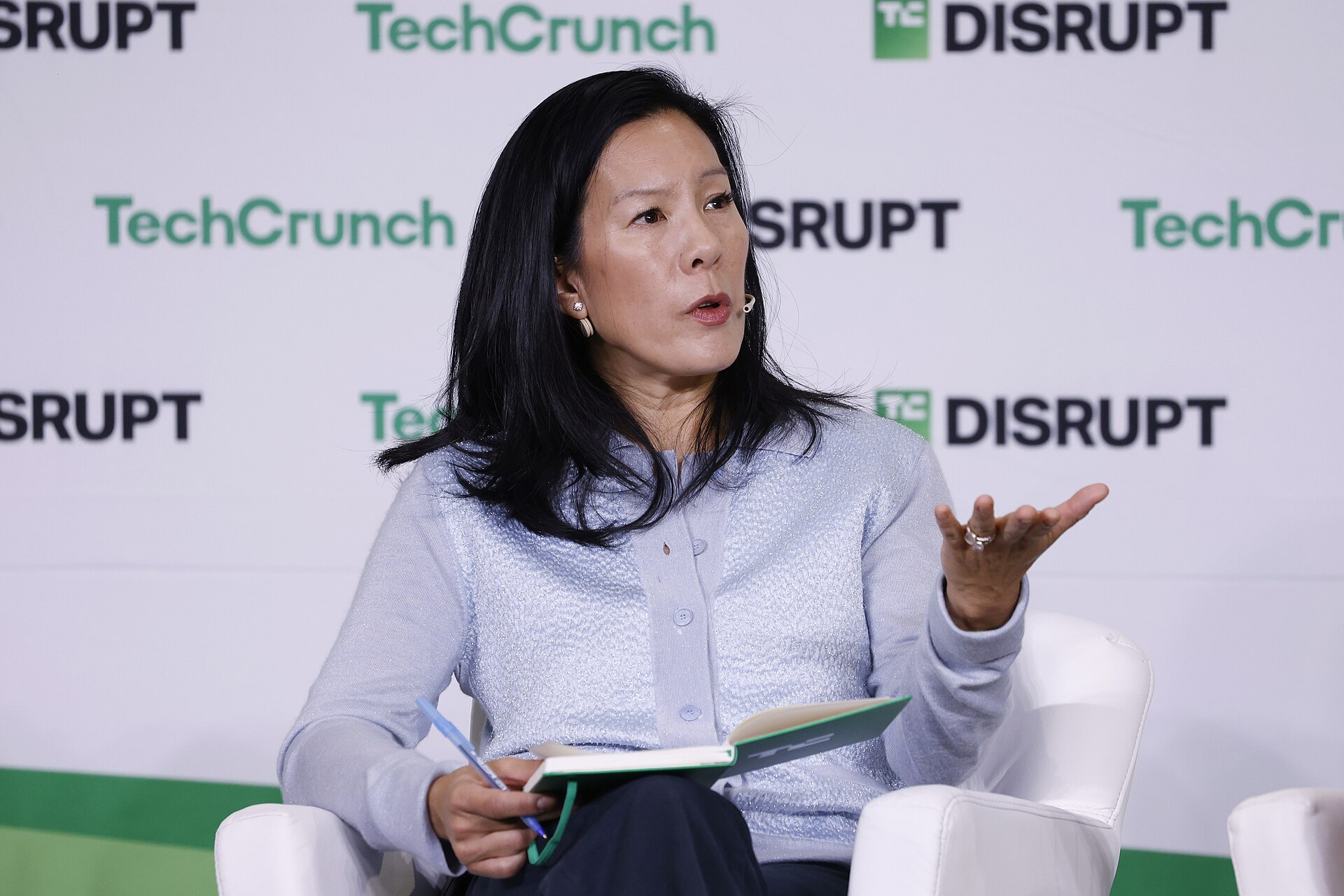
AILEEN LEE
The venture capitalist who coined the term 'unicorn' and built Cowboy Ventures to bet early on founders everyone else underestimated.
In 2013, Aileen Lee wrote a blog post calling billion-dollar startups 'unicorns' because they were so rare — and accidentally gave the entire tech industry its most overused word. She spent a decade at Kleiner Perkins backing companies like Facebook and Twitter before launching her own fund, Cowboy Ventures, in 2012. Her edge is pattern recognition built over 20 years of early-stage bets, and a particular talent for finding founders who don't look like the standard Silicon Valley archetype. She's one of the most respected voices in VC — and one of the few who invented the vocabulary everyone else now uses.
Net Worth
$200 million
Nationality
American
Time Horizon
Long-Term
Risk Appetite
7 / 10
Net Worth Context
- · 200x the average American's lifetime earnings, stacked and waiting.
CAREER & BACKGROUND
Aileen Lee grew up in Massachusetts and was drawn to technology and business from early on. She studied applied math and economics at MIT, where she graduated in 1992, and later earned her MBA from Harvard Business School in 1999.
The combination gave her something relatively rare in venture capital: genuine analytical rigor underneath the relationship-driven instincts.
She started her career at Gap, doing merchandising and strategy work, which might sound like a detour but actually shaped how she thinks about consumer behavior. Understanding why people buy things, how brands build loyalty, and what makes a product sticky — that kind of grounding in real consumer psychology turned out to be extremely useful when evaluating early-stage startups.
In 1999, right at the peak of the dot-com bubble, she joined Kleiner Perkins Caufield & Byers — one of the most storied venture firms in Silicon Valley. She joined as one of very few women at the partner level in an industry that was (and largely still is) dominated by men.
Over the next 13 years, she backed some of the most significant companies of the internet era, including early investments in Facebook, Twitter, and RMG Networks. She developed a reputation for being the person at the table who combined financial discipline with genuine empathy for founders — someone who could run the numbers and also read the room.
In 2012, she left Kleiner Perkins to start Cowboy Ventures. The timing was deliberate.
The seed-stage ecosystem had matured enough that an independent early-stage firm with a focused thesis could compete with the established giants. Cowboy would write smaller checks, move faster, and go earlier — targeting the 'seed stage' before Series A when valuations were lower and the upside was enormous.
Then in 2013, she published a post on TechCrunch titled 'Welcome to the Unicorn Club.' She had done her own analysis of U.S. tech startups founded since 2003 that had reached a $1 billion valuation.
There were 39 of them. She called them unicorns — mythical because they were so rare.
The term stuck immediately and spread globally. It became the defining metric of startup ambition for the next decade.
That one piece of writing probably did more for her public profile than any investment she'd ever made.
Cowboy Ventures has since raised multiple funds and backed companies including Rent the Runway, Daily Harvest, Branch, and Hims & Hers. Lee has been consistently recognized on Forbes Midas List, the ranking of top venture investors, and is one of the most prominent investors in Silicon Valley who actively backs diverse founders — which she talks about not just as a moral position but as a returns argument.
COMPANIES & ROLES
Cowboy Ventures is Lee's firm, founded in 2012. It focuses on seed-stage investments in software and technology companies, typically writing the first institutional check.
The fund is small by Sand Hill Road standards — deliberately so. Smaller fund, fewer bets, more concentrated attention per company.
That model only works if your hit rate is high and your access to the best founders is real. Cowboy has raised multiple funds, with Fund IV closing at around $260 million, bringing total capital under management to over $650 million.
Before Cowboy, her most notable work was at Kleiner Perkins, where she was involved in investments including Facebook's Series A (one of the most valuable venture bets in history), Twitter, and a range of other consumer and enterprise tech companies across the early 2000s. The Kleiner Perkins years were formative — she learned the mechanics of institutional VC while also watching, up close, how the firm navigated the dot-com crash and rebuilt.
Portfolio highlights from Cowboy include Rent the Runway (the fashion rental platform that went public on NASDAQ in 2021), Daily Harvest (subscription meal kits that reached unicorn status itself), Branch (mobile linking and measurement platform, a staple of app developers), and Hims & Hers (the telehealth company that listed via SPAC in 2021). She has also backed Stytch, MainStreet, and Archive, among others.
The through-line in most Cowboy investments is a founder with unusual insight into a market that incumbent players have ignored or written off.
INVESTING STYLE & PHILOSOPHY
Lee invests at the earliest possible stage — usually before a company has product-market fit, sometimes before the product exists in final form. This is seed investing at its most honest: you're not buying a business, you're backing a person and a thesis.
Her framework, which she's talked about openly, is built around a few key questions. First: is this founder the person who will figure this out?
Not 'are they smart' — everyone in the room is smart. But do they have genuine domain insight?
Have they lived the problem? Are they someone who will attract and retain the talent needed to build something big?
Second: is the market real and large enough? Lee is not interested in clever solutions to small problems.
She wants markets that are either already large or that the startup itself will make large through behavior change. Daily Harvest didn't just enter the meal delivery market — it helped create the category of subscription food for people who cook less but care about ingredients.
Third: is there something non-obvious here? This is her contrarian instinct at work.
If everyone already sees the opportunity, valuations are already expensive and the upside is already priced in. Lee looks for the thing that hasn't been written up in TechCrunch yet.
Often that means backing founders who don't fit the conventional VC template — women, people of color, founders outside San Francisco. Not as charity.
As market inefficiency. The market underprices them, which means better deals.
She has also been honest about the limits of pattern-matching. If your mental model of 'successful founder' is a 26-year-old Stanford CS dropout, you will miss a lot of good deals.
Broadening the filter is both more equitable and more profitable. She's made that argument with data, not just principle.
THE PLAYBOOK
Risk Approach
At seed stage, every investment is a high-risk bet. Lee doesn't pretend otherwise.
She has said publicly that the majority of seed investments fail — that's not a bug, it's the structure of the asset class. The question isn't 'how do I avoid failure' but 'am I making enough good bets, sized correctly, that the winners cover everything else and then some.'
Her risk management shows up in two ways. First, portfolio construction: Cowboy runs a concentrated portfolio relative to some seed funds, but not so concentrated that one miss is fatal.
She tends to write checks that get her meaningful ownership without over-concentrating in any single bet. Second, she spends significant time on founder due diligence specifically around resilience — she wants to know how a founder responds when things go wrong, not just how they pitch when things are going well.
The people who crumble at the first setback are the ones who lose her money. The people who adapt, pivot, and grind are the ones who don't.
She has also been open about the emotional dimension of seed investing. You're backing people at their most vulnerable — before proof, before revenue, sometimes before a team.
If you can't sit with that uncertainty, you shouldn't be doing early-stage investing. She can sit with it.
That's part of what makes her good at the job.
Money Habits
Lee is not someone who shows up in the gossip columns. There are no stories about private jets or Hamptons mansions with her name attached.
She lives and works in the Bay Area, keeps a relatively low public profile compared to many partners at her level, and her wealth isn't the kind you can see from a Google image search.
She has been vocal about focusing on compounding over time — in investing and in career-building. She did not rush to start her own fund.
She spent 13 years at Kleiner Perkins building relationships, deal flow, and judgment before going independent. That kind of patience with her own career reflects how she thinks about wealth: it's built slowly, through repeated right decisions, not one big swing.
She's also generous with time in ways that matter more than money. She's spoken extensively at conferences and in interviews about the structural barriers facing women and underrepresented founders in tech.
She co-founded All Raise, a nonprofit organization dedicated to accelerating the success of female founders and funders in venture. That's a real commitment of time and social capital, not just a tweet.
BIGGEST WIN
The Facebook Series A is the headline. Kleiner Perkins invested in Facebook's Series A round in 2005, when the platform was still largely a college network.
The investment valued Facebook at around $100 million. By the time Facebook went public in 2012, that stake was worth billions.
It is one of the single most profitable venture bets in history, and Lee was part of the team that made it.
Within Cowboy's portfolio, Rent the Runway is the cleanest articulation of what she looks for: a contrarian bet on a business model that most investors thought was too operationally complex, run by founders (Jennifer Hyman and Jenny Fleiss) who had a distinctive insight about how women actually relate to clothing and occasion wear. Cowboy backed the company at seed.
It went public on NASDAQ in October 2021 with a market cap over $1.7 billion at listing. That is the kind of outcome that returns a fund.
BIGGEST MISTAKE
Lee has been thoughtful rather than dramatic about mistakes, which is probably more honest than the typical VC 'I passed on Airbnb' story. Her stated regret category is not pulling hard enough on the thread when a founder showed early signals of real product insight but the business model wasn't obvious yet.
The temptation at seed stage is to wait for more clarity — and the price of that patience is missing the round at a price that makes sense.
She's also spoken candidly about the systemic mistake she and her peers made for years: accepting that the demographic homogeneity of tech entrepreneurship was natural rather than constructed. That was a costly error in returns terms, not just in fairness terms.
She has tried to correct for it with how Cowboy invests and with All Raise's work, but she's acknowledged the industry lost a generation of good investments by running the wrong filters.
FINANCIAL PHILOSOPHY
Lee's core belief is that the best returns in venture come from getting in early — earlier than is comfortable, earlier than the data supports, before the consensus forms. If you're waiting for proof, you're waiting for competition to drive up the price.
She's also a strong believer that the human factor dominates everything else. Great founders in okay markets beat average founders in great markets, most of the time.
She has inverted the conventional startup advice: it's not 'find the big market first' — it's 'find the extraordinary person and trust them to find the big market or make one.'
On diversity, she makes the economic argument as forcefully as the moral one. Capital in Silicon Valley has historically flowed toward a narrow demographic archetype.
That creates pricing inefficiencies. Overlooked founders get underfunded, which means their rounds are cheaper, which means your ownership percentage is higher, which means the return multiple is better if they succeed.
This isn't complicated. It's just that most VCs haven't done the math or examined their own filters.
She also thinks about sustainability — both in terms of companies she backs (Daily Harvest and Once Upon a Farm fit here) and in how funds are run. Cowboy is deliberately not trying to be the biggest fund.
Bigger funds require bigger outcomes to return capital, which pushes you toward safer later-stage bets. She would rather stay small enough to still care about a $50 million outcome.
FAMILY & PERSONAL LIFE
Lee is married and has children. She has been relatively private about her family life, which is not unusual for someone who has spent her career in an industry that tends to reduce women to their personal lives when it should be talking about their returns.
What's publicly known is that she's been a working parent throughout her career in VC, and she's spoken about the challenge of building a fund while raising kids — not as a complaint, but as context for why support structures matter and why she cares about building more equitable workplaces. She grew up in Massachusetts in a family with Chinese heritage.
EDUCATION
MIT, class of 1992, studying applied math and economics. The quantitative grounding matters — she can read a cap table, model a market, and stress-test an assumption in a pitch.
Then Harvard Business School for her MBA, graduating in 1999. She entered VC almost immediately after.
The Harvard MBA cohort of that era went almost entirely into consulting and banking; Lee went to Kleiner Perkins, which was already an unusual choice.
BOOKS & RESOURCES
Lee has not written a book, but her most-read piece of writing is the 2013 TechCrunch article Welcome to the Unicorn Club, which is worth reading in full
It's a tightly argued data analysis, not a listicle — she went through every U.S. tech startup founded since 2003, identified which ones hit $1 billion in valuation, and drew conclusions about what they had in common. The findings were specific and the framing was memorable. That's what made it stick
The one she'd give to anyone who thinks running a startup is glamorous — it's an honest account of what actually happens when things get hard, which they always do
As an Amazon Associate, Netfigo earns from qualifying purchases. Book links above may be affiliate links.
QUOTES (6)
The best founders are relentlessly resourceful. They find a way when there is no obvious way.
We have a massive amount of untapped talent in this country because we have not been backing the right people.
Being early is often indistinguishable from being wrong — until it isn't.
The unicorn term was meant to convey rarity. I did not expect it to become a goal.
If you only back people who look like previous winners, you are just betting on the same horse over and over.
At seed stage, you are not investing in a business. You are investing in a person's ability to figure out a business.
NETFIGO SCORE
Proprietary 5-dimension investor rating
Risk Appetite
Contrarian Index
Track Record
Accessibility
Time Horizon
Related Profiles
Investors
Ann Miura-Ko
Both are prominent female venture capitalists focused on seed-stage investing who have shaped the early-stage funding landscape for underrepresented founders.
Brad Feld
Feld co-authored Venture Deals, a book Lee recommends to every founder, and both operate as seed-stage investors who prioritize founder relationships over deal mechanics.
John Doerr
Lee worked alongside John Doerr at Kleiner Perkins for 13 years, where Doerr was the firm's most prominent partner and shaped her foundational understanding of venture capital.
Head-to-Head
Compare Aileen Lee vs another investor.