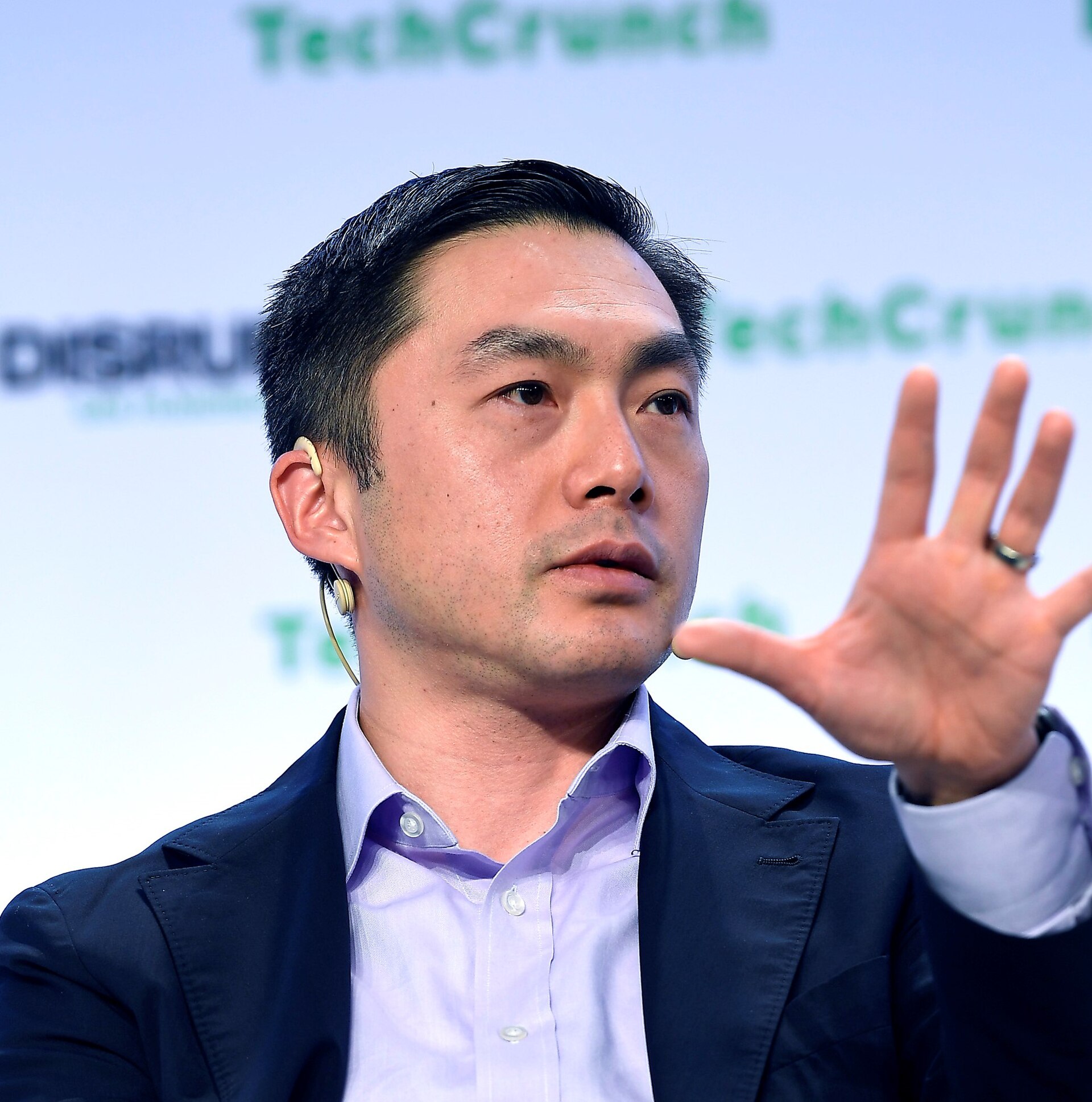
ALFRED LIN
The Sequoia partner who backed Airbnb, DoorDash, and Instacart — and before that, helped turn Zappos into a $1.2 billion Amazon acquisition.
Alfred Lin is one of the quietest heavy hitters in Silicon Valley. He ran finance and operations at Zappos when it was selling shoes on the internet and nobody thought that was a real business — and helped engineer the $1.2 billion Amazon acquisition in 2009. Then he joined Sequoia Capital and spent the next decade backing some of the most consequential companies of his generation: Airbnb, DoorDash, Instacart, Houzz. He's not the loudest voice in the room. He's usually the one who figured out whether the numbers actually work.
Net Worth
$500 million
Nationality
American
Time Horizon
Long-Term
Risk Appetite
7 / 10
Net Worth Context
- · 500x the average American's lifetime earnings, stacked and waiting.
CAREER & BACKGROUND
Alfred Lin grew up in a Taiwanese-American household where education and hard work were non-negotiable. He was sharp enough to get into Stanford for undergrad, studying mathematics and statistics — a combination that would define his approach to business for the rest of his career.
He wasn't just a math guy though. He understood people, culture, and how organizations actually function.
After Stanford, he went to Harvard Business School but left before finishing to join the internet boom. He ended up at LinkExchange, an early online advertising network co-founded by Tony Hsieh.
LinkExchange sold to Microsoft for $265 million in 1998. Lin was there, watching how a scrappy internet company could be built and sold fast.
It was a formative experience.
Then came Venture Frogs, an investment firm Lin and Hsieh started together after the LinkExchange exit. They backed a handful of early-stage companies, one of which was a small online shoe retailer called Zappos.
That bet changed everything.
Lin joined Zappos full-time and eventually became its COO and CFO. He was the operational backbone of a company that was doing something everyone said was crazy — selling shoes online when customers couldn't try them on.
The trick was insane customer service: free returns, free shipping both ways, 365-day return policy. Lin helped build the financial and operational infrastructure to make that sustainable.
Zappos grew from around $1.6 million in gross sales in 2000 to over $1 billion by 2008. That's not a typo.
Amazon acquired Zappos in 2009 for approximately $1.2 billion. It was one of the landmark acquisitions of the e-commerce era.
Lin left shortly after and joined Sequoia Capital as a partner in 2010. He's been there since.
At Sequoia, Lin focused on consumer and marketplace companies — the kinds of businesses where unit economics, network effects, and customer love all have to work together. His portfolio reads like a list of companies that shaped the 2010s: Airbnb, DoorDash, Instacart, Houzz, Opower, Stella & Dot.
He also served on the board of Airbnb through its turbulent period during COVID and its historic IPO in December 2020, which priced at $68 and closed its first day at $144.71 — the biggest IPO of the year.
COMPANIES & ROLES
Zappos is where Lin first made his name. He joined as a senior executive and became COO and CFO, running the operational and financial engine of a company that proved you could sell anything online if you made the experience good enough.
He helped scale it from a niche idea to a billion-dollar brand before Amazon came calling.
Venture Frogs was the investment vehicle he ran with Tony Hsieh after the LinkExchange sale. It was small, scrappy, and made the Zappos bet that turned into a defining chapter for both of them.
Sequoia Capital is where Lin works today. Sequoia is one of the most storied venture firms in the world — they backed Apple, Google, WhatsApp, and PayPal, among others.
Lin joined as a partner in 2010 and has led or co-led investments in some of the firm's biggest consumer wins of the decade.
Airbnb is probably his most famous Sequoia investment. Lin joined the board and stuck with it through the pandemic, which nearly destroyed the company — bookings collapsed 80% almost overnight in early 2020.
The company took on debt, cut staff, and survived. Then it went public in December 2020 at a valuation that made the earlier crisis look like a bad dream.
Lin's conviction through that period was tested as hard as any board member's could be.
DoorDash was another major Sequoia bet Lin was involved with. It went public in December 2020 at a $39 billion valuation — the same week as Airbnb.
Two historic IPOs in the same week. That doesn't happen by accident.
Instacart rounds out the consumer marketplace trifecta. Lin has been deeply involved with the grocery delivery platform, which has had a more complicated public market journey but remains one of the dominant players in grocery delivery in the US.
INVESTING STYLE & PHILOSOPHY
Lin thinks like an operator who became an investor, which makes him genuinely different from most VCs who went straight from school to investing. He's spent real time building financial models that had to be right, managing real operations where a mistake meant real money lost.
That background shapes how he evaluates companies.
His mental model for a great investment centers on three things working together: a massive market, a product people actually love, and unit economics that make sense at scale. He's not just hunting for big ideas — he wants to understand whether the business can actually be profitable at some point, and whether the customer acquisition cost and lifetime value math holds up.
He's particularly drawn to marketplace businesses. Think about what a marketplace does: it connects two sides of a transaction and takes a cut.
The magic is the network effect — the more buyers you have, the more valuable it is for sellers, and vice versa. Once a marketplace gets strong network effects going, it's incredibly hard to displace.
Airbnb has them. DoorDash has them.
Instacart has them. This is not a coincidence.
Lin pays unusually close attention to culture. This comes directly from Zappos, where he saw firsthand that culture is not a soft thing — it's a competitive advantage.
Companies with strong cultures retain good people, move faster, and make better decisions under pressure. When he evaluates founders, he's asking whether this person can build and maintain a culture that attracts the best talent even when things get hard.
He's also known for being a board member who actually helps. Not a name on a deck, but someone who will get into the operations with you, help you think through your hiring plan, your financial model, your go-to-market.
Founders who've worked with him often describe him as one of the most useful board members they've had — which, in the VC world, is rare enough to be a genuine differentiator.
THE PLAYBOOK
Risk Approach
Lin's relationship with risk is shaped by his time as an operator. When you're the CFO of a fast-growing company, you learn very quickly that there's a difference between risk you can quantify and risk you can't.
He's comfortable with the former and very focused on understanding the latter before committing.
At Sequoia, he invests in early-stage companies that by definition might fail. He's not pretending otherwise.
But his due diligence is unusually deep on the operational and financial side — he wants to stress-test the business model, understand where the cash goes, and figure out what the company needs to look like at scale to be worth the bet.
The Airbnb COVID moment is probably the best real-world test of his risk tolerance. When bookings collapsed by 80% in the spring of 2020, the company was burning cash fast and nobody knew when travel would recover.
Lin didn't panic. He helped the company make hard decisions quickly — layoffs, debt financing, pulling back on expansion — and stayed focused on the long-term value of what Airbnb had built.
That's not fearlessness. That's someone who has thought through downside scenarios in advance and knows what to do when they arrive.
He's described his approach as being willing to invest in companies where the outcome is highly uncertain, as long as the upside is genuinely large and the team has what it takes to navigate uncertainty. In other words: he's okay with volatility.
He's not okay with small outcomes.
Money Habits
Lin is notably private about his personal finances, which is refreshing in a world of VC Twitter flexing. He doesn't talk publicly about his net worth or his lifestyle, and you won't find him in the tabloids buying sports teams or bidding on Basquiat paintings.
What is known: he lives in the Bay Area, where Sequoia is headquartered, and has for decades. He's not one of the VCs who moved to Miami for tax reasons during the pandemic and made a big announcement about it.
His philanthropy work has involved education and nonprofit causes, consistent with someone who credits his own education as formative. He's served on boards of educational organizations and has been involved in Stanford-related giving.
He tends to put his money where his conviction is — he co-invested alongside Zappos when he was there, and Sequoia partners typically co-invest in their portfolio companies. If he's willing to put his own capital in alongside a fund bet, that's a meaningful signal about how he thinks about the companies he backs.
BIGGEST WIN
The Zappos-to-Amazon acquisition is the headline number: $1.2 billion, 2009. Lin was COO and CFO of a company that sold shoes on the internet when most people thought that was a fundamentally broken idea.
He helped build the financial architecture, the operational systems, and the culture that made Zappos worth that price. The company had gone from $1.6 million in gross sales in 2000 to over $1 billion by 2008.
Amazon paid a price that reflected not just the revenue but the brand, the culture, and the customer loyalty Lin helped engineer. For a company that started by copying an online shoe store model and then reinventing customer service from the ground up, it was a remarkable outcome.
On the investing side, Airbnb's December 2020 IPO is the number that gets cited most. The stock priced at $68 per share and closed its first day at $144.71, giving the company a market cap of around $100 billion at close — more than Marriott, Hilton, and Hyatt combined.
Lin had been on the board through the company's near-death experience during COVID earlier that year. The fact that the company not only survived but went public at that valuation, that year, is one of the more remarkable corporate turnarounds in recent memory.
BIGGEST MISTAKE
Lin doesn't do the public confessional thing that some investors perform to seem humble, so documented specific mistakes are hard to pin down. What's clear from his career is that not every Sequoia investment works — the firm has had its share of misses, and any partner with a long enough track record has companies in their portfolio that didn't make it.
Within Sequoia's broader portfolio, the firm backed companies during the 2021 froth that didn't survive the 2022 rate environment. Lin has talked obliquely about the danger of optimizing for growth at the expense of fundamentals — which suggests he's seen from the inside what happens when that trade-off goes wrong.
The lesson he draws from it is consistent with his operating background: the unit economics have to work. Eventually is not a strategy.
FINANCIAL PHILOSOPHY
Lin's financial philosophy is rooted in a simple but powerful idea: businesses only work if the unit economics work. Not eventually.
Not at some theoretical scale. At a level you can actually model and defend.
He's seen too many companies grow fast and burn cash on the assumption that profitability is a future problem, and he knows how that usually ends.
He believes deeply in the power of culture as a business driver, not just a feel-good concept. His time at Zappos taught him that a company's values determine how it behaves when the founder isn't in the room.
That's the real test. And companies that pass that test can scale in ways that purely mercenary cultures can't.
He talks often about the difference between being a good investor and being a useful investor. The financial return matters, obviously.
But he thinks the best venture investors add value beyond capital — they help companies hire, think through strategy, navigate crises. He tries to be that kind of partner.
On the market side, he's a long-term thinker. He's not trying to catch every wave or time every trend.
He's looking for companies that will be important in ten years, not companies that are hot right now. That patience is both a discipline and a competitive advantage — it means he's not chasing deals just because everyone else is excited about them.
FAMILY & PERSONAL LIFE
Lin is married and has children. He's kept his family largely out of the public eye, which is a deliberate choice in a world where tech executive family life is routinely documented on Instagram.
His Taiwanese-American background is something he's spoken about in terms of the values it instilled — hard work, discipline, long-term thinking — rather than as a biographical footnote.
His friendship with Tony Hsieh was one of the defining personal and professional relationships of his career. They started companies together, invested together, built Zappos together.
Hsieh's death in November 2020 — a few weeks before the Airbnb IPO that was one of the great professional milestones of Lin's career — was by all accounts devastating. Lin has spoken carefully and with evident feeling about Hsieh's legacy and what he meant to him.
EDUCATION
Lin studied mathematics and statistics at Stanford University — a combination that gave him both the analytical rigor to build financial models and the probabilistic thinking that underlies good investing. Stanford also put him in proximity to the people and culture that would define Silicon Valley in the late 1990s, which mattered as much as the coursework.
He enrolled at Harvard Business School but left before completing his MBA to join the internet boom. In hindsight, that's not a story about dropping out — it's a story about reading the moment correctly.
LinkExchange was the first act. Everything that followed was built on the foundation of what he learned there and at Zappos.
BOOKS & RESOURCES
Lin doesnt have a book of his own, which is unusual for someone of his stature — most VCs eventually write something
He's spoken about books and resources in interviews but hasn't systematically published a reading list
The Zappos story told from the inside, and in many ways Lin's story too, even though he's not the author. It explains the culture they built and why it worked better than almost anything else written about the company
Comes up in discussions of what Lin looks for in companies — the idea that great companies are built on discipline and the right people, not charisma and luck. 'Zero to One' by Peter Thiel is standard Sequoia reading
Which Lin has recommended as the most honest book about what it's actually like to run a company when things go wrong
As an Amazon Associate, Netfigo earns from qualifying purchases. Book links above may be affiliate links.
QUOTES (6)
Culture is not a soft concept. It's what happens when the founder leaves the room.
The unit economics have to work. If they don't work at small scale, they usually don't magically fix themselves at big scale.
Great founders are missionaries, not mercenaries. Missionaries are building something they believe in. Mercenaries are just trying to make money.
The best board members are the ones who've actually run something. They know what it feels like when it's 2am and you don't know the answer.
We look for companies where if they succeed, they'll be really important. Not just valuable — important. There's a difference.
Tony taught me that if you get the culture right, most of the other stuff follows. That's the most important thing I learned at Zappos.
NETFIGO SCORE
Proprietary 5-dimension investor rating
Risk Appetite
Contrarian Index
Track Record
Accessibility
Time Horizon
Related Profiles
Investors
Head-to-Head
Compare Alfred Lin vs another investor.