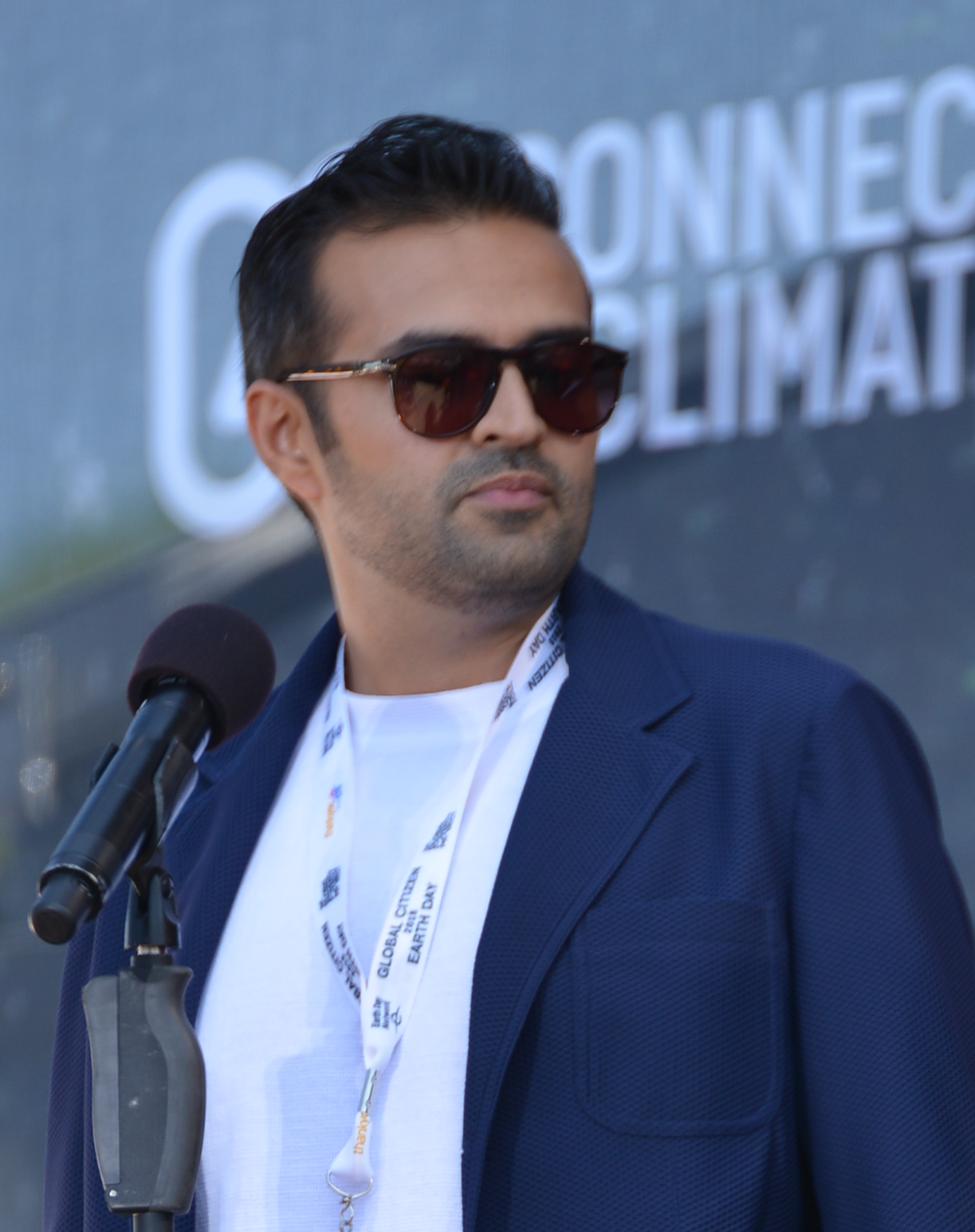
ASHISH THAKKAR
Starting Mara Group at 15 in Kampala, co-founding Atlas Mara with Bob Diamond, and launching what was billed as Africa's first smartphone factory.
He founded Mara Group at 15, not a lemonade stand but a computer parts business run out of a Kampala shopping mall. He went on to co-found Atlas Mara with Bob Diamond and opened what was billed as Africa's first smartphone factory in 2019. Both big bets fell well short. Atlas Mara lost about 95% of its value and Mara Phones' South African plant was auctioned off. The audacity is real. So is the gap between the headlines and the results.
Net Worth
Not publicly disclosed
Verified Oct 2026
Nationality
British
Time Horizon
Long-Term
Risk Appetite
8 / 10
CAREER & BACKGROUND
Ashish Thakkar was born in 1981 in Leicester, UK. His parents had been expelled from Uganda by Idi Amin in 1972.
The family later moved to Rwanda, then fled the 1994 genocide to Burundi and settled in Uganda as refugees. In 1996, at 15, Thakkar borrowed $5,000 and started importing computer parts, flying to Dubai every week and selling from a shopping mall in Kampala.
The business worked. He kept growing it.
By his twenties, Mara had expanded into several African countries, and he became a regular at the World Economic Forum in Davos, making the case for Africa as a commercial opportunity rather than a charity project. In 2013 he was named to Fortune's 40 Under 40, and the same year he and former Barclays CEO Bob Diamond launched Atlas Mara, which raised $325 million on the London Stock Exchange to buy African banks.
It went badly. The shares eventually lost about 95% of their IPO price.
In October 2019 Mara opened a smartphone factory in Kigali, billed as Africa's first, followed by one in Durban, South Africa. The Mara X and Mara Z were real products sold through real retail channels, but sales were small.
By early 2022 the South African factory had been shut and put up for auction.
Thakkar founded Mara Foundation to support young African entrepreneurs and in 2015 became chair of the UN Foundation's Global Entrepreneurs Council.
COMPANIES & ROLES
Mara Group is the holding vehicle. It says it covers over 25 African countries across real estate, technology, manufacturing, financial services and agribusiness.
Within the group, Mara Corporation handled the Mara Phones project. In 2013 he co-founded Atlas Mara with former Barclays boss Bob Diamond, a London-listed vehicle that raised $325 million to buy African banks.
Mara Foundation runs entrepreneurship support and mentorship programs for young African founders. In 2015 he was made chair of the UN Foundation's Global Entrepreneurs Council.
INVESTING STYLE & PHILOSOPHY
Thakkar is an operator-investor rather than a portfolio manager. He does not run a fund — he builds companies.
His investments come through founding or growing businesses rather than writing checks into existing ones. His edge is execution in markets that most global capital labels too difficult: politically complex, infrastructure-thin, high-friction.
He thinks about Africa as one large market at different stages of development, and his companies move to capture the same consumer themes — mobile connectivity, digital finance, tech adoption — across different countries at different speeds. When he does invest as an angel, he backs African founders solving African problems.
THE PLAYBOOK
Risk Approach
Thakkar operates in markets where most global capital does not go. That requires a very specific tolerance for ambiguity: comfort with regulatory unpredictability, currency volatility, infrastructure gaps, and the kind of execution friction that sends conventional investors running.
He started with $5,000 at age 15 and has repeatedly bet on markets before they were ready. Some of those bets, Atlas Mara and Mara Phones, went badly.
His risk philosophy is essentially: if nobody else is willing to do it in Africa, that is usually a reason to do it rather than a reason to avoid it. He backs his own conviction with his own capital.
Money Habits
Thakkar lives in Dubai, which has become a hub for pan-African entrepreneurs because it connects to both the continent and global capital. He is not known for conspicuous wealth displays.
His public presence is almost entirely professional: Davos panels, business forums, media interviews. The one time his money went on public record was his divorce.
He told London's High Court in 2016 that his assets were just £445,532 and that Mara really belonged to his mother and sister. The judge ruled he owned 100% of Mara Group Holdings, called the family-ownership story palpable nonsense, and said he had been repeatedly lied to by the Thakkar witnesses.
BIGGEST WIN
The foundational win is Mara Group itself. He started it at 15 with a $5,000 loan, flying to Dubai every week to buy keyboards, mice and computers and selling them from a shopping mall stall in Kampala.
Turning that into a multi-country group made him one of the most visible young businessmen in Africa, and landed him on Fortune's 40 Under 40 list in 2013. The Mara Phones factory that opened in Kigali in October 2019 got him global coverage as Africa's first smartphone factory, even if the business behind it struggled.
BIGGEST MISTAKE
Atlas Mara. In 2013 he and Bob Diamond, the former Barclays CEO, raised $325 million in London to build a pan-African banking group.
The stock fell steadily and eventually lost about 95% of its IPO price as the bank purchases disappointed, and the group spent its last years selling off its holdings. Mara Phones went the same way on a smaller scale.
The South African factory was shut down and put up for auction by early 2022, and the Kigali plant was reported to be running at about 20% of capacity. Assembled-in-Africa turned out to be much easier to announce than to sell.
FINANCIAL PHILOSOPHY
Thakkar's financial philosophy is Africa-first in a way that is more strategic than sentimental. He believes the continent represents the single biggest emerging market opportunity on the planet — a young population, rapid mobile adoption, underserved financial systems, growing middle class, and institutions still being built from the ground up.
His argument is not charity but arithmetic: Africa will have more working-age people than any other continent by 2050, and the companies building the infrastructure to serve them now will compound for decades. The principle underneath everything is early mover advantage: arrive in markets before they mature, build the relationships and operations, and hold on.
FAMILY & PERSONAL LIFE
Thakkar was born in 1981 in Leicester, UK, to a family of Indian origin from Uganda. His great-grandfather moved from Gujarat to Uganda in 1890, and his parents were forced out to Britain when Idi Amin expelled Uganda's Asians in 1972.
The family later moved to Rwanda, then fled the 1994 genocide to Burundi before settling in Uganda as refugees. He married Meera Thakkar and they divorced after about five years.
The divorce became public in 2016 because of a fight in London's High Court over what he was actually worth.
EDUCATION
Thakkar left formal schooling at 15 to start trading computer parts in Kampala, so the market was his real education. He has been candid about being an unremarkable student.
What he learned came from the first chaotic years of building Mara: navigating different regulators, currencies and cultures at the same time.
BOOKS & RESOURCES
As an Amazon Associate, Netfigo earns from qualifying purchases. Book links above may be affiliate links.
NETFIGO SCORE
Proprietary 5-dimension investor rating
Risk Appetite
Contrarian Index
Track Record
Accessibility
Time Horizon
Related Profiles
Head-to-Head
Compare Ashish Thakkar vs another investor.