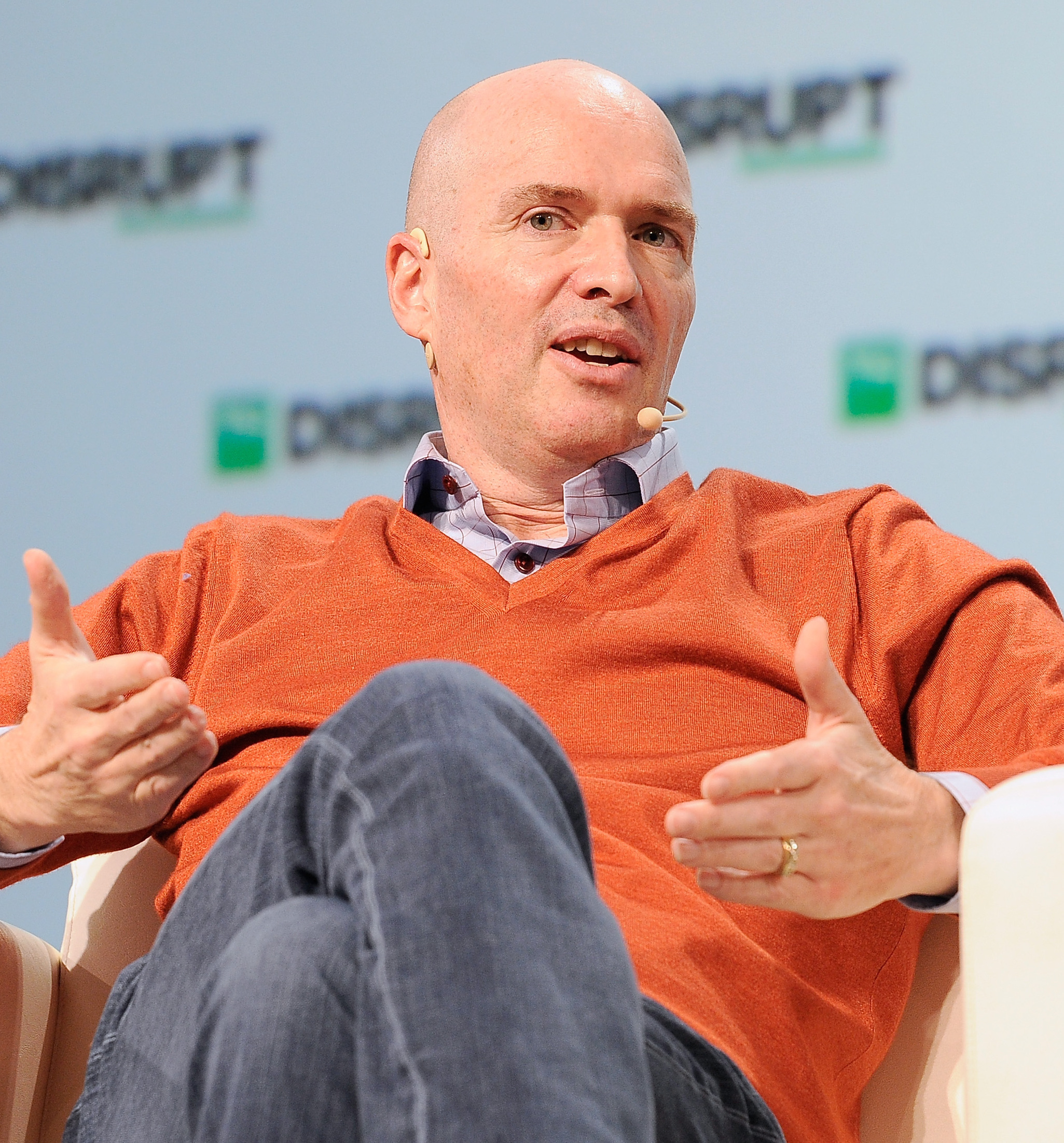
BEN HOROWITZ
Co-founding Andreessen Horowitz, the VC firm that bet big on Airbnb, Coinbase, and GitHub before most people thought any of them would work.
Ben Horowitz sold his startup Loudcloud for $63.5 million in cash when it was burning through money faster than a dot-com bonfire — and then turned the remaining business into Opsware, which he sold to HP for $1.6 billion in 2007. Most people would have taken the first exit and gone home. He didn't. He and Marc Andreessen then started a16z with $300 million in 2009, right when nobody wanted to fund anything, and turned it into one of the most influential venture firms on earth. His book 'The Hard Thing About Hard Things' is the most honest thing anyone in Silicon Valley has ever published about what running a company actually feels like. He quotes rap lyrics in board meetings and means every word.
Net Worth
$1.4 billion
Nationality
American
Time Horizon
Long-Term
Risk Appetite
8 / 10
Net Worth Context
- · Still a billionaire — just the quiet kind at the end of the table.
CAREER & BACKGROUND
Ben Horowitz grew up in Berkeley, California — the kind of household where politics were dinner table conversation and intellectual sparring was just how things worked. His father, David Horowitz, was a left-wing journalist who later became a conservative commentator.
Growing up in that environment gave Ben something most tech founders don't have: comfort with contradiction.
He studied computer science at Columbia and then got a master's at UCLA, but the real education started when he went to work at Silicon Graphics in 1990. He spent the early part of his career moving through Netscape — where he ran the enterprise division under Jim Barksdale — and then watched as Marc Andreessen's browser company got absorbed into AOL.
He and Andreessen had worked closely enough by then to start something together.
In 1999, they co-founded Loudcloud, a cloud infrastructure company that was genuinely ahead of its time. The problem was it cost a fortune to run.
They went public in 2001 — raising $162 million in the worst IPO market since the Great Depression — because they had no other choice. The company was burning $6 million a month.
For about two years, Horowitz ran the company in a state of near-constant existential crisis: fighting to keep the lights on, doing layoffs, managing a stock that had cratered, trying to keep the team from falling apart.
Eventually he pivoted. The hosting business got sold to EDS for $63.5 million.
The software business — what was left — got renamed Opsware and rebuilt from scratch as enterprise data center automation software. By 2007, HP paid $1.6 billion for it.
That arc, from near-death to $1.6 billion, is the spine of everything Horowitz would later say and write about leadership.
In 2009, he and Andreessen founded Andreessen Horowitz — known universally as a16z. They came in with a different philosophy than most VCs: treat founders like CEOs instead of replacing them the moment things get hard, build a full-service firm that helps portfolio companies with recruiting, marketing, and business development, and bet aggressively on software eating the world.
It worked. a16z has backed Airbnb, GitHub (acquired by Microsoft for $7.5 billion), Coinbase, Lyft, Pinterest, Slack, Instagram, and dozens of other companies that became household names.
Today Horowitz still manages the firm but spends as much time thinking about culture, rap music, and organizational theory as he does deal flow. He is one of the few people in venture capital who seems genuinely more interested in how companies work than in how rich they'll make him.
COMPANIES & ROLES
Loudcloud and Opsware are the origin story. Loudcloud launched in 1999 as one of the first companies offering what we'd now call cloud infrastructure — renting computing power to businesses over the internet.
It was too early and too expensive. They went public in 2001 anyway because they needed the money to survive, raising $162 million in a market that had basically given up on tech.
When that business became unsustainable, Horowitz carved out the software piece and rebranded it Opsware. Opsware built tools that let IT teams automate the management of servers and data centers — unglamorous, complicated, genuinely useful.
HP bought it in 2007 for $1.6 billion. That exit funded everything that came next.
Andreessen Horowitz (a16z) is the main event. Founded in 2009 with $300 million, it has since grown to manage well over $35 billion across multiple funds.
The firm invests at every stage, from seed through growth, across consumer tech, enterprise software, crypto and Web3, bio, and fintech. Its portfolio includes some of the most significant technology companies of the last fifteen years: GitHub (sold to Microsoft for $7.5B), Airbnb ($75B+ IPO), Coinbase (first major crypto company to go public in the US), Lyft, Instagram (sold to Facebook for $1B — one of the quickest billion-dollar exits in history), Slack (acquired by Salesforce for $27.7B), and hundreds more.
a16z operates more like a management consulting firm and talent agency than a traditional VC. It has dedicated teams for executive recruiting, marketing, technical advisory, and regulatory affairs.
The idea is that the firm's network and resources give portfolio companies an unfair advantage beyond just the money. Whether that model is truly differentiated or mostly marketing is a genuine debate in the industry — but the returns suggest something is working.
INVESTING STYLE & PHILOSOPHY
Horowitz bets on founders first, everything else second. Not the market, not the technology, not the timing.
The founder. His theory is that the most important variable in any startup is whether the person running it can survive the hard parts — the moments where the spreadsheet says give up but something else says keep going.
He has lived through those moments himself, which is why he looks for them in others.
This is fundamentally different from a lot of VC thinking, which tries to find the right trend and then back whoever is best positioned to ride it. Horowitz would say that's backwards.
Markets change. Technologies evolve.
The only thing that compounds through uncertainty is the quality of the person making decisions.
a16z also invests at stages and in categories that traditional VCs historically avoided or were too slow to move into. They were early and aggressive in crypto when most institutional investors were dismissing it as a fad.
They built a dedicated crypto fund when other firms were treating it as a side bet. They invested in Coinbase before it was clear that regulated crypto exchanges would be allowed to exist.
The firm has also been willing to back companies that are going after historically impossible problems — things with long timelines, high capital requirements, and uncertain regulatory landscapes. They have a bio fund.
They've invested in defense tech. These aren't obvious venture bets.
They require a specific kind of conviction that a lot of investors claim to have but few actually demonstrate with their checkbooks.
Horowitz himself thinks about investing the way a CEO thinks about hiring: you're not looking for the perfect candidate, you're looking for the person who will figure it out. The bet is always on adaptability over current capability.
THE PLAYBOOK
Risk Approach
Horowitz has a genuinely high tolerance for risk, but it's not recklessness — it's experience. He ran Loudcloud through eighteen months where the company's survival was genuinely in doubt, made hundreds of layoffs, and watched his stock lose most of its value before engineering the turnaround.
When you've actually lived through a near-death experience with a company and come out the other side, your definition of 'too risky' shifts significantly.
He has written explicitly about the mental model he uses: most people catastrophize the downside of a bold move. They think 'if this fails, everything is over.' But usually it isn't over — it's just harder.
The question is whether you can survive the harder version. If yes, the risk is manageable.
If no, it's not.
At a16z, this translates into making large, concentrated bets on categories they believe in rather than spreading capital thinly to hedge. Their crypto funds are the clearest example — over $7 billion committed to a category that most of the financial establishment still doesn't fully trust.
That's not the behavior of a firm that is optimizing to not look foolish. That's the behavior of a firm with genuine conviction.
Horowitz is also comfortable with reputational risk in a way that many investors aren't. He says what he thinks publicly, takes positions on cultural and political issues, and doesn't perform the studied neutrality that most VCs use as self-protection.
That comes with costs — some founders won't work with him, some LPs raise eyebrows — but he seems to treat that as the price of having an actual identity.
Money Habits
Horowitz is not ostentatious about money in the way that a lot of Silicon Valley wealth manifests. He lives in Marin County, California.
He drives. He has been known to shop at Costco.
He doesn't throw launch parties for his books or rent out stadiums for thought leadership events.
The thing he seems to spend most visibly on is music and hip-hop culture. He's a genuine fan — not a poser.
He has cited Jay-Z, Nas, Kendrick Lamar, and others in his writing not as decoration but as actual sources of thinking about leadership and loyalty. He and his wife Felicia have donated significant sums to causes related to criminal justice reform and the arts, reflecting a politics that is harder to categorize than most tech-world philanthropy.
The Horowitzes donated $10 million to establish a house at Harvard in 2020 — the first house named after Black donors in the university's history. That's not a donation made for the tax benefit or the naming rights optics.
That's a specific cultural statement.
His publishing work — writing books, maintaining his blog — appears to be genuinely motivated by thinking, not by building a speaker-fee business. 'The Hard Thing About Hard Things' has sold over a million copies and is probably the most-recommended startup book by practicing founders.
He doesn't seem to have monetized that into a coaching empire or a course. He just wrote the thing because he had something to say.
BIGGEST WIN
GitHub. a16z invested $100 million in GitHub's Series A in 2012, which valued the company at around $750 million.
When Microsoft acquired GitHub for $7.5 billion in 2018, that was a 10x return on a single investment in six years. Not a fund return — a single deal.
The bet made sense from a16z's thesis: GitHub was the platform that developers actually lived on. It wasn't just a version control tool — it was becoming the identity layer and collaboration layer for the entire software industry.
Whoever controlled GitHub controlled something fundamental about how software gets made. Microsoft understood this too, eventually.
For Horowitz personally, the GitHub investment is a good illustration of his style: find the thing that the entire developer community already depends on, figure out if it has durable network effects, and bet large. GitHub had tens of millions of developers on the platform.
The product was genuinely beloved. The competitive moat was real.
The $750 million entry valuation felt aggressive at the time. It wasn't.
The broader a16z portfolio through its first decade returned somewhere in the range of 2.5–3x across multiple funds, which is strong but not the defining number. The defining number is the individual bets: Airbnb, GitHub, Coinbase, Instagram — companies that didn't just succeed but became load-bearing pillars of the modern internet.
BIGGEST MISTAKE
Horowitz has been unusually candid about Loudcloud — specifically about the decision to go public in March 2001. The company raised $162 million in the IPO, which they needed to survive.
But the stock opened around $6 after pricing and kept falling. At one point the market cap was below the cash on the balance sheet, which means the market thought the actual business was worth less than nothing.
The mistake wasn't the IPO itself — without it the company would have died and there would be no Opsware, no a16z, no story. The mistake, by his own account, was scaling too fast during the dot-com boom without building a business that could survive a contraction.
Loudcloud had signed up customers who were themselves startups, funded by venture capital that evaporated in 2000 and 2001. When those customers went under, Loudcloud's revenue went with them.
The infrastructure build-out had already happened. The costs were fixed.
The revenue was suddenly not.
The cost was severe: years of near-constant financial crisis, hundreds of layoffs, an enormous amount of personal and professional pain. He's written honestly about calling employees into his office to tell them their jobs were gone, about the psychological toll of running a company that might not make it, about the specific loneliness of being the CEO when things are genuinely terrible.
That period probably cost him several years of his life in stress, even if it made him into who he is.
In hindsight he calls it the education he couldn't have bought any other way.
FINANCIAL PHILOSOPHY
The core principle is that the most important management decisions are the ones that feel impossible. If a decision is easy, someone else would have made it already.
The hard stuff — firing a good friend, telling the board the strategy isn't working, pivoting after three years — is where leaders actually earn their outcomes.
Horowitz talks a lot about 'the struggle.' The Struggle is what happens when things aren't working, the plan isn't right, the team is fraying, and you have no idea what to do. His argument isn't that the struggle is noble — it's awful.
His argument is that surviving it is what separates the companies that matter from the ones that don't.
On money and investing specifically, his philosophy is about asymmetric upside. The best investments look stupid at the time.
The conventional wisdom almost always underestimates how big a new thing can get, because conventional wisdom is built on what already exists. His bet on Airbnb — a company where strangers let strangers sleep in their houses — looked absurd to most investors.
The market was clearly large enough for the bet to make sense.
He also believes strongly that culture is not a soft consideration — it's the actual operating system of a company. The rituals, the language, what gets rewarded and what gets punished — these things compound over time and eventually determine what a company is capable of.
He has referenced Shaka Zulu, Genghis Khan, and Toussaint Louverture alongside Steve Jobs and Andy Grove in the same breath, which is either brilliant or unusual depending on your background, but the underlying point is serious: the best leaders throughout history solved the same fundamental problems he writes about.
FAMILY & PERSONAL LIFE
Ben and Felicia Horowitz have been married since 1989, which means they got married when he was 22 and she was finishing her education. They have four children.
Felicia Horowitz is not a background figure — she's a significant philanthropist in her own right, with a particular focus on criminal justice reform. The two of them run the Horowitz Family Foundation together.
The family's Berkeley roots are visible throughout his writing. He references his father's intellectual combativeness, his upbringing among people with serious political convictions, and the way that environment shaped his comfort with disagreement.
He's one of the few people in venture capital who seems like he actually had a childhood before he had a portfolio.
Their $10 million gift to Harvard — the Horowitz Center, the first house named after Black donors — came with a clear personal statement about what they think their money should do. Felicia has said in interviews that they are intentional about the fact that wealth creates obligations, not just options.
EDUCATION
Horowitz studied computer science at Columbia University for undergrad, then got his master's degree in computer science from UCLA in 1990. The formal education gave him technical credibility — he could actually build things and understand what engineers were talking about — but the more important curriculum was Silicon Graphics and then Netscape, where he learned how enterprise software gets sold and how fast things can move when the internet enters the picture.
He's not someone who ever seemed particularly interested in academic credentials for their own sake. The degrees were tools, not destinations.
BOOKS & RESOURCES
His blog at a16z (now the a16z website) has some of the best management writing on the internet, including The Peacetime CEO/Wartime CEO essay, which is one of the most cited pieces of startup writing ever published
It's free and should be read before the books
's 'My Years with General Motors,' which is the original how-I-built-a-complicated-organization memoir and still holds up a hundred years later
As an Amazon Associate, Netfigo earns from qualifying purchases. Book links above may be affiliate links.
QUOTES (6)
The most important thing that I learned is that you have to be yourself. There is no formula. There's no right way to do it. You have to figure out what is authentic for you.
There are no shortcuts to knowledge, especially knowledge gained from personal experience. Following conventional wisdom and relying on shortcuts can be worse than knowing nothing at all.
The struggle is not failure but it causes failure. Especially if you are weak. Always if you are weak.
A company without a culture is a company without a soul. Culture is not about perks or parties — it's what you do when no one is watching.
In my experience as CEO, I found that the most important decisions tested my courage far more than my intelligence.
The problem with following conventional wisdom in a startup is that a startup's situation is almost never conventional.
NETFIGO SCORE
Proprietary 5-dimension investor rating
Risk Appetite
Contrarian Index
Track Record
Accessibility
Time Horizon
Related Profiles
Investors
Marc Andreessen
Co-founder of Andreessen Horowitz (a16z) — Horowitz and Andreessen have been building companies and investing together since the Netscape era
Peter Thiel
Fellow first-generation Silicon Valley investor who bet early on crypto and defense tech — both invested in Coinbase and share a contrarian approach to venture
Head-to-Head
Compare Ben Horowitz vs another investor.