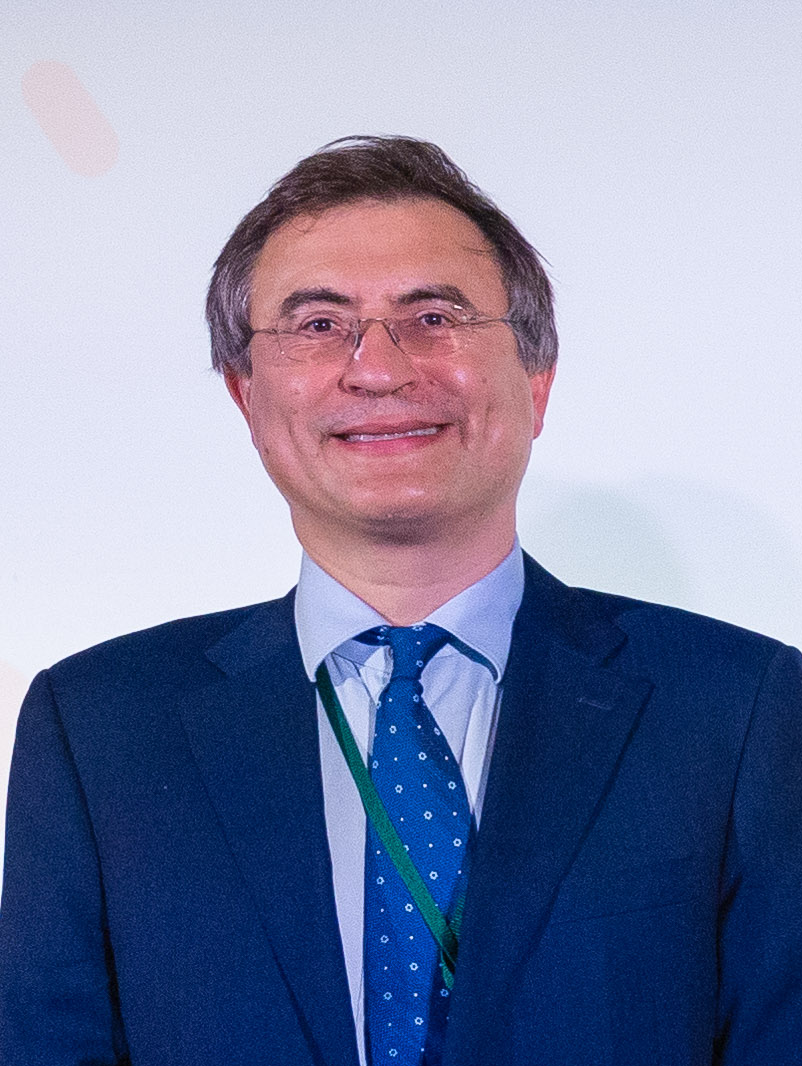
CHRIS HOHN
Running one of the best-performing hedge funds in history while using it to wage war on corporate boards — and donating billions to children's charities in the process.
Chris Hohn built TCI Fund Management into one of the most profitable activist hedge funds on the planet, compounding at roughly 20% annually for two decades. He's the guy who helped force out the CEO of Deutsche Börse in 2005, blocked a $12 billion airline merger in the UK, and made $4 billion in a single year betting against Volkswagen's parent company. He also donated over $4 billion to his children's charity, The Children's Investment Fund Foundation — making him one of the most generous hedge fund managers alive. Terrifying in a boardroom. Surprisingly soft-hearted outside of it.
Net Worth
$7.8 billion
Nationality
British
Time Horizon
Long-Term
Risk Appetite
7 / 10
Fund
TCI Fund Management Ltd
Net Worth Context
- · Still a billionaire — just the quiet kind at the end of the table.
CAREER & BACKGROUND
Chris Hohn grew up in Surrey, England, the son of a Jamaican-born car mechanic. He got into Harvard Business School on a Kennedy Scholarship after studying at Southampton University — and Harvard is where things clicked.
He graduated in 1993 and joined Perry Capital, a New York hedge fund, as an analyst. He spent nearly a decade there learning the craft of activist investing before returning to London.
In 2003, he launched The Children's Investment Fund Management — TCI — with $150 million in seed capital. The name was chosen deliberately.
A chunk of every fee the fund earned would flow directly to The Children's Investment Fund Foundation, his charitable arm. From day one, the money and the mission were linked.
TCI's early years were spectacular. Hohn took concentrated positions in European companies, then pushed hard for change — better management, better capital allocation, share buybacks, board shakeups.
In 2005 he became famous almost overnight when TCI, with just a 4% stake in Deutsche Börse, led a coalition that forced the resignation of CEO Werner Seifert after blocking a bid to acquire the London Stock Exchange. It was considered audacious.
A small hedge fund toppling the chief of one of Europe's largest financial institutions. It proved TCI's model worked.
He followed that by building a massive position in ABN AMRO, the Dutch bank, and helped trigger the bidding war that ended with the bank's disastrous breakup by RBS, Fortis and Santander in 2007. The timing was bad — the financial crisis hit months later and the whole episode became a cautionary tale for the industry.
Hohn lost money on ABN AMRO. He doesn't talk about it much.
After the financial crisis nearly wiped out the fund — TCI fell roughly 43% in 2008 — Hohn rebuilt quietly. He shifted the fund's strategy somewhat, focusing more on businesses with durable competitive advantages and less on purely confrontational activism.
He began building the concentrated, high-conviction positions that now define TCI: a small number of companies held for years, pushed hard from the inside.
By the 2010s, TCI was compounding extraordinary returns again. By 2020 the fund had returned more money to investors than almost any other hedge fund in history on a dollar-weighted basis.
Forbes placed Hohn among the top-earning hedge fund managers globally multiple times — he personally took home $2.4 billion in 2022 alone. He remains one of the most influential and feared activist investors in Europe and increasingly in the US.
COMPANIES & ROLES
TCI Fund Management is Hohn's vehicle for everything. It's a London-based activist hedge fund that takes large positions in a small number of companies — typically 10 to 15 — and then pushes them hard to improve.
Think of it less like a stock picker and more like a very aggressive, very well-funded board member who bought their way onto the shareholder list.
His biggest positions in recent years have included Microsoft, Alphabet (Google's parent), Visa, Moody's, MSCI, Intercontinental Exchange, and Canadian Pacific Railway. These aren't random picks — there's a pattern.
They're all businesses with enormous pricing power, sticky customers, near-monopoly characteristics, and the ability to compound returns for years without needing much new capital. In finance jargon, they're called 'compounders.' Hohn just calls them great businesses.
At Canadian Pacific, TCI pushed for a new CEO, Hunter Harrison, in 2012 — and Harrison turned out to be one of the best operational turnarounds in North American rail history. The stock eventually quadrupled.
It's a perfect example of TCI's model: find a great business being run badly, push for the right leadership, then hold.
Through TCI's management fees and performance fees, Hohn also funds The Children's Investment Fund Foundation, which has become one of the UK's largest charities, focused on child health, nutrition, and education in developing countries. Over $4 billion has flowed through the foundation.
His ex-wife Jamie Cooper ran the foundation for years before their divorce — which became one of the most expensive divorce settlements in UK legal history.
INVESTING STYLE & PHILOSOPHY
Hohn's style is concentration plus conviction plus confrontation. He doesn't diversify.
He picks maybe 10 companies, builds enormous positions, and then uses that ownership stake as leverage to push for change. He's been described as a 'corporate raider in a suit' — which is slightly unfair but not entirely wrong.
The businesses he chooses tend to share a few qualities. They have enormous competitive moats — meaning it's very hard for a competitor to take their customers.
They generate huge amounts of cash, more than they know what to do with. And they tend to operate in industries where scale creates compounding advantages: payment networks, financial data, enterprise software, infrastructure.
These are businesses where the more customers you have, the more valuable the network becomes — and the harder it is for anyone else to build a rival.
Think of Visa. Every time someone uses a Visa card, Visa gets a tiny fee.
The more merchants accept Visa, the more cardholders want it. The more cardholders want it, the more merchants accept it.
It's a self-reinforcing loop. Hohn loves those loops.
But unlike a passive investor who just holds quietly, Hohn uses his ownership stake as a megaphone. If a company is holding too much cash, he demands buybacks.
If the CEO is underperforming, he campaigns for their removal. If the strategy is wrong, he publishes letters saying exactly why.
He is not subtle. He once sent a 34-page letter to a company's board outlining why their management should be replaced.
He won.
He also holds for a long time. TCI's average holding period is years, not months.
He's not flipping stocks. He's trying to find businesses that will compound over a decade, then push them to hit that potential faster than management would on their own.
THE PLAYBOOK
Risk Approach
Hohn's relationship with risk is fascinating and slightly contradictory. He runs a concentrated fund — sometimes 30% of the portfolio is in a single position — which looks extremely risky on paper.
And it can be. In 2008, TCI fell roughly 43% in a single year.
That's not a blip. That's a stomach-churning, career-threatening kind of loss.
But Hohn's view is that concentration in truly great businesses is actually less risky than diversification in mediocre ones. If you know a business is exceptional — if you've done the work, you understand the competitive dynamics, you've stress-tested the model — then holding a large position is rational.
Spreading across 50 companies you half-understand is the real risk.
He also uses some leverage, which amplifies both gains and losses. After 2008 he pulled back on this somewhat.
The experience of watching a fund he'd built from $150 million fall to below $5 billion in assets in a matter of months clearly left a mark.
What he won't do is hold bad businesses just because they're cheap. He's not a value investor in the traditional 'buy ugly things at a discount' sense.
He wants quality first. The 2008 losses came partly from owning financials — ABN AMRO, infrastructure companies linked to credit — and he's largely steered away from those sectors since.
The phrase he returns to in interviews is 'permanent loss of capital.' That's the thing he actually fears. Not volatility — he can tolerate a stock falling 30% if the business is still intact.
What he can't tolerate is owning something that turns out to be structurally broken and loses money forever. That's the real risk.
Money Habits
This is where Hohn gets interesting. He made $2.4 billion in a single year in 2022.
He has a net worth in the billions. And yet he has consistently pledged enormous sums to charity — over $4 billion to the Children's Investment Fund Foundation over the fund's history.
He lives well. He has a property in London and has been associated with high-end real estate.
But he doesn't have the yacht-and-private-jet profile of many hedge fund managers of his wealth. He keeps a relatively low profile compared to contemporaries like Ken Griffin or Ray Dalio, who have built almost celebrity-level public presences.
His divorce from Jamie Cooper, finalized in 2014, resulted in one of the largest divorce settlements in UK history — reportedly around £337 million. A significant chunk went to the CIFF foundation rather than personal wealth, which his ex-wife had originally cofounded and continued to run.
The legal battle was notable for the fact that Cooper argued Hohn had undervalued his assets during proceedings. The UK courts sided substantially with her.
His relationship with money appears to be fundamentally instrumental. He's not spending conspicuously.
He's not collecting sports teams or commissioning superyachts. The money seems to exist to fund the fund, fund the charity, and fund his ability to keep doing both.
Whether that's genuine asceticism or just a man who's too busy to spend is an open question.
BIGGEST WIN
Canadian Pacific Railway is probably TCI's cleanest win. In 2011, Hohn began accumulating a position in CP Rail, the second-largest railway in Canada.
The stock had dramatically underperformed its rival, Canadian National Railway, for years. TCI's thesis was simple: CP had the assets, the routes and the infrastructure to be just as profitable as CN — it just had the wrong management.
Hohn launched a proxy fight in 2012, pushing to replace the CEO with Hunter Harrison, a legendary railway operator who had already transformed CN into one of the most efficient railroads in North America. After a bruising public campaign — one of the most contentious proxy fights in Canadian corporate history — Harrison was installed as CEO.
What happened next was remarkable. Harrison cut costs, improved operating ratios, ran more trains with fewer people, and turned CP into a genuinely world-class operation.
The stock went from around $40 when TCI built its position to over $200 by the time Harrison stepped down. TCI made hundreds of millions on the trade.
Multiples of their original investment. And the company they left behind was genuinely better — not just more valuable, but better run, more efficient, safer.
The kind of outcome that validates the whole activist model.
The Alphabet position also deserves a mention. TCI's large holding in Google's parent company has compounded spectacularly over the years.
When Hohn pushed Alphabet in 2019 to cut costs and improve margins — publishing a detailed letter arguing the company was bloated — the stock wasn't fully rewarding that potential. Three years later, after significant cost discipline was implemented (pushed partly by TCI and other activist pressure), the position had more than doubled.
BIGGEST MISTAKE
ABN AMRO is the one that still comes up whenever Hohn's career is being assessed honestly. In 2007, TCI built a position in ABN AMRO, the large Dutch bank, and pushed aggressively for it to be broken up or sold.
The campaign succeeded — a consortium of RBS, Fortis and Santander paid over €70 billion for the bank in what became one of the largest bank acquisitions in history.
The timing was, to put it diplomatically, terrible. The deal closed in October 2007, just as the global financial system was beginning to seize up.
Within a year, RBS needed a £45 billion government bailout — the largest bank bailout in history at the time — partly because of the debt it took on to buy ABN AMRO. Fortis collapsed and had to be nationalized.
The acquisition was widely cited as one of the key drivers of the financial crisis in Europe.
TCI lost money on the position. The fund fell roughly 43% in 2008, wiping out years of gains.
Hohn has never fully accepted the narrative that TCI was responsible for the ABN AMRO disaster — he argued, with some justification, that the problems were in the banks that overpaid, not in the activism that surfaced the sale. But the reputational damage was real, and the financial damage was enormous.
Assets under management fell from around $15 billion to under $8 billion.
It's a case study in how activist investing can surface value and simultaneously have catastrophic unintended consequences when the macroeconomic backdrop turns against you. The lesson Hohn appeared to draw: stay away from leveraged financials.
He's largely done that since.
FINANCIAL PHILOSOPHY
Hohn believes in owning the best businesses in the world and owning them in size. Not spreading bets across a hundred companies.
Not trading in and out. Not hedging everything to the point where you can't lose but also can't win.
His core rule: find businesses where the competitive advantage is essentially permanent. Payment networks, financial data monopolies, software infrastructure — these are things that get more valuable over time because of how they're structured, not because someone's working harder than the competition.
That compounds. Everything else is noise.
He also believes that activism works, but only when you're right about the underlying business first. TCI doesn't buy broken companies hoping activism will fix them.
They buy great companies being mismanaged, then push for better management. The business has to be worth something before the activism adds value on top.
On capital allocation, he's deeply opinionated. He hates it when companies hoard cash they don't need.
He pushes for dividends and buybacks aggressively. His view: if a company can't invest the money at high returns, it should give it back to shareholders.
Keeping it on the balance sheet earning nothing isn't prudent — it's lazy.
He also has a fairly clear view on ESG and climate. TCI was one of the first major activist funds to use shareholder pressure specifically to push companies on climate risk — not just governance.
In 2020 he led a campaign against Airbus, demanding a credible climate strategy. It's unusual for a hedge fund to pick fights on emissions rather than earnings, but Hohn has always been a little unusual.
FAMILY & PERSONAL LIFE
Hohn grew up in Surrey, England. His father was a Jamaican-born car mechanic — a fact Hohn has mentioned in rare personal interviews as grounding his drive to succeed.
He won a Kennedy Scholarship to Harvard Business School, which was a significant achievement for someone from his background.
He married Jamie Cooper, a fellow Harvard graduate and development expert, who became the founding CEO of The Children's Investment Fund Foundation. They worked alongside each other for years building both the fund and the charity — an unusual arrangement that made the professional and personal thoroughly intertwined.
Their divorce in 2014 became extremely public, partly because of the scale of the financial settlement and partly because it raised questions about control of the foundation. Cooper argued Hohn had concealed assets during proceedings.
Hohn denied this. The UK courts ordered a settlement reportedly around £337 million, one of the largest in British legal history.
A significant portion went to the CIFF.
Hohn has children from the marriage. He keeps them almost entirely out of the public eye.
He doesn't speak publicly about his personal life in any detail, and unlike many figures of his wealth and influence, he doesn't have a public social media presence or a speaking circuit profile. He shows up in headlines when TCI makes a move.
Otherwise, he's largely invisible.
EDUCATION
Hohn studied at Southampton University, where he completed an undergraduate degree in accounting and economics. He won a Kennedy Scholarship to Harvard Business School, graduating with an MBA in 1993.
Harvard is where he connected with the world of activist investing, and he's credited the program as genuinely formative — both for the intellectual framework it gave him and for the network. He doesn't talk much about it, but the HBS stamp is visible throughout TCI's model: the rigorous analysis, the willingness to make a public case, the boardroom confidence.
BOOKS & RESOURCES
Hohn is famously private and doesnt have a published book or a podcast or a Substack
He communicates almost entirely through shareholder letters and the occasional conference appearance. The TCI shareholder letters themselves are worth reading if you can find them — they're models of clear, direct investment thinking
Probably the most direct proxy for Hohn's intellectual framework
's Barbarians at the Gate — the story of the RJR Nabisco buyout — is the classic text on how shareholder pressure can reshape large corporations. Hohn has never explicitly cited it, but the DNA is there
As an Amazon Associate, Netfigo earns from qualifying purchases. Book links above may be affiliate links.
QUOTES (6)
We are long-term investors. We are not traders. We look for businesses that can compound for ten years.
The biggest risk is permanent loss of capital. Volatility is not risk. A stock going down 30% while the business remains intact is not a loss — it's an opportunity.
Companies that hold excessive cash are not being prudent. They are being lazy. That cash belongs to shareholders.
We are not looking for cheap companies. We are looking for great companies at fair prices. The difference matters enormously over a decade.
Activism only works when the underlying business is worth something. We are not turnaround investors. We are improvement investors.
Climate risk is investment risk. Any fund manager who doesn't see that isn't doing their job properly.
NETFIGO SCORE
Proprietary 5-dimension investor rating
Risk Appetite
Contrarian Index
Track Record
Accessibility
Time Horizon
Related Profiles
Investors
Bill Ackman
Both run concentrated activist hedge funds with a small number of high-conviction positions, willing to wage public campaigns against company boards
Dan Loeb
Both use public letter-writing and shareholder pressure to drive operational change at large corporations
Paul Singer
Both are prominent activist investors known for aggressive shareholder campaigns and pushing European companies for structural change
Head-to-Head
Compare Chris Hohn vs another investor.