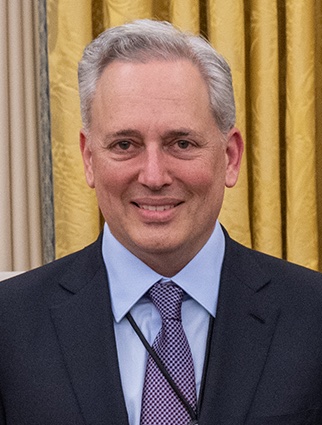
DAVID SACKS
PayPal co-founder, Craft Ventures partner, and one of tech's most vocal political voices — now serving as America's first AI and Crypto Czar.
David Sacks helped build PayPal, sold Yammer to Microsoft for $1.2 billion, and then spent a decade becoming one of Silicon Valley's most influential — and polarizing — venture capitalists. He co-hosts the All-In Podcast with three billionaires, which has somehow become required listening for anyone who wants to understand how tech money thinks. In January 2025, Donald Trump appointed him as the first-ever White House AI and Crypto Czar, which is either the most logical career progression imaginable or proof that podcasting is now a path to government. Either way, he's been in the room where it happens since before most people knew there was a room.
Net Worth
$400 million
Nationality
American
Time Horizon
Long-Term
Risk Appetite
7 / 10
Net Worth Context
- · 400x the average American's lifetime earnings, stacked and waiting.
CAREER & BACKGROUND
Sacks grew up in South Africa and moved to the United States for college, eventually landing at Stanford Law School — which is where the story really starts. At Stanford he met Peter Thiel, Elon Musk, and a group of people who would go on to reshape the internet.
He joined PayPal in its earliest days as Chief Operating Officer, helping turn a chaotic startup into a functioning payments business. When eBay acquired PayPal in 2002 for $1.5 billion, Sacks walked away wealthy and connected to what became known as the PayPal Mafia — the most consequential alumni network in Silicon Valley history.
After PayPal, he went into film production for a while, producing Thank You for Smoking in 2005. That's not a typo.
He genuinely made a film. But tech pulled him back.
In 2008 he founded Yammer, an enterprise social network — basically Facebook for companies, before anyone called it that. The product caught on fast inside large organizations that wanted Slack-style communication without the chaos.
Microsoft acquired Yammer in 2012 for $1.2 billion. Sacks had sold his second company before most people had finished their first.
He then moved into venture capital, eventually founding Craft Ventures in 2017. The firm focused on enterprise software, fintech, and crypto — sectors where Sacks had operational experience and strong opinions.
His portfolio included companies like Affirm, Bird, Hopin, and SpaceX. He also became an early and vocal backer of crypto at a time when most mainstream VCs were still skeptical.
Along the way, he built a media presence that went far beyond the typical VC Twitter account. The All-In Podcast, which he co-hosts with Chamath Palihapitiya, Jason Calacanis, and David Friedberg, launched in 2020 and became one of the most-listened-to business podcasts in the world.
The four of them argue about geopolitics, markets, tech, and whatever is happening in the news — with the combined certainty of people who have made a lot of money and the combined humility of people who know they're being recorded.
In 2025, Trump named him AI and Crypto Czar, a newly created role in the White House focused on developing national policy for artificial intelligence and digital assets. For a PayPal COO turned enterprise software founder turned venture capitalist turned podcaster, it was a logical endpoint.
Or maybe just the latest pivot.
COMPANIES & ROLES
PayPal is where Sacks first made his name and his money. As COO, he was responsible for operations during the company's most chaotic and critical period — the transition from a scrappy fintech startup to a legitimate payment network operating at scale.
The $1.5 billion eBay acquisition in 2002 was the exit, and Sacks's share was meaningful enough to fund everything that followed.
Yammer was his founder chapter. He built it from scratch, grew it to millions of enterprise users across thousands of companies, and sold it to Microsoft for $1.2 billion in 2012.
The product was fundamentally simple — internal messaging for companies — but the timing was right and the execution was clean. Microsoft still runs it today, though they've folded it into Viva Engage.
Craft Ventures is his venture fund, launched in 2017. The firm has backed a mix of enterprise SaaS companies, fintech startups, and crypto projects.
Notable portfolio companies include Affirm (buy-now-pay-later, went public at a $12 billion valuation), Bird (electric scooters — less successful), SpaceX, and a range of B2B software companies. The fund's strategy reflects Sacks's operating background — he tends to invest in companies building infrastructure or tools for businesses rather than consumer apps.
The All-In Podcast is arguably his most influential current vehicle. Launched with Chamath Palihapitiya, Jason Calacanis, and David Friedberg during COVID, it now reaches millions of listeners per episode.
Topics range from tech and investing to geopolitics and economic policy. It's made Sacks one of the most recognized voices in tech commentary, not just tech investing.
As White House AI and Crypto Czar, Sacks is now shaping federal policy on two of the most contested technology areas in the world. The role involves advising on AI regulation, crypto legislation, and the US government's broader digital technology strategy.
INVESTING STYLE & PHILOSOPHY
Sacks is an operator-investor, which means he invests the way someone who has actually built companies thinks — not the way a finance guy thinks. He looks for enterprise software and infrastructure businesses because those are the categories he knows from the inside.
He's not guessing about what enterprise buyers want. He was one of them.
He tends to back companies building tools for other businesses — things like communications platforms, fintech infrastructure, or developer tools. These businesses are less sexy than consumer apps but they tend to have better economics: longer customer lifetimes, higher switching costs, more predictable revenue.
In other words, once a company builds its workflow around your software, they don't leave. That's a moat — the kind Warren Buffett talks about, but applied to software.
Sacks is also a crypto believer, which puts him in a specific camp among VCs. He's been publicly bullish on Bitcoin, Ethereum, and the broader digital asset space since early in its mainstream emergence.
His argument is basically that crypto represents a new financial and ownership infrastructure layer — and that the US needs to lead in building it or cede that ground to other countries. Whether that's correct remains to be seen, but he's been consistent about it at a time when it was easier to stay quiet.
He concentrates. He doesn't spray capital across hundreds of bets hoping a few break through.
Craft Ventures makes fewer, larger bets on companies where Sacks or his partners have a specific edge — usually operational knowledge of the sector or a relationship with the founders. He'll also take contrarian positions publicly — he was skeptical of a lot of late-stage VC valuations in 2021 and said so loudly on the podcast before the correction came.
THE PLAYBOOK
Risk Approach
Sacks has a nuanced relationship with risk that doesn't fit neatly into 'aggressive' or 'conservative.' On one hand, he's a venture capitalist — the entire asset class is built on the assumption that most bets will fail and a small number will generate returns large enough to make up for everything else. That requires genuine comfort with losing.
On the other hand, Sacks is not a spray-and-pray investor. He manages concentration risk by doing the operational work upfront — he invests in categories he understands deeply, backs founders he has credibility with, and tends to avoid sectors where he has no informational edge.
He's said publicly that one of the biggest mistakes in VC is investing in companies just because the market is hot. His answer to risk isn't diversification.
It's better judgment.
He's also been consistently vocal about macro risks that most tech investors prefer to ignore — things like government overreach into tech, the risk of the US falling behind China on AI development, and the systemic fragility of companies that grow on cheap capital and collapse when rates rise. That macro awareness separates him from a lot of his peers who operate as if the environment never changes.
On crypto specifically, he has taken concentrated personal risk — he's publicly committed to the space at times when reputational risk alone would have deterred most people. For Sacks, the bigger risk seems to be missing a transformational technology.
He'd rather be wrong and early than cautious and late.
Money Habits
Sacks lives well — he's not a Buffett-style ascetic. He has a notable home in San Francisco's Pacific Heights neighborhood, drives nice cars, and has the lifestyle of someone who sold two companies before 40.
None of this is unusual for his peer group.
What's more distinctive is how he thinks about money professionally. At Craft Ventures, he's built a relatively lean operation compared to the mega-funds — the firm isn't trying to deploy $10 billion and charge management fees on an empire.
That structural choice keeps incentives aligned: if you don't raise a massive fund, you don't need massive exits to justify the business.
He's an active angel investor outside of Craft, backing founders directly in areas where he has personal conviction. SpaceX, for instance, is a known investment — and not the obvious call it looks like now.
His time investment in the All-In Podcast is itself a kind of capital allocation. He and his co-hosts don't take advertising in the traditional sense.
The podcast's value is positioning and deal flow — being associated with it signals that you're inside the conversation that matters. For a VC, that's worth more than almost anything money can directly buy.
BIGGEST WIN
The Yammer sale to Microsoft for $1.2 billion in 2012 is the cleanest single-outcome win. Sacks founded the company in 2008 — right into the teeth of the financial crisis — and built it to a business that Microsoft considered important enough to acquire for over a billion dollars in four years.
That's a fast build in any environment, and a remarkably fast one in enterprise software, which typically takes longer to monetize than consumer products.
But the PayPal exit might be the more historically significant win. Sacks was COO through the chaos years — fraud, regulatory pressure, and an attempted hostile takeover by eBay before eBay eventually just bought them for $1.5 billion in 2002.
The operational grind of that period, and the network of relationships it produced, is the foundation of almost everything else he's built since.
On the investment side, his early stake in Affirm — backed through Craft — turned into a substantial return when the company went public in January 2021 at a valuation of roughly $12 billion. Affirm's stock ran considerably higher after IPO before pulling back significantly, but the entry position through early VC rounds meant the numbers worked regardless.
BIGGEST MISTAKE
Sacks has been associated with some high-profile misses in the portfolio. Bird, the electric scooter company backed by Craft Ventures, is probably the most visible.
Bird raised over $600 million in venture funding, reached a peak valuation of around $2.5 billion, and went public via SPAC in 2021. By 2023 it had filed for bankruptcy.
The unit economics on scooter sharing were always difficult, and the business never found a path to profitability even with massive fundraising.
Hopin, the virtual events platform, is another notable one. Craft was an early backer of a company that exploded in value during COVID — Hopin raised at a $7.75 billion valuation in 2021 as virtual events became the only option for conferences and gatherings.
When in-person events returned, the valuation collapsed. Hopin sold its core events business in 2023 for a fraction of its peak value.
Investors who came in at the top lost most of their money.
These weren't necessarily bad decisions at the time — the information available in 2021 did support high valuations in both cases. But they're a reminder that even operators with real domain expertise can get caught in valuation bubbles when capital is cheap and everyone is optimistic.
Sacks was vocal on the podcast about overvaluation concerns in general, but that macro view didn't fully protect the specific bets.
FINANCIAL PHILOSOPHY
Sacks thinks about investing through the lens of someone who has built things. His core belief is that the best investors are the ones who understand what they're buying — not just the financials but the mechanics, the moat, the why-does-this-company-exist-and-who-would-miss-it.
That's harder than it sounds when markets are hot and everyone is in a hurry.
He's a believer in the power of networks — not just social networks but network effects in business. A product gets more valuable as more people use it.
He saw this firsthand at PayPal, where every new merchant who accepted PayPal made the network more useful for every existing user, and vice versa. He looks for that dynamic in the companies he backs.
On crypto, his philosophy is essentially a bet on decentralization as a structural shift in how value is stored and transferred. He doesn't think this is a fad.
He thinks it's an internet-level transition and that most people are underestimating it — including people who should know better.
He's also deeply concerned about the relationship between technology and political power. He talks frequently about the risk of government overreach stifling American innovation, and about the competitive threat from China in AI.
His appointment as AI and Crypto Czar suggests he's decided talking about these problems isn't enough anymore.
One of his most consistent messages: the things that look risky in the short term — founding a startup, backing a controversial technology, taking a public position — are often the lowest-risk moves over a long enough time horizon. The real risk is playing it safe in a world that's changing fast.
FAMILY & PERSONAL LIFE
Sacks is married to Jacqueline Tortorice, and they have children together. The family is based in San Francisco.
He's spoken occasionally about the tension between the demands of startup life and family time — standard stuff for founders of his generation, but at least he acknowledges it. His closest professional relationships have an almost fraternal quality — the PayPal Mafia alumni still talk, invest together, and occasionally publicly defend each other with a loyalty that's unusual even by Silicon Valley standards.
His friendship and business relationship with Peter Thiel goes back to Stanford Law School, which is over 30 years at this point.
EDUCATION
Sacks did his undergraduate degree at Stanford University, where he studied economics. He then attended Stanford Law School — which is where he met Peter Thiel and several others who would become lifelong collaborators.
He reportedly never practiced law, which is a very Silicon Valley thing to do with a law degree. The education matters mostly for the network it gave him, not the credential.
BOOKS & RESOURCES
Sacks hasnt written a book, which is notable for someone who has a lot of opinions and a very large podcast audience
Maybe it's coming
Which outlines the contrarian philosophy that has clearly influenced how Sacks thinks about building and backing companies. The core idea — that the best companies create new categories rather than competing in existing ones — shows up in how Craft chooses investments
A 1997 book that predicted the rise of digital currencies and the erosion of nation-state financial control. It's a foundational text for a lot of crypto-adjacent thinkers, and its influence on Sacks is visible in his public arguments about why digital assets matter structurally, not just as an investment
For understanding enterprise software investing — the core of Crafts thesis — hes pointed to the work of analysts and practitioners who have tracked SaaS economics closely
The All-In Podcast itself functions as a continuous commentary on the ideas Sacks finds important, and the back catalogue is worth treating as a reading list of his current thinking
As an Amazon Associate, Netfigo earns from qualifying purchases. Book links above may be affiliate links.
QUOTES (6)
The best founders are the ones who can articulate why the existing solutions are broken and why their approach is fundamentally different.
Crypto is not a bubble. It's a new financial system being built in public. The volatility is the price you pay for getting in early on something that will eventually be worth trillions.
The biggest mistake you can make in a downturn is cutting too slowly. The companies that survive are the ones that make hard decisions fast and then rebuild from a position of strength.
If you're not willing to be called crazy for your investment thesis, your thesis probably isn't differentiated enough to generate outsized returns.
The US has a window to lead on AI. If we regulate first and build second, we will lose that window. China is not going to wait.
Enterprise software is boring to talk about and extremely good to invest in. The economics are just better than almost anything else in tech.
NETFIGO SCORE
Proprietary 5-dimension investor rating
Risk Appetite
Contrarian Index
Track Record
Accessibility
Time Horizon
Related Profiles
Investors
Chamath Palihapitiya
Co-hosts of the All-In Podcast — together they've built one of the most influential voices in tech and finance
Jason Calacanis
All-In Podcast co-host and fellow early-stage tech investor
Peter Thiel
Stanford classmates and PayPal co-founders — their partnership at PayPal is one of the most consequential in tech history
Head-to-Head
Compare David Sacks vs another investor.