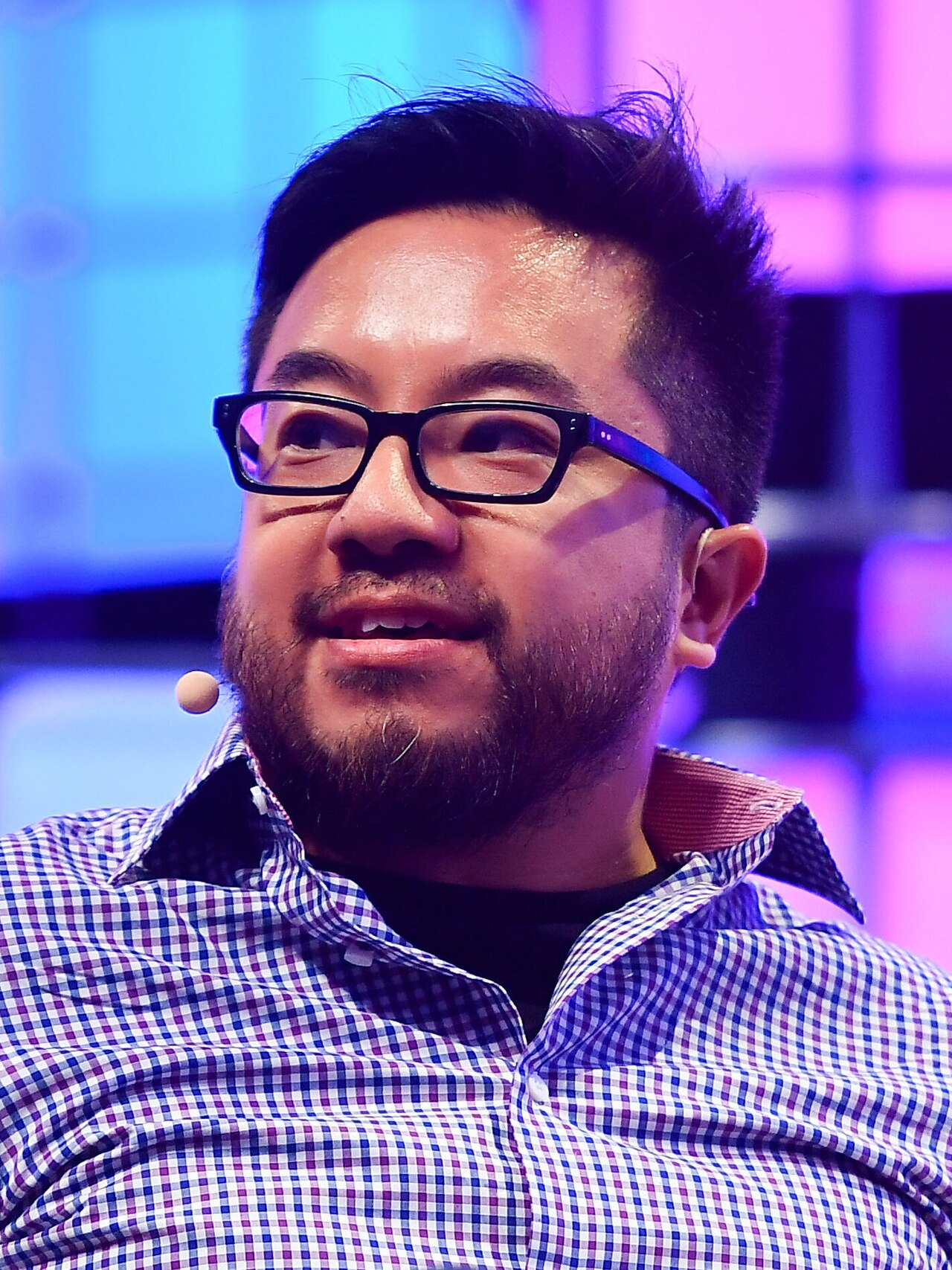
GARRY TAN
Co-founder of Initialized Capital and the CEO who took over Y Combinator to drag it into a new era — loudly.
Garry Tan was a designer-turned-engineer-turned-VC who backed Coinbase and Instacart when they were nobodies, turning a $7 million fund into over $10 billion in value. Then in 2023, Y Combinator called him back to run the whole thing — and he showed up swinging, publicly feuding with San Francisco politicians on X while trying to rebuild the city he thinks tech abandoned. He is simultaneously one of the most connected people in Silicon Valley and one of the most online. That combination is either going to define his legacy or end it. Probably both.
Net Worth
$200 million
Nationality
American
Time Horizon
Long-Term
Risk Appetite
8 / 10
Net Worth Context
- · 200x the average American's lifetime earnings, stacked and waiting.
CAREER & BACKGROUND
Garry Tan grew up in the Bay Area and studied computer science and management science at Stanford, where he got his first taste of what Silicon Valley actually looked like up close. After graduating in 2003, he joined the original team at Palantir as a software engineer — back when it was a scrappy idea from Peter Thiel and a handful of Stanford grads, not a $40 billion defense contractor.
That alone puts him in the 'was there before it was cool' category for at least three different things.
In 2007, he made his first big leap: he joined Y Combinator as a partner. YC at the time was already the most important startup accelerator on earth, but it was still relatively small and scrappy compared to what it became.
Tan spent six years there as a partner, working directly with founders across hundreds of batches, and he started to develop a very specific philosophy — that the best founders are often the ones nobody else takes seriously yet.
In 2012, he left YC to co-found Initialized Capital with Alexis Ohanian (yes, the Reddit guy). The fund was built on a simple and somewhat insane thesis: write the very first check into companies before anyone else will, at valuations so early that most institutional investors won't even take a meeting.
Their debut fund was $7 million. Tiny by VC standards.
But the portfolio included Coinbase, which went public at a $100 billion valuation, and Instacart, which IPO'd in 2023. The $7 million fund returned something in the neighborhood of $10 billion in total value.
That's not a typo.
Initialized grew from there, raising successively larger funds and backing hundreds of companies in the pre-seed and seed stage. Tan was the design and product brain of the operation — he'd been a designer himself and genuinely understood what made a product good or bad, which gave him an edge over pure finance VCs who evaluated startups on spreadsheets.
Then in 2022, YC came calling again. Sam Altman had left to run OpenAI full-time, and the organization needed leadership.
Tan was named CEO and President of Y Combinator in January 2023. He moved back to San Francisco — a city that had emptied out during COVID and was struggling with homelessness, crime, and a mass exodus of tech workers — and he decided he wasn't going to be quiet about any of it.
He started posting aggressively on X (formerly Twitter), calling out politicians by name, advocating for pro-housing policies, and generally making himself a polarizing figure in both tech and local politics. Whether you think he's right or wrong about San Francisco, nobody can accuse him of playing it safe.
COMPANIES & ROLES
Palantir was Tan's first real job out of Stanford — he was a software engineer there in the very early days, before the company became synonymous with government surveillance contracts and controversial Pentagon deals. It was a formative experience in 'what does it look like when extremely smart people build something that the world isn't sure it wants.'
Y Combinator (first stint, 2007–2012) is where Tan learned how to find great founders before they were great. As a partner, he sat across the table from thousands of early-stage companies and had to make fast judgments about which ones had something real.
That six-year apprenticeship in pattern recognition became the foundation for everything he did next.
Initialized Capital is the fund he co-founded with Alexis Ohanian in 2012. The thesis was brutally simple: invest at the very beginning, when valuations are lowest and nobody else is paying attention.
Their portfolio reads like a greatest hits of the last decade of tech — Coinbase, Instacart, Flexport, Reddit (through Ohanian's connection), and hundreds of others. The first fund was $7 million.
By some estimates, that fund alone returned over $1 billion, making it one of the best-performing venture funds in history on a percentage basis.
Y Combinator (current, 2023–present) is where Tan is now as CEO and President. Under his leadership, YC has continued its batch model while Tan has pushed harder on community, alumni networks, and — most visibly — a very loud public stance on San Francisco politics and tech's relationship with government and cities.
He's turned the YC CEO role into something that looks more like a public intellectual position than a traditional operator role, which is either visionary or a distraction depending on who you ask.
INVESTING STYLE & PHILOSOPHY
Tan is a pre-seed investor at heart. That means he's betting on people before they have a product, sometimes before they have a clear idea.
The valuation is low enough that if one company in ten becomes something real, the fund still works. It's the opposite of late-stage growth investing, where you're paying a premium for a company that's already proven itself.
His edge — and this is genuinely unusual in venture — is that he thinks like a designer and a product person, not a finance person. He can look at an early prototype and have an informed opinion about whether the UX makes sense, whether the problem is real, and whether the founder actually understands their user.
Most VCs can't do that. They're evaluating TAM slides and revenue projections.
Tan is evaluating the product itself.
He's also strongly founder-obsessed in the YC tradition. The YC model is built on the belief that the right founder can pivot their way to success even if the initial idea is wrong — but the wrong founder will fail even with a great idea.
Tan has internalized this completely. He's said publicly that he's more interested in a founder's intensity and clarity of thinking than in whether their deck is polished.
He has a strong bias toward technical founders — people who can build the thing themselves — because it removes a layer of dependency and usually means the founder understands the product at a fundamental level. If the founder can't write the code or design the interface, Tan gets nervous.
At YC, the investment model is standardized: every company in the batch gets a small check (typically around $500,000) for 7% equity. It's not about negotiating terms or doing deep diligence — it's about running enough companies through the program that the math works out over time.
It's a portfolio approach applied to early-stage investing, which is counterintuitive but has worked extraordinarily well.
THE PLAYBOOK
Risk Approach
Tan operates at the extreme high-risk end of the investing spectrum — pre-seed venture capital is the riskiest mainstream asset class you can invest in. Most companies in a pre-seed portfolio fail completely.
That's baked into the model. The math only works if the few that succeed return so much that they cover all the losses and then some.
What Tan has said consistently is that he's comfortable with the idea that the majority of his bets will go to zero — because he's calibrated the size of the potential wins to make up for it. Coinbase returning thousands of times his initial investment more than covered the dozens of companies in the same cohort that failed quietly.
That's not luck — it's arithmetic.
Personally, he's taken significant risk with his own career as well. Leaving YC in 2012 to start Initialized when he had no track record as a fund manager.
Coming back to YC in 2023 to lead an institution that many felt had lost its way, during a brutal tech downturn. Being publicly vocal about San Francisco politics in ways that have made him real enemies.
None of these are the moves of someone trying to protect what they have. He seems genuinely comfortable betting on himself in situations where the downside is being publicly wrong.
Money Habits
Tan is not famous for extravagant spending. He's more identified with the craft of building things — he still codes, still designs, still writes — than with the lifestyle that his net worth could theoretically buy him.
He's been publicly critical of the tech bro culture of yacht parties and conspicuous consumption, which is somewhat ironic given that he runs the institution that produced many of the people doing the yacht partying.
He lives in San Francisco, which he has made a point of doing loudly and publicly — in a city where many tech founders relocated to Miami or Austin during COVID. His decision to stay and his vocal support for pro-housing and pro-tech-in-cities policies is itself a kind of financial and personal commitment to a bet on San Francisco's future.
He's been open about the fact that the paper wealth from Initialized's portfolio, particularly Coinbase, was transformational for him personally — but that he reinvested most of his energy into building the next thing rather than sitting on the returns. His compensation at YC is not publicly disclosed, but YC is a nonprofit, so it's unlikely to be venture-partner-level economics.
He's active on social media to a degree that most wealthy people his age are not, which suggests he either genuinely enjoys the engagement or has decided that visibility is worth the cost of the occasional blowback. Probably both.
BIGGEST WIN
Coinbase. Full stop.
When Initialized Capital wrote one of the very first checks into Coinbase, Brian Armstrong was a relatively unknown engineer with an idea about making it easier to buy Bitcoin. This was 2012.
Bitcoin was still a fringe curiosity. Most investors wouldn't touch it.
Initialized got in at a valuation so low it barely registers by modern standards.
Coinbase went public on NASDAQ in April 2021 at a reference price of $250 per share, with a direct listing that valued the company at around $100 billion on its first day. Initialized's stake — grown from that early seed investment through subsequent rounds — was worth hundreds of millions of dollars at peak prices.
It is, by any reasonable measure, one of the most successful early-stage venture bets of the decade.
Instacart was another Initialized portfolio company that IPO'd in September 2023, giving the fund another significant exit. The combination of these two alone would make Initialized one of the best-performing seed funds ever raised, regardless of what the rest of the portfolio does.
BIGGEST MISTAKE
Tan has been relatively guarded about specific investment mistakes — which is pretty standard for VCs, who are not incentivized to publicize their misses. What he has been more public about is a kind of broader strategic mistake: the tech industry's disengagement from civic life.
His argument, which he has made repeatedly and at length on X, is that tech founders and investors spent years accumulating enormous wealth and power while deliberately staying out of politics and public institutions — and that this abdication left a vacuum that produced bad policy outcomes for everyone, including the tech industry itself. He sees this as a collective mistake he was part of.
His very public Twitter/X presence has also generated its own controversy. In early 2023, he posted a comment that many people interpreted as threatening toward a San Francisco supervisor he was feuding with over city policy — the supervisor's office filed a police report.
Tan said he was quoting a song lyric and the post was misinterpreted. Whether you believe that or not, it was a significant reputational moment that he had to manage publicly, and it's a reminder that being extremely online comes with real costs.
He has since been more measured but not quieter.
FINANCIAL PHILOSOPHY
Tan's core belief is that the best investments look obviously bad to most people at the time you make them. If everyone agreed the company was great, the price would already reflect that.
The only way to make venture-scale returns is to be right when the consensus is wrong — and you have to be comfortable looking foolish in the interim.
He's deeply influenced by the YC philosophy, which holds that the best founders are solving problems they personally experienced and couldn't find a good solution for. That authenticity is hard to fake and tends to produce more durable companies than founders chasing trends or market maps.
On a broader level, Tan believes that technology is the primary force for improving human wellbeing, and that investing in technology startups is therefore not just a financial act but a kind of civic participation. This isn't empty rhetoric for him — it's why he moved back to San Francisco and why he's vocal about wanting tech people to re-engage with the cities they've partially abandoned.
He's also a strong believer in iteration and learning from failure quickly. The YC model — run companies through a three-month program, force them to talk to users, ship product, and get to launch as fast as possible — reflects a philosophy that speed of learning matters more than the elegance of any single decision.
You can't reason your way to product-market fit. You have to go find it.
FAMILY & PERSONAL LIFE
Tan is married and has been open about the fact that his family life is a grounding force in what can be a very chaotic public existence. He doesn't talk about his wife and children extensively in public interviews, which seems like a deliberate choice given how exposed everything else about his life is on social media.
He grew up in the Bay Area, which gives him a genuine connection to San Francisco that isn't performative — he's not a transplant who arrived for the money. His parents are Taiwanese-American, and he has spoken about the immigrant work ethic that shaped his family's approach to opportunity and education.
He has a close friendship with Alexis Ohanian that predates Initialized and has survived the complexity of being business partners, which is notable — co-founder relationships at that level of intensity often don't.
EDUCATION
Stanford University, where he studied computer science and management science, graduating in 2003. Stanford at that point was already ground zero for the internet boom and the companies being built out of it — Tan was surrounded by people who were starting companies or going to work at companies that would become enormous.
The environment mattered as much as the curriculum. He's spoken about how being at Stanford in that era made founding or joining startups feel like the obvious thing to do, not a risk.
BOOKS & RESOURCES
Tan doesnt have a book of his own — yet
Given how much he writes and how opinionated he is, it would be surprising if he didn't eventually produce one. In the meantime, his most useful output is his writing on X, his blog posts from the Initialized era, and his interviews, which tend to be substantive and direct
Which articulates the monopoly-building philosophy that runs through Silicon Valley's most ambitious companies
Essentially the bible for anyone who thinks seriously about product and user experience — Tan's design background makes this a natural touchstone. 'High Output Management' by Andy Grove is the operating manual that most serious tech executives return to repeatedly; it's the closest thing to a standard text on how to actually run a company at scale. 'Hackers and Painters' by Paul Graham — the YC founder's essays on technology and creativity — is required reading for anyone trying to understand the intellectual tradition Tan comes from
As an Amazon Associate, Netfigo earns from qualifying purchases. Book links above may be affiliate links.
QUOTES (6)
The best founders are the ones who are solving a problem they personally experienced and couldn't find a good solution for.
Most people overestimate how much things will change in two years and underestimate how much they'll change in ten.
If you're building something genuinely new, most people are going to tell you it's a bad idea. That's how you know you're onto something.
San Francisco is not dead. It is a city that built the modern world and it will build the next one too. But only if people who care about it decide to stay and fight.
The thing that makes a great investor is the same thing that makes a great founder: the willingness to believe something is true before the evidence is overwhelming.
Design is not decoration. Design is how you communicate that you understand your user's problem better than anyone else.
NETFIGO SCORE
Proprietary 5-dimension investor rating
Risk Appetite
Contrarian Index
Track Record
Accessibility
Time Horizon
Related Profiles
Investors
Head-to-Head
Compare Garry Tan vs another investor.