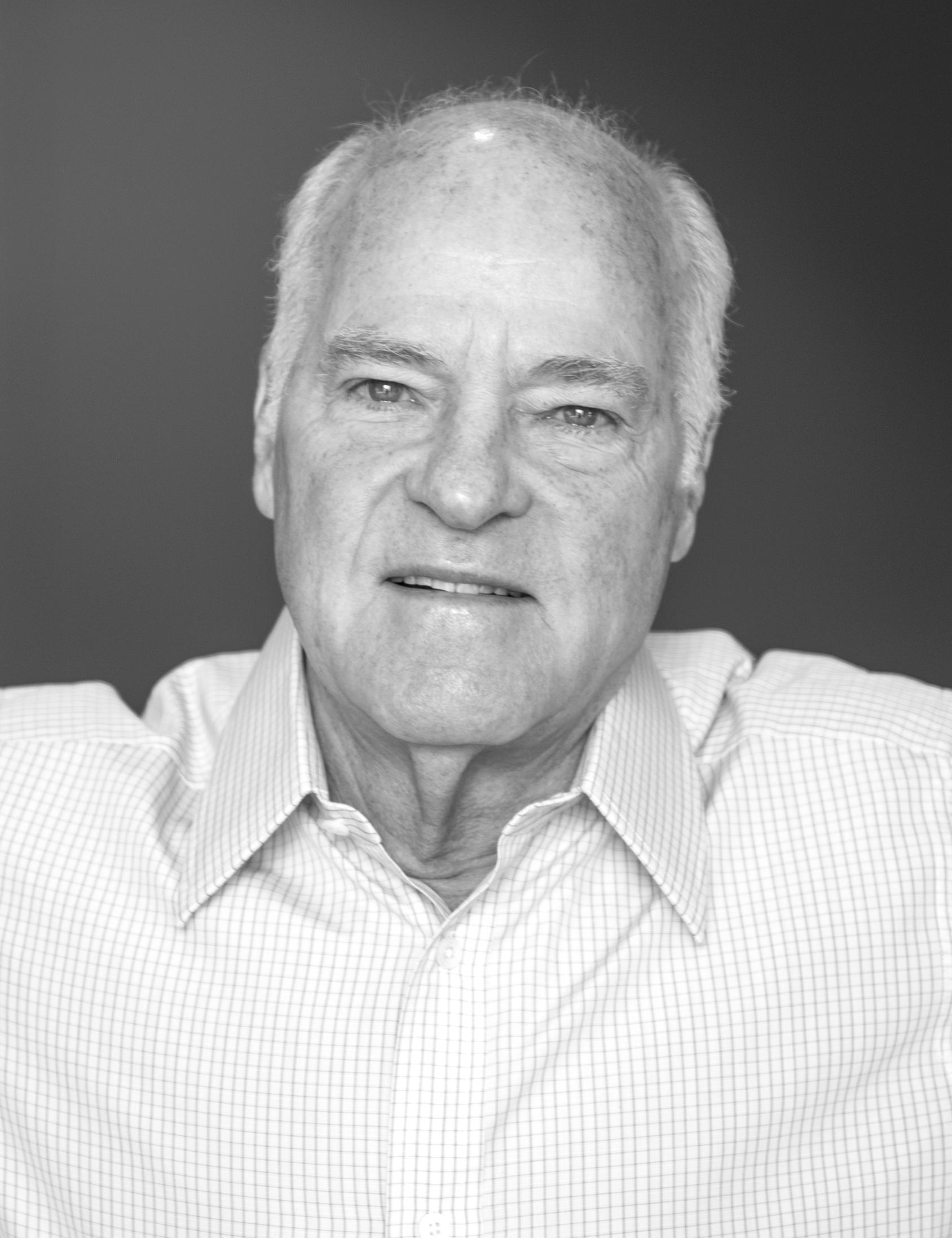
HENRY KRAVIS
Co-founding KKR and inventing the modern leveraged buyout — using borrowed money to take over massive companies and flip them for billions.
Henry Kravis didn't just buy companies — he invented a whole new way to buy them. In 1988, KKR took RJR Nabisco private for $25 billion in the largest leveraged buyout in history at the time. The deal became so famous it got its own book and movie. Kravis figured out that if you borrow most of the money, use the target company's own assets as collateral, and squeeze out inefficiencies, you can generate returns that look almost supernatural. He built a $553 billion firm on that idea. Not bad for a kid from Tulsa.
Net Worth
$8.5 billion
Nationality
American
Time Horizon
Long-Term
Risk Appetite
7 / 10
Fund
KKR & Co. Inc.
Net Worth Context
- · Still a billionaire — just the quiet kind at the end of the table.
CAREER & BACKGROUND
Henry Kravis grew up in Tulsa, Oklahoma, the son of an engineer father who taught him early that debt was a tool, not a trap. That lesson would define his entire career.
He graduated from Claremont McKenna College in 1967 and headed to Columbia Business School, where he earned his MBA in 1969. From there he went straight to Bear Stearns, where he worked under Jerome Kohlberg — the man who would become his mentor and, eventually, his co-founder.
At Bear Stearns in the early 1970s, Kohlberg was developing a radical idea: use debt to buy out companies, then improve them and sell them at a profit. Kravis and his cousin George Roberts joined the effort.
The three of them did a handful of small 'bootstrap' acquisitions inside Bear Stearns and proved the concept worked. When Bear Stearns refused to let them scale it into a proper business unit, they walked.
In 1976, Kohlberg, Kravis, and Roberts founded KKR with $120,000 in seed capital. They were essentially inventing the leveraged buyout industry from scratch.
Their first major deal was Houdaille Industries in 1979 — a $380 million LBO that was the largest private transaction in US history at that point. Nobody really knew what an LBO was yet.
They were making it up as they went.
Through the 1980s, KKR went on a buying spree. They took Beatrice Companies private for $8.7 billion in 1986.
They bought Safeway, Owens-Illinois, Duracell. Each deal bigger than the last.
The pattern was always the same: identify a company with stable cash flows and underused assets, load it with debt, install new management or push existing management harder, then exit via IPO or sale when the business had been optimized.
Then came RJR Nabisco. In 1988, KKR won a chaotic bidding war for the tobacco and food conglomerate, paying $25 billion — $31.1 billion including assumed debt.
It was the largest corporate transaction in history. The deal became the subject of Bryan Burrough and John Helyar's book 'Barbarians at the Gate,' which portrayed Kravis as the cold, elegant dealmaker at the center of a feeding frenzy.
A HBO film followed. Kravis became, for a moment, the most famous businessman in America — and not entirely for flattering reasons.
Jerome Kohlberg left KKR in 1987 before the RJR deal, partly over philosophical differences about deal size and risk levels. He thought they were getting too aggressive.
Kravis and Roberts kept going.
Through the 1990s and 2000s, KKR evolved. Early LBOs had a reputation for brutal cost-cutting and layoffs — the 'barbarians' reputation stuck.
Kravis spent years trying to reframe private equity as a value-creation business rather than a strip-and-flip operation. Whether that reframing was genuine or PR is something the critics still debate.
In 2010, KKR went public on the New York Stock Exchange, a somewhat ironic move for a firm whose entire identity was built on taking companies private. By then the firm managed hundreds of billions across private equity, credit, real assets, and infrastructure.
Kravis stepped back from the co-CEO role in 2021, handing the firm to successors Joseph Bae and Scott Nuttall. He remains co-chairman.
He is 80 years old and still shows up.
COMPANIES & ROLES
KKR is the main event — it is everything. Founded in 1976, it manages roughly $553 billion in assets across private equity, credit, real assets, infrastructure, and hedge funds.
It is one of the three firms (with Blackstone and Carlyle) that essentially created and defined the private equity industry.
KKR's most famous deals include: RJR Nabisco ($25 billion in 1988 — the deal that changed finance), Beatrice Companies ($8.7 billion in 1986), Safeway (taken private in 1986, relisted in 1990), Hospital Corporation of America ($33 billion in 2006 — one of the largest healthcare LBOs ever), First Data ($29 billion in 2007), Alliance Boots (the UK pharmacy chain, $22 billion in 2007, the first-ever FTSE 100 LBO), and Dollar General ($7 billion in 2007, sold for massive profit after a successful operational turnaround).
In recent years KKR has also made major bets on infrastructure and energy — pipeline companies, fiber networks, data centers. The firm has evolved from a pure buyout shop into something closer to a diversified alternative asset manager competing with Blackstone for the same institutional capital.
Kravis also co-founded the private equity-focused business school program, has served on dozens of corporate boards, and is a major philanthropist — his name is on buildings at Columbia Business School and the Metropolitan Museum of Art, among others.
Personally, he owns a stake in the San Jose Sharks NHL team alongside other investors, which is either a passion investment or what happens when you run out of things to buy at the scale he operates at.
INVESTING STYLE & PHILOSOPHY
Kravis is a leverage artist. The whole game is simple in theory and brutally hard in practice: find a company worth more than the market thinks, borrow most of the purchase price using the company's own future cash flows as collateral, fix the business or run it better than it was being run, then sell it for more than you paid.
Think of it like buying a house. You put 20% down, get a mortgage for the other 80%, renovate the property, and sell it at a profit.
Kravis does that with billion-dollar companies. The twist is that the 'mortgage' here is held by the company itself — so if the business can't generate enough cash to service the debt, it can go bankrupt.
That's what happened to a number of early LBO targets in the early 1990s recession. The model has risk built into every layer.
Kravis looks for companies with what he calls 'stable, predictable cash flows' — businesses that aren't going to be disrupted overnight. Grocery chains.
Healthcare companies. Industrial conglomerates.
Defense contractors. Not early-stage startups burning cash on user acquisition.
Companies that make money every single quarter, reliably, which means the debt can be serviced while KKR does its work.
The other thing he looks for is operational inefficiency — companies that are good businesses but badly run. When KKR buys a company, they bring in advisors, sometimes new management, and push hard on margin improvement.
Critics call this 'cutting to the bone.' Proponents call it 'adding value.' The truth depends heavily on whether you're a shareholder or an employee.
Kravis doesn't do many small deals. KKR works at a scale where a $1 billion transaction barely moves the needle.
The firm targets deals in the billions, which limits the pool of potential targets but amplifies the returns when things go right.
He is also a relationship investor. Many of KKR's biggest deals came through decades-long relationships with management teams, bankers, and advisors.
In private equity, who picks up the phone when you call matters more than almost anything else.
THE PLAYBOOK
Risk Approach
Kravis's relationship with risk is the most interesting thing about him. He uses enormous amounts of leverage — by definition, he is taking on more risk than an equity-only investor.
But he would argue, and has argued repeatedly in interviews, that the risk is managed through deal selection, not avoided by choosing safer assets.
The mental model is: the debt itself isn't the risk. The risk is buying the wrong business.
If you buy a company with truly durable cash flows at a reasonable price and load it with debt, the debt gets paid down and you still own the equity. If you buy a fragile business and lever it up, you own a time bomb.
Kravis watched that time bomb go off in the early 1990s. Several KKR-backed companies — including Seaman Furniture and Stop & Shop — ran into serious trouble when the recession hit and their debt loads became unsustainable.
He talks about that period as the most educational of his career. The lesson: cash flow visibility matters more than projected growth.
If you can't see the cash, don't borrow against it.
He does not short stocks. He does not trade.
He does not do public market speculation. His entire risk framework is: we do deep diligence, we understand the business better than almost anyone, we negotiate hard on price and structure, and then we hold for years.
The holding period itself is risk management — it takes time out of the equation.
One thing he is consistent about: he never invests in businesses he doesn't understand. KKR stayed out of dotcom companies in the late 1990s when every other big money shop was piling in.
That probably looked conservative at the time. In 2001 it looked smart.
Money Habits
Kravis lives like someone who has $8.5 billion and doesn't feel the need to hide it. He owns a Park Avenue apartment in New York and has owned properties in Southampton, Colorado, and Paris.
His lifestyle is very much the Manhattan private equity aesthetic — art, philanthropy, formal charity dinners, invitations to Davos.
He is a serious art collector. His collection includes major works and he has served on the board of the Metropolitan Museum of Art for decades.
He donated $65 million to the Met in 2013 — the auditorium there is named the Kravis Center. He has also given over $100 million to Columbia Business School, where the school's business center bears his name.
Philanthropy is a major part of how he spends money. He and his wife Marie-Josée have donated hundreds of millions to hospitals, museums, educational institutions, and public policy organizations.
The Henry R. Kravis Prize in Leadership is awarded annually to a nonprofit leader who drives large-scale change.
His third wife, Marie-Josée Drouin, is a Canadian economist and commentator who served on the board of LVMH and the Hudson Institute. They married in 1994.
Before her, he was briefly married to television personality Carolyne Roehm. His personal life in the 1980s was very much the tabloid-friendly Manhattan social circuit — charity galas, fashion events, society columns.
He drives an understated car for a man of his means — reportedly prefers to be driven. He is known to be punctual to the point of obsession.
Meetings with Kravis start exactly when they're supposed to start. In dealmaking circles, that kind of precision signals something about how seriously he takes his time.
BIGGEST WIN
RJR Nabisco, 1988. $25 billion.
The deal that rewrote the rules of corporate finance.
RJR Nabisco was the tobacco and food giant that made Camel cigarettes and Oreos. In October 1988, the company's CEO Ross Johnson floated a management buyout at $75 per share.
The moment that became public, every major financial player on Wall Street started sharpening pencils. KKR entered the bidding.
So did Forstmann Little. So did the management team backed by Shearson Lehman.
What followed was six weeks of escalating bids, leaked information, strategy shifts, and barely concealed panic. The final KKR bid was $109 per share — $25 billion in total, or $31.1 billion including assumed debt.
It was, by an enormous margin, the largest corporate transaction in history.
KKR funded the deal with roughly $1.5 billion in equity and over $20 billion in junk bonds and bank debt. The entire structure rested on RJR's cash flows being able to service that mountain of debt while KKR found buyers for the individual divisions.
They sold the food business (Nabisco) separately and eventually relisted the tobacco business. The final returns to KKR investors were decent — not spectacular, but positive — given how much they paid.
The real win wasn't the return percentage. It was what the deal did for KKR's franchise.
After RJR, they were the most famous private equity firm in the world. Institutional capital flooded in.
Every major pension fund, endowment, and sovereign wealth fund wanted access. The deal paid for itself in future fundraising alone.
BIGGEST MISTAKE
Buying at the top of the 2006-2007 LBO boom — multiple times, at maximum prices, with maximum leverage.
KKR did several mega-deals right before the financial crisis. Hospital Corporation of America: $33 billion in 2006.
First Data: $29 billion in 2007. Alliance Boots: $22 billion in 2007.
These were enormous transactions done when credit was absurdly cheap, competition for deals was intense, and everyone was convinced the cycle would keep going.
When the credit crisis hit in 2008, all three of these companies were sitting on debt loads that were extremely painful to service in a recession. First Data in particular became a years-long ordeal — KKR eventually took it public in 2015, eight years after the buyout, at a valuation that did not make investors whole.
First Data cost KKR's investors real money. The fund that owned it — KKR 2006 Fund — had one of the weaker performance records in the firm's history.
HCA did eventually work out, but it took much longer and required much more patience than anyone planned for.
Kravis has acknowledged that 2007 was a period when discipline broke down across the industry, including at KKR. The returns weren't negative in most cases, but the opportunity cost — the difference between what they earned and what they could have earned deploying that capital elsewhere — was significant.
The lesson he drew: cheap debt does not make a bad price a good price. The financing terms change.
The price you paid does not.
FINANCIAL PHILOSOPHY
Kravis has a handful of principles he repeats so often they've become aphorisms.
The first one: the price you pay determines your return. This sounds obvious.
Most professional investors violate it constantly. Kravis is obsessive about not overpaying — he has walked away from deals at the last minute because the final price moved past his threshold.
He walked away from RJR Nabisco once before coming back with a higher bid. He walked away from several other large deals in the 2000s and 2010s that competitors bought and later regretted.
Second: management matters more than almost anything else. KKR spends enormous resources evaluating the people running a business.
Kravis has said repeatedly that he'd rather own an average business with great management than a great business with average management. He has replaced CEOs of portfolio companies more than once — sometimes within weeks of closing a deal — when he concluded the person wasn't right.
Third: debt is a tool, not a strategy. He gets credit — or blame — for popularizing leverage in corporate acquisitions.
But his view has always been that debt only works if the underlying business can support it. Leverage amplifies good businesses.
It destroys mediocre ones.
Fourth: be long-term greedy. His holding periods are typically three to five years, sometimes longer.
He is not trying to flip companies. He wants the operational improvements to actually happen, the debt to actually get paid down, and the business to actually be worth more when he sells than when he bought.
The returns come from that transformation, not from financial engineering alone.
Fifth: know when to walk away. He has a discipline about price that most people in dealmaking don't have.
When auction dynamics push valuations past what the numbers support, he gets up from the table.
FAMILY & PERSONAL LIFE
Kravis has three sons from his first two marriages — Harrison, Kimberly, and Bobby. Harrison Kravis has worked in technology and media.
Kimberly has been involved in philanthropic work. The family keeps a relatively low profile compared to Henry's own public presence.
His third and current wife is Marie-Josée Drouin, a Canadian economist who is genuinely accomplished in her own right — she is a senior fellow at the Hudson Institute, has served on the board of LVMH and other major companies, and is one of the more credentialed spouses in the New York finance world. They have been married since 1994.
His previous marriage to fashion designer Carolyne Roehm in the late 1980s was very much a society affair — they were fixtures on the charity gala circuit, photographed constantly, and their eventual divorce in 1993 was covered like celebrity news.
His mentor and co-founder Jerome Kohlberg was also, effectively, a family figure — Kravis's relationship with him was closer to a father-son dynamic than a business partnership. Kohlberg's departure from KKR in 1987 was genuinely painful for Kravis by most accounts.
Kohlberg died in 2015.
His cousin George Roberts co-founded KKR and still serves as co-chairman alongside Kravis. Running a $553 billion firm with a family member for nearly 50 years is either an incredible story of partnership or a workplace environment most people could not survive.
Probably both.
EDUCATION
Kravis went to Claremont McKenna College in California, graduating in 1967 with a degree in economics. He describes it as where he developed his fascination with business and dealmaking — small classes, real engagement, not just theory.
From there he went to Columbia Business School, graduating in 1969 with an MBA. Columbia is where the framework clicked into place.
The finance curriculum, the New York proximity, the case studies — he's said that business school taught him to think in terms of cash flows and capital structure, which is the language of everything KKR ever did.
He's given back significantly to Columbia — over $100 million in donations, his name on the building. It is one of the largest gifts in the school's history.
BOOKS & RESOURCES
Kravis hasnt written his own book — which is notable given how many of his peers have
He has said he prefers doing deals to writing about them. The most detailed portrait of his approach comes from others who wrote about him
The essential Kravis text. He didn't write it and doesn't love everything in it, but it is the most detailed account of how KKR thinks, operates, and executes under pressure. It portrays him as cold, precise, and relentless — which is probably accurate. Required reading for anyone who wants to understand LBOs
The more favorable — and more analytical — account of KKR's history. It makes the case that leveraged buyouts actually improved companies and created value for shareholders and employees. Academic but readable
Which covers the rise of Blackstone's Steve Schwarzman and gives context to the whole alternative asset management industry. It's the clearest explanation of how the business actually works and where the money comes from and goes
As an Amazon Associate, Netfigo earns from qualifying purchases. Book links above may be affiliate links.
QUOTES (6)
If you don't have integrity, you have nothing. You can't buy it. You are what you are.
We are not in the business of buying companies to sell them. We are in the business of building them.
Debt is a tool. Used correctly it can enhance returns. Used incorrectly, it can destroy value faster than almost anything else.
Management is everything. I'd rather have an okay business with great management than a great business with okay management.
The most important thing I've learned is knowing when to walk away from a deal. Discipline on price is what separates good investors from great ones.
NETFIGO SCORE
Proprietary 5-dimension investor rating
Risk Appetite
Contrarian Index
Track Record
Accessibility
Time Horizon
Related Profiles
Investors
Carl Icahn
Icahn and Kravis were both active in the 1980s corporate takeover wave — Icahn as the hostile raider, Kravis as the negotiated buyout specialist — two very different styles targeting the same underperforming conglomerates
David Rubenstein
Rubenstein co-founded The Carlyle Group, completing the trio of mega-firms — KKR, Blackstone, Carlyle — that Kravis's success inspired and that now dominate alternative asset management globally
Steve Schwarzman
Schwarzman built Blackstone using the same LBO playbook Kravis pioneered at KKR — the two firms define the private equity industry and have competed for the same deals for four decades
Head-to-Head
Compare Henry Kravis vs another investor.