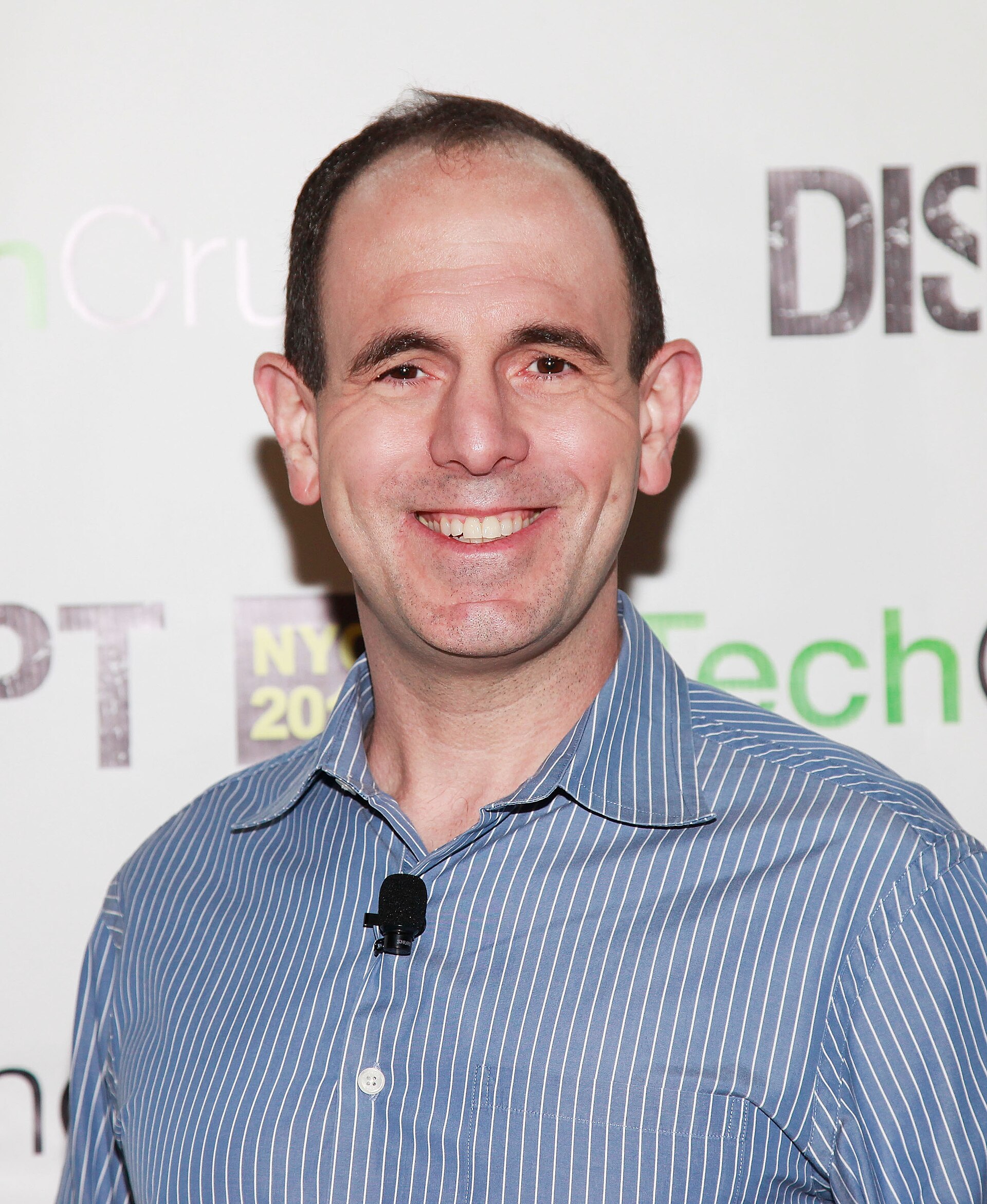
KEITH RABOIS
The PayPal Mafia's sharpest operator — turned early bets on LinkedIn, Yelp, YouTube, and Square into a portfolio that reads like a greatest hits of the modern internet.
Keith Rabois has been in the room when more billion-dollar companies were born than almost anyone alive. He was employee #6 at PayPal, an early exec at LinkedIn, COO at Square, and an early investor in Yelp, YouTube, and Airbnb — before any of those were household names. He's not a founder, not a pure VC, not a pure operator. He's something rarer: the guy who can run the thing AND spot the next thing. The only person who might have a more ridiculous early-stage batting average is the guy he learned from — Peter Thiel.
Net Worth
$500 million
Nationality
American
Time Horizon
Long-Term
Risk Appetite
8 / 10
Net Worth Context
- · 500x the average American's lifetime earnings, stacked and waiting.
CAREER & BACKGROUND
Rabois grew up in New Jersey, went to Stanford undergrad, then Stanford Law. At Stanford he got close to Peter Thiel — a friendship that would define the next three decades of his career.
He was intellectually combative from day one. In 1995, while still at Stanford, he stood outside the home of a university official and shouted anti-gay slurs in a protest against what he called campus censorship.
It became a campus scandal and followed him for years. He later said it was a deliberate provocation to test the limits of free speech on campus.
Whether you buy that framing or not, it gave everyone a preview of the Rabois MO: never shy, always willing to be controversial.
After law school he bounced through a few jobs — including at PayPal, where Thiel was CEO. Rabois joined as employee number six in 1999 and served as VP of Business Development and Government Relations.
He was there through the early scrappy years, the dot-com crash, the eBay acquisition in 2002 for $1.5 billion. The PayPal network scattered after the acquisition, and those people went on to found or fund Google, YouTube, SpaceX, LinkedIn, Yelp, and Facebook.
That alumni group became known as the PayPal Mafia. Rabois was a card-carrying member.
After PayPal, he moved into venture and operating roles simultaneously — which was unusual. He became EVP at LinkedIn in 2005, working with Reid Hoffman on turning the professional network into a real business.
Then he made early angel investments in YouTube (sold to Google for $1.65 billion in 2006), Yelp, and Slide. These were tiny checks that turned into enormous outcomes.
In 2010 he joined Square as COO. Jack Dorsey was the founder and CEO, and Rabois ran the business side.
He was instrumental in building the company's operations, hiring, culture, and go-to-market. He helped take Square from a cool hardware idea — a little white card reader that plugged into your iPhone — to a real financial services business.
He left Square in 2013 under complicated circumstances (a subordinate filed a harassment complaint, which Rabois denied; he resigned anyway). Square IPO'd in 2015, so he captured the gains on his equity.
After Square, he joined Khosla Ventures as a partner in 2013. He invested in DoorDash, Stripe, OpenDoor, and others during his time there.
Then in 2019 he made a big move: jumped to Founders Fund — the VC firm Peter Thiel started — as a general partner. He's been there since, making early-stage bets across consumer, fintech, and frontier tech.
He also did something unusual for a tech investor: he got obsessed with real estate. He moved from Silicon Valley to Miami around 2021, became vocal about Florida as a tech hub alternative to California, and invested personally in real estate.
He co-founded OpenDoor in 2014, which was his thesis that real estate transactions could be fully automated — and it went public via SPAC in 2020 at a $9.7 billion valuation.
COMPANIES & ROLES
PayPal was where it started. Rabois joined as employee six in 1999 and helped build the government relations function during the startup's most chaotic years.
The eBay acquisition at $1.5 billion in 2002 was his first major liquidity event.
LinkedIn — he joined as EVP in 2005 and helped Reid Hoffman turn the professional network from a niche experiment into an actual company. LinkedIn went public in 2011 at a $4.25 billion valuation and was later acquired by Microsoft for $26.2 billion in 2016.
YouTube — he was an early angel investor before Google acquired it for $1.65 billion in 2006. His check was small.
The return was not.
Yelp — another early angel bet, before Yelp became the thing everyone complains about their restaurant ratings on. Yelp IPO'd in 2012.
Square — he joined as COO in 2010 and spent three years helping Jack Dorsey build the payments and point-of-sale business. Square IPO'd in 2015 and is now Block, with a market cap that has ranged between $20 billion and $120 billion depending on when you asked.
OpenDoor — he co-founded this in 2014. The idea: you want to sell your house, you don't want to deal with agents and open houses and lowball offers.
OpenDoor makes you an offer immediately and handles the whole transaction. It went public via SPAC in 2020 at a $9.7 billion valuation.
DoorDash — he backed this early while at Khosla Ventures. DoorDash IPO'd in December 2020, opening at $182 a share and closing at a valuation north of $38 billion on day one.
Stripe — another Khosla-era investment. Stripe is currently the most valuable private fintech company in the US, last valued at $65 billion.
Founders Fund — he's been a general partner here since 2019, deploying Thiel's flagship fund into early-stage and growth-stage companies across tech, defense, and biotech.
INVESTING STYLE & PHILOSOPHY
Rabois bets on what he calls 'product wedges' — companies that start with one narrow, exceptional product and use it as a foot in the door to build something much bigger. Square started as a card reader.
OpenDoor started as an instant cash offer on your house. DoorDash started as food delivery.
In each case the first product was almost embarrassingly simple. That's the point.
He believes simplicity is a feature, not a limitation.
He's deeply operational in how he evaluates companies. He doesn't just look at the market size or the pitch deck — he looks at how the founders run the company.
Are decisions getting made fast? Is the team lean or is it already bloated with managers who manage managers?
He has a famous framework he calls the 'barbell' — the idea that the best companies have a small number of people doing extremely important things, and almost everyone else doing focused, narrow, repeatable tasks. Middle management is where companies go to die in his view.
He's also a conviction investor. He doesn't want a portfolio of 50 bets he vaguely believes in.
He wants 10 bets he'd go all-in on. This makes him look wrong more spectacularly when he's wrong, but it also means his wins are enormous.
DoorDash and Stripe alone would make most investors' careers.
His mental model for evaluating founders is similarly concentrated. He wants someone who is obsessed, opinionated, and willing to be wrong in public.
He doesn't trust founders who are too agreeable, too polished, or too focused on consensus. He wants someone who acts like they already know the answer and just needs resources to prove it.
THE PLAYBOOK
Risk Approach
Rabois is high risk by temperament and medium risk by design. He takes big swings on early-stage companies where the failure rate is brutal — most of his bets will go to zero, and he knows it and doesn't care.
The philosophy is that a $0 outcome on a $500K check is irrelevant if the DoorDash bet returns hundreds of millions.
But he's also quite strategic about concentration. He doesn't spread thin to feel safe.
He concentrates into the ones he believes in most and actively helps them — which is his version of risk management. He reduces risk not by diversifying but by being more useful to the companies he backs.
At the personal level he's also taken on real real estate risk — buying and developing property in Miami with genuine leverage, not just passive allocation. He's put personal capital into his thesis that Miami is becoming a tech hub, which either looks prescient or premature depending on the year you ask.
Money Habits
Rabois made the move from San Francisco to Miami in late 2020, which was partly a political statement and partly a real estate bet. He bought a significant home in Miami Beach and has been vocal about preferring Florida's tax environment and culture to California's.
He says he does not miss San Francisco.
He's known for eating at the same few restaurants obsessively and being deeply skeptical of trendy food culture. He's more interested in who he's eating with than what's on the menu.
He is active on Twitter/X to a degree that borders on compulsive — multiple posts a day, direct engagement with critics, and a willingness to argue in public that most senior investors avoid. He has used the platform to announce investments, attack competitors, defend founders, and occasionally start fires he didn't need to start.
It's a marketing strategy and a genuine habit at the same time.
His lifestyle is expensive but not flashy in the tech-bro sense. No yacht.
No obvious status signaling. He spends on real estate, on travel, and on time — which he protects aggressively.
He's known for being ruthless about his calendar and unwilling to take meetings that don't have clear purpose.
BIGGEST WIN
DoorDash. Rabois backed Tony Xu and the DoorDash team at Khosla Ventures when food delivery was still considered a crowded, low-margin, unsexy category.
Most investors were skeptical. Uber Eats and Grubhub already existed.
The conventional wisdom was that this market was won. Rabois disagreed.
He saw a company with superior operations and a founder who understood logistics at a granular level that the others didn't.
DoorDash IPO'd in December 2020. It opened at $182 per share and its market cap on day one was north of $38 billion.
Khosla's position at IPO was worth billions. It was one of the largest venture returns of 2020, in a year full of enormous IPO returns.
The people who said food delivery was commoditized got the industry right and the outcome completely wrong.
BIGGEST MISTAKE
OpenDoor. He co-founded it, championed it, and was one of its loudest public advocates.
The thesis was real — real estate transactions are unnecessarily painful and technology could fix that. The company went public via SPAC in 2020 at a $9.7 billion valuation.
Then interest rates started rising in 2022. OpenDoor's business model requires buying homes and holding them temporarily — when the housing market froze and home values dropped, OpenDoor was holding inventory it had overpaid for.
In Q3 2022 the company lost $928 million in a single quarter. The stock, which had peaked above $35, fell below $2.
The company has since restructured, but the valuation destruction was catastrophic for investors who bought at the SPAC price. Rabois didn't lose everything — his early equity was at much lower cost basis — but the company he built and went public with destroyed enormous amounts of public market investor wealth.
The lesson: business models that involve holding physical assets are brutally exposed to macro conditions you can't control.
FINANCIAL PHILOSOPHY
His clearest principle is that 'great companies are built by people who are irrationally committed.' He doesn't trust founders who have a backup plan. If someone can imagine a world where they stop and go do something else, they're probably going to stop and go do something else.
The founders he backs are the ones who would do this whether or not anyone gave them money.
He's also deeply skeptical of the modern VC trend of huge rounds and enormous teams. He thinks capital is often the enemy of clarity.
When you raise $200 million as a seed-stage company, you hire to fill the money, then the org chart becomes the product roadmap, then nothing moves fast. He likes companies that are forced to be scrappy and forced to prioritize.
On investing returns: he believes the difference between the best VC and the median VC is not incremental — it's categorical. The best 10 investments in any VC's fund typically account for more than 100% of the returns (because losses are capped at the investment, but winners are theoretically unlimited).
So the job is to get into the best companies, not to avoid the losers. Avoiding losers is what mediocre investors optimize for.
He's also unusually direct about talent: he believes most people are not exceptional and most companies are not exceptional, and the correct response to this is not to be polite about it. He has a reputation for being brutally honest in evaluations, which makes some founders love him and some avoid him.
FAMILY & PERSONAL LIFE
Rabois is married to Avi Liran and the couple have children. He's been relatively private about his family life compared to his very public professional persona.
He moved his family to Miami in 2020. He's spoken in interviews about wanting to raise his children outside of what he sees as Silicon Valley's increasingly monocultural, politically conformist environment.
He is openly gay and has been for years, though he rarely makes it a central part of his public identity.
EDUCATION
Stanford undergrad, then Stanford Law. Stanford is where he met Peter Thiel, which is arguably the most consequential thing that happened to him academically.
He never practiced law — law school was more about intellectual formation than career path. He has said the legal training made him a better investor because it taught him to read contracts, understand incentives, and find the specific sentence in a document where everything actually hinges.
BOOKS & RESOURCES
Rabois doesnt have a book of his own, which is notable given his profile
He has said he finds the VC book genre largely self-congratulatory and hasn't wanted to add to it
Another one he returns to. Grove ran Intel and this book is the clearest articulation of operational management in tech that exists. Rabois recommends it specifically to founders who are transitioning from 'building product' mode to 'building company' mode — a transition most founders struggle with
As foundational for understanding why big companies fail and where startup opportunities come from. The short version: big companies optimize for their current customers, which creates blindspots. Startups attack the blindspots
As an Amazon Associate, Netfigo earns from qualifying purchases. Book links above may be affiliate links.
QUOTES (6)
The most important thing I've learned is that the quality of the people you work with is the most important variable in your success.
If you want to build a great company, you have to be irrationally committed. People with backup plans execute their backup plans.
Most VCs are afraid of losing money. The best VCs are afraid of missing the next Google. Those are completely different businesses.
Great products are built by teams small enough that everyone knows what everyone else is doing.
The goal is not to compete. The goal is to create a market where you are the only option.
San Francisco decided it didn't want to be the center of innovation anymore. Miami said yes.
NETFIGO SCORE
Proprietary 5-dimension investor rating
Risk Appetite
Contrarian Index
Track Record
Accessibility
Time Horizon
Related Profiles
Investors
Chamath Palihapitiya
Both prominent voices in the 2020-2021 SPAC boom and frequent sparring partners on Silicon Valley culture
Peter Thiel
Thiel was Rabois's mentor at Stanford and PayPal — the single most influential relationship in his career
Reid Hoffman
Rabois worked under Reid Hoffman as EVP at LinkedIn and they remain close allies from the PayPal Mafia era
Head-to-Head
Compare Keith Rabois vs another investor.