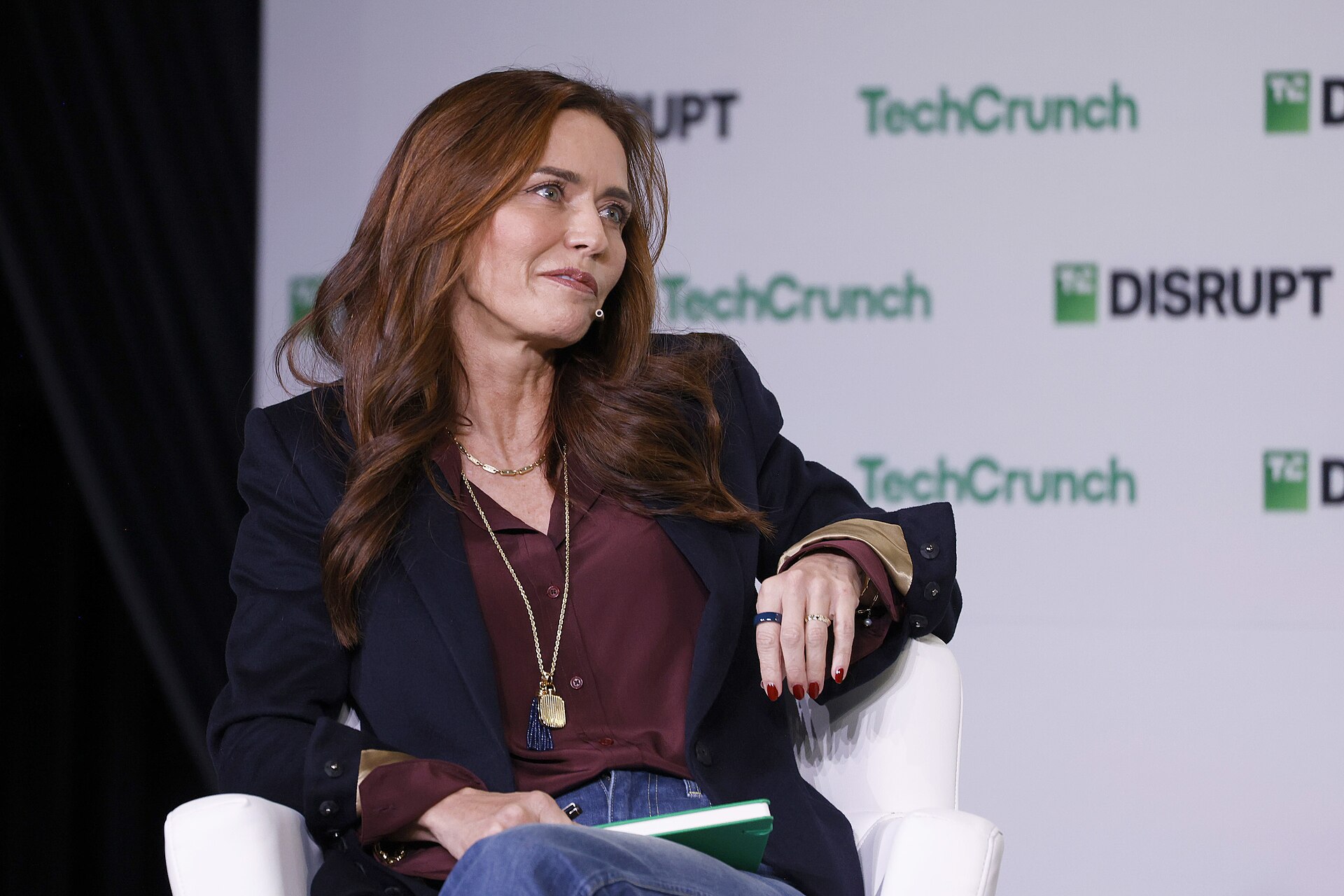
KIRSTEN GREEN
The VC who saw the DTC revolution coming before anyone else, backing Warby Parker, Glossier, and Reformation when retail was supposedly dead.
Kirsten Green was an equity analyst who got tired of watching from the sidelines and decided to start investing in the brands she actually believed in. In 2012, she founded Forerunner Ventures with a thesis that sounded insane at the time: consumers were about to start buying everything directly from brands, cutting out retailers entirely. She was right. Her early bets on Warby Parker, Bonobos, Dollar Shave Club, and Glossier returned multiples that made old-school retail investors look like they'd been asleep for a decade. Dollar Shave Club sold to Unilever for $1 billion in 2016 — she'd invested when it was practically a YouTube joke. She didn't predict the future. She just paid closer attention to how people actually wanted to shop.
Net Worth
$1.2 billion
Nationality
American
Time Horizon
Long-Term
Risk Appetite
7 / 10
Net Worth Context
- · Still a billionaire — just the quiet kind at the end of the table.
CAREER & BACKGROUND
Kirsten Green grew up in California and spent the early part of her career doing something most VCs haven't bothered with: actually analyzing retail businesses. She worked as an equity research analyst covering consumer and retail stocks, which meant she spent years dissecting how brands made money, where they lost it, and what made some resonate with customers while others quietly collapsed.
That background gave her something rare in venture capital — she understood unit economics. She knew what a good margin looked like.
She knew what customer acquisition costs could do to an otherwise promising brand. Most VCs investing in consumer startups in the early 2010s were pattern-matching off tech companies.
Green was doing something different. She was thinking about brands the way a serious retail investor thinks about brands.
In 2010, she started making her first angel investments into direct-to-consumer companies. The thesis was forming in real time: the internet was quietly destroying the case for wholesale distribution, and a new generation of brands could build direct relationships with customers, own their data, and collect margins that traditional retail had always handed to middlemen.
She founded Forerunner Ventures in 2012 to pursue this seriously.
The timing looked terrible to some. Traditional retail was getting demolished by Amazon.
Malls were dying. The conventional wisdom was that consumer investing was a graveyard.
Green saw it differently — the disruption of retail wasn't killing brands, it was creating an opening for the right kind of brand to win in a completely new way.
Forerunner's early portfolio reads like a greatest-hits list of the DTC era. Warby Parker, Bonobos, Dollar Shave Club, Glossier, Ritual, Away, Hims, Oura.
Some of these became billion-dollar companies. Some went public.
Dollar Shave Club sold to Unilever for $1 billion. These weren't flukes — they were the output of a repeatable investment framework that Green had built from scratch, in a category that most serious venture investors had written off.
She has since raised multiple funds, grown Forerunner into a team-based firm with a real platform for helping portfolio companies, and become one of the most cited voices in consumer investing. She sits on the boards of multiple portfolio companies and has been named to the Forbes Midas List.
She built one of the most distinctive funds in venture capital by refusing to copy what everyone else was doing.
COMPANIES & ROLES
Forerunner Ventures is Green's firm — a consumer-focused venture fund she founded in 2012 and has run ever since. It's not a generalist fund that occasionally does consumer.
Consumer is the entire thesis. The firm invests at the intersection of shifting consumer behavior and brand innovation, which in practice means backing direct-to-consumer companies before that category had a name.
Warby Parker was one of the signature early bets. Green backed the eyewear brand when the idea of buying glasses online seemed nuts and the incumbents were Luxottica, a monopoly that controlled most of what sat on your face.
Warby went public in 2021 at a $6 billion valuation. The DTC playbook, in full.
Dollar Shave Club was the bet that announced Forerunner to the world. Green invested early in the subscription razor startup that turned a funny viral video into a genuine business.
Unilever acquired it in 2016 for $1 billion. At the time, it was the largest acquisition of a venture-backed consumer brand in history.
Glossier was another — Emily Weiss's skincare and beauty brand that grew out of a blog and became a cult product line. Green invested early and watched it hit unicorn status.
Bonobos, the menswear brand that figured out fit before anyone else cared about it, was an early Forerunner investment. Walmart acquired it for $310 million in 2017.
Other notable portfolio companies include Away (luggage that millennials would actually pay for), Hims (men's health DTC), Ritual (supplements), Oura (smart ring), and Curology (personalized skincare). The common thread across all of them: a consumer behavior shift, a brand with a clear point of view, and a direct relationship with customers that traditional retail never had.
INVESTING STYLE & PHILOSOPHY
Green invests in consumer brands the way a detective reads a crime scene — starting from the consumer's behavior and working backwards to where the opportunity is. Most investors start from the technology or the business model.
She starts from the human.
Her framework is built around what she calls 'consumer-led disruption.' The thesis is that big shifts in where and how people shop — the rise of e-commerce, the death of department stores, the power of social media — create windows where new brands can build direct relationships with customers that legacy companies can't replicate. She's looking for that window, and then for the brand with the right team and voice to climb through it.
Think of it like this: every time retail gets disrupted, the incumbents are stuck defending their existing channels. The startup has no legacy infrastructure to protect, no wholesale relationships to manage.
It can go straight to the customer. Green's job is to find those startups before they've proven the thesis so completely that the valuation reflects it.
She cares deeply about brand. Not in a soft, fuzzy way — in a financial way.
A strong brand lowers customer acquisition costs, supports pricing power, and creates loyalty that makes unit economics work. She's been doing equity analysis long enough to know that a mediocre product with a strong brand will outperform a great product with a weak brand for longer than anyone expects.
She also invests in people with real retail intuition. Not just founders who understand growth marketing and paid social — founders who understand customers the way a merchant does.
What do they want? What do they hate?
What would make them switch? That sensibility is harder to find than technical talent, and Green has made a career out of spotting it.
Her time horizon is medium to long. DTC brands take time to build.
Customer acquisition takes capital. Logistics are hard.
She's not looking for a two-year flip — she's looking for brands that will be meaningful businesses in ten years.
THE PLAYBOOK
Risk Approach
Green's background in equity research makes her more numbers-disciplined than many consumer VCs. She thinks carefully about downside.
When you've spent years watching retail companies blow up because their unit economics were never real, you learn to look hard at the math before falling in love with the brand.
She's comfortable with the standard venture risk profile — most bets won't return the fund, and you make it back on the ones that do. But within that framework, she applies more scrutiny to consumer businesses than a generalist VC might.
Gross margins matter. Customer lifetime value matters.
The cost of acquiring a customer relative to what that customer is worth over time — that ratio tells you whether a brand is a real business or an expensive hobby.
She's taken some notable risk on brands that had no clear comp. When she invested in Dollar Shave Club, there was no playbook for building a subscription razor brand via viral video.
When she backed Away, the luggage market was considered boring and undifferentiated. Her willingness to go into categories that serious investors had dismissed is a specific flavor of contrarianism — not 'everyone is wrong about the market direction' but 'everyone is wrong about whether this category can produce a great brand.'
That said, she's not reckless. She concentrates on what she knows.
She doesn't wander into B2B SaaS or deep tech. The risk she takes is in consumer brand-building, a domain where she has spent her entire career developing pattern recognition.
It's focused risk, not diversified risk.
Money Habits
Green is notably private about her personal finances, which is fairly unusual for someone who has become a visible face in venture capital. She doesn't do the Instagram-visible lifestyle that some investors cultivate.
There are no well-publicized homes or car collections attached to her name.
What's visible is how she talks about money in a professional context: with unusual respect for the people whose money she's investing. She has said publicly that managing other people's capital is a serious responsibility and that she thinks about the limited partners who trust her with their money before she thinks about building her own wealth from management fees.
She reinvested heavily in building Forerunner as a firm — bringing on more partners, building platform services for portfolio companies, and expanding the thesis thoughtfully rather than just raising a bigger fund because she could. That's a financial choice.
She could have raised a much larger fund faster and collected significantly more in management fees. She chose to grow the fund in proportion to the team's actual capacity to help companies.
She's been a visible advocate for more women in venture capital, including through where she spends her time and advisory energy. Whether that costs her economically is hard to measure, but it reflects a set of priorities that aren't purely return-maximizing in the short term.
BIGGEST WIN
Dollar Shave Club sold to Unilever for $1 billion in 2016 — and that number undersells how improbable the whole thing was. Forerunner invested early, when Dollar Shave Club was a subscription razor startup running on a viral YouTube video and a very sharp sense of humor.
The idea that a consumer packaged goods giant would pay ten figures for a brand built entirely on irreverent direct marketing was not on most investors' bingo cards.
At the time of acquisition, it was the largest acquisition of a venture-backed consumer brand in history. Green had made the bet when the DTC category was still a fringe thesis and razor blades didn't seem like a venture-scale opportunity.
The return was exceptional. More importantly, the exit validated everything Forerunner had been arguing about the future of consumer brands — that direct relationships with customers and a strong brand voice were genuinely defensible assets that strategic acquirers would pay for.
Warby Parker going public at a $6 billion valuation in 2021 is another marker. Green had backed it early, when the idea of buying prescription eyeglasses online was considered a consumer education challenge, not a business.
The $6 billion exit isn't just a good return — it's proof that an entirely new category of consumer business became real.
BIGGEST MISTAKE
Green is more circumspect about public mistakes than some investors, which makes specific numbers harder to pin down. What she has spoken about candidly is the broader challenge of consumer investing in the 2019–2022 period, when DTC darlings that looked like sure things ran into profitability problems they couldn't solve.
Several high-profile DTC companies — not just Forerunner portfolio companies but across the category — discovered that customer acquisition costs on Facebook and Instagram had gotten so expensive that the unit economics that worked in 2016 didn't work in 2020. The DTC playbook got priced in.
Companies that had raised at high valuations on the strength of their growth rates suddenly couldn't get to profitability fast enough.
Forerunner was not immune. Some portfolio companies struggled in this environment.
The honest lesson Green and Forerunner drew from this period: growth rate is not the same as business quality, and the same macroeconomic tailwinds that made DTC look unstoppable could reverse faster than anyone expected. The category she'd pioneered had also gotten crowded, and crowded categories raise acquisition costs for everyone.
Being first is an advantage that gets competed away.
FINANCIAL PHILOSOPHY
Green's principles are shaped by a fundamental belief that consumer behavior changes slowly and then all at once — and that the investors who see it early win big.
Her core view: brands that build direct relationships with customers are structurally more valuable than brands that depend on retail intermediaries. Not because DTC is inherently cool, but because the data, the margin, and the customer loyalty all compound on the direct side.
Wholesale gives you distribution. Direct gives you a business.
She believes strongly in founder-market fit in the consumer space. She wants to back founders who are building something they themselves wanted to buy and couldn't find.
That personal connection to the problem usually generates the authentic brand voice that no amount of marketing spend can manufacture.
On market timing: she thinks most investors underestimate how long a behavioral shift takes to play out and then overestimate how much of the opportunity they've captured when they finally notice it. Being early in consumer means tolerating years of slow growth before the tipping point.
Most institutional capital can't handle that emotionally.
She's also honest about the limit of venture capital in consumer. Not every great brand needs venture funding.
Not every great brand should scale to a billion dollars. She's built Forerunner to be thoughtful about which companies need VC growth capital versus which ones would be better served growing more organically.
That kind of restraint is unusual in a world where funds pressure companies to grow at all costs.
FAMILY & PERSONAL LIFE
Green is married and has children. She's been public about the challenge of building a career in venture capital while raising a family — particularly in an industry that rewards being constantly available and socially networked in ways that aren't always compatible with family life.
She's spoken in interviews about being deliberate with her time and about finding a work rhythm that works for her family without treating the trade-off as something she simply has to accept. This perspective informs some of her broader advocacy work around creating more sustainable career paths in venture capital.
She's based in San Francisco, which puts her in the center of the venture capital ecosystem she operates in. Beyond that, she keeps her family life genuinely private in a way that's worth respecting.
EDUCATION
Green studied business at UCLA Anderson School of Management. The financial modeling and equity analysis foundation she built there fed directly into the investing discipline she brought to Forerunner — the ability to read a balance sheet with the same attention a brand investor pays to a campaign is not something most consumer VCs have, and her education is part of why she does.
BOOKS & RESOURCES
Green hasnt published a book, but shes been a thoughtful contributor to the conversation about consumer investing through interviews, conference talks, and Forerunners published research
Her annual 'State of Commerce' report is genuinely worth reading if you want to understand how the firm thinks about retail and consumer behavior trends
Essential for the jobs-to-be-done framework that underlies how she thinks about consumer behavior and product-market fit
As an Amazon Associate, Netfigo earns from qualifying purchases. Book links above may be affiliate links.
QUOTES (6)
The consumer is the boss. If you start there, you'll end up somewhere interesting.
Brand is not a soft concept. It's a financial asset that shows up in your acquisition costs and your margins if you build it right.
We were investing in consumer at a time when a lot of people thought consumer was a bad word in venture. That was fine with us.
The best founders I back have a personal connection to the problem they're solving. They built the thing because they wanted it and couldn't find it anywhere.
Direct-to-consumer isn't a channel strategy. It's a relationship strategy. The channel is just where the relationship starts.
The window of opportunity in consumer investing is usually when the category looks broken to everyone else. That's when the new model can get traction.
NETFIGO SCORE
Proprietary 5-dimension investor rating
Risk Appetite
Contrarian Index
Track Record
Accessibility
Time Horizon
Related Profiles
Investors
Head-to-Head
Compare Kirsten Green vs another investor.