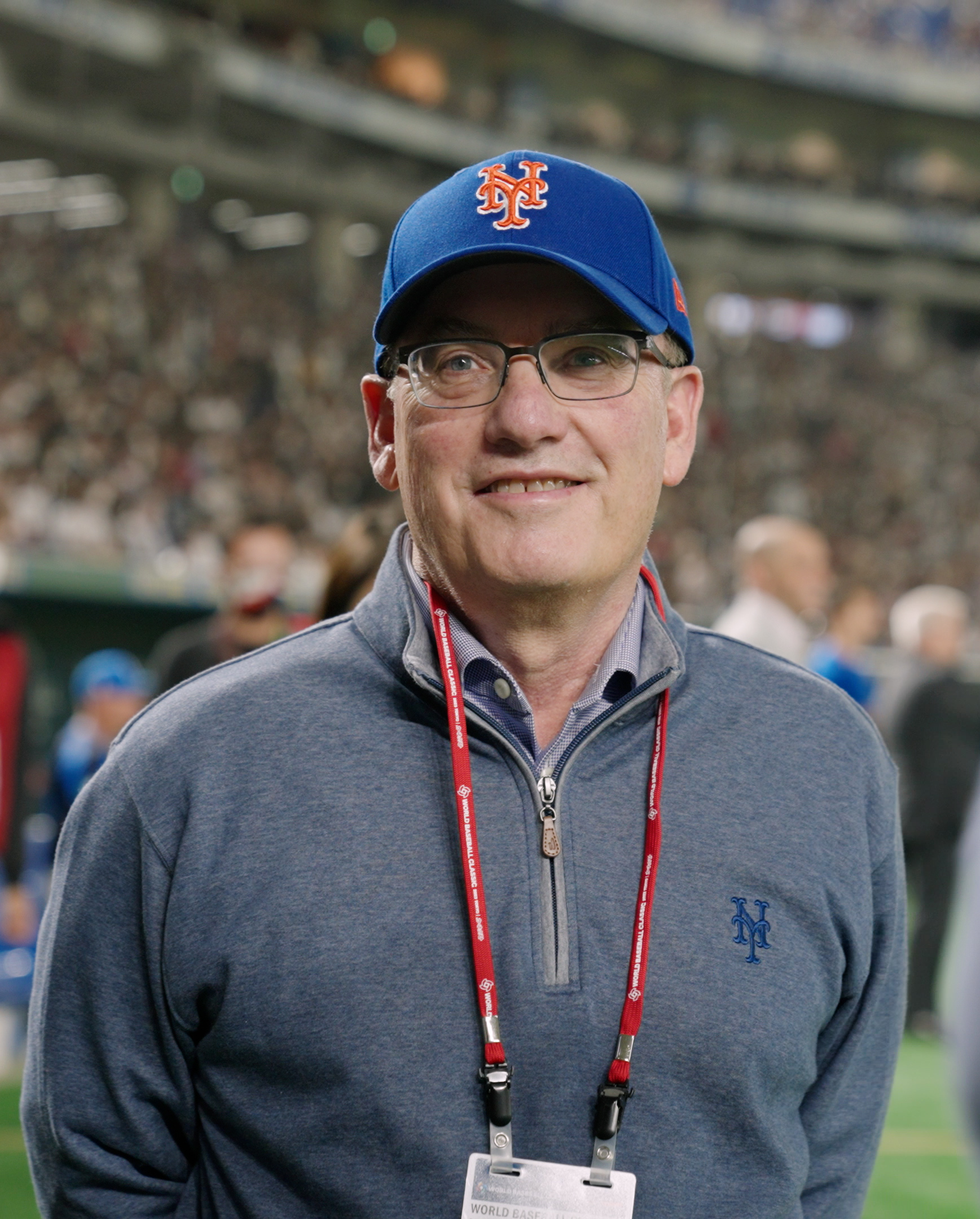
STEVE COHEN
The most feared trader on Wall Street — ran SAC Capital, made billions reading the market better than almost anyone alive, and survived a $1.8 billion insider trading settlement that would have ended most careers.
Steve Cohen turned $1,000 in poker winnings into one of the greatest trading fortunes in Wall Street history. SAC Capital averaged 30% annual returns for two decades — numbers so good that the government assumed something illegal was happening. They were right, at least partly: SAC paid $1.8 billion in 2013 to settle insider trading charges, the largest such settlement ever. Cohen himself was never criminally charged and was only barred from managing outside money for two years. He came back, renamed the fund Point72, and kept going. The man is basically unkillable.
Net Worth
$21 billion
Nationality
American
Time Horizon
Swing
Risk Appetite
9 / 10
Fund
Point72 Asset Management LP
Net Worth Context
- · That's the GDP of a small country — around the size of Greenland.
- · Enough to buy an NBA team and keep $17B for snacks.
CAREER & BACKGROUND
Steve Cohen grew up in Great Neck, Long Island, the fifth of eight kids in a middle-class Jewish family. His father was a dress manufacturer.
Cohen played poker seriously in high school — seriously enough that he later credited it with teaching him probability, reading people, and managing risk under pressure. These skills turned out to be worth about $21 billion.
He studied economics at Penn's Wharton School, graduated in 1978, and landed a job as a junior options trader at Gruntal & Co., a now-defunct New York brokerage. On his first day, he made $8,000 for the firm.
By the end of the year, he was generating $100,000 a day. He was 22.
Within a few years, he was running his own trading desk at Gruntal, taking on more risk, making more money, and developing the instincts that would define his career.
In 1992, Cohen left to start SAC Capital Advisors with $25 million — $10 million of his own money and $15 million from outside investors. The name came from his initials.
From the beginning, SAC was different. Cohen traded with ferocious intensity, churning through positions at a speed that most institutional investors considered reckless.
He wasn't building portfolios. He was hunting for edges, transaction by transaction, hour by hour.
SAC's returns over the next two decades were extraordinary. The fund averaged roughly 30% annually, net of fees — and the fees were brutal, typically 3% management and 50% performance.
Even after that, investors kept coming back because the net returns were still better than almost anything else available. At its peak, SAC managed $16 billion and was responsible for up to 3% of daily US stock trading volume.
Cohen personally made over $1 billion a year during the fund's best years.
Then came the legal trouble. Federal prosecutors had been investigating SAC for years, following a broader crackdown on hedge fund insider trading.
Between 2010 and 2013, eight former SAC employees were convicted of insider trading. The firm itself pleaded guilty to securities fraud in 2013 and paid $1.8 billion in penalties — at the time, the largest insider trading settlement in history.
Cohen was never personally charged, but the SEC barred him from managing outside money until 2018.
He converted SAC into a family office, renamed it Point72 Asset Management, and continued investing his own fortune. When the two-year bar expired, he opened Point72 back up to outside investors.
The firm now manages around $35 billion. Cohen also bought the New York Mets in 2020 for $2.4 billion, the highest price ever paid for an MLB franchise at that time.
He has since invested heavily in the team, signing major free agents and turning the Mets into one of the highest-payroll teams in baseball.
He also became famous — or infamous — for his role in the GameStop short squeeze of January 2021. Point72 had backed Melvin Capital, which was one of the funds heavily short GameStop.
When Reddit's WallStreetBets community drove the stock from $20 to nearly $500, Melvin needed emergency capital. Point72 and Citadel injected $2.75 billion into Melvin.
Cohen was vilified on social media. He got death threats.
He briefly deleted his Twitter account. Melvin eventually closed in 2022 after further losses.
Cohen kept going.
COMPANIES & ROLES
SAC Capital Advisors was the vehicle that made Cohen a legend. Founded in 1992 with $25 million, it became one of the most profitable hedge funds in history — returning an average of 30% annually for two decades before its criminal settlement and conversion to a family office.
The strategy was intense short-term trading across equities, combined with a vast network of analysts and, the government argued, sometimes information they shouldn't have had.
Point72 Asset Management is the reincarnation of SAC, operating today as a multi-strategy hedge fund managing roughly $35 billion. It runs global long/short equity, macro strategies, and systematic trading under one roof.
After the two-year bar on managing outside capital lifted in 2018, Cohen reopened Point72 to institutional investors. The firm employs over 2,000 people and operates out of offices in Stamford, Connecticut.
The New York Mets are Cohen's most public investment. He bought the MLB franchise in November 2020 for $2.4 billion, making it the most expensive sports franchise sale in history at the time.
He has spent aggressively — the Mets had one of the highest payrolls in baseball by 2023, exceeding $300 million — and has been vocal about wanting to win a World Series. Cohen is also a significant collector of contemporary art, with a collection estimated at over $1 billion.
His art has included works by Jeff Koons, Damien Hirst, and Pablo Picasso.
INVESTING STYLE & PHILOSOPHY
Cohen is a trader first and foremost, which puts him in a different category from most famous investors. Warren Buffett buys a business and holds it for decades.
Cohen buys a stock and might sell it in minutes, hours, or days. His edge was never about finding the best long-term business — it was about reading what the market was about to do next, better and faster than anyone else.
He runs a high-conviction, high-turnover operation. SAC was famous for taking large positions quickly, moving markets just by trading, and exiting just as fast.
Cohen reportedly monitors up to six screens at once and takes positions personally in between managing his army of analysts and portfolio managers. He is involved in the trades, not just the oversight.
The model at both SAC and Point72 is 'pod shops' — independent portfolio managers running their own books within the fund, each with their own P&L targets and drawdown limits. If a PM bleeds too much capital, they get cut.
It's ruthless and effective. Cohen essentially built a factory for generating trading ideas, staffed it with some of the most aggressive traders on Wall Street, and skimmed the best of what they produced.
Think of it like a trading firm where the floor manager also plays poker at the highest table.
His edge historically came from information — being faster, better-connected, and more plugged-in than competitors. He built a culture where analysts were expected to bring specific, actionable intelligence: not just 'I think the stock will go up' but 'the company's supply chain contact told me inventory is tightening.' The line between aggressive research and insider trading turned out to be one that some of his employees crossed.
Cohen himself claimed he never knowingly received material non-public information. Prosecutors couldn't prove otherwise.
Post-SAC, Point72 has diversified its strategies significantly — adding systematic/quant trading, macro, and discretionary long/short. Cohen still plays, but the fund is less dependent on any single approach or any single person's genius.
THE PLAYBOOK
Risk Approach
Cohen's risk tolerance is extremely high, but it is not reckless — and that distinction matters. He takes large concentrated positions, trades aggressively, and turns over his portfolio at a rate that would give most investors whiplash.
But he is also precise about cutting losses. SAC had strict drawdown rules: portfolio managers who lost more than a certain percentage of their capital faced position cuts or termination.
The same culture applied to Cohen himself — he has described his ability to cut a losing position as one of his most important skills.
He talks about trading discipline the way athletes talk about training. You don't let a bad position become an identity.
You don't hold on because you're emotionally attached to the thesis. You read the tape, assess what the market is telling you, and act.
He attributes his ability to take losses quickly to his poker background — in poker, a bad hand is a bad hand regardless of how much you've already bet, and throwing good money after bad is how amateurs go broke.
The insider trading settlement tested his risk tolerance in a different way. Paying $1.8 billion is a number that would destroy most people financially and certainly most people psychologically.
Cohen absorbed it, converted the fund, kept trading with his own capital, and came back two years later. Whether that's resilience or just having enough money that $1.8 billion is survivable is a question worth asking.
Probably both.
Money Habits
Cohen lives large, and he doesn't pretend otherwise. He owns a 35,000-square-foot mansion in Greenwich, Connecticut, that features a basketball court, a skating rink, a movie theater, and its own art gallery.
He reportedly spent $14.8 million renovating it after purchase. He also owns a 9-bedroom oceanfront estate in East Hampton on Long Island, and properties in Palm Beach, Florida, and Aspen, Colorado.
His art collection is one of the most significant private collections in the world. He paid $137.5 million for Picasso's 'Le Rêve' in 2013 — a painting he had originally agreed to buy from Steve Wynn for $139 million in 2006, until Wynn accidentally put his elbow through it.
The damaged painting sold for $155 million in 2013. Cohen has also owned works by Damien Hirst, Jeff Koons, and Jackson Pollock.
The total collection value has been estimated north of $1 billion.
He is a major philanthropist. The Cohen Foundation has donated hundreds of millions to mental health initiatives, military veterans' causes, and education.
He has given over $275 million to mental health-related causes and pledged $50 million to veterans' treatment programs. He's also donated significantly to his alma mater, Penn.
The Mets ownership is the most visible expression of his money habits — he doesn't just buy the team, he spends aggressively to win. In 2023, the Mets' payroll including luxury tax hit nearly $370 million, making them one of the most expensive rosters in baseball history.
Cohen has publicly said he doesn't care about the luxury tax bill. For a man with $21 billion, why would he?
BIGGEST WIN
The biggest win is SAC Capital itself — the entire 20-year run. Cohen started with $25 million in 1992 and grew it into a fund managing $16 billion.
Over that period, he averaged approximately 30% annual returns before fees. After fees, his investors still made extraordinary returns, and Cohen personally took home over $1 billion a year during the fund's peak years.
His personal cut from the 50% performance fee structure alone made him one of the wealthiest people in America.
A more specific example: during the 2008 financial crisis, when most hedge funds were being destroyed, SAC managed its exposure carefully and significantly outperformed the market. Cohen had been warning his team about mortgage risk months before Lehman Brothers collapsed.
His macro awareness combined with his trading discipline let him sidestep much of the carnage that wiped out competitors.
And then the Mets, in a different sense. He bought the franchise for $2.4 billion in 2020.
By 2023, Forbes estimated the Mets were worth $2.9 billion. He's already sitting on a half-billion in appreciation — and he still owns the team.
BIGGEST MISTAKE
The $1.8 billion insider trading settlement in 2013 is the obvious answer, but Cohen would probably frame it differently. He never admitted personal wrongdoing.
The mistake, from his perspective, was building a culture so focused on gaining edge through information that some of his employees crossed lines he claims he didn't know they were crossing. Eight of his people were convicted.
The firm pleaded guilty. He paid $1.8 billion in penalties — real money, even for him — and was barred from managing outside capital for two years.
The actual cost was larger than the fine. SAC's reputation was destroyed.
The fund had to return all outside capital. Cohen lost the platform he'd spent 20 years building.
And the two-year bar meant watching markets move while sitting on the sidelines. He turned it into Point72 and rebuilt, which took real psychological resilience, but the original SAC Capital is gone.
Another notable stumble: his support for Melvin Capital during the GameStop crisis in January 2021. Point72 and Citadel injected $2.75 billion into Melvin to keep it from imploding.
Melvin still eventually collapsed in 2022 after continued losses. Cohen's goodwill investment — and the public relations nightmare of being associated with the short position that Reddit traders were targeting — was a bruising episode.
He received death threats, briefly quit Twitter, and became one of the most hated figures in retail investor culture for a period.
FINANCIAL PHILOSOPHY
Cohen's financial philosophy is rooted in one core belief: information and conviction are the only things that matter. He's not interested in diversification as a risk-reduction strategy.
He'd rather take a large, well-researched position in one idea than spread money across twenty mediocre ones. 'I'd rather be 80% right and fully invested than 100% hedged and making nothing' is the Cohen mentality.
He believes that most investors are too cautious and too passive. He told his analysts that being wrong and doing nothing is the same failure as being wrong and losing money.
Sitting on cash when there's an edge to be had is just as much a mistake as betting on a bad idea. Decisiveness is a core value.
He's also deeply focused on process. Cohen has talked publicly about the importance of separating 'I was wrong about this trade' from 'I am a bad trader.' Emotional detachment from individual outcomes is how you survive a career in short-term trading.
He has been interested in sports psychology and performance coaching for years — Point72 reportedly has invested in programs to help traders manage the psychological demands of the job.
On the legal side of things, Cohen's philosophy seems to be: play aggressive, stay within what you can personally defend, and build systems robust enough that the people beneath you can't take you down. Whether that philosophy fully held up between 2008 and 2013 is something only Cohen knows for certain.
FAMILY & PERSONAL LIFE
Cohen grew up in Great Neck, Long Island, one of eight children. His father worked in the garment industry.
Cohen has been married twice. His first marriage, to Patricia Finke, ended in a contentious divorce in 1990.
Patricia Cohen later sued him for fraud, alleging he had hidden assets during their divorce settlement. The case dragged through courts for years and was ultimately dismissed.
He married Alexandra Garcia, known as Alex, in 1992, the same year he founded SAC. They have seven children between them — two from his first marriage and five together.
Alex Cohen has become a significant public figure in her own right through her philanthropy, particularly around mental health and veterans' causes.
Cohen is famously passionate about the New York Mets — he's been a fan since childhood growing up on Long Island. Buying the team in 2020 was described by people close to him as a lifelong dream.
He is notoriously active on social media around Mets news and sometimes engages directly with fans, which is unusual for a billionaire of his stature. His handle was @StevenACohen72.
He briefly deleted his account during the GameStop chaos when the threats got serious enough that it was no longer fun.
EDUCATION
Cohen attended Great Neck North High School on Long Island, where he got serious about poker — running games that he later credited with teaching him to read probability and manage risk. He went on to study economics at the University of Pennsylvania's Wharton School, graduating in 1978.
Wharton gave him the theoretical framework, but poker gave him the instincts. He has said that his poker background was more formative for his trading career than anything he learned in a classroom.
BOOKS & RESOURCES
The book to read. It's the definitive account of SAC Capital, the insider trading investigation, and Cohen's trajectory from Gruntal trader to hedge fund legend to government target. Kolhatkar had extraordinary access and the book reads like a thriller. Cohen did not cooperate with it and reportedly disliked it, which is probably a recommendation in itself
An excellent history of hedge funds that puts SAC in context among the great funds of the late 20th century
A book that has circulated widely in professional trading circles for years
As an Amazon Associate, Netfigo earns from qualifying purchases. Book links above may be affiliate links.
QUOTES (6)
I think the secret is to cut your losses quickly. That's the most important thing. If I'm wrong, I just get out.
Being right isn't enough. You have to be right and act on it. Most people are right occasionally but they don't make money because they don't have the conviction to act.
I don't diversify to reduce risk. I concentrate where I have edge. Everything else is just noise.
The best traders I've seen share one thing — they don't fall in love with positions. A stock doesn't know you own it.
You want to know what separates the good traders from the great ones? The great ones take big losses and come back the next day.
Information is the edge. Everything else is just capital and courage.
NETFIGO SCORE
Proprietary 5-dimension investor rating
Risk Appetite
Contrarian Index
Track Record
Accessibility
Time Horizon
Related Profiles
Investors
David Einhorn
Both are prominent hedge fund managers who rose to fame in the 2000s running concentrated equity strategies. Einhorn at Greenlight and Cohen at SAC represent two different approaches to hedge fund management — Einhorn's value-activist style versus Cohen's high-frequency trading edge.
Ken Griffin
Both ran massive multi-strategy hedge funds from the same era — Citadel and SAC were the two most feared firms on Wall Street. Griffin and Cohen were simultaneously rivals and, during GameStop, briefly allies when Citadel and Point72 both injected capital into Melvin Capital.
Paul Tudor Jones
Paul Tudor Jones and Steve Cohen are two of the greatest short-term traders in hedge fund history. Both built their reputations on reading market momentum and acting decisively — Jones called the 1987 crash, Cohen dominated equity trading for 20 years.
Head-to-Head
Compare Steve Cohen vs another investor.