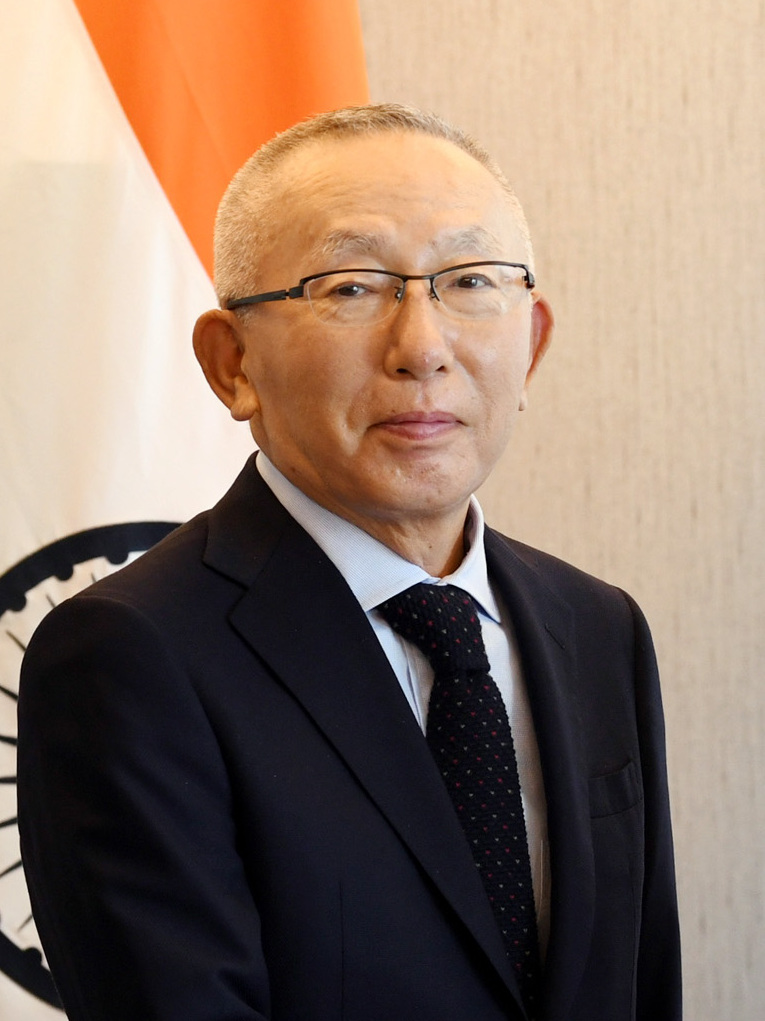
TADASHI YANAI
Uniqlo founder — turned a small family clothing shop into Asia's biggest fashion retailer
A man who turned one clothing store in rural Japan into a $90 billion empire by selling the most boring clothes imaginable — and making them the best-made boring clothes on Earth. Yanai has said he failed more than he succeeded. His autobiography is literally called "One Win, Nine Losses." Japan's richest person got there by perfecting basics: better fabric, better stitching, lower prices. The exact opposite of fashion.
Net Worth
$38 billion
Nationality
Japanese
Time Horizon
Long-Term
Risk Appetite
7 / 10
Net Worth Context
- · That's the GDP of a small country — around the size of Greenland.
- · Enough to buy an NBA team and keep $34B for snacks.
CAREER & BACKGROUND
Born in 1949 in Ube, Yamaguchi Prefecture, Japan. His father ran a small men's clothing shop.
After graduating from Waseda University, worked briefly at a supermarket chain (Jusco). Took over his father's tailor shop in 1972.
Opened the first Uniqlo store in Hiroshima in 1984 — the name was supposed to be "Uni-Clo" (Unique Clothing) but was registered as "Uniqlo" due to a clerical error. Launched the fleece jacket campaign in 1998 — sold 2.6 million fleece jackets in one season at $15 each.
This single campaign put Uniqlo on the national map. Took Fast Retailing (Uniqlo's parent) public.
Expanded internationally starting in 2001 (London first — which failed spectacularly). Re-entered international markets with China in 2002 — this time it worked.
By 2024, Uniqlo has over 2,400 stores in 25 countries. Fast Retailing's market cap surpassed Zara's parent Inditex multiple times.
Yanai became Japan's richest person.
COMPANIES & ROLES
Fast Retailing (founder and CEO) — parent of Uniqlo, GU (budget brand), Theory (acquired 2003), Helmut Lang (acquired, later sold), J Brand, Comptoir des Cotonniers, and Princesse tam.tam. The non-Uniqlo brands have been a mixed bag.
INVESTING STYLE & PHILOSOPHY
Yanai is obsessed with operational excellence over creative flair. While competitors chase trends, Uniqlo engineers better basics.
Their HEATTECH thermal wear and AIRism moisture-wicking fabric are developed with Toray Industries using actual materials science R&D. Yanai thinks of clothing more like technology — iterating on performance fabrics season after season.
He's a contrarian in the fashion industry because he rejects the fundamental premise that fashion needs to be fashionable. He wants it functional, affordable, and perfect.
THE PLAYBOOK
Risk Approach
Yanai takes big swings internationally but is conservative operationally. He'll enter a new country knowing the first few years will lose money.
But inside each store, everything is obsessively controlled — inventory management, supply chain, fabric quality. He failed in the UK, partially in the US (initially), and in some European markets, but kept iterating until he got it right.
He's willing to lose money on expansion as long as the product stays consistent.
Money Habits
Yanai works 7 days a week and has for decades. He arrives at 7 AM and often doesn't leave until 9 PM.
He visits Uniqlo stores constantly and personally checks fabric quality, folding standards, and customer service. He's worth $38 billion but is known for eating in the company cafeteria.
He sets his alarm for 5 AM every day. He's donated billions to causes including $100 million to his alma mater Waseda University and significant support for the UNHCR refugee clothing program — Uniqlo is the UN's largest private sector partner for refugee assistance.
BIGGEST WIN
The fleece campaign of 1998 was the original breakout. But the bigger win is Uniqlo's China expansion.
While western brands struggled with localization, Uniqlo became the most popular fast-fashion brand in China. By 2024, Uniqlo has more stores in Greater China than in Japan.
The Chinese business alone is worth tens of billions. Yanai saw China's middle-class boom before most and invested aggressively when competitors hesitated.
BIGGEST MISTAKE
The UK launch in 2001 was a disaster. Yanai opened 21 stores in the UK and had to close 16 of them within two years.
He tried to sell the same products at the same prices as Japan without adapting to local tastes or understanding the European competitive landscape. He's been remarkably honest about this failure.
The Theory and Helmut Lang acquisitions also underperformed — Yanai is much better at building brands than buying them.
FINANCIAL PHILOSOPHY
Yanai's philosophy is "clothes are a component, not the main dish." He believes clothing should enhance your life without demanding attention. He admires Steve Jobs' uniform approach.
He thinks the fashion industry is fundamentally broken — too wasteful, too trend-driven, too focused on exclusivity. His vision is democratized quality: everyone deserves well-made clothes at fair prices.
He's said "Uniqlo is not a fashion company — it's a technology company that happens to make clothes."
FAMILY & PERSONAL LIFE
Married with two sons. Both sons hold positions in Fast Retailing.
Yanai has been open about wanting the company to eventually be run by professional management rather than family — unlike most Japanese corporate dynasties. He's attempted to appoint non-family successors twice but ended up taking the CEO role back both times.
EDUCATION
Graduated from Waseda University (one of Japan's top private universities) with a degree in political science and economics in 1971. No business or fashion education.
His education in retail came entirely from running his father's shop.
BOOKS & RESOURCES
Yanais autobiography is called One Win, Nine Losses — he considers it required reading for his executives
He admires Harold Geneen's "Managing" and Peter Drucker's works (Drucker is his management hero). He's said every Fast Retailing executive should read Drucker before anything else
QUOTES (6)
One win, nine losses. That is the history of my career. The key is to make that one win so big that it pays for all nine losses and then some.
Uniqlo is not a fashion company. It is a technology company that happens to make clothes. Our fabrics are engineered, not designed.
Change or die. Those are the only two options in retail. If you are doing the same thing you did five years ago, you are already dead — you just don't know it yet.
Clothes should serve you. You should never serve your clothes. The moment you dress to impress, you've already lost. Dress to live.
I failed in London. I failed in some parts of America. I failed at running other brands. But I never failed at learning from failure. That's the only skill that matters.
Everyone at Fast Retailing must read Peter Drucker. If you don't understand management as a discipline, you have no right to manage anyone.
NETFIGO SCORE
Proprietary 5-dimension investor rating
Risk Appetite
Contrarian Index
Track Record
Accessibility
Time Horizon
Head-to-Head
Compare Tadashi Yanai vs another investor.