NETFIGO SCORE BATTLE
ORIGINAL DATARisk Appetite
Contrarian Index
Track Record
Accessibility
Time Horizon
AT A GLANCE
INVESTING STYLE
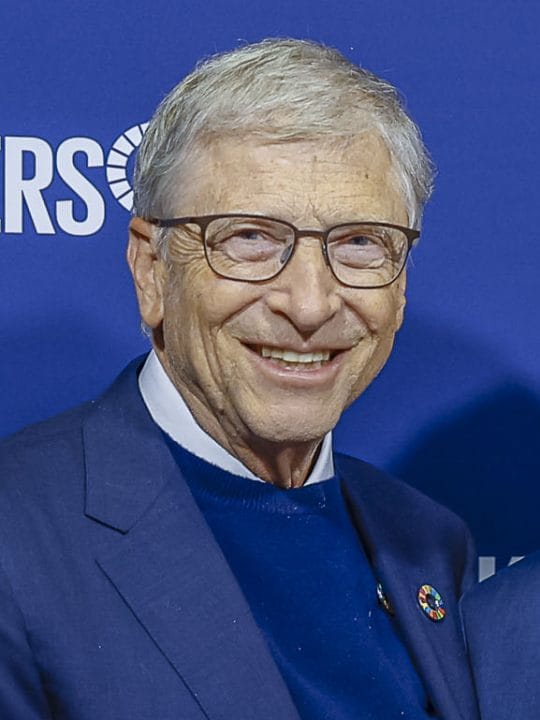
Bill Gates
Gates invests through Cascade Investment LLC in established, cash-generative businesses — railroads, waste management, agricultural equipment, farmland. His biggest single Cascade holding for years was Canadian National Railway.
He has sold most of his Microsoft stock over time. His investment philosophy outside Microsoft mirrors Buffett's: durable businesses with pricing power, bought at reasonable prices.
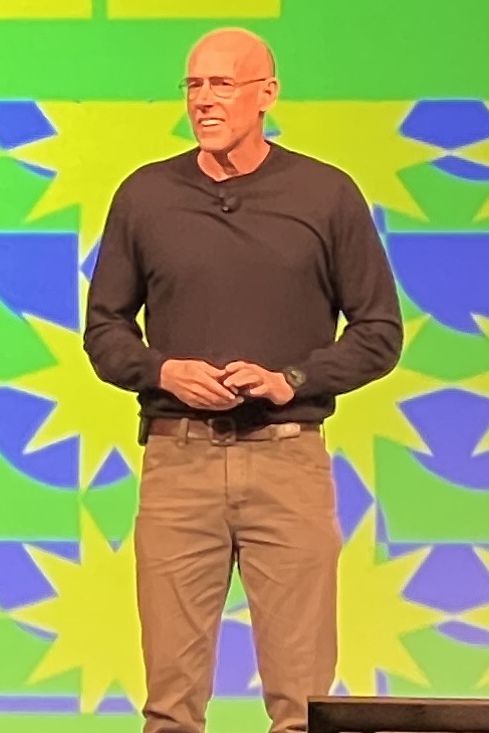
Scott Galloway
Galloway's personal investing style is relatively conservative given how loud he is. He keeps a heavy allocation in index funds and real estate.
He does make concentrated bets on individual stocks when he has conviction — he famously held Amazon for years. He angel invests occasionally but is not prolific.
His real wealth comes from business exits and media income, not portfolio management.
FINANCIAL PHILOSOPHY
Bill Gates
His core framework: read obsessively, think long-term, and separate emotion from analysis. He takes annual Think Weeks — solo retreats to a lake cottage in the Pacific Northwest where he reads papers and books for two weeks with no interruptions.
He publishes a reading list twice a year at gatesnotes.com. He credits Warren Buffett, a friend since they were seated next to each other at a lunch in 1991, with teaching him to judge a business by how durable it is rather than how clever it is.
Scott Galloway
Diversify, own assets, and do not confuse being smart with being lucky. Galloway preaches that the most reliable path to wealth is boring — buy index funds, own property in growing cities, and let time do the work.
He is deeply skeptical of anyone who claims they can consistently beat the market.
RISK TOLERANCE
Bill Gates
Gates's risk tolerance is intellectual and deliberate rather than impulsive. He takes genuinely large bets — TerraPower on nuclear fission, billions into climate technology, the Gates Foundation's campaigns to eradicate diseases that kill millions — but only after intense research.
His Think Weeks exist to force slow, rigorous thinking on big decisions. At Microsoft, he kept enough cash on hand to run the company for a full year with zero revenue because he never wanted short-term survival pressure to force a bad long-term decision.
That discipline carries into his personal finances.
Scott Galloway
Moderate. Galloway has experienced the full spectrum — he had a company go public and then go bankrupt (Red Envelope), which taught him that financial ruin is always closer than you think.
Post-L2 sale, he became much more conservative. Heavy real estate holdings in New York and Florida.
He preaches diversification publicly and mostly follows his own advice, with occasional concentrated stock positions.
THE PLAYBOOK
Bill Gates
He wakes up early, exercises on a treadmill while watching documentaries, and reportedly does the dishes every night. He has said dishes are meditative.
For a man worth $108 billion, the emphasis on routine is either deeply grounded or very good PR. He drove himself to work at Microsoft for years and lived in a normal house long after he could afford otherwise.
Scott Galloway
Galloway owns significant real estate in New York and Florida. He talks openly about his wealth and spending — nice apartments, good restaurants, private school for his kids.
He is not frugal and does not pretend to be. But he is very intentional about where money goes.
He has said his biggest financial luxury is "buying back his time" — paying for convenience so he can focus on what matters.
BIGGEST WIN
Bill Gates
Microsoft Windows. The decision to license MS-DOS to IBM for the PC while retaining the right to sell it to other manufacturers was arguably the most lucrative business decision in tech history.
Every PC manufacturer then licensed Windows. Gates captured the entire PC market without building the hardware.
By 1999, Microsoft's market cap hit $616 billion.
Scott Galloway
Selling L2 to Gartner for an estimated $134 million in 2017. He built L2 into the go-to benchmarking firm for digital competence of luxury and consumer brands.
The exit, combined with his media career taking off simultaneously, catapulted him from "NYU professor" to "famous rich guy who yells about tech on the internet."
BIGGEST MISTAKE
Bill Gates
Missing the internet. Microsoft was late and initially dismissive of the internet as a platform.
Gates eventually course-corrected and wrote the Internet Tidal Wave memo in 1995, redirecting the entire company toward internet strategy. But the delay allowed Netscape to establish footholds, and Microsoft's browser monopoly tactics led to the landmark antitrust case United States v.
Microsoft in 2000, which threatened to break up the company.
Scott Galloway
Red Envelope. Full stop.
Galloway has been brutally honest about this — he took a gift e-commerce company public, it was valued at hundreds of millions, and then it went bankrupt. He has called it the most painful experience of his career and has said it took years to emotionally recover.
He lost a significant amount of personal wealth in the collapse.
CAREER HIGHLIGHTS
Bill Gates
Bill Gates was born in Seattle in 1955. He taught himself to program on a PDP-10 at age 13.
He enrolled at Harvard in 1973, dropped out in 1975, and moved to Albuquerque with Paul Allen to found Microsoft. Their break came when they licensed an operating system to IBM for the original PC — and crucially, retained the rights to sell it to anyone else.
That decision made Microsoft. Windows became the standard operating system for the world.
Gates became the world's richest person in 1995 and held that title for much of the next 15 years. He transitioned out of Microsoft's day-to-day around 2000 and fully moved into philanthropy via the Gates Foundation.
Scott Galloway
Scott Galloway is a serial entrepreneur and NYU Stern School of Business professor who became famous for his brutally honest takes on Big Tech. He founded nine companies over his career, including L2 (a business intelligence firm sold to Gartner in 2017), Red Envelope (an e-commerce company that went public then bankrupt), and Prophet (a brand strategy firm).
His 2017 book The Four, about Amazon, Apple, Facebook, and Google, became a bestseller. His YouTube channel and Prof G podcast reach millions.
He called Amazon buying Whole Foods before it happened. He also co-hosts Pivot with Kara Swisher, one of the most popular tech podcasts in the world.
He teaches brand strategy at NYU and is known for his profanity-laced, data-heavy lectures that go viral every semester.
COMPANIES & ROLES
Bill Gates
Microsoft (co-founder, former CEO and chairman). Cascade Investment LLC (his personal investment vehicle).
Bill & Melinda Gates Foundation (co-chair). Major holdings through Cascade include Canadian National Railway, Deere & Company, and significant farmland.
Early Microsoft equity remains a massive portion of his net worth.
Scott Galloway
L2 Inc (founder, sold to Gartner), Red Envelope (founder, IPO then bankruptcy), Prophet (co-founder), Section4 (founder, online education), Prof G Media (founder)
EDUCATION
Bill Gates
Harvard University — studied mathematics and computer science. Dropped out in 1975 after his sophomore year to found Microsoft.
Scott Galloway
UCLA (BA), UC Berkeley Haas School of Business (MBA).
BOOKS & RESOURCES
Bill Gates
The Road Ahead (his own book)
Business at the Speed of Thought (his own book)
As an Amazon Associate, Netfigo earns from qualifying purchases. Book links above may be affiliate links.
Scott Galloway
The Algebra of Happiness by Scott Galloway, Prof G Pod (podcast), Pivot with Kara Swisher (podcast), No Mercy / No Malice (his weekly blog)
As an Amazon Associate, Netfigo earns from qualifying purchases. Book links above may be affiliate links.