NETFIGO SCORE BATTLE
ORIGINAL DATARisk Appetite
Contrarian Index
Track Record
Accessibility
Time Horizon
AT A GLANCE
INVESTING STYLE
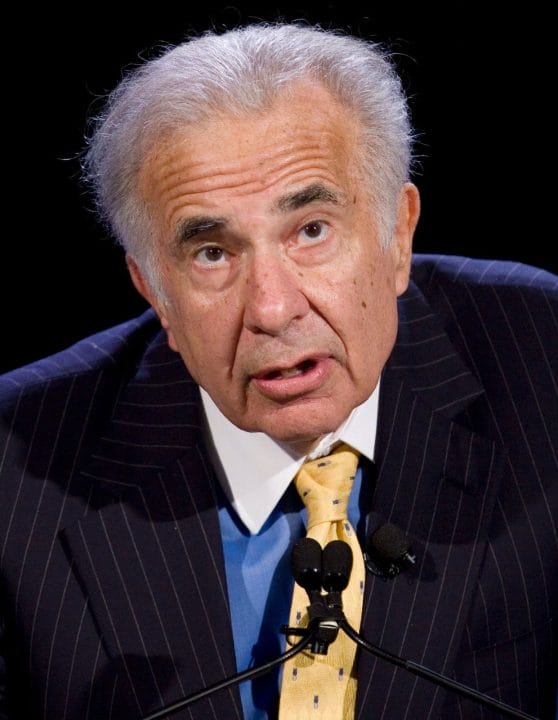
Carl Icahn
Icahn buys undervalued companies with bad management. His thesis is consistently the same: there is enormous value being destroyed by entrenched executives who are more interested in keeping their jobs than returning value to shareholders.
He buys enough stock to force a confrontation. Sometimes management cleans itself up just from the threat of his involvement.
Sometimes he installs new people. Sometimes he forces a full sale of the company.
His version of value investing is more aggressive than Graham''s or Buffett''s. He doesn''t wait for the market to recognise value.
He forces the recognition. He is comfortable with conflict in a way most investors are not.
He sees confrontation with management as part of the job — not an unfortunate side effect of it.
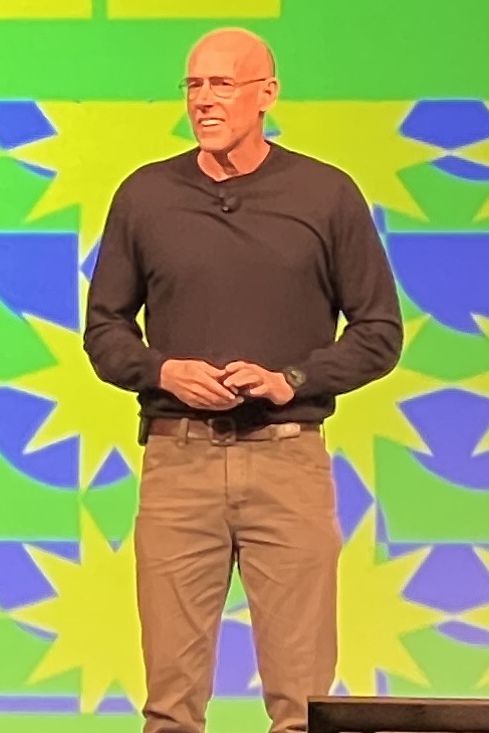
Scott Galloway
Galloway's personal investing style is relatively conservative given how loud he is. He keeps a heavy allocation in index funds and real estate.
He does make concentrated bets on individual stocks when he has conviction — he famously held Amazon for years. He angel invests occasionally but is not prolific.
His real wealth comes from business exits and media income, not portfolio management.
FINANCIAL PHILOSOPHY
Carl Icahn
He genuinely believes management teams destroy shareholder value through complacency, self-dealing, and entrenchment. He sees himself as a corrective force — not a vulture, but a mechanism by which markets hold management accountable.
Whether that''s how it looks from inside the companies he targets is a different question. His rules: buy when nobody else wants it, apply pressure to unlock the value, sell when the value is recognised.
Don''t get sentimental about positions. Don''t let management tell you the company is more complex than it looks.
Scott Galloway
Diversify, own assets, and do not confuse being smart with being lucky. Galloway preaches that the most reliable path to wealth is boring — buy index funds, own property in growing cities, and let time do the work.
He is deeply skeptical of anyone who claims they can consistently beat the market.
RISK TOLERANCE
Carl Icahn
He concentrates. He uses leverage.
He''s comfortable with positions that make other investors deeply uncomfortable. He''s also comfortable being wrong in public — he''s had positions go spectacularly badly and he doesn''t hide from them.
His Hertz position went bankrupt during COVID. His Herbalife long was a very public, very watched position on the opposite side of Bill Ackman''s short.
He doesn''t bluff. When he says he''s going to fight, he fights.
Scott Galloway
Moderate. Galloway has experienced the full spectrum — he had a company go public and then go bankrupt (Red Envelope), which taught him that financial ruin is always closer than you think.
Post-L2 sale, he became much more conservative. Heavy real estate holdings in New York and Florida.
He preaches diversification publicly and mostly follows his own advice, with occasional concentrated stock positions.
THE PLAYBOOK
Carl Icahn
He lives in Sunny Isles Beach, Florida. He works ferociously hard and has done so into his 90s.
He''s a hands-on manager — not someone who delegates. He famously said: "If you want a friend on Wall Street, get a dog." He has a Maltese named Tiger.
He''s been a prolific poker player and was once considered one of the best amateur players in New York. He remarried in 1999.
His current wife is Gail Golden. He''s given some money to charity but not at the scale of Buffett or Gates — he''s made no secret of prioritising returns over philanthropy.
Scott Galloway
Galloway owns significant real estate in New York and Florida. He talks openly about his wealth and spending — nice apartments, good restaurants, private school for his kids.
He is not frugal and does not pretend to be. But he is very intentional about where money goes.
He has said his biggest financial luxury is "buying back his time" — paying for convenience so he can focus on what matters.
BIGGEST WIN
Carl Icahn
Apple. In 2013 he disclosed a $1.5 billion stake in Apple and published an open letter to Tim Cook urging a larger share buyback.
Apple eventually announced a significantly expanded buyback program. The stock rose.
Icahn made approximately $2 billion on the position. He didn''t have to engineer a hostile takeover — just making his involvement public was enough to move one of the largest companies in the world.
Scott Galloway
Selling L2 to Gartner for an estimated $134 million in 2017. He built L2 into the go-to benchmarking firm for digital competence of luxury and consumer brands.
The exit, combined with his media career taking off simultaneously, catapulted him from "NYU professor" to "famous rich guy who yells about tech on the internet."
BIGGEST MISTAKE
Carl Icahn
TWA. He took over Trans World Airlines in 1985 using a leveraged buyout, extracted cash from the company to pay back the acquisition debt, and sold the valuable London routes to American Airlines for $445 million.
By the time he was done, TWA was a financially gutted airline. It went bankrupt in 1992, again in 1995, and was absorbed by American Airlines in 2001.
Icahn personally made hundreds of millions. The airline''s employees and creditors did not.
He''s defended his actions as legal. Legal and good for everyone are not always the same thing.
Scott Galloway
Red Envelope. Full stop.
Galloway has been brutally honest about this — he took a gift e-commerce company public, it was valued at hundreds of millions, and then it went bankrupt. He has called it the most painful experience of his career and has said it took years to emotionally recover.
He lost a significant amount of personal wealth in the collapse.
CAREER HIGHLIGHTS
Carl Icahn
Carl Icahn grew up in Far Rockaway, Queens. His father was a failed opera singer who became a synagogue cantor.
Icahn studied philosophy at Princeton — graduated 1957 — then enrolled in NYU School of Medicine before dropping out after two years to join the army. He became a stockbroker at Dreyfus & Co.
in 1961, saved $400,000, and bought a seat on the New York Stock Exchange in 1968.
He spent the early years running option arbitrage — finding and exploiting small mispricings. He was very good at it.
In the late 1970s he pivoted to a bigger game: buying large stakes in undervalued companies and forcing management changes. His first major target was Tappan Company in 1979.
By the mid-1980s he was feared by corporate boards across America. Oliver Stone''s Gordon Gekko in Wall Street is directly based on the era Icahn created.
Scott Galloway
Scott Galloway is a serial entrepreneur and NYU Stern School of Business professor who became famous for his brutally honest takes on Big Tech. He founded nine companies over his career, including L2 (a business intelligence firm sold to Gartner in 2017), Red Envelope (an e-commerce company that went public then bankrupt), and Prophet (a brand strategy firm).
His 2017 book The Four, about Amazon, Apple, Facebook, and Google, became a bestseller. His YouTube channel and Prof G podcast reach millions.
He called Amazon buying Whole Foods before it happened. He also co-hosts Pivot with Kara Swisher, one of the most popular tech podcasts in the world.
He teaches brand strategy at NYU and is known for his profanity-laced, data-heavy lectures that go viral every semester.
COMPANIES & ROLES
Carl Icahn
Icahn Enterprises is his publicly traded holding company. He''s been chairman since 1987.
Some of his most famous investments: TWA, which he took over in 1985, stripped its most valuable routes to pay back the debt used to acquire it, and left financially hollowed out — it went bankrupt twice after his tenure. Texaco, where he forced a settlement that paid shareholders.
Apple, where he took a $1.5 billion position in 2013 and published an open letter to Tim Cook demanding a larger share buyback. Apple eventually expanded the buyback.
The stock rose. Icahn made roughly $2 billion on the position without engineering a hostile takeover — the threat of his involvement was enough to move a $500 billion company.
He''s also had notable losses. Hertz went bankrupt during COVID while he held a large position.
He lost hundreds of millions.
Scott Galloway
L2 Inc (founder, sold to Gartner), Red Envelope (founder, IPO then bankruptcy), Prophet (co-founder), Section4 (founder, online education), Prof G Media (founder)
EDUCATION
Carl Icahn
Princeton University, BA in Philosophy, 1957. NYU School of Medicine, dropped out after two years.
He''s credited Princeton''s philosophy training with teaching him to question conventional wisdom — which shows up directly in how he argues with corporate boards.
Scott Galloway
UCLA (BA), UC Berkeley Haas School of Business (MBA).
BOOKS & RESOURCES
Carl Icahn
Icahn doesnt write books
King Icahn: The Biography of a Renegade Capitalist by Mark Stevens (1993) is the best single-volume account of his early career and tactics — dated now, but still the most complete picture of how he operated in his prime
The definitive account of 1980s corporate raiding — not about Icahn specifically, but about the world he helped create
Covers Michael Milken and the junk bond financing that made the leveraged buyout era possible. Icahn used Milken extensively
Traces the history of shareholder activism through actual letters from activists to companies — Icahn features prominently and it''s probably the most useful modern frame for understanding what he actually does
As an Amazon Associate, Netfigo earns from qualifying purchases. Book links above may be affiliate links.
Scott Galloway
The Algebra of Happiness by Scott Galloway, Prof G Pod (podcast), Pivot with Kara Swisher (podcast), No Mercy / No Malice (his weekly blog)
As an Amazon Associate, Netfigo earns from qualifying purchases. Book links above may be affiliate links.