
NETFIGO SCORE BATTLE
ORIGINAL DATARisk Appetite
Contrarian Index
Track Record
Accessibility
Time Horizon
AT A GLANCE
INVESTING STYLE
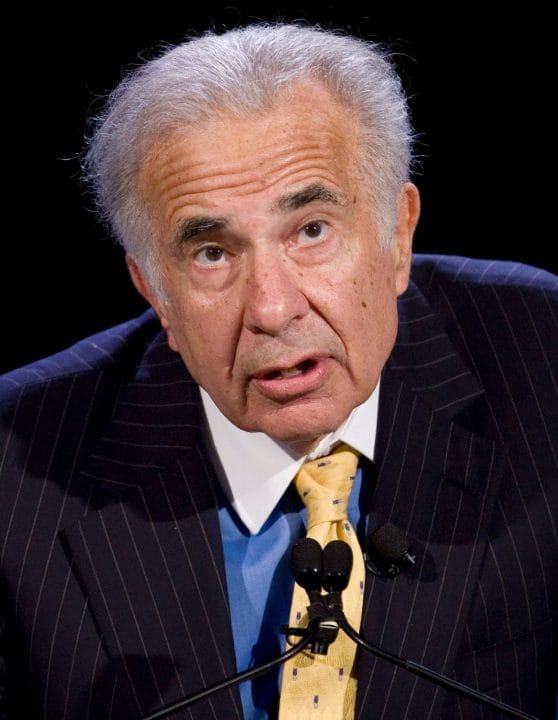
Carl Icahn
Icahn buys undervalued companies with bad management. His thesis is consistently the same: there is enormous value being destroyed by entrenched executives who are more interested in keeping their jobs than returning value to shareholders.
He buys enough stock to force a confrontation. Sometimes management cleans itself up just from the threat of his involvement.
Sometimes he installs new people. Sometimes he forces a full sale of the company.
His version of value investing is more aggressive than Graham''s or Buffett''s. He doesn''t wait for the market to recognise value.
He forces the recognition. He is comfortable with conflict in a way most investors are not.
He sees confrontation with management as part of the job — not an unfortunate side effect of it.
Stig Brodersen
Pure value investing in the Buffett-Graham tradition. Stig looks for companies trading below intrinsic value with strong competitive advantages, honest management, and a margin of safety.
He takes a concentrated approach — he'd rather own 10-15 well-understood positions than 50 diversified ones. He does deep fundamental analysis: reading annual reports, understanding unit economics, and calculating intrinsic value using discounted cash flow models.
He has an international perspective that most American value investors lack — he actively looks at companies in Europe, Asia, and emerging markets. He believes international markets are less efficiently priced than US markets, creating more opportunities for value investors.
FINANCIAL PHILOSOPHY
Carl Icahn
He genuinely believes management teams destroy shareholder value through complacency, self-dealing, and entrenchment. He sees himself as a corrective force — not a vulture, but a mechanism by which markets hold management accountable.
Whether that''s how it looks from inside the companies he targets is a different question. His rules: buy when nobody else wants it, apply pressure to unlock the value, sell when the value is recognised.
Don''t get sentimental about positions. Don''t let management tell you the company is more complex than it looks.
Stig Brodersen
Stig believes that investing should be approached with intellectual humility and continuous learning. His core philosophy: understand what you own, buy it at a price that gives you a margin of safety, and be patient.
He thinks most investors trade too frequently and react too emotionally to short-term market movements. He values international diversification more than most American investors, arguing that US-centric portfolios miss significant opportunities.
He also believes strongly in the democratization of financial education — TIP was built on the principle that world-class investing knowledge should be free.
RISK TOLERANCE
Carl Icahn
He concentrates. He uses leverage.
He''s comfortable with positions that make other investors deeply uncomfortable. He''s also comfortable being wrong in public — he''s had positions go spectacularly badly and he doesn''t hide from them.
His Hertz position went bankrupt during COVID. His Herbalife long was a very public, very watched position on the opposite side of Bill Ackman''s short.
He doesn''t bluff. When he says he''s going to fight, he fights.
Stig Brodersen
Moderate. Stig is concentrated but disciplined.
He won't buy something unless his downside analysis shows limited risk of permanent capital loss. He's willing to hold cash when he can't find cheap stocks — sometimes 20-30% of his portfolio.
He's less speculative than Preston and has stayed closer to the original value investing framework. He manages risk through deep understanding of each position rather than through broad diversification.
THE PLAYBOOK
Carl Icahn
He lives in Sunny Isles Beach, Florida. He works ferociously hard and has done so into his 90s.
He''s a hands-on manager — not someone who delegates. He famously said: "If you want a friend on Wall Street, get a dog." He has a Maltese named Tiger.
He''s been a prolific poker player and was once considered one of the best amateur players in New York. He remarried in 1999.
His current wife is Gail Golden. He''s given some money to charity but not at the scale of Buffett or Gates — he''s made no secret of prioritising returns over philanthropy.
Stig Brodersen
Stig is methodical and disciplined. He reads extensively — annual reports, investing books, economic history, and academic research.
He maintains a structured process for evaluating potential investments and doesn't deviate from it based on market emotions. He lives in Denmark and maintains a lower public profile than many financial media personalities.
He reinvests podcast income into both his business and his personal investment portfolio.
BIGGEST WIN
Carl Icahn
Apple. In 2013 he disclosed a $1.5 billion stake in Apple and published an open letter to Tim Cook urging a larger share buyback.
Apple eventually announced a significantly expanded buyback program. The stock rose.
Icahn made approximately $2 billion on the position. He didn''t have to engineer a hostile takeover — just making his involvement public was enough to move one of the largest companies in the world.
Stig Brodersen
Co-building The Investor's Podcast Network into a global phenomenon. The show's reach — 100 million+ downloads — means Stig has directly contributed to the financial education of millions of people across dozens of countries.
His interviews with top investors have created a free archive of investing wisdom that rivals any MBA curriculum. On a personal investment level, his consistent application of value principles across international markets has produced solid long-term returns.
BIGGEST MISTAKE
Carl Icahn
TWA. He took over Trans World Airlines in 1985 using a leveraged buyout, extracted cash from the company to pay back the acquisition debt, and sold the valuable London routes to American Airlines for $445 million.
By the time he was done, TWA was a financially gutted airline. It went bankrupt in 1992, again in 1995, and was absorbed by American Airlines in 2001.
Icahn personally made hundreds of millions. The airline''s employees and creditors did not.
He''s defended his actions as legal. Legal and good for everyone are not always the same thing.
Stig Brodersen
Stig has been open about early investment mistakes where he bought companies that were cheap for a reason — value traps where the low price reflected genuine business deterioration rather than market mispricing. He's talked about the importance of distinguishing between "cheap" and "good value," which is one of the hardest lessons in value investing.
He's also acknowledged that running a media business while managing a personal portfolio creates time allocation challenges.
CAREER HIGHLIGHTS
Carl Icahn
Carl Icahn grew up in Far Rockaway, Queens. His father was a failed opera singer who became a synagogue cantor.
Icahn studied philosophy at Princeton — graduated 1957 — then enrolled in NYU School of Medicine before dropping out after two years to join the army. He became a stockbroker at Dreyfus & Co.
in 1961, saved $400,000, and bought a seat on the New York Stock Exchange in 1968.
He spent the early years running option arbitrage — finding and exploiting small mispricings. He was very good at it.
In the late 1970s he pivoted to a bigger game: buying large stakes in undervalued companies and forcing management changes. His first major target was Tappan Company in 1979.
By the mid-1980s he was feared by corporate boards across America. Oliver Stone''s Gordon Gekko in Wall Street is directly based on the era Icahn created.
Stig Brodersen
Stig Brodersen grew up in Denmark and studied business and finance. He earned his MBA and worked in corporate finance before deciding his real passion was investing education.
He connected with Preston Pysh online through their shared love of Warren Buffett and Benjamin Graham, and they launched The Investor's Podcast in 2014. The concept was brilliantly simple: read the classic investing books that every successful investor recommends, break them down chapter by chapter in plain language, and give them away for free as a podcast.
It worked beyond anyone's expectations. The show grew into The Investor's Podcast Network, now hosting multiple shows including We Study Billionaires, Millennial Investing, and Bitcoin Fundamentals.
The network has surpassed 100 million total downloads. When Preston shifted his focus to Bitcoin, Stig took the lead on We Study Billionaires, conducting in-depth interviews with legendary investors.
He's interviewed Howard Marks, Mohnish Pabrai, Guy Spier, Tobias Carlisle, and dozens of other investing heavyweights. He also co-authored books with Preston on Buffett's investment methods.
COMPANIES & ROLES
Carl Icahn
Icahn Enterprises is his publicly traded holding company. He''s been chairman since 1987.
Some of his most famous investments: TWA, which he took over in 1985, stripped its most valuable routes to pay back the debt used to acquire it, and left financially hollowed out — it went bankrupt twice after his tenure. Texaco, where he forced a settlement that paid shareholders.
Apple, where he took a $1.5 billion position in 2013 and published an open letter to Tim Cook demanding a larger share buyback. Apple eventually expanded the buyback.
The stock rose. Icahn made roughly $2 billion on the position without engineering a hostile takeover — the threat of his involvement was enough to move a $500 billion company.
He''s also had notable losses. Hertz went bankrupt during COVID while he held a large position.
He lost hundreds of millions.
Stig Brodersen
The Investor's Podcast Network — co-founded with Preston Pysh, one of the largest financial media networks in the world. We Study Billionaires — the flagship podcast, now primarily hosted by Stig.
He co-authored books on Warren Buffett's investment frameworks with Preston Pysh. He also runs his own investment portfolio following value investing principles.
EDUCATION
Carl Icahn
Princeton University, BA in Philosophy, 1957. NYU School of Medicine, dropped out after two years.
He''s credited Princeton''s philosophy training with teaching him to question conventional wisdom — which shows up directly in how he argues with corporate boards.
Stig Brodersen
Stig earned an MBA with a focus on finance and business. His academic background in business gives him a structured analytical framework for evaluating companies.
He's also self-educated through hundreds of investing books that he's read and discussed on the podcast — the show itself has been his ongoing graduate education in investing.
BOOKS & RESOURCES
Carl Icahn
Icahn doesnt write books
King Icahn: The Biography of a Renegade Capitalist by Mark Stevens (1993) is the best single-volume account of his early career and tactics — dated now, but still the most complete picture of how he operated in his prime
The definitive account of 1980s corporate raiding — not about Icahn specifically, but about the world he helped create
Covers Michael Milken and the junk bond financing that made the leveraged buyout era possible. Icahn used Milken extensively
Traces the history of shareholder activism through actual letters from activists to companies — Icahn features prominently and it''s probably the most useful modern frame for understanding what he actually does
As an Amazon Associate, Netfigo earns from qualifying purchases. Book links above may be affiliate links.
Stig Brodersen
The foundation of Stig's entire investing approach
The more technical deep-dive that Stig considers essential for serious investors
A book about unconventional CEOs that Stig frequently recommends
As an Amazon Associate, Netfigo earns from qualifying purchases. Book links above may be affiliate links.