NETFIGO SCORE BATTLE
ORIGINAL DATARisk Appetite
Contrarian Index
Track Record
Accessibility
Time Horizon
AT A GLANCE
INVESTING STYLE
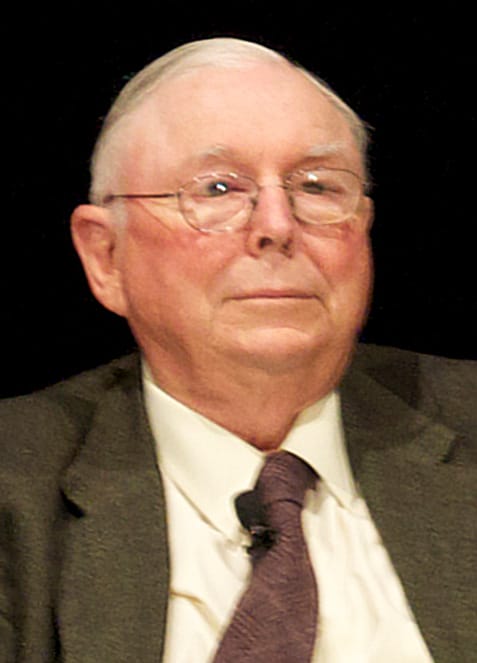
Charlie Munger
Munger's whole thing is mental models. The idea is simple: instead of being an expert in one field, you learn the core concepts from as many different fields as possible — psychology, biology, physics, economics, history — and then use that whole toolkit to think about problems.
He calls it a latticework of mental models. It sounds like a self-help concept.
It's actually how he consistently made better decisions than almost everyone around him. On investing, he pushed Buffett away from his old mentor's approach — which was basically "find dirt-cheap companies and flip them fast" — toward something more durable: find the best businesses in the world and hold them forever.
The key word he uses is moat. A business so dominant that competitors can't touch it.
Think Coca-Cola. He was also deeply influenced by psychology, particularly the ways humans reliably fool themselves.
He gave a famous talk called "The Psychology of Human Misjudgment" listing 25 ways our brains get things wrong. Reading it once will change how you make decisions.
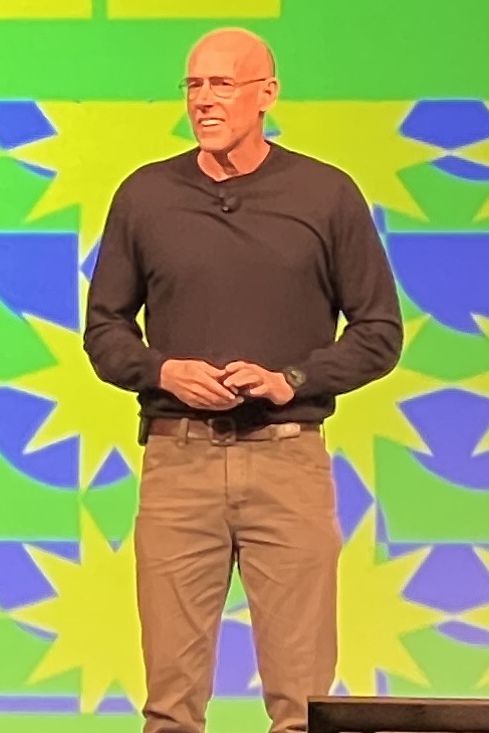
Scott Galloway
Galloway's personal investing style is relatively conservative given how loud he is. He keeps a heavy allocation in index funds and real estate.
He does make concentrated bets on individual stocks when he has conviction — he famously held Amazon for years. He angel invests occasionally but is not prolific.
His real wealth comes from business exits and media income, not portfolio management.
FINANCIAL PHILOSOPHY
Charlie Munger
Invert. Always invert.
That's his most famous rule — borrowed from the mathematician Jacobi. Instead of asking "how do I succeed?" ask "what would guarantee failure, and then avoid those things." It sounds obvious.
Almost nobody actually does it. He believes the secret to a good life and good investing is the same: figure out what you want to avoid, avoid it relentlessly, and most good things follow.
On wealth: getting rich isn't the hard part — keeping it is. Most people blow up by using borrowed money, getting greedy at the top, or panicking at the bottom.
Don't do those things. On decisions: only make the big bet when you're very sure.
Be patient for a long time, then move fast when the opportunity is obvious.
Scott Galloway
Diversify, own assets, and do not confuse being smart with being lucky. Galloway preaches that the most reliable path to wealth is boring — buy index funds, own property in growing cities, and let time do the work.
He is deeply skeptical of anyone who claims they can consistently beat the market.
RISK TOLERANCE
Charlie Munger
Munger's approach to risk: don't take risks you don't understand, and don't take risks you don't need to. He kept things simple.
He concentrated into a small number of businesses he understood deeply. He used borrowed money only a handful of times in his whole life, and said so plainly — his own partnership fell by more than half in 1973-74 partly because of it.
He kept large cash reserves. His view on diversification was almost the opposite of what most financial advisors tell you — he thought spreading money across 50 stocks was an admission that you hadn't done enough homework.
If you've done the work, you concentrate. If you haven't, maybe don't invest at all.
Scott Galloway
Moderate. Galloway has experienced the full spectrum — he had a company go public and then go bankrupt (Red Envelope), which taught him that financial ruin is always closer than you think.
Post-L2 sale, he became much more conservative. Heavy real estate holdings in New York and Florida.
He preaches diversification publicly and mostly follows his own advice, with occasional concentrated stock positions.
THE PLAYBOOK
Charlie Munger
Munger lived in the same house in Los Angeles for most of his adult life. He was famously frugal — not in a miserable way, but in a "I genuinely don't care about most things money buys" way.
He flew commercial until fairly recently. He read obsessively.
He described himself as a book with legs. His children joked that he was more interesting to talk to than almost anyone alive, but would only engage on topics he found intellectually stimulating.
He donated massively to education — hundreds of millions to the University of Michigan, UC Santa Barbara, Stanford and other institutions, often with very specific conditions attached. He designed buildings as a hobby and funded their construction himself.
He died at 99 worth around $2.6 billion — extraordinary by any measure, and somehow modest given he sat next to one of the richest men in history for 45 years.
Scott Galloway
Galloway owns significant real estate in New York and Florida. He talks openly about his wealth and spending — nice apartments, good restaurants, private school for his kids.
He is not frugal and does not pretend to be. But he is very intentional about where money goes.
He has said his biggest financial luxury is "buying back his time" — paying for convenience so he can focus on what matters.
BIGGEST WIN
Charlie Munger
See's Candies. In 1972, Munger convinced a reluctant Buffett to pay what seemed like an expensive price — $25 million — for a California candy company.
Buffett thought it was too much. Munger held firm.
See's has since generated over $2 billion in profit for Berkshire, basically funding dozens of other acquisitions. It also taught Buffett the single most important lesson of his career: paying a fair price for a great business beats getting a cheap price for a mediocre one.
That one deal changed the entire direction of Berkshire Hathaway.
Scott Galloway
Selling L2 to Gartner for an estimated $134 million in 2017. He built L2 into the go-to benchmarking firm for digital competence of luxury and consumer brands.
The exit, combined with his media career taking off simultaneously, catapulted him from "NYU professor" to "famous rich guy who yells about tech on the internet."
BIGGEST MISTAKE
Charlie Munger
Munger is famous for avoiding mistakes more than for making spectacular wins — his whole philosophy is about not doing stupid things. But he's admitted to a few.
He said Berkshire was too slow to move into BYD, China's electric vehicle company, despite knowing it was exceptional for years before they finally bought in. He also held too much Wesco Financial for too long when the money could have been put to better use elsewhere.
His most honest self-criticism: he wished he had moved faster when the evidence was already clear. For a man who spent his career warning others about psychological biases, he wasn't immune to them.
Scott Galloway
Red Envelope. Full stop.
Galloway has been brutally honest about this — he took a gift e-commerce company public, it was valued at hundreds of millions, and then it went bankrupt. He has called it the most painful experience of his career and has said it took years to emotionally recover.
He lost a significant amount of personal wealth in the collapse.
CAREER HIGHLIGHTS
Charlie Munger
Charlie Munger grew up in Omaha — same city as Buffett, but they didn't know each other yet. His father was a lawyer.
So was his grandfather. Charlie became one too, but he was clearly more interested in figuring out how the world worked than in courtrooms.
He studied math at the University of Michigan, got drafted into World War II, trained as a meteorologist, and somehow ended up at Harvard Law School without ever finishing an undergraduate degree. Harvard took him anyway.
He graduated in 1948 and moved to California to practice law. He was good at it.
He was also quietly building a real estate business on the side that made him more money than law ever did. He and Buffett met at a dinner in Omaha in 1959.
Munger was 35. Buffett was 28.
By the end of the night, Buffett was trying to convince Munger to go into investing full time. It took about a decade.
Munger ran his own investment partnership from 1962 to 1975 — returned 24% annually while the market did 6.4%. Then he fully merged his career with Buffett's at Berkshire, where he stayed until his death in 2023.
Scott Galloway
Scott Galloway is a serial entrepreneur and NYU Stern School of Business professor who became famous for his brutally honest takes on Big Tech. He founded nine companies over his career, including L2 (a business intelligence firm sold to Gartner in 2017), Red Envelope (an e-commerce company that went public then bankrupt), and Prophet (a brand strategy firm).
His 2017 book The Four, about Amazon, Apple, Facebook, and Google, became a bestseller. His YouTube channel and Prof G podcast reach millions.
He called Amazon buying Whole Foods before it happened. He also co-hosts Pivot with Kara Swisher, one of the most popular tech podcasts in the world.
He teaches brand strategy at NYU and is known for his profanity-laced, data-heavy lectures that go viral every semester.
COMPANIES & ROLES
Charlie Munger
Munger's main stage was Berkshire Hathaway, where he served as Vice Chairman from 1978 until he died. His role was hard to define on paper — he didn't run a fund or manage a portfolio.
What he actually did was talk to Buffett. That was worth a trillion dollars.
Before Berkshire, he ran his own investment partnership from 1962 to 1975 that crushed the market. He also controlled Wesco Financial, a small insurance and financial company he ran as a personal Berkshire subsidiary from 1973 to 2011, until Berkshire fully absorbed it.
Outside finance, he was obsessed with architecture — he personally designed several buildings, including the graduate residence he funded at the University of Michigan. His proposed Munger Hall at UC Santa Barbara went the other way.
It gave 94% of its bedrooms no windows, an architect on the review committee resigned in protest in 2021, and the project was eventually abandoned.
Scott Galloway
L2 Inc (founder, sold to Gartner), Red Envelope (founder, IPO then bankruptcy), Prophet (co-founder), Section4 (founder, online education), Prof G Media (founder)
EDUCATION
Charlie Munger
University of Michigan, mathematics — left for World War II without graduating. US Army Air Corps, meteorology training.
Harvard Law School, JD 1948 — admitted without an undergraduate degree, which Harvard is apparently capable of when it wants to be.
Scott Galloway
UCLA (BA), UC Berkeley Haas School of Business (MBA).
BOOKS & RESOURCES
Charlie Munger
Munger endorses it, Buffett calls it the best investing book ever written, and they're both right
Munger recommended this for years as the best book on human psychology. He believed understanding psychological biases was essential to investing
Written as a synthesis of Munger's thinking, often recommended by Munger himself
As an Amazon Associate, Netfigo earns from qualifying purchases. Book links above may be affiliate links.
Scott Galloway
The Algebra of Happiness by Scott Galloway, Prof G Pod (podcast), Pivot with Kara Swisher (podcast), No Mercy / No Malice (his weekly blog)
As an Amazon Associate, Netfigo earns from qualifying purchases. Book links above may be affiliate links.