Compare / Dave Ramsey vs Timothy Sykes
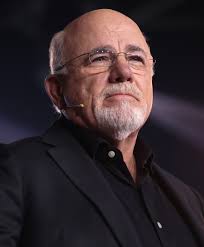
DAVE RAMSEY
Personal finance personality who built a media empire teaching debt elimination and the 7 Baby Steps
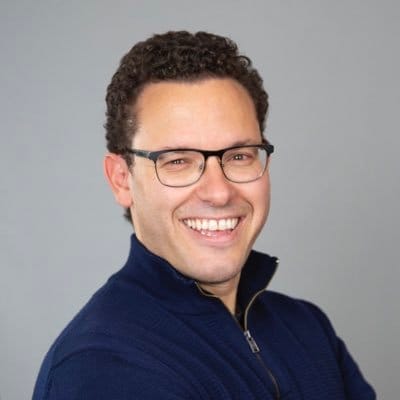
TIMOTHY SYKES
Penny stock trader and educator who turned $12,000 into $1.65 million and built a trading education empire
NETFIGO SCORE BATTLE
ORIGINAL DATARisk Appetite
Contrarian Index
Track Record
Accessibility
Time Horizon
AT A GLANCE
INVESTING STYLE
Dave Ramsey
Ramsey does not teach investing strategy in the way that hedge fund managers do. His investment philosophy is: get completely out of debt first (including your mortgage), then invest 15% of your income in good growth stock mutual funds inside a Roth IRA and 401(k).
He recommends actively managed mutual funds — specifically four types of funds (growth, growth and income, aggressive growth, international) — rather than index funds. He assumes 12% average annual returns, which is significantly higher than what most financial planners use.
Timothy Sykes
Sykes specializes in low-priced, highly volatile stocks — often called penny stocks or small-cap momentum plays — and trades both the long and short side. His long strategy focuses on stocks spiking on news catalysts, bought early and sold quickly into the spike.
His short strategy focuses on the same stocks after the spike, shorting them as they fade back to reality. He has said repeatedly that most penny stocks are garbage companies that temporarily spike on hype and then collapse.
His edge is understanding that cycle and positioning accordingly.
FINANCIAL PHILOSOPHY
Dave Ramsey
Ramsey''s philosophy is built on behavior, not math. He knows the debt avalanche (paying off highest-interest debt first) is mathematically optimal.
He recommends the debt snowball (paying off smallest balances first) anyway, because the psychology of quick wins keeps people on track. He has said explicitly: if people made financial decisions based on math, they wouldn''t be in debt.
His entire system is designed for people who need behavioral support as much as financial instruction.
Timothy Sykes
Sykes believes the penny stock market is structurally exploitable because it attracts unsophisticated investors who chase momentum without understanding that most penny stock companies are worthless. His philosophy is to be on the right side of that dynamic — buying into hype early and selling before it fades, or shorting the aftermath.
He is not a fundamental investor in any sense. He invests in the predictability of human behavior around speculative, low-quality assets.
RISK TOLERANCE
Dave Ramsey
Ramsey's approach to risk is unusual: he believes debt is the greatest financial risk of all, and that eliminating it is the primary risk management strategy. He is strongly opposed to all consumer debt, to borrowing to invest, and to any financial product that involves leverage.
He avoids options, leveraged ETFs, and anything he cannot explain to a caller in two minutes. He is conservative on financial product complexity and aggressive on the emotional/behavioral side of money management.
Timothy Sykes
Sykes operates with defined position sizes and stops, and emphasizes cutting losses quickly above everything else. He has publicly documented losses alongside wins, and stresses that small losses are the price of staying in the game.
He does not use heavy leverage. He avoids holding overnight positions where possible — the gap risk on volatile small-cap stocks overnight is extreme.
His risk model is conservative relative to the volatility of the instruments he trades.
THE PLAYBOOK
Dave Ramsey
Ramsey built a $5.5 million cash-purchased mansion in Franklin, Tennessee — a deliberate statement that you can buy luxury without debt. He drives Corvettes.
He has seven figure annual income from his media empire. He practices what he preaches on the debt side: no borrowing, no mortgages.
He is genuinely aligned with his brand on the core debt elimination message, even if his lifestyle is far beyond what most listeners will achieve.
Timothy Sykes
Sykes is the most conspicuously lifestyle-oriented trader in his category. He has photographed himself on yachts, in Lamborghinis, in luxury hotels, and with stacks of cash — marketing imagery that his critics cite as manipulative and his defenders cite as authentic success documentation.
He lives part-time in Miami and part-time internationally. He is genuinely philanthropic: he has funded the building of dozens of schools in developing countries through Karmagawa, the charity he co-founded, donating a share of his course revenue to it.
BIGGEST WIN
Dave Ramsey
Financial Peace University is the defining win. The structured 9-week program has helped millions of families get out of debt in a systematic, accountable way.
The program has processed an estimated $3 billion in debt elimination by its participants. The weekly debt-free screams — callers who have paid off their debt and yell "We''re debt-free!" on his show — have become one of the most emotionally resonant moments in financial media.
The behavioral component of his teaching is genuinely effective for the audience it serves.
Timothy Sykes
The original bar mitzvah money trade — $12,415 to $1.65 million — is the defining story. It is verifiable through SEC filings from his college hedge fund days.
More recently, his Millionaire Challenge has produced documented seven-figure earners: students like Tim Grittani, who turned $1,500 into over $13 million using Sykes''s methodology. Grittani''s success is probably the strongest external validation of the teaching model — a student who took the framework and surpassed the teacher.
BIGGEST MISTAKE
Dave Ramsey
The 12% return assumption is the most consistent criticism. Most financial planners use 6–8% for long-term planning.
Ramsey uses 12%, based on historical stock market averages that include unusually strong decades and ignore inflation adjustment. This leads listeners to underestimate how much they need to save for retirement.
He has also been criticized for recommending actively managed funds over index funds despite decades of evidence showing index funds outperform after fees. His response has been consistent: he believes active management in his preferred fund categories outperforms.
Most independent research disagrees.
Timothy Sykes
The hedge fund period is the honest low point. After college, Sykes ran Cilantro Fund Management and struggled significantly — the strategies that worked trading his own small account did not scale to managing institutional capital in the same volatile instruments.
He has acknowledged that his edge in penny stocks is partly size-dependent: he can move in and out of small positions quickly in ways that are impossible with millions under management. The fund underperformed and he eventually returned to trading only his own capital.
CAREER HIGHLIGHTS
Dave Ramsey
Ramsey grew up in Antioch, Tennessee, in an entrepreneurial family. He got his real estate license at 18 and by his mid-20s had built a real estate portfolio worth $4 million using a network of short-term bank loans.
The loans were 90-day commercial notes, not mortgages, which meant the bank could demand everything back on three months notice. When his main lender was sold in the late 1980s, the new owners did exactly that.
He filed Chapter 7 in September 1988 at age 28, with a pregnant wife and a toddler. That experience became the foundation of everything he teaches.
He started a financial counseling practice, then a radio show in Nashville in 1992. The show grew.
He syndicated it nationally. By the 2000s, The Dave Ramsey Show was one of the most listened-to radio programs in America, reaching over 16 million weekly listeners.
He built Ramsey Solutions — a financial education company — around the radio brand, producing books, courses, live events, and personal finance apps.
Timothy Sykes
Sykes grew up in Greenwich, Connecticut, in a financially comfortable family. He received $12,415 as bar mitzvah gift money and, at age 17, started using it to trade stocks.
By the time he was a junior at Tulane University, he had turned it into approximately $1.65 million — primarily through trading volatile, low-priced stocks that most Wall Street firms ignored entirely.
He graduated in 2003 and briefly ran Cilantro Fund Management, a hedge fund, before returning to his roots in penny stock trading. In 2008 he wrote "An American Hedge Fund," documenting his college trading story.
He then launched the Millionaire Challenge, his flagship mentorship program. He built one of the first large-scale day trading education platforms on the internet, with thousands of paying students, multiple millionaire challenge graduates, and a media presence that includes books, DVDs, webinars, and social media.
COMPANIES & ROLES
Dave Ramsey
Ramsey Solutions is his Nashville-based company, employing over 1,000 people and generating estimated revenues of over $300 million annually. It produces The Dave Ramsey Show (now also a podcast and YouTube show), EveryDollar (a budgeting app), Financial Peace University (a structured debt-elimination program), and Ramsey+ (a subscription financial education platform).
He also publishes books that have sold tens of millions of copies collectively and hosts live events that fill arenas. Several of his employees, including George Kamel and Rachel Cruze (his daughter), have built their own financial media careers under the Ramsey brand.
Timothy Sykes
Sykes runs several interconnected businesses under the Millionaire Challenge umbrella. The core is a subscription community offering trade alerts, video lessons, a live chatroom, and direct mentorship.
He has produced multiple millionaire students — traders who completed his program and went on to earn seven-figure trading profits — which he documents publicly and markets heavily.
He also runs Profit.ly, a trade tracking and verification platform that attempts to provide auditable performance records for traders. He has been vocal about the importance of trade verification in an industry full of unverifiable claims — something he applies to himself, publishing every trade publicly.
EDUCATION
Dave Ramsey
University of Tennessee, BS in Finance and Real Estate, 1982. He has said his real education was going bankrupt at 26 and having to figure out how money actually works without a lender propping him up.
Timothy Sykes
Tulane University, BA in Philosophy and Psychology, 2003. He has been dismissive of traditional finance education as preparation for the kind of trading he does — the academic curriculum does not cover penny stock dynamics or short-term momentum.
His real education was the college trading years, which were simultaneously his proof of concept.
BOOKS & RESOURCES
Dave Ramsey
As an Amazon Associate, Netfigo earns from qualifying purchases. Book links above may be affiliate links.
Timothy Sykes
An American Hedge Fund (2008) is his memoir of the college trading era
It covers the bar mitzvah money story in full, including the hedge fund failure. It is more honest about the failures than most trading books
The Complete Penny Stock Course by Jamil Ben Alluch, written in collaboration with the Sykes methodology, is a more systematic treatment of the trading strategy. For anyone curious about penny stock dynamics
Why these stocks spike, why they collapse, and how the cycle repeats — it covers the mechanics clearly