NETFIGO SCORE BATTLE
ORIGINAL DATARisk Appetite
Contrarian Index
Track Record
Accessibility
Time Horizon
AT A GLANCE
INVESTING STYLE
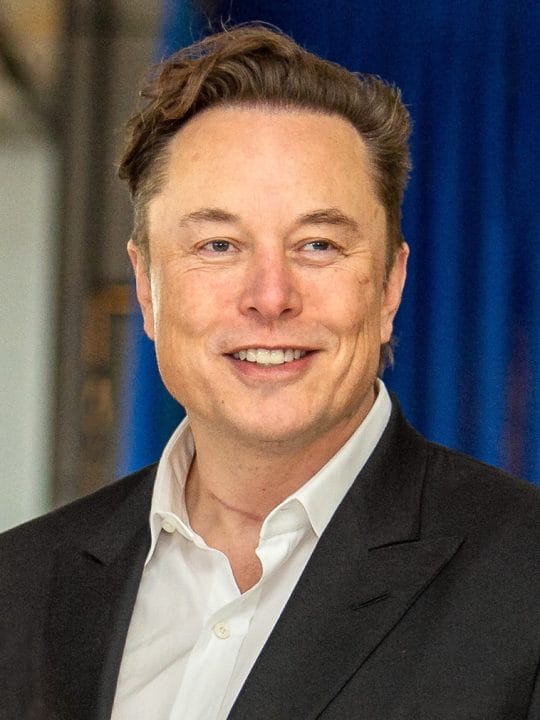
Elon Musk
Musk does not invest in the traditional sense. He builds companies and holds them.
His strategy is to find industries where he believes the incumbent players are too slow, too cautious, or fundamentally wrong in their assumptions — and then attack from first principles. He has said he asks "what is the physics limit?" of any problem, not what the industry standard is.
He holds massive concentrated equity in each of his companies. He does not diversify.
He famously said he was "asset rich and cash poor" and at times has literally borrowed money against his Tesla stock to fund other ventures.
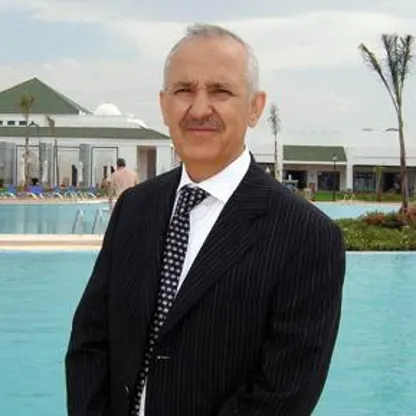
Anas Sefrioui
Sefrioui is a real estate operator first, investor second. He builds companies, not portfolios.
His growth approach has always been organic — acquire land, develop it, sell units, reinvest. No interest in financial markets or passive allocation.
The Africa expansion was the one big strategic bet beyond his home market. Bold in concept.
Mixed in execution.
FINANCIAL PHILOSOPHY
Elon Musk
Build things that matter. He has said he did not start companies to make money — he started them because electric vehicles and space were the most important problems he could work on.
He believes the only way to understand if something is possible is to try it. His financial philosophy is: do not optimize for personal comfort, optimize for impact.
He will borrow against his assets, take massive personal financial risk, and maintain concentrated positions that would terrify any normal financial advisor.
Anas Sefrioui
Build where people actually need to live. Volume beats margin.
The goal is not the most impressive building but the most buildings. He has consistently argued that Africa’s housing deficit — running into the hundreds of millions of units — is the biggest real estate opportunity on earth.
RISK TOLERANCE
Elon Musk
Musk borrowed against his Tesla stock to buy Twitter. He sold Tesla shares to fund SpaceX.
In 2008, with both Tesla and SpaceX weeks from bankruptcy, he split his last $40 million between them because he had already decided that if they died, he'd be broke — and that was fine. He told his biographer he did not fear losing everything.
What he feared was not trying. His pain threshold for financial loss is essentially unlimited, which makes him either the most courageous or the most reckless operator in modern business history, depending on which week you ask.
Anas Sefrioui
High on operational bets, low on financial market speculation. Building in emerging markets involves real currency exposure, regulatory uncertainty, and infrastructure gaps — Sefrioui leaned into all of them.
The 2020 legal troubles showed that close proximity to political capital can also become a liability overnight.
THE PLAYBOOK
Elon Musk
For years, Musk did not own a house. He sold all his California properties and reportedly lived in a small modular home near SpaceX's facilities in South Texas.
He drives a Tesla. He is known for working extreme hours — there are accounts of him sleeping on factory floors during Tesla production crises.
He has said he does not spend much time thinking about his net worth and that money is only useful as a resource to accelerate his missions.
Anas Sefrioui
Not known for conspicuous consumption. His wealth has been largely tied up in Addoha shares and land holdings rather than liquid assets.
He is a builder, not a spender.
BIGGEST WIN
Elon Musk
Tesla. He invested his own money when it was burning cash and nearly bankrupt, held through multiple near-death experiences, and watched it grow from a startup nobody believed in to a $1 trillion market cap company.
He also holds SpaceX equity. SpaceX went public in June 2026 at a valuation north of $1.7 trillion, having rewritten the economics of space launch.
Anas Sefrioui
The 2006 Casablanca Stock Exchange IPO. Raising 6 billion Moroccan dirhams on the back of a simple affordable housing story, in a market that was not yet sophisticated, was a remarkable capital markets achievement.
It funded the next decade of growth.
BIGGEST MISTAKE
Elon Musk
Twitter / X. He paid $44 billion for it in 2022, considered overpaying dramatically.
The company lost most of its advertising revenue after Musk's takeover. Advertisers pulled out.
He feuded publicly with brands, journalists, and regulators. By most financial metrics, it was an expensive and chaotic acquisition.
His stated defense is that X is a long-term platform for free speech and AI training data.
Anas Sefrioui
Expanding into Sub-Saharan Africa too quickly, without enough local partnerships and local capital structures, created operational strain. The 2020 legal case may also trace back to financial engineering under pressure from the Africa overextension.
Governance did not scale as fast as ambition.
CAREER HIGHLIGHTS
Elon Musk
Elon Musk was born in Pretoria, South Africa in 1971. He taught himself to code, sold a video game called Blastar at age 12 for $500, then moved to Canada at 17 to avoid mandatory South African military service.
He transferred to the University of Pennsylvania, sold Zip2 (a web software company) to Compaq for $307 million in 1999, then founded X.com — which became PayPal — and sold it to eBay for $1.5 billion in 2002. He plowed essentially all of it into SpaceX and Tesla simultaneously, nearly went bankrupt in 2008, and then watched both companies become dominant.
Tesla became the most valuable car company on earth. SpaceX became the dominant commercial launch provider.
He bought Twitter for $44 billion in 2022, renamed it X, fired most of the staff, and called it a platform for free speech. He became the world's richest person multiple times over.
Anas Sefrioui
Anas Sefrioui was born in 1956 in Fez, Morocco. He started in real estate in the 1980s with small construction projects in Casablanca.
In 1988 he formally founded Groupe Addoha — later incorporated as Douja Promotion Group. For two decades he focused exclusively on affordable and mid-range housing, staying far from the luxury segment.
The strategy paid off. The 2006 Casablanca Stock Exchange IPO raised around 6 billion dirhams, was heavily oversubscribed, and pushed his personal wealth to an estimated billion, briefly making him one of the richest people in Africa.
Through the 2010s he expanded into Sub-Saharan Africa — Ivory Coast, Senegal, Ghana, and Cameroon — targeting the same underserved affordable housing market. Then came the turbulence.
A restructuring of Morocco’s affordable housing subsidy program hit margins hard. In 2020, Moroccan authorities charged him in connection with a mortgage fraud case linked to Crédit Immobilier.
He denied the charges. The Addoha stock price fell sharply.
The Africa expansion slowed. He remains one of the most significant real estate figures the continent has produced.
COMPANIES & ROLES
Elon Musk
Tesla (CEO). SpaceX (CEO and chief engineer).
X / Twitter (owner and executive chairman). xAI (founder).
Neuralink (co-founder). The Boring Company (founder).
Early investor in DeepMind (sold stake). Previously: Zip2 (sold 1999), PayPal / X.com (sold 2002).
Anas Sefrioui
Groupe Addoha (Douja Promotion Group) is the whole story. Listed on the Casablanca Stock Exchange under the ticker ADH, its market cap peaked near 25 billion dirhams.
The company builds residential properties across four segments: affordable, mid-range, upper mid-range, and a small luxury slice — though the bread and butter has always been the lower two. At its height, Addoha delivered tens of thousands of housing units per year across Morocco and several Sub-Saharan African markets.
Sefrioui also built out logistics and manufacturing businesses tied to construction supply chains.
EDUCATION
Elon Musk
University of Pennsylvania — dual bachelor's degrees in economics (Wharton) and physics. Started a PhD in energy physics at Stanford, dropped out after two days to start Zip2.
Anas Sefrioui
Educated in Morocco in real estate and construction. Not known for Western business school credentials.
He built his expertise in the field, not the classroom.
BOOKS & RESOURCES
Elon Musk
As an Amazon Associate, Netfigo earns from qualifying purchases. Book links above may be affiliate links.
Anas Sefrioui
Stripped of the politics, it captures the land-banker mindset he has always embodied
Introduced millions to the idea that real estate builds wealth in ways employment never can
The Intelligent Entrepreneur by Bill Murphy Jr. speaks to the relentless, opportunity
Driven building Sefrioui exemplifies
Africa Rising by Vijay Mahajan laid out the case for Africa’s emerging consumer class years before it became consensus — and is the best intellectual framework for understanding his Africa strategy.
As an Amazon Associate, Netfigo earns from qualifying purchases. Book links above may be affiliate links.