NETFIGO SCORE BATTLE
ORIGINAL DATARisk Appetite
Contrarian Index
Track Record
Accessibility
Time Horizon
AT A GLANCE
INVESTING STYLE
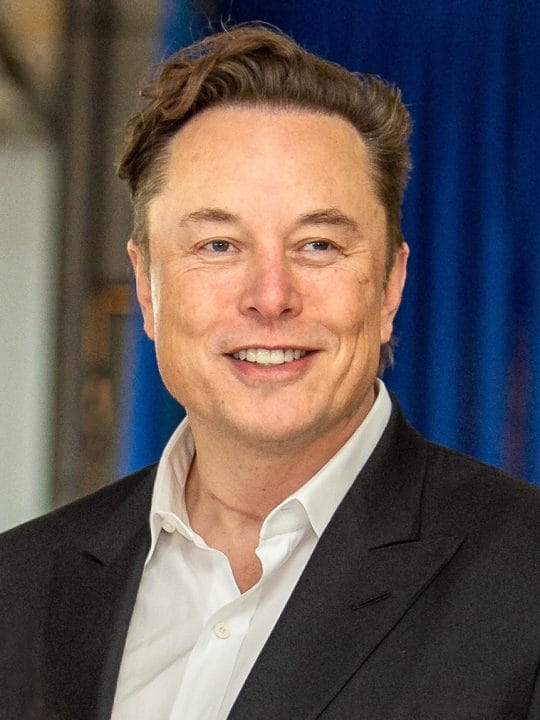
Elon Musk
Musk does not invest in the traditional sense. He builds companies and holds them.
His strategy is to find industries where he believes the incumbent players are too slow, too cautious, or fundamentally wrong in their assumptions — and then attack from first principles. He has said he asks "what is the physics limit?" of any problem, not what the industry standard is.
He holds massive concentrated equity in each of his companies. He does not diversify.
He famously said he was "asset rich and cash poor" and at times has literally borrowed money against his Tesla stock to fund other ventures.
Bill Nygren
Classic large-cap value. Nygren buys businesses trading significantly below his estimate of intrinsic value — typically at least a 40% discount.
He focuses on companies with strong management teams, high free cash flow generation, and the ability to allocate capital intelligently. He runs concentrated portfolios (20-30 stocks) and is willing to hold positions for 3-5+ years.
He is a contrarian by default — his best ideas are usually in sectors the market hates.
FINANCIAL PHILOSOPHY
Elon Musk
Build things that matter. He has said he did not start companies to make money — he started them because electric vehicles and space were the most important problems he could work on.
He believes the only way to understand if something is possible is to try it. His financial philosophy is: do not optimize for personal comfort, optimize for impact.
He will borrow against his assets, take massive personal financial risk, and maintain concentrated positions that would terrify any normal financial advisor.
Bill Nygren
Nygren believes the market is generally efficient but occasionally misprices individual businesses, especially during periods of fear or sector-wide pessimism. He thinks like a business buyer, not a stock trader — asking "what would a rational private buyer pay for this entire company?" He considers management quality and skill at investing company money as important as the financial statements.
RISK TOLERANCE
Elon Musk
Musk borrowed against his Tesla stock to buy Twitter. He sold Tesla shares to fund SpaceX.
In 2008, with both Tesla and SpaceX weeks from bankruptcy, he split his last $40 million between them because he had already decided that if they died, he'd be broke — and that was fine. He told his biographer he did not fear losing everything.
What he feared was not trying. His pain threshold for financial loss is essentially unlimited, which makes him either the most courageous or the most reckless operator in modern business history, depending on which week you ask.
Bill Nygren
Moderate. Nygren runs concentrated portfolios which adds stock-specific risk, but he focuses on large-cap, established businesses with strong balance sheets.
He is not swinging at biotech startups or crypto. The risk is being early and looking wrong for extended periods while waiting for the market to recognize value.
THE PLAYBOOK
Elon Musk
For years, Musk did not own a house. He sold all his California properties and reportedly lived in a small modular home near SpaceX's facilities in South Texas.
He drives a Tesla. He is known for working extreme hours — there are accounts of him sleeping on factory floors during Tesla production crises.
He has said he does not spend much time thinking about his net worth and that money is only useful as a resource to accelerate his missions.
Bill Nygren
Low-profile lifestyle. Based in Chicago.
Nygren does not seek media attention and rarely appears on financial TV. He writes detailed quarterly commentaries for Oakmark shareholders that are some of the best free investing education available.
He lets his long-term performance record speak for itself.
BIGGEST WIN
Elon Musk
Tesla. He invested his own money when it was burning cash and nearly bankrupt, held through multiple near-death experiences, and watched it grow from a startup nobody believed in to a $1 trillion market cap company.
He also holds SpaceX equity. SpaceX went public in June 2026 at a valuation north of $1.7 trillion, having rewritten the economics of space launch.
Bill Nygren
His consistency over nearly three decades. While many value managers have stumbled during the growth-dominated 2010s, Nygren adapted his approach to include "modern value" — companies like Alphabet and Meta that trade at low multiples relative to their growth rates.
His willingness to evolve his definition of value without abandoning the discipline has kept Oakmark relevant.
BIGGEST MISTAKE
Elon Musk
Twitter / X. He paid $44 billion for it in 2022, considered overpaying dramatically.
The company lost most of its advertising revenue after Musk's takeover. Advertisers pulled out.
He feuded publicly with brands, journalists, and regulators. By most financial metrics, it was an expensive and chaotic acquisition.
His stated defense is that X is a long-term platform for free speech and AI training data.
Bill Nygren
Holding financial stocks through the 2008 financial crisis. Oakmark Fund was down significantly in 2008 as bank and insurance stocks cratered.
While the long-term recovery proved him right on many of those holdings, the drawdown was painful for investors who redeemed at the bottom.
CAREER HIGHLIGHTS
Elon Musk
Elon Musk was born in Pretoria, South Africa in 1971. He taught himself to code, sold a video game called Blastar at age 12 for $500, then moved to Canada at 17 to avoid mandatory South African military service.
He transferred to the University of Pennsylvania, sold Zip2 (a web software company) to Compaq for $307 million in 1999, then founded X.com — which became PayPal — and sold it to eBay for $1.5 billion in 2002. He plowed essentially all of it into SpaceX and Tesla simultaneously, nearly went bankrupt in 2008, and then watched both companies become dominant.
Tesla became the most valuable car company on earth. SpaceX became the dominant commercial launch provider.
He bought Twitter for $44 billion in 2022, renamed it X, fired most of the staff, and called it a platform for free speech. He became the world's richest person multiple times over.
Bill Nygren
Joined Harris Associates (parent of Oakmark Funds) in 1983. Became lead portfolio manager of the Oakmark Fund in 2000.
Lead manager of Oakmark Select Fund since 1996 and Oakmark Global Select since 2006. Oakmark Select Fund has returned over 11% annually since 1996 inception.
Manages over $20 billion across Oakmark strategies. Named Morningstar Domestic Stock Fund Manager of the Year in 2001.
Known for buying out-of-favor large-cap value stocks and holding them for years. Has consistently argued that the market overreacts to short-term problems and undervalues franchises with durable competitive advantages.
COMPANIES & ROLES
Elon Musk
Tesla (CEO). SpaceX (CEO and chief engineer).
X / Twitter (owner and executive chairman). xAI (founder).
Neuralink (co-founder). The Boring Company (founder).
Early investor in DeepMind (sold stake). Previously: Zip2 (sold 1999), PayPal / X.com (sold 2002).
Bill Nygren
Oakmark Funds (lead portfolio manager), Harris Associates (partner)
EDUCATION
Elon Musk
University of Pennsylvania — dual bachelor's degrees in economics (Wharton) and physics. Started a PhD in energy physics at Stanford, dropped out after two days to start Zip2.
Bill Nygren
CFA charterholder. MBA from the University of Wisconsin-Madison.
Undergraduate degree from the University of Minnesota. Has spent his entire career at Harris Associates — over 40 years at one firm.
BOOKS & RESOURCES
Elon Musk
As an Amazon Associate, Netfigo earns from qualifying purchases. Book links above may be affiliate links.
Bill Nygren
Nygren's own quarterly Oakmark commentaries are worth reading. He frequently cites Warren Buffett and Charlie Munger as influences
As an Amazon Associate, Netfigo earns from qualifying purchases. Book links above may be affiliate links.