NETFIGO SCORE BATTLE
ORIGINAL DATARisk Appetite
Contrarian Index
Track Record
Accessibility
Time Horizon
AT A GLANCE
INVESTING STYLE
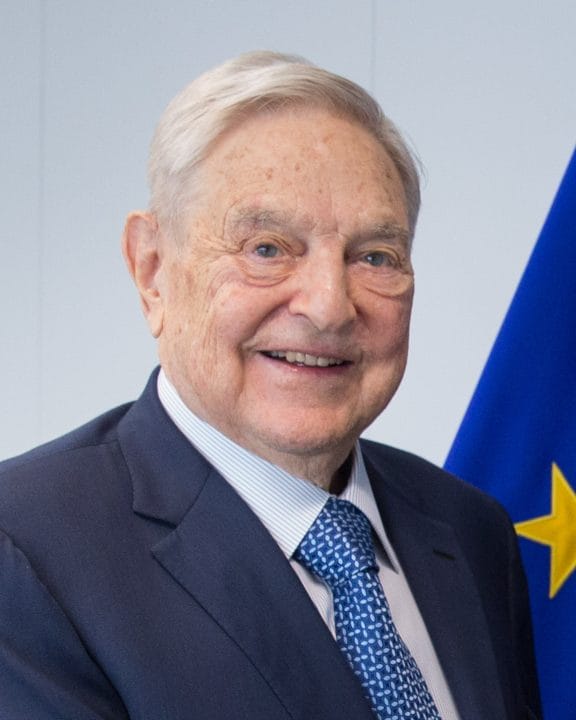
George Soros
Soros doesn't use a fixed strategy. He uses a theory.
He calls it reflexivity — the idea that market participants don't just react to fundamentals, they influence them. House prices going up makes people confident.
Confident people borrow more. Borrowing pushes prices higher.
Until it doesn't. Markets create self-reinforcing loops that diverge from reality for a long time before snapping back.
In practice, this meant making very large macro bets — currencies, interest rates, commodities, whole stock markets — when he believed a loop had gone too far. He didn't diversify to reduce risk.
He concentrated into high-conviction positions and used leverage. He famously said: "It's not whether you're right or wrong, but how much money you make when you're right and how much you lose when you're wrong."
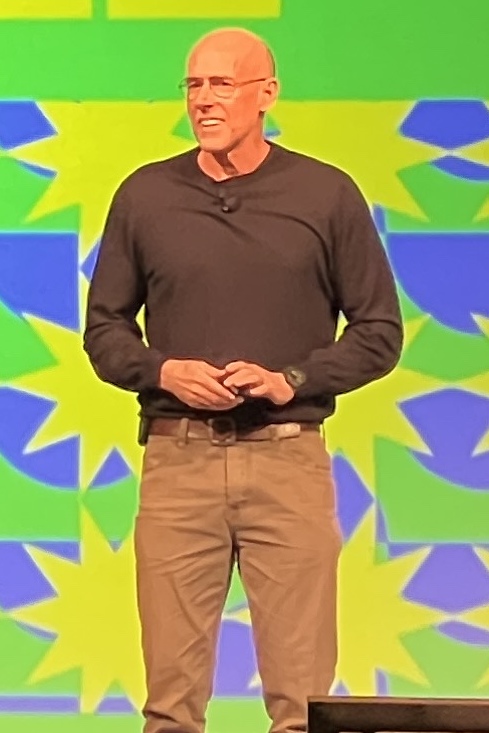
Scott Galloway
Galloway's personal investing style is relatively conservative given how loud he is. He keeps a heavy allocation in index funds and real estate.
He does make concentrated bets on individual stocks when he has conviction — he famously held Amazon for years. He angel invests occasionally but is not prolific.
His real wealth comes from business exits and media income, not portfolio management.
FINANCIAL PHILOSOPHY
George Soros
He believes in fallibility — specifically, that every market participant is operating on imperfect information, including himself. His approach: form a hypothesis, bet on it, watch for signals that the hypothesis is wrong, and change course decisively when those signals arrive.
He is explicitly anti-certainty. He thinks the most dangerous investor is the one who mistakes confidence for competence.
His philosophy of the open society — the political version — applies equally to markets: no position is so right that it can't be challenged.
Scott Galloway
Diversify, own assets, and do not confuse being smart with being lucky. Galloway preaches that the most reliable path to wealth is boring — buy index funds, own property in growing cities, and let time do the work.
He is deeply skeptical of anyone who claims they can consistently beat the market.
RISK TOLERANCE
George Soros
He had an unusual relationship with physical discomfort as a risk signal. He's talked about trusting his back pain — when a position was going wrong, he'd feel it before he saw it in the numbers.
That's either profound intuition or a good story. Either way, he wasn't a systematic rule-follower.
He made enormous bets and reversed course on short notice when the thesis broke. His risk management wasn't "don't lose money." It was "don't lose so much that you can't play again."
Scott Galloway
Moderate. Galloway has experienced the full spectrum — he had a company go public and then go bankrupt (Red Envelope), which taught him that financial ruin is always closer than you think.
Post-L2 sale, he became much more conservative. Heavy real estate holdings in New York and Florida.
He preaches diversification publicly and mostly follows his own advice, with occasional concentrated stock positions.
THE PLAYBOOK
George Soros
He lives in New York and his estate in the Hamptons. He donated over $32 billion — more than 80% of his peak wealth — to the Open Society Foundations.
He's been married three times. His third wife Tamiko Bolton is 42 years younger than him.
He plays tennis. He's in his mid-90s and still occasionally publishes essays on markets and geopolitics.
He handed chairmanship of the Open Society Foundations to his son Alexander in 2023.
Scott Galloway
Galloway owns significant real estate in New York and Florida. He talks openly about his wealth and spending — nice apartments, good restaurants, private school for his kids.
He is not frugal and does not pretend to be. But he is very intentional about where money goes.
He has said his biggest financial luxury is "buying back his time" — paying for convenience so he can focus on what matters.
BIGGEST WIN
George Soros
September 16, 1992. Black Wednesday.
Soros had been building a short position against the British pound for months. Britain was in the Exchange Rate Mechanism — a system that required it to keep the pound within a fixed band against other European currencies.
He believed the pound was overvalued and Britain couldn't sustain the interest rates needed to defend it. He was right.
The Bank of England spent billions trying to hold the peg. It failed.
Britain withdrew from the ERM. Soros made approximately $1 billion that day.
Total profits in the surrounding weeks were closer to $2 billion. He became known as the man who broke the Bank of England.
Scott Galloway
Selling L2 to Gartner for an estimated $134 million in 2017. He built L2 into the go-to benchmarking firm for digital competence of luxury and consumer brands.
The exit, combined with his media career taking off simultaneously, catapulted him from "NYU professor" to "famous rich guy who yells about tech on the internet."
BIGGEST MISTAKE
George Soros
2000. Soros had been warning about the dot-com bubble for years.
He was right about it being a bubble. But he kept buying tech stocks because he thought the momentum would continue a little longer.
It didn't. The Quantum Fund lost $3 billion in a matter of months.
He later said: "I was too early and then I panicked." That's a remarkable thing for someone of his stature to say. The lesson: being right about the direction of a trade doesn't mean you're right about the timing.
Scott Galloway
Red Envelope. Full stop.
Galloway has been brutally honest about this — he took a gift e-commerce company public, it was valued at hundreds of millions, and then it went bankrupt. He has called it the most painful experience of his career and has said it took years to emotionally recover.
He lost a significant amount of personal wealth in the collapse.
CAREER HIGHLIGHTS
George Soros
George Soros was born György Schwartz in Budapest in 1930. His family survived the Nazi occupation by obtaining forged papers and hiding.
He saw up close what happens when governments go bad. He fled Hungary after the war, worked as a railway porter and waiter in London, and studied philosophy at the London School of Economics — where he became a student of Karl Popper, whose big idea was that open societies are better than closed ones.
That stuck.
He moved to New York in 1956 and spent the next decade working at brokerages and learning the markets. In 1973 he co-founded the Quantum Fund with Jim Rogers.
From 1970 to 2000, the fund averaged roughly 30% annual returns. That's the second-best sustained hedge fund record in history, behind only Jim Simons.
He stepped back from active management gradually through the 2000s and has spent most of his time on philanthropy ever since.
Scott Galloway
Scott Galloway is a serial entrepreneur and NYU Stern School of Business professor who became famous for his brutally honest takes on Big Tech. He founded nine companies over his career, including L2 (a business intelligence firm sold to Gartner in 2017), Red Envelope (an e-commerce company that went public then bankrupt), and Prophet (a brand strategy firm).
His 2017 book The Four, about Amazon, Apple, Facebook, and Google, became a bestseller. His YouTube channel and Prof G podcast reach millions.
He called Amazon buying Whole Foods before it happened. He also co-hosts Pivot with Kara Swisher, one of the most popular tech podcasts in the world.
He teaches brand strategy at NYU and is known for his profanity-laced, data-heavy lectures that go viral every semester.
COMPANIES & ROLES
George Soros
Soros Fund Management is the vehicle. The Quantum Fund, which ran under it, returned roughly 30% annually for three decades.
The 1992 trade — shorting £10 billion of British sterling — was the most famous single day in hedge fund history, but the 30-year sustained record is the real story.
He stepped down from managing outside money in 2011 and converted to a family office. He's donated over $32 billion to the Open Society Foundations, which funds democracy and civil society programs in over 120 countries.
That's more money than he kept for himself.
Scott Galloway
L2 Inc (founder, sold to Gartner), Red Envelope (founder, IPO then bankruptcy), Prophet (co-founder), Section4 (founder, online education), Prof G Media (founder)
EDUCATION
George Soros
London School of Economics, BSc and MSc in Philosophy, 1952. Student of Karl Popper.
He's credited Popper's concept of the open society as the foundation of both his philanthropic work and his investment theory.
Scott Galloway
UCLA (BA), UC Berkeley Haas School of Business (MBA).
BOOKS & RESOURCES
George Soros
Beyond his own writing: Karl Poppers The Open Society and Its Enemies is the philosophical foundation of everything Soros believes
You can't fully understand him without it
Includes a long interview with Soros worth tracking down
The story of Long-Term Capital Management's collapse — the best account of what happens when extremely smart macro traders get their risk management catastrophically wrong
As an Amazon Associate, Netfigo earns from qualifying purchases. Book links above may be affiliate links.
Scott Galloway
The Algebra of Happiness by Scott Galloway, Prof G Pod (podcast), Pivot with Kara Swisher (podcast), No Mercy / No Malice (his weekly blog)
As an Amazon Associate, Netfigo earns from qualifying purchases. Book links above may be affiliate links.