NETFIGO SCORE BATTLE
ORIGINAL DATARisk Appetite
Contrarian Index
Track Record
Accessibility
Time Horizon
AT A GLANCE
INVESTING STYLE
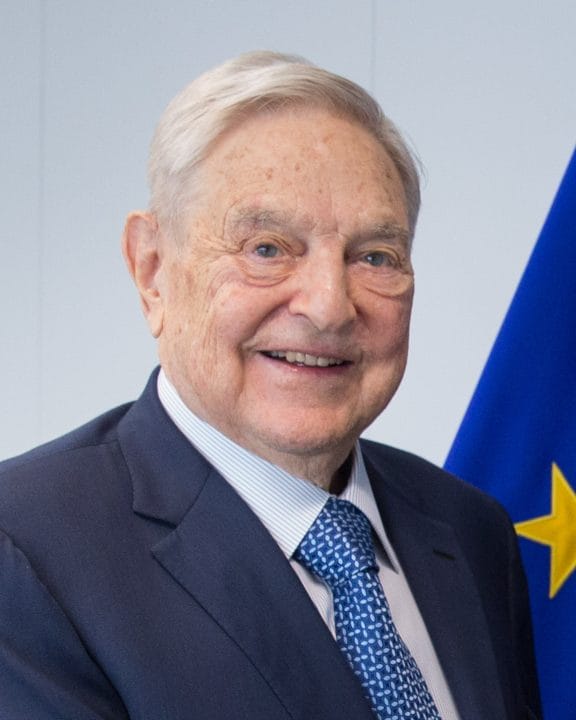
George Soros
Soros doesn't use a fixed strategy. He uses a theory.
He calls it reflexivity — the idea that market participants don't just react to fundamentals, they influence them. House prices going up makes people confident.
Confident people borrow more. Borrowing pushes prices higher.
Until it doesn't. Markets create self-reinforcing loops that diverge from reality for a long time before snapping back.
In practice, this meant making very large macro bets — currencies, interest rates, commodities, whole stock markets — when he believed a loop had gone too far. He didn't diversify to reduce risk.
He concentrated into high-conviction positions and used leverage. He famously said: "It's not whether you're right or wrong, but how much money you make when you're right and how much you lose when you're wrong."
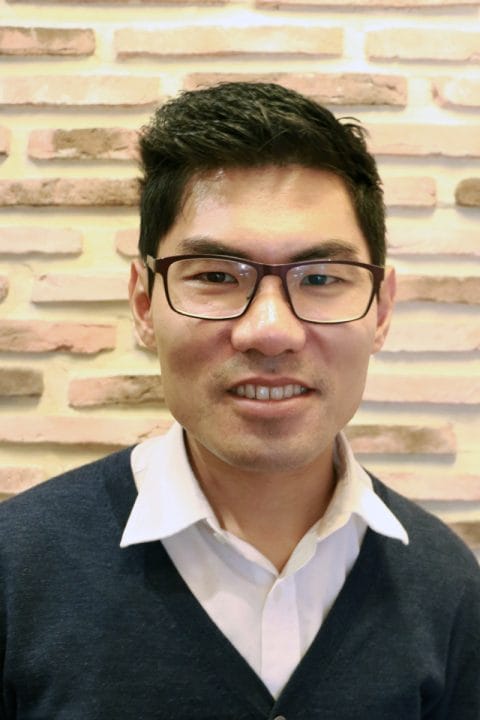
Stig Brodersen
Pure value investing in the Buffett-Graham tradition. Stig looks for companies trading below intrinsic value with strong competitive advantages, honest management, and a margin of safety.
He takes a concentrated approach — he'd rather own 10-15 well-understood positions than 50 diversified ones. He does deep fundamental analysis: reading annual reports, understanding unit economics, and calculating intrinsic value using discounted cash flow models.
He has an international perspective that most American value investors lack — he actively looks at companies in Europe, Asia, and emerging markets. He believes international markets are less efficiently priced than US markets, creating more opportunities for value investors.
FINANCIAL PHILOSOPHY
George Soros
He believes in fallibility — specifically, that every market participant is operating on imperfect information, including himself. His approach: form a hypothesis, bet on it, watch for signals that the hypothesis is wrong, and change course decisively when those signals arrive.
He is explicitly anti-certainty. He thinks the most dangerous investor is the one who mistakes confidence for competence.
His philosophy of the open society — the political version — applies equally to markets: no position is so right that it can't be challenged.
Stig Brodersen
Stig believes that investing should be approached with intellectual humility and continuous learning. His core philosophy: understand what you own, buy it at a price that gives you a margin of safety, and be patient.
He thinks most investors trade too frequently and react too emotionally to short-term market movements. He values international diversification more than most American investors, arguing that US-centric portfolios miss significant opportunities.
He also believes strongly in the democratization of financial education — TIP was built on the principle that world-class investing knowledge should be free.
RISK TOLERANCE
George Soros
He had an unusual relationship with physical discomfort as a risk signal. He's talked about trusting his back pain — when a position was going wrong, he'd feel it before he saw it in the numbers.
That's either profound intuition or a good story. Either way, he wasn't a systematic rule-follower.
He made enormous bets and reversed course on short notice when the thesis broke. His risk management wasn't "don't lose money." It was "don't lose so much that you can't play again."
Stig Brodersen
Moderate. Stig is concentrated but disciplined.
He won't buy something unless his downside analysis shows limited risk of permanent capital loss. He's willing to hold cash when he can't find cheap stocks — sometimes 20-30% of his portfolio.
He's less speculative than Preston and has stayed closer to the original value investing framework. He manages risk through deep understanding of each position rather than through broad diversification.
THE PLAYBOOK
George Soros
He lives in New York and his estate in the Hamptons. He donated over $32 billion — more than 80% of his peak wealth — to the Open Society Foundations.
He's been married three times. His third wife Tamiko Bolton is 42 years younger than him.
He plays tennis. He's in his mid-90s and still occasionally publishes essays on markets and geopolitics.
He handed chairmanship of the Open Society Foundations to his son Alexander in 2023.
Stig Brodersen
Stig is methodical and disciplined. He reads extensively — annual reports, investing books, economic history, and academic research.
He maintains a structured process for evaluating potential investments and doesn't deviate from it based on market emotions. He lives in Denmark and maintains a lower public profile than many financial media personalities.
He reinvests podcast income into both his business and his personal investment portfolio.
BIGGEST WIN
George Soros
September 16, 1992. Black Wednesday.
Soros had been building a short position against the British pound for months. Britain was in the Exchange Rate Mechanism — a system that required it to keep the pound within a fixed band against other European currencies.
He believed the pound was overvalued and Britain couldn't sustain the interest rates needed to defend it. He was right.
The Bank of England spent billions trying to hold the peg. It failed.
Britain withdrew from the ERM. Soros made approximately $1 billion that day.
Total profits in the surrounding weeks were closer to $2 billion. He became known as the man who broke the Bank of England.
Stig Brodersen
Co-building The Investor's Podcast Network into a global phenomenon. The show's reach — 100 million+ downloads — means Stig has directly contributed to the financial education of millions of people across dozens of countries.
His interviews with top investors have created a free archive of investing wisdom that rivals any MBA curriculum. On a personal investment level, his consistent application of value principles across international markets has produced solid long-term returns.
BIGGEST MISTAKE
George Soros
2000. Soros had been warning about the dot-com bubble for years.
He was right about it being a bubble. But he kept buying tech stocks because he thought the momentum would continue a little longer.
It didn't. The Quantum Fund lost $3 billion in a matter of months.
He later said: "I was too early and then I panicked." That's a remarkable thing for someone of his stature to say. The lesson: being right about the direction of a trade doesn't mean you're right about the timing.
Stig Brodersen
Stig has been open about early investment mistakes where he bought companies that were cheap for a reason — value traps where the low price reflected genuine business deterioration rather than market mispricing. He's talked about the importance of distinguishing between "cheap" and "good value," which is one of the hardest lessons in value investing.
He's also acknowledged that running a media business while managing a personal portfolio creates time allocation challenges.
CAREER HIGHLIGHTS
George Soros
George Soros was born György Schwartz in Budapest in 1930. His family survived the Nazi occupation by obtaining forged papers and hiding.
He saw up close what happens when governments go bad. He fled Hungary after the war, worked as a railway porter and waiter in London, and studied philosophy at the London School of Economics — where he became a student of Karl Popper, whose big idea was that open societies are better than closed ones.
That stuck.
He moved to New York in 1956 and spent the next decade working at brokerages and learning the markets. In 1973 he co-founded the Quantum Fund with Jim Rogers.
From 1970 to 2000, the fund averaged roughly 30% annual returns. That's the second-best sustained hedge fund record in history, behind only Jim Simons.
He stepped back from active management gradually through the 2000s and has spent most of his time on philanthropy ever since.
Stig Brodersen
Stig Brodersen grew up in Denmark and studied business and finance. He earned his MBA and worked in corporate finance before deciding his real passion was investing education.
He connected with Preston Pysh online through their shared love of Warren Buffett and Benjamin Graham, and they launched The Investor's Podcast in 2014. The concept was brilliantly simple: read the classic investing books that every successful investor recommends, break them down chapter by chapter in plain language, and give them away for free as a podcast.
It worked beyond anyone's expectations. The show grew into The Investor's Podcast Network, now hosting multiple shows including We Study Billionaires, Millennial Investing, and Bitcoin Fundamentals.
The network has surpassed 100 million total downloads. When Preston shifted his focus to Bitcoin, Stig took the lead on We Study Billionaires, conducting in-depth interviews with legendary investors.
He's interviewed Howard Marks, Mohnish Pabrai, Guy Spier, Tobias Carlisle, and dozens of other investing heavyweights. He also co-authored books with Preston on Buffett's investment methods.
COMPANIES & ROLES
George Soros
Soros Fund Management is the vehicle. The Quantum Fund, which ran under it, returned roughly 30% annually for three decades.
The 1992 trade — shorting £10 billion of British sterling — was the most famous single day in hedge fund history, but the 30-year sustained record is the real story.
He stepped down from managing outside money in 2011 and converted to a family office. He's donated over $32 billion to the Open Society Foundations, which funds democracy and civil society programs in over 120 countries.
That's more money than he kept for himself.
Stig Brodersen
The Investor's Podcast Network — co-founded with Preston Pysh, one of the largest financial media networks in the world. We Study Billionaires — the flagship podcast, now primarily hosted by Stig.
He co-authored books on Warren Buffett's investment frameworks with Preston Pysh. He also runs his own investment portfolio following value investing principles.
EDUCATION
George Soros
London School of Economics, BSc and MSc in Philosophy, 1952. Student of Karl Popper.
He's credited Popper's concept of the open society as the foundation of both his philanthropic work and his investment theory.
Stig Brodersen
Stig earned an MBA with a focus on finance and business. His academic background in business gives him a structured analytical framework for evaluating companies.
He's also self-educated through hundreds of investing books that he's read and discussed on the podcast — the show itself has been his ongoing graduate education in investing.
BOOKS & RESOURCES
George Soros
Beyond his own writing: Karl Poppers The Open Society and Its Enemies is the philosophical foundation of everything Soros believes
You can't fully understand him without it
Includes a long interview with Soros worth tracking down
The story of Long-Term Capital Management's collapse — the best account of what happens when extremely smart macro traders get their risk management catastrophically wrong
As an Amazon Associate, Netfigo earns from qualifying purchases. Book links above may be affiliate links.
Stig Brodersen
The foundation of Stig's entire investing approach
The more technical deep-dive that Stig considers essential for serious investors
A book about unconventional CEOs that Stig frequently recommends
As an Amazon Associate, Netfigo earns from qualifying purchases. Book links above may be affiliate links.