Compare / Jack Bogle vs Bill Nygren
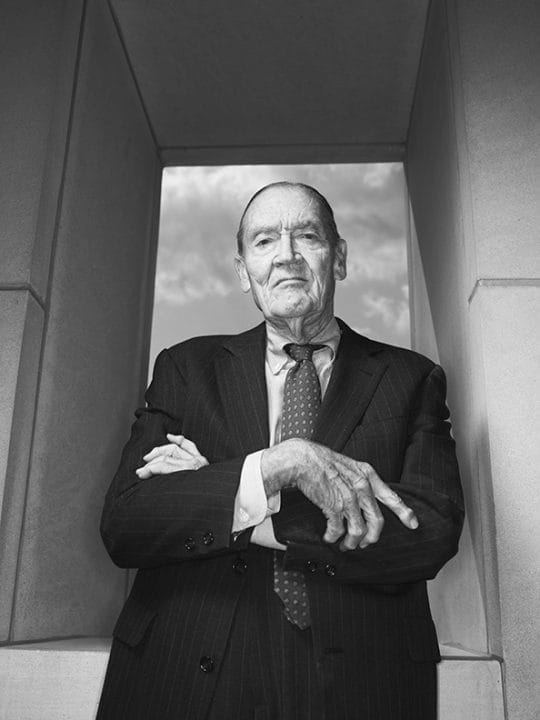
JACK BOGLE
Founder of Vanguard and inventor of the retail index fund, which returned trillions to ordinary investors
BILL NYGREN
Lead portfolio manager at Oakmark Funds who has beaten the S&P 500 over 20+ years by buying unfashionable stoc…
NETFIGO SCORE BATTLE
ORIGINAL DATARisk Appetite
Contrarian Index
Track Record
Accessibility
Time Horizon
AT A GLANCE
INVESTING STYLE
Jack Bogle
Bogle''s investment philosophy is the simplest on this entire list: buy the whole market, hold it forever, pay as little as possible to do so, and never let a market downturn scare you into selling. He believed individual stock picking and market timing were exercises in humility — the market will humble you.
He also believed that the financial industry had a conflict of interest with its clients: the more complex and expensive the product, the better for the firm and the worse for the investor.
Bill Nygren
Classic large-cap value. Nygren buys businesses trading significantly below his estimate of intrinsic value — typically at least a 40% discount.
He focuses on companies with strong management teams, high free cash flow generation, and the ability to allocate capital intelligently. He runs concentrated portfolios (20-30 stocks) and is willing to hold positions for 3-5+ years.
He is a contrarian by default — his best ideas are usually in sectors the market hates.
FINANCIAL PHILOSOPHY
Jack Bogle
Bogle''s core belief was that costs are the enemy of investors. Every dollar paid in management fees, transaction costs, and taxes is a dollar that does not compound.
Over 30 years, a 1% annual fee difference can reduce a portfolio by 25%. He called this the "tyranny of compounding costs." His secondary belief was behavioral: investors are their own worst enemy when they try to time the market or chase performance.
The solution to both problems is the same — buy a low-cost index fund, hold it indefinitely, and ignore the noise.
Bill Nygren
Nygren believes the market is generally efficient but occasionally misprices individual businesses, especially during periods of fear or sector-wide pessimism. He thinks like a business buyer, not a stock trader — asking "what would a rational private buyer pay for this entire company?" He considers management quality and skill at investing company money as important as the financial statements.
RISK TOLERANCE
Jack Bogle
Bogle was conservative by nature and by philosophy. His famous asset allocation rule — hold your age in bonds — is a rule of thumb for declining risk as you approach retirement.
He was deeply skeptical of leverage, alternatives, and complex products. He was also skeptical of ETFs (despite Vanguard offering them), arguing that the ease of trading them encouraged investors to behave badly — buying high, selling low — in ways that traditional mutual fund investors could not.
Bill Nygren
Moderate. Nygren runs concentrated portfolios which adds stock-specific risk, but he focuses on large-cap, established businesses with strong balance sheets.
He is not swinging at biotech startups or crypto. The risk is being early and looking wrong for extended periods while waiting for the market to recognize value.
THE PLAYBOOK
Jack Bogle
Bogle was one of the most underpaid financial firm founders in history, by choice. Because Vanguard''s mutual structure does not enrich its leaders in the way that public companies do, Bogle ended up with approximately $80 million at his death — a fraction of what he would have been worth had Vanguard been structured like BlackRock or Fidelity.
He lived in a modest home in Pennsylvania. He drove ordinary cars.
He had a heart transplant in 1996 and continued working until shortly before his death in 2019 at age 89.
Bill Nygren
Low-profile lifestyle. Based in Chicago.
Nygren does not seek media attention and rarely appears on financial TV. He writes detailed quarterly commentaries for Oakmark shareholders that are some of the best free investing education available.
He lets his long-term performance record speak for itself.
BIGGEST WIN
Jack Bogle
The index fund itself is the win. The Vanguard 500 Index Fund, launched in 1976, inspired the passive investing revolution that has saved ordinary investors an estimated $1 trillion in fees compared to actively managed alternatives.
The structural insight — that you cannot consistently beat the market, so don''t try — was empirically verified over decades. By 2019, more money was invested in passive index funds than in active funds in the United States for the first time ever.
That shift is largely Bogle''s legacy.
Bill Nygren
His consistency over nearly three decades. While many value managers have stumbled during the growth-dominated 2010s, Nygren adapted his approach to include "modern value" — companies like Alphabet and Meta that trade at low multiples relative to their growth rates.
His willingness to evolve his definition of value without abandoning the discipline has kept Oakmark relevant.
BIGGEST MISTAKE
Jack Bogle
The Wellington merger with Thorndike, Doran, Paine & Lewis in 1966 was the admitted mistake of his career. He pushed for the merger to give Wellington growth stock exposure during the Go-Go era.
The combined firm underperformed badly in the bear market of 1973–1974. The board fired Bogle as CEO.
He has called the decision a serious error of judgment. The irony is that being fired is what created the circumstances for Vanguard.
The biggest professional failure of his life became the greatest gift to retail investors in history.
Bill Nygren
Holding financial stocks through the 2008 financial crisis. Oakmark Fund was down significantly in 2008 as bank and insurance stocks cratered.
While the long-term recovery proved him right on many of those holdings, the drawdown was painful for investors who redeemed at the bottom.
CAREER HIGHLIGHTS
Jack Bogle
Bogle grew up in New Jersey during the Great Depression, in a family that lost most of its money in the crash of 1929. His father struggled, the family moved repeatedly, and Bogle attended Blair Academy on a scholarship.
He won another scholarship to Princeton, where he studied economics and wrote a senior thesis on the mutual fund industry — a thesis that predicted that most actively managed funds would fail to beat the market over time. He was 22.
He was right.
He joined Wellington Management Company in 1951 and rose to CEO. He then made a disastrous decision in 1966, merging Wellington with the growth-focused Thorndike, Doran, Paine & Lewis — a merger that fell apart in the 1973-74 bear market and cost Bogle his job.
He was fired in 1974. In response, he filed to create a new kind of investment company — one owned by its own funds and therefore by its fund shareholders, not by outside investors.
Vanguard was born in 1975. The first index fund for retail investors launched in 1976.
Bill Nygren
Joined Harris Associates (parent of Oakmark Funds) in 1983. Became lead portfolio manager of the Oakmark Fund in 2000.
Lead manager of Oakmark Select Fund since 1996 and Oakmark Global Select since 2006. Oakmark Select Fund has returned over 11% annually since 1996 inception.
Manages over $20 billion across Oakmark strategies. Named Morningstar Domestic Stock Fund Manager of the Year in 2001.
Known for buying out-of-favor large-cap value stocks and holding them for years. Has consistently argued that the market overreacts to short-term problems and undervalues franchises with durable competitive advantages.
COMPANIES & ROLES
Jack Bogle
Vanguard is the company he built and the enduring legacy. Its mutual ownership structure — unusual in finance — means there are no outside shareholders taking profit.
The funds'' investors own Vanguard. This structure allows Vanguard to continuously lower its fees, because profit flows back to investors rather than to a corporate parent.
Today Vanguard manages over $8 trillion and is the largest issuer of mutual funds in the world.
The Vanguard 500 Index Fund (now VFIAX), launched in 1976, was the first retail index fund available to ordinary investors. It tracks the S&P 500.
It charges 0.04% annually. The average actively managed fund charges over 1%.
That difference, compounded over 30 years, is the difference between a comfortable retirement and a difficult one for millions of people.
Bill Nygren
Oakmark Funds (lead portfolio manager), Harris Associates (partner)
EDUCATION
Jack Bogle
Blair Academy (scholarship), 1947. Princeton University, BA in Economics, 1951.
His Princeton thesis — arguing that mutual funds could not consistently outperform the market and should focus on cost reduction — was the intellectual seed of the index fund. He has said the thesis was one of the most important things he ever wrote, which is unusual praise for a 22-year-old''s college paper.
Bill Nygren
CFA charterholder. MBA from the University of Wisconsin-Madison.
Undergraduate degree from the University of Minnesota. Has spent his entire career at Harris Associates — over 40 years at one firm.
BOOKS & RESOURCES
Jack Bogle
As an Amazon Associate, Netfigo earns from qualifying purchases. Book links above may be affiliate links.
Bill Nygren
Nygren's own quarterly Oakmark commentaries are worth reading. He frequently cites Warren Buffett and Charlie Munger as influences
As an Amazon Associate, Netfigo earns from qualifying purchases. Book links above may be affiliate links.