Compare / Jack Bogle vs Scott Galloway
NETFIGO SCORE BATTLE
ORIGINAL DATARisk Appetite
Contrarian Index
Track Record
Accessibility
Time Horizon
AT A GLANCE
INVESTING STYLE
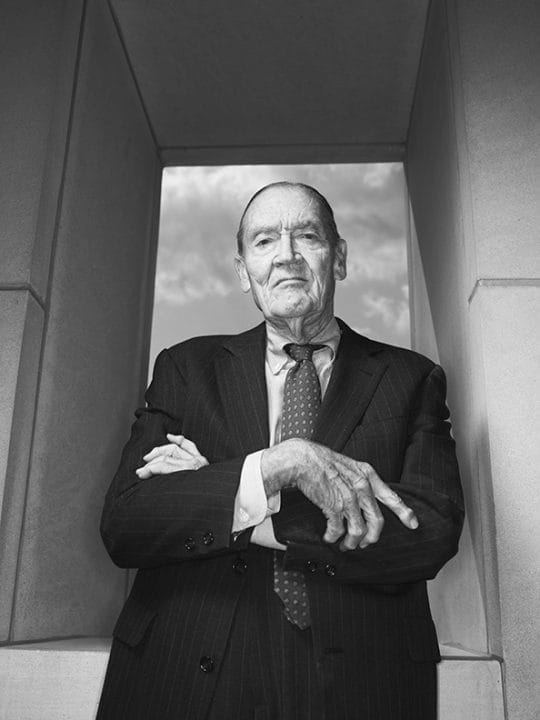
Jack Bogle
Bogle''s investment philosophy is the simplest on this entire list: buy the whole market, hold it forever, pay as little as possible to do so, and never let a market downturn scare you into selling. He believed individual stock picking and market timing were exercises in humility — the market will humble you.
He also believed that the financial industry had a conflict of interest with its clients: the more complex and expensive the product, the better for the firm and the worse for the investor.
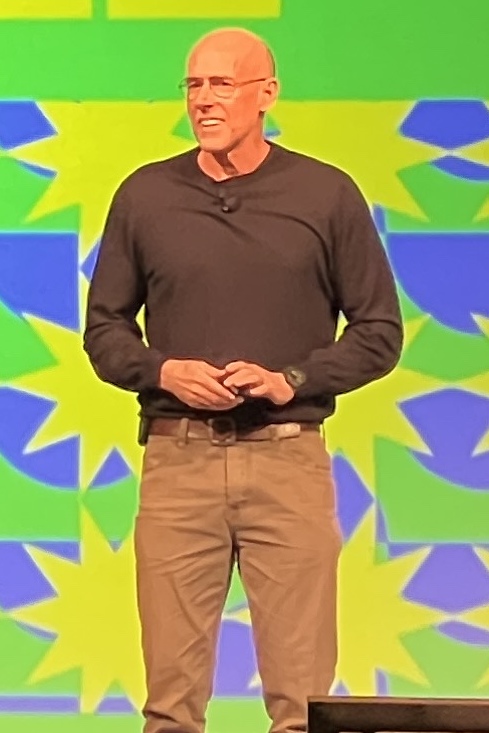
Scott Galloway
Galloway's personal investing style is relatively conservative given how loud he is. He keeps a heavy allocation in index funds and real estate.
He does make concentrated bets on individual stocks when he has conviction — he famously held Amazon for years. He angel invests occasionally but is not prolific.
His real wealth comes from business exits and media income, not portfolio management.
FINANCIAL PHILOSOPHY
Jack Bogle
Bogle''s core belief was that costs are the enemy of investors. Every dollar paid in management fees, transaction costs, and taxes is a dollar that does not compound.
Over 30 years, a 1% annual fee difference can reduce a portfolio by 25%. He called this the "tyranny of compounding costs." His secondary belief was behavioral: investors are their own worst enemy when they try to time the market or chase performance.
The solution to both problems is the same — buy a low-cost index fund, hold it indefinitely, and ignore the noise.
Scott Galloway
Diversify, own assets, and do not confuse being smart with being lucky. Galloway preaches that the most reliable path to wealth is boring — buy index funds, own property in growing cities, and let time do the work.
He is deeply skeptical of anyone who claims they can consistently beat the market.
RISK TOLERANCE
Jack Bogle
Bogle was conservative by nature and by philosophy. His famous asset allocation rule — hold your age in bonds — is a rule of thumb for declining risk as you approach retirement.
He was deeply skeptical of leverage, alternatives, and complex products. He was also skeptical of ETFs (despite Vanguard offering them), arguing that the ease of trading them encouraged investors to behave badly — buying high, selling low — in ways that traditional mutual fund investors could not.
Scott Galloway
Moderate. Galloway has experienced the full spectrum — he had a company go public and then go bankrupt (Red Envelope), which taught him that financial ruin is always closer than you think.
Post-L2 sale, he became much more conservative. Heavy real estate holdings in New York and Florida.
He preaches diversification publicly and mostly follows his own advice, with occasional concentrated stock positions.
THE PLAYBOOK
Jack Bogle
Bogle was one of the most underpaid financial firm founders in history, by choice. Because Vanguard''s mutual structure does not enrich its leaders in the way that public companies do, Bogle ended up with approximately $80 million at his death — a fraction of what he would have been worth had Vanguard been structured like BlackRock or Fidelity.
He lived in a modest home in Pennsylvania. He drove ordinary cars.
He had a heart transplant in 1996 and continued working until shortly before his death in 2019 at age 89.
Scott Galloway
Galloway owns significant real estate in New York and Florida. He talks openly about his wealth and spending — nice apartments, good restaurants, private school for his kids.
He is not frugal and does not pretend to be. But he is very intentional about where money goes.
He has said his biggest financial luxury is "buying back his time" — paying for convenience so he can focus on what matters.
BIGGEST WIN
Jack Bogle
The index fund itself is the win. The Vanguard 500 Index Fund, launched in 1976, inspired the passive investing revolution that has saved ordinary investors an estimated $1 trillion in fees compared to actively managed alternatives.
The structural insight — that you cannot consistently beat the market, so don''t try — was empirically verified over decades. By 2019, more money was invested in passive index funds than in active funds in the United States for the first time ever.
That shift is largely Bogle''s legacy.
Scott Galloway
Selling L2 to Gartner for an estimated $134 million in 2017. He built L2 into the go-to benchmarking firm for digital competence of luxury and consumer brands.
The exit, combined with his media career taking off simultaneously, catapulted him from "NYU professor" to "famous rich guy who yells about tech on the internet."
BIGGEST MISTAKE
Jack Bogle
The Wellington merger with Thorndike, Doran, Paine & Lewis in 1966 was the admitted mistake of his career. He pushed for the merger to give Wellington growth stock exposure during the Go-Go era.
The combined firm underperformed badly in the bear market of 1973–1974. The board fired Bogle as CEO.
He has called the decision a serious error of judgment. The irony is that being fired is what created the circumstances for Vanguard.
The biggest professional failure of his life became the greatest gift to retail investors in history.
Scott Galloway
Red Envelope. Full stop.
Galloway has been brutally honest about this — he took a gift e-commerce company public, it was valued at hundreds of millions, and then it went bankrupt. He has called it the most painful experience of his career and has said it took years to emotionally recover.
He lost a significant amount of personal wealth in the collapse.
CAREER HIGHLIGHTS
Jack Bogle
Bogle grew up in New Jersey during the Great Depression, in a family that lost most of its money in the crash of 1929. His father struggled, the family moved repeatedly, and Bogle attended Blair Academy on a scholarship.
He won another scholarship to Princeton, where he studied economics and wrote a senior thesis on the mutual fund industry — a thesis that predicted that most actively managed funds would fail to beat the market over time. He was 22.
He was right.
He joined Wellington Management Company in 1951 and rose to CEO. He then made a disastrous decision in 1966, merging Wellington with the growth-focused Thorndike, Doran, Paine & Lewis — a merger that fell apart in the 1973-74 bear market and cost Bogle his job.
He was fired in 1974. In response, he filed to create a new kind of investment company — one owned by its own funds and therefore by its fund shareholders, not by outside investors.
Vanguard was born in 1975. The first index fund for retail investors launched in 1976.
Scott Galloway
Scott Galloway is a serial entrepreneur and NYU Stern School of Business professor who became famous for his brutally honest takes on Big Tech. He founded nine companies over his career, including L2 (a business intelligence firm sold to Gartner in 2017), Red Envelope (an e-commerce company that went public then bankrupt), and Prophet (a brand strategy firm).
His 2017 book The Four, about Amazon, Apple, Facebook, and Google, became a bestseller. His YouTube channel and Prof G podcast reach millions.
He called Amazon buying Whole Foods before it happened. He also co-hosts Pivot with Kara Swisher, one of the most popular tech podcasts in the world.
He teaches brand strategy at NYU and is known for his profanity-laced, data-heavy lectures that go viral every semester.
COMPANIES & ROLES
Jack Bogle
Vanguard is the company he built and the enduring legacy. Its mutual ownership structure — unusual in finance — means there are no outside shareholders taking profit.
The funds'' investors own Vanguard. This structure allows Vanguard to continuously lower its fees, because profit flows back to investors rather than to a corporate parent.
Today Vanguard manages over $8 trillion and is the largest issuer of mutual funds in the world.
The Vanguard 500 Index Fund (now VFIAX), launched in 1976, was the first retail index fund available to ordinary investors. It tracks the S&P 500.
It charges 0.04% annually. The average actively managed fund charges over 1%.
That difference, compounded over 30 years, is the difference between a comfortable retirement and a difficult one for millions of people.
Scott Galloway
L2 Inc (founder, sold to Gartner), Red Envelope (founder, IPO then bankruptcy), Prophet (co-founder), Section4 (founder, online education), Prof G Media (founder)
EDUCATION
Jack Bogle
Blair Academy (scholarship), 1947. Princeton University, BA in Economics, 1951.
His Princeton thesis — arguing that mutual funds could not consistently outperform the market and should focus on cost reduction — was the intellectual seed of the index fund. He has said the thesis was one of the most important things he ever wrote, which is unusual praise for a 22-year-old''s college paper.
Scott Galloway
UCLA (BA), UC Berkeley Haas School of Business (MBA).
BOOKS & RESOURCES
Jack Bogle
As an Amazon Associate, Netfigo earns from qualifying purchases. Book links above may be affiliate links.
Scott Galloway
The Algebra of Happiness by Scott Galloway, Prof G Pod (podcast), Pivot with Kara Swisher (podcast), No Mercy / No Malice (his weekly blog)
As an Amazon Associate, Netfigo earns from qualifying purchases. Book links above may be affiliate links.