
NETFIGO SCORE BATTLE
ORIGINAL DATARisk Appetite
Contrarian Index
Track Record
Accessibility
Time Horizon
AT A GLANCE
INVESTING STYLE
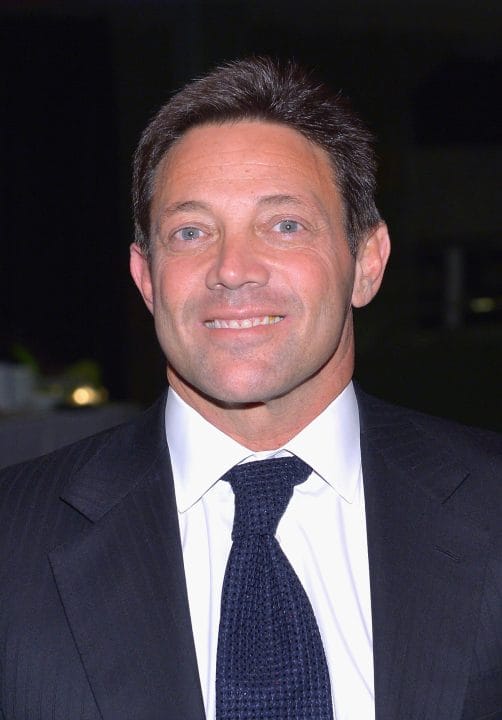
Jordan Belfort
Belfort's original "investing style" was securities fraud — buying penny stocks in bulk, artificially inflating prices through high-pressure sales, then dumping shares on unsuspecting retail investors. This is a pump-and-dump scheme, and it's a federal crime.
His current advice is more conventional. He now recommends long-term investing in quality companies, diversification, and avoiding get-rich-quick schemes — which is a bit like an arsonist giving fire safety tips, but the advice itself is actually sound.
He talks a lot about the psychology of selling — both in business and in how Wall Street sells products to retail investors. His main message: the system is rigged against retail investors, and the best defense is financial education.
He's not wrong about this, even if he was personally one of the people doing the rigging.
Stig Brodersen
Pure value investing in the Buffett-Graham tradition. Stig looks for companies trading below intrinsic value with strong competitive advantages, honest management, and a margin of safety.
He takes a concentrated approach — he'd rather own 10-15 well-understood positions than 50 diversified ones. He does deep fundamental analysis: reading annual reports, understanding unit economics, and calculating intrinsic value using discounted cash flow models.
He has an international perspective that most American value investors lack — he actively looks at companies in Europe, Asia, and emerging markets. He believes international markets are less efficiently priced than US markets, creating more opportunities for value investors.
FINANCIAL PHILOSOPHY
Jordan Belfort
Belfort's current financial philosophy is essentially: don't do what I did. Be ethical.
Build real businesses that create real value. Invest for the long term.
Don't chase shortcuts.
More specifically, he teaches that sales skills are the most valuable financial skill anyone can develop. His argument: everything in life is a sale — getting a job, raising capital, convincing a partner to join your startup.
If you can sell, you can always make money.
He also stresses the difference between income and wealth. At Stratton, he had massive income but zero real wealth — it all went to drugs, toys, legal fees, and restitution.
Real wealth, he says, is about building assets that generate income while you sleep.
On the market itself: he thinks most retail investors should stick to index funds and avoid individual stock picking. He believes actively managed funds mostly underperform because of fees.
Coming from a guy who ran a boiler room, this is actually pretty good advice.
Stig Brodersen
Stig believes that investing should be approached with intellectual humility and continuous learning. His core philosophy: understand what you own, buy it at a price that gives you a margin of safety, and be patient.
He thinks most investors trade too frequently and react too emotionally to short-term market movements. He values international diversification more than most American investors, arguing that US-centric portfolios miss significant opportunities.
He also believes strongly in the democratization of financial education — TIP was built on the principle that world-class investing knowledge should be free.
RISK TOLERANCE
Jordan Belfort
In his Stratton days, his risk tolerance was effectively infinite — he was leveraging illegal schemes and spending money faster than he made it. There was no risk management because the "strategy" was fraud.
Now, he describes himself as much more conservative. He's said he keeps a significant cash reserve, invests in real estate, and avoids anything he doesn't fully understand.
Prison will do that to you.
He's also said that true risk isn't financial — it's ethical. The real risk he took wasn't losing money.
It was losing his freedom, his family, and his reputation. He frames his entire cautionary tale around this idea: the biggest risk in any deal isn't the money, it's whether you can sleep at night.
Stig Brodersen
Moderate. Stig is concentrated but disciplined.
He won't buy something unless his downside analysis shows limited risk of permanent capital loss. He's willing to hold cash when he can't find cheap stocks — sometimes 20-30% of his portfolio.
He's less speculative than Preston and has stayed closer to the original value investing framework. He manages risk through deep understanding of each position rather than through broad diversification.
THE PLAYBOOK
Jordan Belfort
During the Stratton years, Belfort's spending was legendary and absurd. He owned a 167-foot yacht (originally owned by Coco Chanel) that he sank off the coast of Sardinia.
He had a helicopter he crashed while high on Quaaludes. He owned multiple mansions.
He spent an estimated $700,000 per week on drugs alone. He literally threw money around.
Post-prison, his lifestyle is more restrained — but still comfortable. He lives in a beachfront property in Manhattan Beach, California.
He drives luxury cars. He dresses well.
He travels for speaking gigs constantly.
He still owes restitution — $110 million to the victims of his fraud. He's paid back roughly $14 million as of the most recent public records.
The movie deal alone reportedly earned him over $1 million. His victims have pointed out, with some justification, that he's profiting from the story of how he robbed them.
Stig Brodersen
Stig is methodical and disciplined. He reads extensively — annual reports, investing books, economic history, and academic research.
He maintains a structured process for evaluating potential investments and doesn't deviate from it based on market emotions. He lives in Denmark and maintains a lower public profile than many financial media personalities.
He reinvests podcast income into both his business and his personal investment portfolio.
BIGGEST WIN
Jordan Belfort
The movie deal is probably the biggest "win" of his post-prison life. Selling the rights to Scorsese and having Leonardo DiCaprio play you is a level of rehabilitation that most convicted felons can only dream of.
The film made $392 million globally and turned Belfort into a household name — in a weirdly aspirational way.
At Stratton, the raw numbers were staggering: he was reportedly earning $1 million per week at the firm's peak. But since most of that money was obtained through fraud and was subsequently seized or spent, it doesn't really count as a "win" in any legitimate sense.
His Straight Line Selling system is a legitimate post-prison success. He built a multimillion-dollar training business from a prison cell, essentially monetizing the one skill that was genuinely his: the ability to sell anything to anyone.
Stig Brodersen
Co-building The Investor's Podcast Network into a global phenomenon. The show's reach — 100 million+ downloads — means Stig has directly contributed to the financial education of millions of people across dozens of countries.
His interviews with top investors have created a free archive of investing wisdom that rivals any MBA curriculum. On a personal investment level, his consistent application of value principles across international markets has produced solid long-term returns.
BIGGEST MISTAKE
Jordan Belfort
The whole thing. Stratton Oakmont defrauded roughly 1,500 investors out of approximately $200 million.
Belfort personally pleaded guilty to securities fraud and money laundering. He was sentenced to 4 years in federal prison (served 22 months), ordered to pay $110.4 million in restitution, and was banned from the securities industry for life.
He lost everything — his money, his first marriage, his freedom, and very nearly his life (he overdosed multiple times during the Stratton years). His 167-foot yacht sank in a storm off Italy.
His helicopter was destroyed when he tried to land it on his lawn while high.
The lesson he teaches now: "I was the richest man I knew, and I was the most miserable. Money made through dishonesty isn't wealth — it's a ticking bomb." Whether you believe his redemption arc is genuine or just another sales pitch is up to you.
Stig Brodersen
Stig has been open about early investment mistakes where he bought companies that were cheap for a reason — value traps where the low price reflected genuine business deterioration rather than market mispricing. He's talked about the importance of distinguishing between "cheap" and "good value," which is one of the hardest lessons in value investing.
He's also acknowledged that running a media business while managing a personal portfolio creates time allocation challenges.
CAREER HIGHLIGHTS
Jordan Belfort
Jordan Belfort grew up in Queens, New York. His parents were both accountants — middle class, nothing flashy.
After high school, he briefly tried selling Italian ices on the beach (made $20,000 in one summer, which gave him the taste) and then went to dental school at the University of Maryland. He dropped out on the first day after a professor told the class that the golden age of dentistry was over.
He drifted into Wall Street in the late 1980s. His first job was at L.F.
Rothschild, where he was trained as a stockbroker. He was literally on the job for his first day when Black Monday hit — October 19, 1987, the biggest one-day market crash in history.
He was immediately laid off.
So he pivoted to selling meat and seafood door to door on Long Island. No joke.
He was good at it — reportedly earning $3,000–$4,000 a week. But the stock market kept calling.
In 1989, he co-founded Stratton Oakmont, a brokerage firm in Lake Success, Long Island.
Stratton Oakmont became one of the most notorious boiler rooms in Wall Street history. The firm specialized in penny stock fraud — buying huge blocks of cheap, nearly worthless stocks, then having an army of aggressive salespeople call investors and push the price up through manipulation.
Once the price was inflated, Belfort and his partners would dump their shares. Classic pump-and-dump.
At its peak, Stratton Oakmont had over 1,000 brokers and was moving millions of dollars daily. Belfort was making an estimated $1 million per week.
The office was famous for its insane culture — drugs, parties, dwarf-tossing contests, and an atmosphere that made a frat house look like a monastery.
The SEC and FBI were circling for years. Stratton was shut down in 1996.
Belfort was indicted in 1998 for securities fraud and money laundering. He cooperated with the FBI (wore a wire to help catch other fraudsters), pleaded guilty, and was sentenced to 4 years in federal prison.
He served 22 months at a minimum-security facility in Nevada.
After prison, he reinvented himself. He wrote two memoirs — "The Wolf of Wall Street" and "Catching the Wolf of Wall Street." Martin Scorsese turned the first one into a movie starring Leonardo DiCaprio in 2013.
The film grossed $392 million worldwide and turned Belfort from a convicted felon into a celebrity. He now runs a sales training company and charges $50,000–$100,000 per speaking engagement.
Stig Brodersen
Stig Brodersen grew up in Denmark and studied business and finance. He earned his MBA and worked in corporate finance before deciding his real passion was investing education.
He connected with Preston Pysh online through their shared love of Warren Buffett and Benjamin Graham, and they launched The Investor's Podcast in 2014. The concept was brilliantly simple: read the classic investing books that every successful investor recommends, break them down chapter by chapter in plain language, and give them away for free as a podcast.
It worked beyond anyone's expectations. The show grew into The Investor's Podcast Network, now hosting multiple shows including We Study Billionaires, Millennial Investing, and Bitcoin Fundamentals.
The network has surpassed 100 million total downloads. When Preston shifted his focus to Bitcoin, Stig took the lead on We Study Billionaires, conducting in-depth interviews with legendary investors.
He's interviewed Howard Marks, Mohnish Pabrai, Guy Spier, Tobias Carlisle, and dozens of other investing heavyweights. He also co-authored books with Preston on Buffett's investment methods.
COMPANIES & ROLES
Jordan Belfort
Stratton Oakmont was the main act — a brokerage firm that was really a fraud factory. At its peak, it employed over 1,000 stockbrokers and took dozens of companies public (most of them worthless or nearly so).
The firm was shut down by regulators in 1996 after years of violations.
His current company is Jordan Belfort Global — a sales training and motivational speaking business. He teaches his "Straight Line Selling" system, which is essentially the sales methodology he developed at Stratton, minus the illegal parts.
He sells courses, coaching, and live events.
He's also been involved in crypto promotion — he's given talks and endorsements for various blockchain projects, which is ironic given that his original crime was essentially selling worthless assets to unsuspecting buyers. He's been criticized for this, and he's pushed back by saying crypto itself isn't a scam, just some of the projects are.
Stig Brodersen
The Investor's Podcast Network — co-founded with Preston Pysh, one of the largest financial media networks in the world. We Study Billionaires — the flagship podcast, now primarily hosted by Stig.
He co-authored books on Warren Buffett's investment frameworks with Preston Pysh. He also runs his own investment portfolio following value investing principles.
EDUCATION
Jordan Belfort
Belfort attended American University in Washington, D.C., where he earned a degree in biology. He then enrolled in the University of Maryland School of Dentistry but famously dropped out on the first day.
No MBA, no finance degree, no Series 7 at the time — he got into Wall Street purely through hustle and the ability to sell.
Stig Brodersen
Stig earned an MBA with a focus on finance and business. His academic background in business gives him a structured analytical framework for evaluating companies.
He's also self-educated through hundreds of investing books that he's read and discussed on the podcast — the show itself has been his ongoing graduate education in investing.
BOOKS & RESOURCES
Jordan Belfort
For understanding the psychology of persuasion — ironic, given that he used those same principles to defraud people
As an Amazon Associate, Netfigo earns from qualifying purchases. Book links above may be affiliate links.
Stig Brodersen
The foundation of Stig's entire investing approach
The more technical deep-dive that Stig considers essential for serious investors
A book about unconventional CEOs that Stig frequently recommends
As an Amazon Associate, Netfigo earns from qualifying purchases. Book links above may be affiliate links.