Compare / Kevin O'Leary vs Timothy Sykes
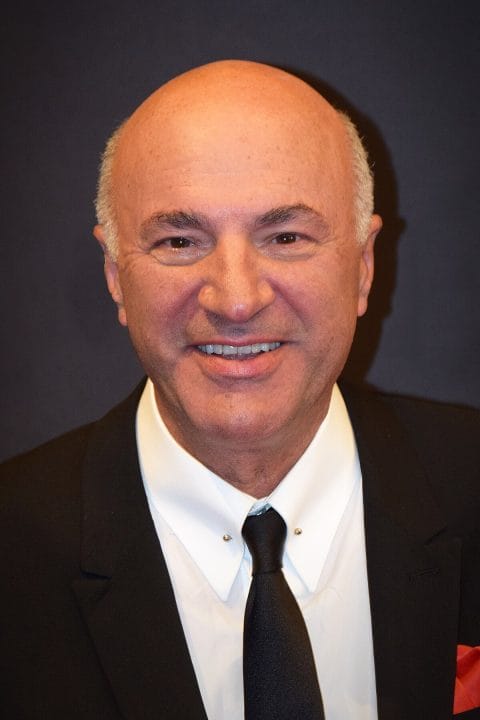
KEVIN O'LEARY
Shark Tank's "Mr. Wonderful," co-founder of SoftKey, and a prolific investor in royalty deals and ETFs
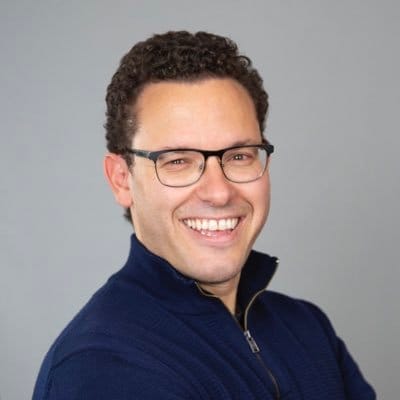
TIMOTHY SYKES
Penny stock trader and educator who turned $12,000 into $1.65 million and built a trading education empire
NETFIGO SCORE BATTLE
ORIGINAL DATARisk Appetite
Contrarian Index
Track Record
Accessibility
Time Horizon
AT A GLANCE
INVESTING STYLE
Kevin O'Leary
O'Leary is famous for royalty deals. On Shark Tank, he frequently offers founders a deal where he gets a royalty per unit sold rather than (or in addition to) equity.
His logic: royalties start paying immediately, do not depend on an exit event, and give him guaranteed cash flow regardless of whether the company gets acquired. He also invests in ETFs and dividend-paying equities through his O'Shares brand.
He is very publicly diversified — he does not concentrate bets. He likes to say he treats every dollar as a soldier that goes out and brings back more soldiers.
Timothy Sykes
Sykes specializes in low-priced, highly volatile stocks — often called penny stocks or small-cap momentum plays — and trades both the long and short side. His long strategy focuses on stocks spiking on news catalysts, bought early and sold quickly into the spike.
His short strategy focuses on the same stocks after the spike, shorting them as they fade back to reality. He has said repeatedly that most penny stocks are garbage companies that temporarily spike on hype and then collapse.
His edge is understanding that cycle and positioning accordingly.
FINANCIAL PHILOSOPHY
Kevin O'Leary
Every dollar is a soldier. Send it out to bring back more soldiers.
O'Leary's philosophy is entirely about cash flow and capital efficiency. He wants money working for him at all times.
He is against speculative investments that do not produce income. He is famously anti-debt for personal use but comfortable with leverage in business when the numbers work.
His mother taught him to save 10% of everything — he still follows that rule.
Timothy Sykes
Sykes believes the penny stock market is structurally exploitable because it attracts unsophisticated investors who chase momentum without understanding that most penny stock companies are worthless. His philosophy is to be on the right side of that dynamic — buying into hype early and selling before it fades, or shorting the aftermath.
He is not a fundamental investor in any sense. He invests in the predictability of human behavior around speculative, low-quality assets.
RISK TOLERANCE
Kevin O'Leary
O'Leary caps any single position at 5% of his total portfolio. When something appreciates beyond that, he trims.
He never lets conviction turn into concentration. His royalty deal preference on Shark Tank is itself a risk management tool — royalties pay regardless of whether the company ever gets acquired or goes public, while equity only pays on an exit that may never come.
He has said the single biggest mistake retail investors make is falling in love with a stock and watching a 5% position quietly become 40% of their net worth before they notice.
Timothy Sykes
Sykes operates with defined position sizes and stops, and emphasizes cutting losses quickly above everything else. He has publicly documented losses alongside wins, and stresses that small losses are the price of staying in the game.
He does not use heavy leverage. He avoids holding overnight positions where possible — the gap risk on volatile small-cap stocks overnight is extreme.
His risk model is conservative relative to the volatility of the instruments he trades.
THE PLAYBOOK
Kevin O'Leary
O'Leary is flashy on camera — he wears a signature watch, talks about wine and luxury — but has spoken about being more measured in private. He collects fine wine and has a wine brand (O'Leary Fine Wines).
He runs every financial decision through a "what does this dollar do for me" filter. He has said he wakes up early, spends mornings on markets and email, and treats content creation and Shark Tank as businesses in themselves.
Timothy Sykes
Sykes is the most conspicuously lifestyle-oriented trader in his category. He has photographed himself on yachts, in Lamborghinis, in luxury hotels, and with stacks of cash — marketing imagery that his critics cite as manipulative and his defenders cite as authentic success documentation.
He lives part-time in Miami and part-time internationally. He is genuinely philanthropic: he has funded the building of dozens of schools in developing countries through Karmagawa, the charity he co-founded, donating a share of his course revenue to it.
BIGGEST WIN
Kevin O'Leary
Selling SoftKey / The Learning Company to Mattel for $4.2 billion. The fact that Mattel destroyed most of that value after the acquisition does not change the outcome for O'Leary — he negotiated the sale, collected his share, and moved on.
The deal remains one of the largest educational technology exits in history.
Timothy Sykes
The original bar mitzvah money trade — $12,415 to $1.65 million — is the defining story. It is verifiable through SEC filings from his college hedge fund days.
More recently, his Millionaire Challenge has produced documented seven-figure earners: students like Tim Grittani, who turned $1,500 into over $13 million using Sykes''s methodology. Grittani''s success is probably the strongest external validation of the teaching model — a student who took the framework and surpassed the teacher.
BIGGEST MISTAKE
Kevin O'Leary
The SoftKey-Mattel deal is simultaneously his biggest win and his most controversial chapter. Critics have argued that the company was aggressively managed for the sale rather than for long-term health — and that the $3.6 billion write-down at Mattel was foreseeable.
O'Leary disputes this and says the operational problems were Mattel's responsibility after the acquisition.
Timothy Sykes
The hedge fund period is the honest low point. After college, Sykes ran Cilantro Fund Management and struggled significantly — the strategies that worked trading his own small account did not scale to managing institutional capital in the same volatile instruments.
He has acknowledged that his edge in penny stocks is partly size-dependent: he can move in and out of small positions quickly in ways that are impossible with millions under management. The fund underperformed and he eventually returned to trading only his own capital.
CAREER HIGHLIGHTS
Kevin O'Leary
Kevin O'Leary was born in Montreal in 1954 to an Irish-Canadian father and a Lebanese mother. His mother taught him about money early — she literally forced him to save a portion of every dollar he ever received.
He studied environmental science and then got an MBA from Western University (Ivey Business School). He co-founded SoftKey International in 1986, an educational software company.
Through aggressive acquisitions — buying The Learning Company, Broderbund, and others — SoftKey became the dominant educational software company in North America. It was sold to Mattel in 1999 for $4.2 billion.
Mattel subsequently wrote down $3.6 billion of that purchase price, calling it one of the worst acquisitions in corporate history. O'Leary was already cashed out.
He moved into TV, joining Canada's Dragon's Den in 2006 and Shark Tank in 2009. He also launched O'Leary Funds (mutual funds and ETFs), O'Shares ETFs, and various venture investments.
Timothy Sykes
Sykes grew up in Greenwich, Connecticut, in a financially comfortable family. He received $12,415 as bar mitzvah gift money and, at age 17, started using it to trade stocks.
By the time he was a junior at Tulane University, he had turned it into approximately $1.65 million — primarily through trading volatile, low-priced stocks that most Wall Street firms ignored entirely.
He graduated in 2003 and briefly ran Cilantro Fund Management, a hedge fund, before returning to his roots in penny stock trading. In 2008 he wrote "An American Hedge Fund," documenting his college trading story.
He then launched the Millionaire Challenge, his flagship mentorship program. He built one of the first large-scale day trading education platforms on the internet, with thousands of paying students, multiple millionaire challenge graduates, and a media presence that includes books, DVDs, webinars, and social media.
COMPANIES & ROLES
Kevin O'Leary
SoftKey International / The Learning Company (co-founder, sold to Mattel for $4.2B in 1999). O'Shares ETFs (financial products).
O'Leary Ventures. Dragon's Den (2006-2014).
Shark Tank (2009-present). Books: Cold Hard Truth on Business, Money & Life.
Cold Hard Truth on Family, Kids & Money.
Timothy Sykes
Sykes runs several interconnected businesses under the Millionaire Challenge umbrella. The core is a subscription community offering trade alerts, video lessons, a live chatroom, and direct mentorship.
He has produced multiple millionaire students — traders who completed his program and went on to earn seven-figure trading profits — which he documents publicly and markets heavily.
He also runs Profit.ly, a trade tracking and verification platform that attempts to provide auditable performance records for traders. He has been vocal about the importance of trade verification in an industry full of unverifiable claims — something he applies to himself, publishing every trade publicly.
EDUCATION
Kevin O'Leary
University of Waterloo — Bachelor of Science in environmental studies and psychology. Western University (Ivey Business School) — MBA.
Timothy Sykes
Tulane University, BA in Philosophy and Psychology, 2003. He has been dismissive of traditional finance education as preparation for the kind of trading he does — the academic curriculum does not cover penny stock dynamics or short-term momentum.
His real education was the college trading years, which were simultaneously his proof of concept.
BOOKS & RESOURCES
Kevin O'Leary
As an Amazon Associate, Netfigo earns from qualifying purchases. Book links above may be affiliate links.
Timothy Sykes
An American Hedge Fund (2008) is his memoir of the college trading era
It covers the bar mitzvah money story in full, including the hedge fund failure. It is more honest about the failures than most trading books
The Complete Penny Stock Course by Jamil Ben Alluch, written in collaboration with the Sykes methodology, is a more systematic treatment of the trading strategy. For anyone curious about penny stock dynamics
Why these stocks spike, why they collapse, and how the cycle repeats — it covers the mechanics clearly