NETFIGO SCORE BATTLE
ORIGINAL DATARisk Appetite
Contrarian Index
Track Record
Accessibility
Time Horizon
AT A GLANCE
INVESTING STYLE
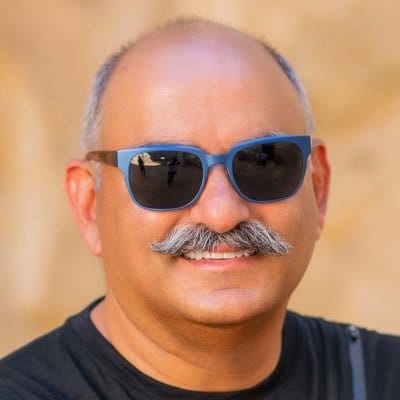
Mohnish Pabrai
Pure Buffett-Munger cloning. Mohnish doesn't pretend to be original and that's his superpower.
He coined the term "cloning" for his approach: find the best investors in the world, study their moves, understand their reasoning, and copy what makes sense. He runs a concentrated portfolio — typically 10 or fewer positions.
He looks for what he calls "Dhandho" — a Gujarati word meaning "endeavors that create wealth." The Dhandho framework is simple: heads I win big, tails I don't lose much. He wants asymmetric bets where the downside is limited but the upside is massive.
He's willing to go heavily into emerging markets, especially India and Turkey, where he sees mispriced assets that Western investors ignore. He holds for years, trades very rarely, and does almost nothing most of the time.
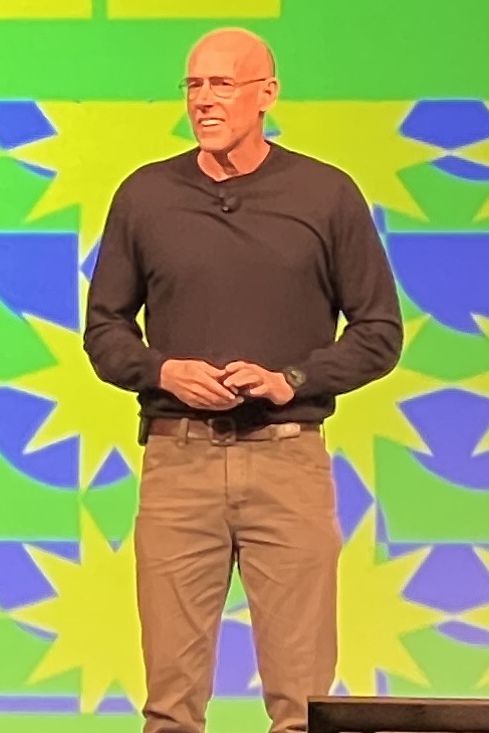
Scott Galloway
Galloway's personal investing style is relatively conservative given how loud he is. He keeps a heavy allocation in index funds and real estate.
He does make concentrated bets on individual stocks when he has conviction — he famously held Amazon for years. He angel invests occasionally but is not prolific.
His real wealth comes from business exits and media income, not portfolio management.
FINANCIAL PHILOSOPHY
Mohnish Pabrai
Pabrai's philosophy is built on a few bedrock ideas. First: be a shameless cloner.
If someone smarter has figured it out, copy them. Second: look for low-risk, high-uncertainty situations — the market prices uncertainty as if it were risk, but they're not the same thing.
Third: invest in your circle of competence and expand it slowly. Fourth: compounding is the eighth wonder of the world, so start early and be patient.
Fifth: give back. He takes the Buffett giving pledge seriously — his Dakshana Foundation is the real deal, not a vanity project.
He genuinely believes wealth creation and philanthropy are two sides of the same coin.
Scott Galloway
Diversify, own assets, and do not confuse being smart with being lucky. Galloway preaches that the most reliable path to wealth is boring — buy index funds, own property in growing cities, and let time do the work.
He is deeply skeptical of anyone who claims they can consistently beat the market.
RISK TOLERANCE
Mohnish Pabrai
Moderate to aggressive on individual positions, conservative in structure. Each position can be 10-20% of his portfolio, which is concentrated by any standard.
But he only buys when his downside analysis shows limited risk of permanent loss. He's comfortable with volatility — his fund dropped 60-70% in 2008 and he didn't panic.
He views drawdowns as temporary if the business thesis is intact. He keeps a big cash position when he can't find cheap stocks, sometimes 30-40% in cash.
He's also willing to invest heavily in countries most American investors won't touch.
Scott Galloway
Moderate. Galloway has experienced the full spectrum — he had a company go public and then go bankrupt (Red Envelope), which taught him that financial ruin is always closer than you think.
Post-L2 sale, he became much more conservative. Heavy real estate holdings in New York and Florida.
He preaches diversification publicly and mostly follows his own advice, with occasional concentrated stock positions.
THE PLAYBOOK
Mohnish Pabrai
Mohnish lives simply relative to his wealth. He drives a used car, lives modestly, and has said he spends very little time worrying about material possessions.
He reads voraciously — 3-4 hours a day, mostly annual reports, business biographies, and investor letters. He takes a no-meeting approach to his day: he has no office, no analysts, no team.
He invests alone from his home in Irvine, California. He checks his portfolio rarely and makes maybe 2-3 investment decisions per year.
The rest of the time he reads, thinks, and works on Dakshana. He's also a creature of habit — he follows a similar daily routine year-round.
Scott Galloway
Galloway owns significant real estate in New York and Florida. He talks openly about his wealth and spending — nice apartments, good restaurants, private school for his kids.
He is not frugal and does not pretend to be. But he is very intentional about where money goes.
He has said his biggest financial luxury is "buying back his time" — paying for convenience so he can focus on what matters.
BIGGEST WIN
Mohnish Pabrai
His bet on Fiat Chrysler (now Stellantis) starting around 2012 was a masterclass. He bought the stock when Sergio Marchionne was restructuring the company and the market was deeply skeptical.
The stock roughly tripled. He also made a killing on Rain Industries, an Indian chemical company that most Western investors had never heard of.
He bought it cheap, the company's fundamentals improved dramatically, and the stock went up several hundred percent. These wins perfectly illustrate his method: find overlooked companies in overlooked markets and let the market catch up.
Scott Galloway
Selling L2 to Gartner for an estimated $134 million in 2017. He built L2 into the go-to benchmarking firm for digital competence of luxury and consumer brands.
The exit, combined with his media career taking off simultaneously, catapulted him from "NYU professor" to "famous rich guy who yells about tech on the internet."
BIGGEST MISTAKE
Mohnish Pabrai
The 2008 financial crisis was brutal for Pabrai. His funds lost 60-70% of their value.
He was heavily concentrated in financial stocks and housing-related plays going into the crash. He's been completely transparent about this — he calls it a humbling experience that made him a better investor.
He also admits he's made mistakes holding some positions too long after the thesis broke, particularly in some emerging market bets. But his willingness to openly discuss failures is one of the things that makes him credible.
Scott Galloway
Red Envelope. Full stop.
Galloway has been brutally honest about this — he took a gift e-commerce company public, it was valued at hundreds of millions, and then it went bankrupt. He has called it the most painful experience of his career and has said it took years to emotionally recover.
He lost a significant amount of personal wealth in the collapse.
CAREER HIGHLIGHTS
Mohnish Pabrai
Mohnish Pabrai was born in Mumbai in 1964 and moved to the US for college. He started his career as an IT consultant and founded TransTech Inc., an IT consulting firm, in 1991 with $100,000 in savings and $70,000 on credit cards.
He grew it to $20 million in revenue and sold it. In 1999, he read a book about Buffett and had a revelation: investing was simpler and more profitable than running a business.
He started Pabrai Investment Funds with $1 million — $100,000 of his own money and the rest from friends and family. By 2007, his funds had compounded at over 28% annually.
The 2008 crash hit him hard — his funds dropped 60-70%. But he recovered and kept compounding.
His total assets under management have exceeded $1 billion. In 2007, he and Guy Spier famously paid $650,100 at a charity auction to have lunch with Warren Buffett.
He's also a major philanthropist — his Dakshana Foundation has helped thousands of underprivileged Indian students get into top engineering and medical schools.
Scott Galloway
Scott Galloway is a serial entrepreneur and NYU Stern School of Business professor who became famous for his brutally honest takes on Big Tech. He founded nine companies over his career, including L2 (a business intelligence firm sold to Gartner in 2017), Red Envelope (an e-commerce company that went public then bankrupt), and Prophet (a brand strategy firm).
His 2017 book The Four, about Amazon, Apple, Facebook, and Google, became a bestseller. His YouTube channel and Prof G podcast reach millions.
He called Amazon buying Whole Foods before it happened. He also co-hosts Pivot with Kara Swisher, one of the most popular tech podcasts in the world.
He teaches brand strategy at NYU and is known for his profanity-laced, data-heavy lectures that go viral every semester.
COMPANIES & ROLES
Mohnish Pabrai
Pabrai Investment Funds — his hedge fund modeled directly after Buffett's original partnership structure. No management fee, just a performance fee above a hurdle rate.
TransTech Inc. — his first company, an IT consulting firm he built from scratch and sold.
Dakshana Foundation — his philanthropy arm that coaches underprivileged Indian students for IIT and medical school entrance exams. Over 15,000 students have gotten into top schools through the program.
Scott Galloway
L2 Inc (founder, sold to Gartner), Red Envelope (founder, IPO then bankruptcy), Prophet (co-founder), Section4 (founder, online education), Prof G Media (founder)
EDUCATION
Mohnish Pabrai
Pabrai earned a bachelor's degree in electrical engineering from Clemson University in South Carolina. He's entirely self-taught as an investor — no MBA, no finance degree, no Wall Street training.
Like Buffett, he learned investing from books, primarily The Intelligent Investor and Buffett's shareholder letters. He considers his engineering background an advantage because it taught him systematic thinking and first-principles analysis.
Scott Galloway
UCLA (BA), UC Berkeley Haas School of Business (MBA).
BOOKS & RESOURCES
Mohnish Pabrai
His own book, a must-read that explains his framework for finding low-risk, high-return investments using the Gujarati concept of Dhandho
The foundation, as it is for virtually all value investors in this lineage
Pabrai considers Munger's mental models essential to good investing
For understanding qualitative business analysis beyond just the numbers
As an Amazon Associate, Netfigo earns from qualifying purchases. Book links above may be affiliate links.
Scott Galloway
The Algebra of Happiness by Scott Galloway, Prof G Pod (podcast), Pivot with Kara Swisher (podcast), No Mercy / No Malice (his weekly blog)
As an Amazon Associate, Netfigo earns from qualifying purchases. Book links above may be affiliate links.