Compare / Mohnish Pabrai vs Anas Sefrioui

NETFIGO SCORE BATTLE
ORIGINAL DATARisk Appetite
Contrarian Index
Track Record
Accessibility
Time Horizon
AT A GLANCE
INVESTING STYLE
Mohnish Pabrai
Pure Buffett-Munger cloning. Mohnish doesn't pretend to be original and that's his superpower.
He coined the term "cloning" for his approach: find the best investors in the world, study their moves, understand their reasoning, and copy what makes sense. He runs a concentrated portfolio — typically 10 or fewer positions.
He looks for what he calls "Dhandho" — a Gujarati word meaning "endeavors that create wealth." The Dhandho framework is simple: heads I win big, tails I don't lose much. He wants asymmetric bets where the downside is limited but the upside is massive.
He's willing to go heavily into emerging markets, especially India and Turkey, where he sees mispriced assets that Western investors ignore. He holds for years, trades very rarely, and does almost nothing most of the time.
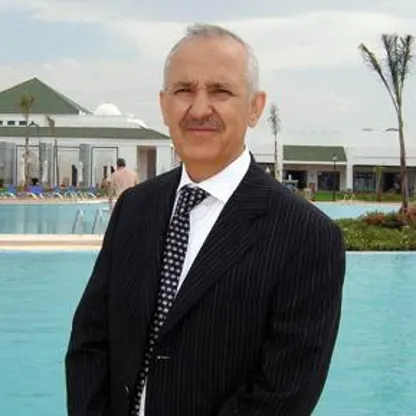
Anas Sefrioui
Sefrioui is a real estate operator first, investor second. He builds companies, not portfolios.
His growth approach has always been organic — acquire land, develop it, sell units, reinvest. No interest in financial markets or passive allocation.
The Africa expansion was the one big strategic bet beyond his home market. Bold in concept.
Mixed in execution.
FINANCIAL PHILOSOPHY
Mohnish Pabrai
Pabrai's philosophy is built on a few bedrock ideas. First: be a shameless cloner.
If someone smarter has figured it out, copy them. Second: look for low-risk, high-uncertainty situations — the market prices uncertainty as if it were risk, but they're not the same thing.
Third: invest in your circle of competence and expand it slowly. Fourth: compounding is the eighth wonder of the world, so start early and be patient.
Fifth: give back. He takes the Buffett giving pledge seriously — his Dakshana Foundation is the real deal, not a vanity project.
He genuinely believes wealth creation and philanthropy are two sides of the same coin.
Anas Sefrioui
Build where people actually need to live. Volume beats margin.
The goal is not the most impressive building but the most buildings. He has consistently argued that Africa’s housing deficit — running into the hundreds of millions of units — is the biggest real estate opportunity on earth.
RISK TOLERANCE
Mohnish Pabrai
Moderate to aggressive on individual positions, conservative in structure. Each position can be 10-20% of his portfolio, which is concentrated by any standard.
But he only buys when his downside analysis shows limited risk of permanent loss. He's comfortable with volatility — his fund dropped 60-70% in 2008 and he didn't panic.
He views drawdowns as temporary if the business thesis is intact. He keeps a big cash position when he can't find cheap stocks, sometimes 30-40% in cash.
He's also willing to invest heavily in countries most American investors won't touch.
Anas Sefrioui
High on operational bets, low on financial market speculation. Building in emerging markets involves real currency exposure, regulatory uncertainty, and infrastructure gaps — Sefrioui leaned into all of them.
The 2020 legal troubles showed that close proximity to political capital can also become a liability overnight.
THE PLAYBOOK
Mohnish Pabrai
Mohnish lives simply relative to his wealth. He drives a used car, lives modestly, and has said he spends very little time worrying about material possessions.
He reads voraciously — 3-4 hours a day, mostly annual reports, business biographies, and investor letters. He takes a no-meeting approach to his day: he has no office, no analysts, no team.
He invests alone from his home in Irvine, California. He checks his portfolio rarely and makes maybe 2-3 investment decisions per year.
The rest of the time he reads, thinks, and works on Dakshana. He's also a creature of habit — he follows a similar daily routine year-round.
Anas Sefrioui
Not known for conspicuous consumption. His wealth has been largely tied up in Addoha shares and land holdings rather than liquid assets.
He is a builder, not a spender.
BIGGEST WIN
Mohnish Pabrai
His bet on Fiat Chrysler (now Stellantis) starting around 2012 was a masterclass. He bought the stock when Sergio Marchionne was restructuring the company and the market was deeply skeptical.
The stock roughly tripled. He also made a killing on Rain Industries, an Indian chemical company that most Western investors had never heard of.
He bought it cheap, the company's fundamentals improved dramatically, and the stock went up several hundred percent. These wins perfectly illustrate his method: find overlooked companies in overlooked markets and let the market catch up.
Anas Sefrioui
The 2006 Casablanca Stock Exchange IPO. Raising 6 billion Moroccan dirhams on the back of a simple affordable housing story, in a market that was not yet sophisticated, was a remarkable capital markets achievement.
It funded the next decade of growth.
BIGGEST MISTAKE
Mohnish Pabrai
The 2008 financial crisis was brutal for Pabrai. His funds lost 60-70% of their value.
He was heavily concentrated in financial stocks and housing-related plays going into the crash. He's been completely transparent about this — he calls it a humbling experience that made him a better investor.
He also admits he's made mistakes holding some positions too long after the thesis broke, particularly in some emerging market bets. But his willingness to openly discuss failures is one of the things that makes him credible.
Anas Sefrioui
Expanding into Sub-Saharan Africa too quickly, without enough local partnerships and local capital structures, created operational strain. The 2020 legal case may also trace back to financial engineering under pressure from the Africa overextension.
Governance did not scale as fast as ambition.
CAREER HIGHLIGHTS
Mohnish Pabrai
Mohnish Pabrai was born in Mumbai in 1964 and moved to the US for college. He started his career as an IT consultant and founded TransTech Inc., an IT consulting firm, in 1991 with $100,000 in savings and $70,000 on credit cards.
He grew it to $20 million in revenue and sold it. In 1999, he read a book about Buffett and had a revelation: investing was simpler and more profitable than running a business.
He started Pabrai Investment Funds with $1 million — $100,000 of his own money and the rest from friends and family. By 2007, his funds had compounded at over 28% annually.
The 2008 crash hit him hard — his funds dropped 60-70%. But he recovered and kept compounding.
His total assets under management have exceeded $1 billion. In 2007, he and Guy Spier famously paid $650,100 at a charity auction to have lunch with Warren Buffett.
He's also a major philanthropist — his Dakshana Foundation has helped thousands of underprivileged Indian students get into top engineering and medical schools.
Anas Sefrioui
Anas Sefrioui was born in 1956 in Fez, Morocco. He started in real estate in the 1980s with small construction projects in Casablanca.
In 1988 he formally founded Groupe Addoha — later incorporated as Douja Promotion Group. For two decades he focused exclusively on affordable and mid-range housing, staying far from the luxury segment.
The strategy paid off. The 2006 Casablanca Stock Exchange IPO raised around 6 billion dirhams, was heavily oversubscribed, and pushed his personal wealth to an estimated billion, briefly making him one of the richest people in Africa.
Through the 2010s he expanded into Sub-Saharan Africa — Ivory Coast, Senegal, Ghana, and Cameroon — targeting the same underserved affordable housing market. Then came the turbulence.
A restructuring of Morocco’s affordable housing subsidy program hit margins hard. In 2020, Moroccan authorities charged him in connection with a mortgage fraud case linked to Crédit Immobilier.
He denied the charges. The Addoha stock price fell sharply.
The Africa expansion slowed. He remains one of the most significant real estate figures the continent has produced.
COMPANIES & ROLES
Mohnish Pabrai
Pabrai Investment Funds — his hedge fund modeled directly after Buffett's original partnership structure. No management fee, just a performance fee above a hurdle rate.
TransTech Inc. — his first company, an IT consulting firm he built from scratch and sold.
Dakshana Foundation — his philanthropy arm that coaches underprivileged Indian students for IIT and medical school entrance exams. Over 15,000 students have gotten into top schools through the program.
Anas Sefrioui
Groupe Addoha (Douja Promotion Group) is the whole story. Listed on the Casablanca Stock Exchange under the ticker ADH, its market cap peaked near 25 billion dirhams.
The company builds residential properties across four segments: affordable, mid-range, upper mid-range, and a small luxury slice — though the bread and butter has always been the lower two. At its height, Addoha delivered tens of thousands of housing units per year across Morocco and several Sub-Saharan African markets.
Sefrioui also built out logistics and manufacturing businesses tied to construction supply chains.
EDUCATION
Mohnish Pabrai
Pabrai earned a bachelor's degree in electrical engineering from Clemson University in South Carolina. He's entirely self-taught as an investor — no MBA, no finance degree, no Wall Street training.
Like Buffett, he learned investing from books, primarily The Intelligent Investor and Buffett's shareholder letters. He considers his engineering background an advantage because it taught him systematic thinking and first-principles analysis.
Anas Sefrioui
Educated in Morocco in real estate and construction. Not known for Western business school credentials.
He built his expertise in the field, not the classroom.
BOOKS & RESOURCES
Mohnish Pabrai
His own book, a must-read that explains his framework for finding low-risk, high-return investments using the Gujarati concept of Dhandho
The foundation, as it is for virtually all value investors in this lineage
Pabrai considers Munger's mental models essential to good investing
For understanding qualitative business analysis beyond just the numbers
As an Amazon Associate, Netfigo earns from qualifying purchases. Book links above may be affiliate links.
Anas Sefrioui
Stripped of the politics, it captures the land-banker mindset he has always embodied
Introduced millions to the idea that real estate builds wealth in ways employment never can
The Intelligent Entrepreneur by Bill Murphy Jr. speaks to the relentless, opportunity
Driven building Sefrioui exemplifies
Africa Rising by Vijay Mahajan laid out the case for Africa’s emerging consumer class years before it became consensus — and is the best intellectual framework for understanding his Africa strategy.
As an Amazon Associate, Netfigo earns from qualifying purchases. Book links above may be affiliate links.