
NETFIGO SCORE BATTLE
ORIGINAL DATARisk Appetite
Contrarian Index
Track Record
Accessibility
Time Horizon
AT A GLANCE
INVESTING STYLE
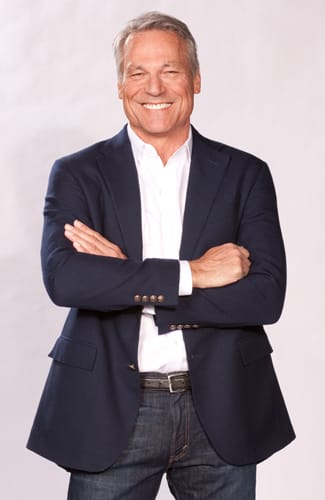
Phil Town
Pure Buffett-Munger value investing, simplified for retail investors. Phil calls it "Rule #1 Investing" after Buffett's famous rule: don't lose money.
The system boils down to four steps. First, find a business you understand — he calls this having a "meaning" for the company.
Second, check that the business has a durable competitive advantage — what Buffett calls a moat. Third, make sure management is honest and competent.
Fourth, buy it only when the price is way below what the business is actually worth — his "margin of safety." He teaches people to calculate a company's intrinsic value using growth rates and PE ratios, which is genuinely useful even if the formulas are simplified. He also teaches a "three circles" framework: Meaning, Moat, and Management.
If a company passes all three, you look at the price. If it doesn't, you move on.
He's a buy-and-hold guy who believes in concentrated portfolios — 10 stocks or fewer.
Farnoosh Torabi
Torabi is a practical, diversified, automation-focused investor. She believes in maxing out tax-advantaged accounts first (401k, Roth IRA), investing in low-cost index funds, and automating everything so investing isn't a decision you make each month.
She's not a stock picker and doesn't pretend to be. Her approach: the market will go up over time, so get in early, stay in, keep costs low, and don't try to time anything.
She's in the Bogle camp philosophically.
What makes her perspective different is her focus on the earning side. Most personal finance advice is about spending less and saving more.
Torabi argues that growing your income — through negotiation, side hustles, career moves — is a more powerful lever than cutting expenses. You can only cut so much.
There's no ceiling on what you can earn.
FINANCIAL PHILOSOPHY
Phil Town
Phil's core belief is that anyone can learn to invest like Buffett if they're willing to put in the work. He rejects the idea that investing is too complicated for regular people.
He also rejects index investing — he thinks you can beat the market if you're disciplined about buying wonderful companies at attractive prices. He's big on the concept of "voting with your dollars" — investing in companies whose missions you believe in.
He frequently says the best investment you can make is in your own financial education. His whole philosophy is about empowerment: you don't need a financial advisor, you don't need Wall Street, you just need to learn the rules and follow them.
Farnoosh Torabi
Torabi's philosophy has three pillars. First: earn more.
She believes income growth is the most underrated financial strategy. Cutting lattes saves you $5 a day.
A salary negotiation can be worth $10,000 a year — compounding forever.
Second: automate and simplify. She doesn't want people thinking about money every day.
Set up the systems — automatic savings, automatic investing, automatic bill pay — and then spend your mental energy on earning more and living well.
Third: talk about money openly. She thinks financial secrecy — between partners, between friends, between parents and kids — is the biggest barrier to financial health.
Her podcast is built on this idea: hearing how real people handle money normalizes the conversation and makes everyone smarter.
Her most resonant principle: financial independence isn't about being rich. It's about having enough that no person, no job, and no situation has power over you.
RISK TOLERANCE
Phil Town
Conservative in practice. Phil preaches buying with a huge margin of safety — he wants 50% below intrinsic value, which is more conservative than even Buffett typically demands.
He tells students to sit in cash until they find something genuinely cheap, which means sometimes going months without buying anything. His actual risk management is basically "don't invest in anything you don't deeply understand." He also teaches technical indicators like the MACD and moving averages as timing tools, which is where he diverges from pure Buffett orthodoxy.
Buffett doesn't time. Phil does.
Farnoosh Torabi
Moderate. She believes in taking appropriate risk for your age and goals — more aggressive when young, more conservative as you approach needing the money.
She's not afraid of the stock market but doesn't advocate for concentrated bets or speculative investments.
She stresses the importance of an emergency fund and having "go-to-hell money" — enough cash saved that you can walk away from a bad job, a bad relationship, or a bad situation without financial panic. She frames this as a safety net and a power tool.
THE PLAYBOOK
Phil Town
Phil practices what he preaches about patience. He talks about sitting in cash for long stretches waiting for the right opportunity, sometimes a year or more.
He does not live a flashy public lifestyle. He reinvests most of his earnings back into his education business and his own portfolio.
He talks about spending hours a day reading about businesses, which tracks with the Buffett and Munger idea of being a learning machine. The weekly podcast forces him to stay current on markets and business news.
Farnoosh Torabi
Torabi is thoughtful about spending. She talks about "spending audits" — periodically reviewing every subscription, recurring charge, and discretionary spend to make sure it still aligns with what you actually value.
She and her husband split finances in a way she's been open about: joint accounts for shared expenses (mortgage, kids, household), separate accounts for individual spending. No permission needed for personal purchases under a certain threshold.
She frames this as both financial and relationship advice.
She lives in the New York area with her family. She's not flashy about spending but she's also not a frugality absolutist — she believes in spending on things that bring genuine joy while cutting things that don't.
BIGGEST WIN
Phil Town
His own origin story. Going from a $4,000-a-year river guide to a millionaire investor using nothing but books and discipline is genuinely compelling.
It's the perfect proof-of-concept for his entire teaching method. Whether his returns are as dramatic as claimed is hard to independently verify — he's not running a public fund — but the story has inspired millions of people to actually learn about investing instead of just parking money in index funds and hoping for the best.
Farnoosh Torabi
The So Money podcast is the biggest professional win. Over 1,500 episodes, consistently in the top personal finance charts, and it's given her a platform that reaches millions.
The podcast opened doors to corporate speaking, books, and media opportunities.
"When She Makes More" was a cultural win — it started a national conversation about breadwinner women and money dynamics in relationships. She was on every major talk show discussing it, and it positioned her as someone willing to tackle the uncomfortable money topics that other advisors avoid.
BIGGEST MISTAKE
Phil Town
The education business model creates an inherent tension. When your income comes from teaching investing rather than from investing itself, critics ask: if the method works so well, why aren't you just doing it full-time?
Phil's answer is that he likes teaching. Fair enough.
But the $2,000+ workshop prices and upsells into coaching programs make some people wonder whether the students are the product, not the strategy. His simplified formulas also sometimes lead beginners to false confidence — running a DCF model doesn't mean you understand the business.
Farnoosh Torabi
Torabi has been honest about her biggest regret: not negotiating her salary aggressively enough early in her career. As a journalist, she accepted what was offered because she felt grateful to have the job.
She later calculated how much that cost her over a decade of compounding raises and says the number is "depressing."
She uses this story constantly in her teaching — it's her most practical lesson. One conversation about your salary in your 20s can be worth hundreds of thousands of dollars over a career.
She now coaches women specifically on salary negotiation because she knows the cost of not doing it.
CAREER HIGHLIGHTS
Phil Town
Phil Town was born in Portland, Oregon in 1948 and served nearly four years in the US Army, including the Vietnam era. Around 1972 he was living in a tent in Flagstaff, Arizona, leading whitewater trips on the Colorado River.
In 1980 a rafting trip he ran for Outward Bound trustees nearly capsized, and one of the passengers told him he could be doing better and pointed him to value investing. He says he turned $1,000 into over $1 million in five years.
He then pivoted into teaching. Rule #1 came out in 2006 and hit number one on the New York Times bestseller list, and Payback Time did the same in 2010.
In 2013 he founded Rule One Partners, a hedge fund. He built an education business around workshops, online courses, YouTube and the InvestED podcast with his daughter Danielle.
His approach is basically Buffett for beginners. Find wonderful companies at attractive prices and hold them.
Farnoosh Torabi
Farnoosh Torabi was born in Worcester, Massachusetts, to Iranian immigrant parents who came to the US with almost nothing. Her parents worked multiple jobs — her mother cleaned houses, her father worked in tech.
Money was tight but education was non-negotiable. She grew up watching her parents navigate the American financial system without a manual.
She went to Penn State, then got a master's from Columbia University's Graduate School of Journalism. She started her career as a financial journalist, writing for Money Magazine, TheStreet.com, and the New York Times.
She covered personal finance from the journalism side — not as an advisor, but as a reporter who could translate complicated money topics into stories people actually wanted to read.
Her first book, "You're So Money," came out in 2008 — right when the financial crisis was making everyone panic about money. The timing was either terrible or perfect depending on how you look at it.
The book was aimed at twenty-somethings trying to be financially savvy without giving up their lives.
Her breakout book was "When She Makes More" in 2014. It tackled the taboo topic of relationships where the woman is the primary breadwinner — the financial, emotional, and relationship dynamics that nobody in personal finance was talking about.
It got massive press attention because it said the quiet part out loud: traditional gender expectations around money are still wrecking relationships, even among progressive couples.
In 2015, she launched the "So Money" podcast. It's now past 1,500 episodes, featuring interviews with everyone from billionaires to regular people sharing their financial wins and disasters.
It consistently ranks in the top personal finance podcasts. The show's strength is range — one episode might feature a CEO, the next a single mom who paid off $100,000 in debt.
COMPANIES & ROLES
Phil Town
Rule #1 Investing, his education company offering courses, workshops and coaching on value investing, plus the Rule #1 Investing YouTube channel. In 2013 he also founded Rule One Partners, a hedge fund based in Georgia.
The InvestED podcast is co-hosted with his daughter Danielle Town. He has essentially built a media business around teaching people how to fish rather than fishing for them.
Farnoosh Torabi
So Money Media is her primary business — the podcast, newsletter, and associated content. The podcast has featured over 1,500 guests and has a dedicated audience.
She's a contributor to CNET and has written for or appeared on virtually every major financial media outlet — CNBC, CNN, NBC, Forbes, O Magazine, and more. Corporate speaking is a significant revenue stream.
She doesn't manage money or run a fund. Her business model is content, education, and corporate partnerships.
She's done branded content with major financial companies — always disclosed, and she's careful about maintaining editorial independence.
EDUCATION
Phil Town
Phil Town has no formal finance education. He graduated high school in 1966 and, after four attempts at college, earned a BA in philosophy from the University of California, San Diego.
His investing is entirely self-taught through books, starting with The Intelligent Investor and working through Buffett's shareholder letters, Munger's speeches and the classic value investing texts. He is arguably the best advertisement for his own philosophy.
You do not need a finance degree to learn this stuff.
Farnoosh Torabi
Torabi has a bachelor's degree from Penn State and a master's in journalism from Columbia University. The journalism background is her edge — she approaches personal finance as a storyteller and investigator, not as a financial advisor.
She can take complex topics and make them compelling, which is why her podcast works where others don't.
BOOKS & RESOURCES
Phil Town
The book that changed his life
Co-written with Phil in 2018, about her learning to invest from her father
As an Amazon Associate, Netfigo earns from qualifying purchases. Book links above may be affiliate links.
Farnoosh Torabi
For people who want a practical, no-BS money system
A critical look at the personal finance industry itself
As an Amazon Associate, Netfigo earns from qualifying purchases. Book links above may be affiliate links.