Compare / Stanley Druckenmiller vs Anas Sefrioui
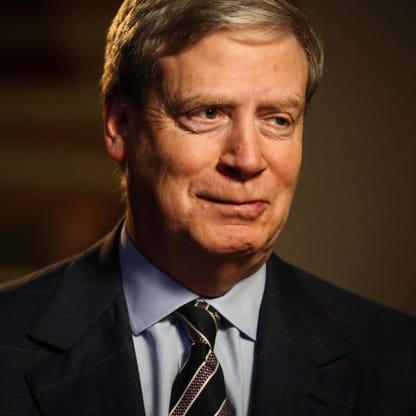
STANLEY DRUCKENMILLER
Macro investor who managed George Soros's Quantum Fund and broke the Bank of England trade

ANAS SEFRIOUI
Building Morocco’s largest real estate empire from scratch and constructing over 300,000 affordable homes acro…
NETFIGO SCORE BATTLE
ORIGINAL DATARisk Appetite
Contrarian Index
Track Record
Accessibility
Time Horizon
AT A GLANCE
INVESTING STYLE
Stanley Druckenmiller
Druckenmiller is a top-down macro investor. He starts with the big picture: where are interest rates going?
What is the Fed doing? What is the currency going to do?
What are the geopolitical pressures? He then identifies the market or asset class that will benefit most from getting the macro right, and concentrates heavily.
He does not diversify in the traditional sense. He has said repeatedly that he runs one big trade at a time — a concentrated bet on whatever macro theme he thinks is most mispriced.
He also sizes aggressively: when he''s right, he pushes. When he''s wrong, he cuts quickly.
The combination of high conviction and fast loss-cutting is what produced 30 years without a losing year.
Anas Sefrioui
Sefrioui is a real estate operator first, investor second. He builds companies, not portfolios.
His growth approach has always been organic — acquire land, develop it, sell units, reinvest. No interest in financial markets or passive allocation.
The Africa expansion was the one big strategic bet beyond his home market. Bold in concept.
Mixed in execution.
FINANCIAL PHILOSOPHY
Stanley Druckenmiller
Druckenmiller''s core philosophy is that earnings drive stocks over years, but liquidity and sentiment drive them over months. His edge is seeing the macro picture before others do, and sizing a trade correctly when he does.
He has said his best trait as an investor is not intellect but the ability to change his mind quickly. He can hold a position all-in one day and be flat the next if the macro thesis changes.
He believes most investors lose money because they fall in love with positions.
Anas Sefrioui
Build where people actually need to live. Volume beats margin.
The goal is not the most impressive building but the most buildings. He has consistently argued that Africa’s housing deficit — running into the hundreds of millions of units — is the biggest real estate opportunity on earth.
RISK TOLERANCE
Stanley Druckenmiller
Druckenmiller is one of the most aggressive risk-takers in the history of investing — but he is an aggressive risk-taker who cuts losses instantly. His rule is simple: size up when winning, cut when losing.
He has described his approach as being willing to bet everything when the odds are heavily in his favor, and being absolutely willing to lose quickly when they''re not. He also never uses maximum leverage.
He is aggressive with position sizing but conservative with financial leverage.
Anas Sefrioui
High on operational bets, low on financial market speculation. Building in emerging markets involves real currency exposure, regulatory uncertainty, and infrastructure gaps — Sefrioui leaned into all of them.
The 2020 legal troubles showed that close proximity to political capital can also become a liability overnight.
THE PLAYBOOK
Stanley Druckenmiller
Druckenmiller lives in New York and has homes in Palm Beach. He is known for being generous — his foundation has donated over $1 billion to medical research, education, and poverty alleviation.
He is particularly focused on brain research and has given hundreds of millions to Harlem Children''s Zone and medical institutions. He drives himself to work, avoids most hedge fund social events, and is not on social media.
He gives rare interviews but when he does, they''re densely informative.
Anas Sefrioui
Not known for conspicuous consumption. His wealth has been largely tied up in Addoha shares and land holdings rather than liquid assets.
He is a builder, not a spender.
BIGGEST WIN
Stanley Druckenmiller
The 1992 British pound trade. The UK had joined the European Exchange Rate Mechanism, which required them to keep the pound within a fixed band against European currencies.
By 1992 the UK economy was weak, interest rates were too high, and the peg was increasingly unsustainable. Druckenmiller had this figured out.
He was planning a $1.5 billion short position when Soros told him: if you believe it, why not bet more? They sized the position to $10 billion.
The British government spent $27 billion defending the peg. They failed.
On September 16, 1992 — now called Black Wednesday — the UK withdrew from the ERM. Quantum made $1 billion in one day.
The total profit was approximately $1.5 billion. Soros got the credit.
Druckenmiller made the trade.
Anas Sefrioui
The 2006 Casablanca Stock Exchange IPO. Raising 6 billion Moroccan dirhams on the back of a simple affordable housing story, in a market that was not yet sophisticated, was a remarkable capital markets achievement.
It funded the next decade of growth.
BIGGEST MISTAKE
Stanley Druckenmiller
The dot-com bubble in 1999–2000 is the one he has spoken most candidly about. Druckenmiller made a significant bet on technology stocks late in the bubble cycle — he knew they were overvalued but bought them anyway because momentum was strong.
He later admitted this was a mistake driven by FOMO, not analysis. When the bubble burst in early 2000, Quantum lost approximately $3 billion in a matter of weeks.
He has described this as the one period where he let emotion override judgment — specifically, fear of missing out on a rally he knew was irrational. It contributed to his eventual decision to step back from managing Soros''s money.
Anas Sefrioui
Expanding into Sub-Saharan Africa too quickly, without enough local partnerships and local capital structures, created operational strain. The 2020 legal case may also trace back to financial engineering under pressure from the Africa overextension.
Governance did not scale as fast as ambition.
CAREER HIGHLIGHTS
Stanley Druckenmiller
Druckenmiller grew up in Philadelphia and briefly studied English at Bowdoin College before switching to economics. He started as an oil analyst at Pittsburgh National Bank in 1977 and quickly developed a reputation for seeing the big picture — how economic forces translated into market prices.
He started Duquesne Capital Management in 1981 at age 28 with a small amount of seed money.
In 1988 he joined George Soros to co-manage the Quantum Fund, while keeping Duquesne running alongside it. The partnership was unconventional — two funds, two strategies, one very productive relationship.
Druckenmiller ran Soros''s money for 12 years. In 2000, he stepped back from outside management to focus on Duquesne full time.
He closed Duquesne to outside investors in 2010 at its peak, saying the pressure of managing other people''s money had become emotionally taxing.
Anas Sefrioui
Anas Sefrioui was born in 1956 in Fez, Morocco. He started in real estate in the 1980s with small construction projects in Casablanca.
In 1988 he formally founded Groupe Addoha — later incorporated as Douja Promotion Group. For two decades he focused exclusively on affordable and mid-range housing, staying far from the luxury segment.
The strategy paid off. The 2006 Casablanca Stock Exchange IPO raised around 6 billion dirhams, was heavily oversubscribed, and pushed his personal wealth to an estimated billion, briefly making him one of the richest people in Africa.
Through the 2010s he expanded into Sub-Saharan Africa — Ivory Coast, Senegal, Ghana, and Cameroon — targeting the same underserved affordable housing market. Then came the turbulence.
A restructuring of Morocco’s affordable housing subsidy program hit margins hard. In 2020, Moroccan authorities charged him in connection with a mortgage fraud case linked to Crédit Immobilier.
He denied the charges. The Addoha stock price fell sharply.
The Africa expansion slowed. He remains one of the most significant real estate figures the continent has produced.
COMPANIES & ROLES
Stanley Druckenmiller
Duquesne Capital Management, started in 1981, is the cornerstone of his career. It averaged approximately 30% annual net returns from 1981 to 2010 — an almost unimaginable run.
He closed it to outside investors in 2010 when assets were around $12 billion, converting it to a family office to manage his own wealth and stop bearing the psychological burden of managing external capital.
The Quantum Fund, George Soros''s flagship vehicle, is where the most famous trade happened. Druckenmiller ran the fund''s equity and macro book from 1988 to 2000 alongside Soros.
The returns during this period were extraordinary — Quantum returned over 30% annually in the 1990s.
Anas Sefrioui
Groupe Addoha (Douja Promotion Group) is the whole story. Listed on the Casablanca Stock Exchange under the ticker ADH, its market cap peaked near 25 billion dirhams.
The company builds residential properties across four segments: affordable, mid-range, upper mid-range, and a small luxury slice — though the bread and butter has always been the lower two. At its height, Addoha delivered tens of thousands of housing units per year across Morocco and several Sub-Saharan African markets.
Sefrioui also built out logistics and manufacturing businesses tied to construction supply chains.
EDUCATION
Stanley Druckenmiller
Bowdoin College, BA in Economics (originally started in English), 1975. He has donated tens of millions to Bowdoin.
He attended the University of Michigan''s doctoral economics program briefly before leaving to take the banking job that launched his career. He is somewhat dismissive of formal academic economics, having said in interviews that most of what he uses was learned by doing.
Anas Sefrioui
Educated in Morocco in real estate and construction. Not known for Western business school credentials.
He built his expertise in the field, not the classroom.
BOOKS & RESOURCES
Stanley Druckenmiller
Widely considered one of the best investing interview collections ever written. His chapter alone is worth the price of the book. He goes deep on how he thinks about macro, how he sizes positions, and where he has been wrong
Gives context for the Quantum Fund environment where Druckenmiller worked. It''s dense and philosophical, but understanding Soros''s reflexivity theory helps you understand the intellectual framework Druckenmiller operated within
As an Amazon Associate, Netfigo earns from qualifying purchases. Book links above may be affiliate links.
Anas Sefrioui
Stripped of the politics, it captures the land-banker mindset he has always embodied
Introduced millions to the idea that real estate builds wealth in ways employment never can
The Intelligent Entrepreneur by Bill Murphy Jr. speaks to the relentless, opportunity
Driven building Sefrioui exemplifies
Africa Rising by Vijay Mahajan laid out the case for Africa’s emerging consumer class years before it became consensus — and is the best intellectual framework for understanding his Africa strategy.
As an Amazon Associate, Netfigo earns from qualifying purchases. Book links above may be affiliate links.