Compare / Stanley Druckenmiller vs Bill Nygren
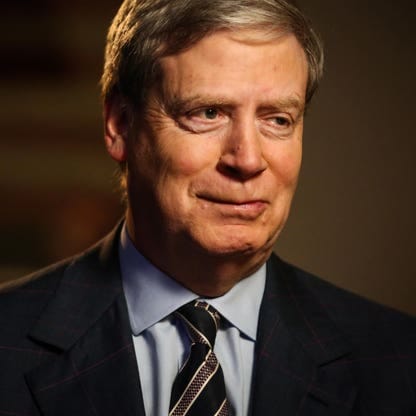
STANLEY DRUCKENMILLER
Macro investor who managed George Soros's Quantum Fund and broke the Bank of England trade
BILL NYGREN
Lead portfolio manager at Oakmark Funds who has beaten the S&P 500 over 20+ years by buying unfashionable stoc…
NETFIGO SCORE BATTLE
ORIGINAL DATARisk Appetite
Contrarian Index
Track Record
Accessibility
Time Horizon
AT A GLANCE
INVESTING STYLE
Stanley Druckenmiller
Druckenmiller is a top-down macro investor. He starts with the big picture: where are interest rates going?
What is the Fed doing? What is the currency going to do?
What are the geopolitical pressures? He then identifies the market or asset class that will benefit most from getting the macro right, and concentrates heavily.
He does not diversify in the traditional sense. He has said repeatedly that he runs one big trade at a time — a concentrated bet on whatever macro theme he thinks is most mispriced.
He also sizes aggressively: when he''s right, he pushes. When he''s wrong, he cuts quickly.
The combination of high conviction and fast loss-cutting is what produced 30 years without a losing year.
Bill Nygren
Classic large-cap value. Nygren buys businesses trading significantly below his estimate of intrinsic value — typically at least a 40% discount.
He focuses on companies with strong management teams, high free cash flow generation, and the ability to allocate capital intelligently. He runs concentrated portfolios (20-30 stocks) and is willing to hold positions for 3-5+ years.
He is a contrarian by default — his best ideas are usually in sectors the market hates.
FINANCIAL PHILOSOPHY
Stanley Druckenmiller
Druckenmiller''s core philosophy is that earnings drive stocks over years, but liquidity and sentiment drive them over months. His edge is seeing the macro picture before others do, and sizing a trade correctly when he does.
He has said his best trait as an investor is not intellect but the ability to change his mind quickly. He can hold a position all-in one day and be flat the next if the macro thesis changes.
He believes most investors lose money because they fall in love with positions.
Bill Nygren
Nygren believes the market is generally efficient but occasionally misprices individual businesses, especially during periods of fear or sector-wide pessimism. He thinks like a business buyer, not a stock trader — asking "what would a rational private buyer pay for this entire company?" He considers management quality and skill at investing company money as important as the financial statements.
RISK TOLERANCE
Stanley Druckenmiller
Druckenmiller is one of the most aggressive risk-takers in the history of investing — but he is an aggressive risk-taker who cuts losses instantly. His rule is simple: size up when winning, cut when losing.
He has described his approach as being willing to bet everything when the odds are heavily in his favor, and being absolutely willing to lose quickly when they''re not. He also never uses maximum leverage.
He is aggressive with position sizing but conservative with financial leverage.
Bill Nygren
Moderate. Nygren runs concentrated portfolios which adds stock-specific risk, but he focuses on large-cap, established businesses with strong balance sheets.
He is not swinging at biotech startups or crypto. The risk is being early and looking wrong for extended periods while waiting for the market to recognize value.
THE PLAYBOOK
Stanley Druckenmiller
Druckenmiller lives in New York and has homes in Palm Beach. He is known for being generous — his foundation has donated over $1 billion to medical research, education, and poverty alleviation.
He is particularly focused on brain research and has given hundreds of millions to Harlem Children''s Zone and medical institutions. He drives himself to work, avoids most hedge fund social events, and is not on social media.
He gives rare interviews but when he does, they''re densely informative.
Bill Nygren
Low-profile lifestyle. Based in Chicago.
Nygren does not seek media attention and rarely appears on financial TV. He writes detailed quarterly commentaries for Oakmark shareholders that are some of the best free investing education available.
He lets his long-term performance record speak for itself.
BIGGEST WIN
Stanley Druckenmiller
The 1992 British pound trade. The UK had joined the European Exchange Rate Mechanism, which required them to keep the pound within a fixed band against European currencies.
By 1992 the UK economy was weak, interest rates were too high, and the peg was increasingly unsustainable. Druckenmiller had this figured out.
He was planning a $1.5 billion short position when Soros told him: if you believe it, why not bet more? They sized the position to $10 billion.
The British government spent $27 billion defending the peg. They failed.
On September 16, 1992 — now called Black Wednesday — the UK withdrew from the ERM. Quantum made $1 billion in one day.
The total profit was approximately $1.5 billion. Soros got the credit.
Druckenmiller made the trade.
Bill Nygren
His consistency over nearly three decades. While many value managers have stumbled during the growth-dominated 2010s, Nygren adapted his approach to include "modern value" — companies like Alphabet and Meta that trade at low multiples relative to their growth rates.
His willingness to evolve his definition of value without abandoning the discipline has kept Oakmark relevant.
BIGGEST MISTAKE
Stanley Druckenmiller
The dot-com bubble in 1999–2000 is the one he has spoken most candidly about. Druckenmiller made a significant bet on technology stocks late in the bubble cycle — he knew they were overvalued but bought them anyway because momentum was strong.
He later admitted this was a mistake driven by FOMO, not analysis. When the bubble burst in early 2000, Quantum lost approximately $3 billion in a matter of weeks.
He has described this as the one period where he let emotion override judgment — specifically, fear of missing out on a rally he knew was irrational. It contributed to his eventual decision to step back from managing Soros''s money.
Bill Nygren
Holding financial stocks through the 2008 financial crisis. Oakmark Fund was down significantly in 2008 as bank and insurance stocks cratered.
While the long-term recovery proved him right on many of those holdings, the drawdown was painful for investors who redeemed at the bottom.
CAREER HIGHLIGHTS
Stanley Druckenmiller
Druckenmiller grew up in Philadelphia and briefly studied English at Bowdoin College before switching to economics. He started as an oil analyst at Pittsburgh National Bank in 1977 and quickly developed a reputation for seeing the big picture — how economic forces translated into market prices.
He started Duquesne Capital Management in 1981 at age 28 with a small amount of seed money.
In 1988 he joined George Soros to co-manage the Quantum Fund, while keeping Duquesne running alongside it. The partnership was unconventional — two funds, two strategies, one very productive relationship.
Druckenmiller ran Soros''s money for 12 years. In 2000, he stepped back from outside management to focus on Duquesne full time.
He closed Duquesne to outside investors in 2010 at its peak, saying the pressure of managing other people''s money had become emotionally taxing.
Bill Nygren
Joined Harris Associates (parent of Oakmark Funds) in 1983. Became lead portfolio manager of the Oakmark Fund in 2000.
Lead manager of Oakmark Select Fund since 1996 and Oakmark Global Select since 2006. Oakmark Select Fund has returned over 11% annually since 1996 inception.
Manages over $20 billion across Oakmark strategies. Named Morningstar Domestic Stock Fund Manager of the Year in 2001.
Known for buying out-of-favor large-cap value stocks and holding them for years. Has consistently argued that the market overreacts to short-term problems and undervalues franchises with durable competitive advantages.
COMPANIES & ROLES
Stanley Druckenmiller
Duquesne Capital Management, started in 1981, is the cornerstone of his career. It averaged approximately 30% annual net returns from 1981 to 2010 — an almost unimaginable run.
He closed it to outside investors in 2010 when assets were around $12 billion, converting it to a family office to manage his own wealth and stop bearing the psychological burden of managing external capital.
The Quantum Fund, George Soros''s flagship vehicle, is where the most famous trade happened. Druckenmiller ran the fund''s equity and macro book from 1988 to 2000 alongside Soros.
The returns during this period were extraordinary — Quantum returned over 30% annually in the 1990s.
Bill Nygren
Oakmark Funds (lead portfolio manager), Harris Associates (partner)
EDUCATION
Stanley Druckenmiller
Bowdoin College, BA in Economics (originally started in English), 1975. He has donated tens of millions to Bowdoin.
He attended the University of Michigan''s doctoral economics program briefly before leaving to take the banking job that launched his career. He is somewhat dismissive of formal academic economics, having said in interviews that most of what he uses was learned by doing.
Bill Nygren
CFA charterholder. MBA from the University of Wisconsin-Madison.
Undergraduate degree from the University of Minnesota. Has spent his entire career at Harris Associates — over 40 years at one firm.
BOOKS & RESOURCES
Stanley Druckenmiller
Widely considered one of the best investing interview collections ever written. His chapter alone is worth the price of the book. He goes deep on how he thinks about macro, how he sizes positions, and where he has been wrong
Gives context for the Quantum Fund environment where Druckenmiller worked. It''s dense and philosophical, but understanding Soros''s reflexivity theory helps you understand the intellectual framework Druckenmiller operated within
As an Amazon Associate, Netfigo earns from qualifying purchases. Book links above may be affiliate links.
Bill Nygren
Nygren's own quarterly Oakmark commentaries are worth reading. He frequently cites Warren Buffett and Charlie Munger as influences
As an Amazon Associate, Netfigo earns from qualifying purchases. Book links above may be affiliate links.