Compare / Warren Buffett vs Anas Sefrioui
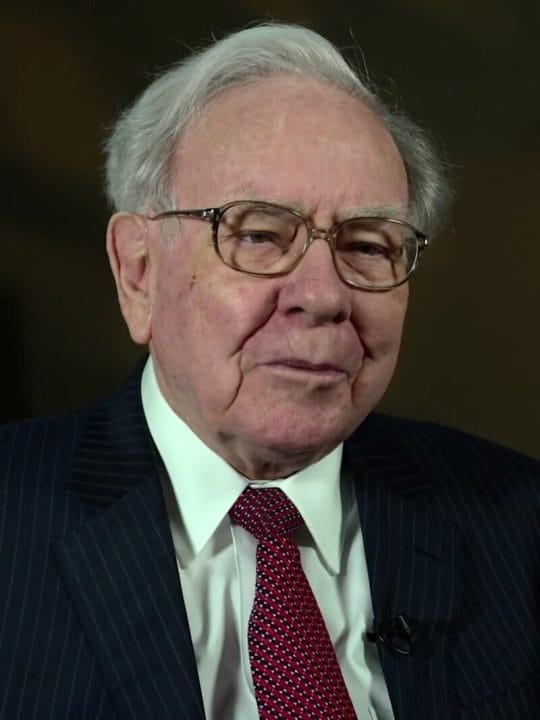
WARREN BUFFETT
The greatest long-term value investor in history. Chairman of Berkshire Hathaway. Known for compounding patien…
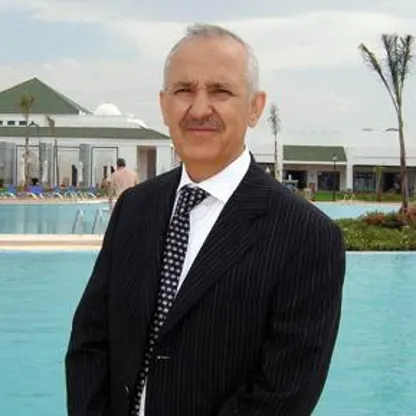
ANAS SEFRIOUI
Building Morocco’s largest real estate empire from scratch and constructing over 300,000 affordable homes acro…
NETFIGO SCORE BATTLE
ORIGINAL DATARisk Appetite
Contrarian Index
Track Record
Accessibility
Time Horizon
AT A GLANCE
INVESTING STYLE
Warren Buffett
Buffett's approach is simple to describe and almost impossible to copy. He buys great businesses at fair prices and then just...
holds them. Forever.
He calls it "buy and hold" but that undersells it — he means hold until the sun burns out. He looks for companies with a real unfair advantage over competitors.
Something that protects them from being wiped out. He calls it a "moat" — like the water around a castle.
Think Coca-Cola. Everyone knows it.
Nobody can replicate it. He puts a LOT of money into a small number of bets — usually his top five holdings make up over 70% of everything.
Most fund managers would have a panic attack at that level of concentration. Buffett calls it being convicted.
His old mentor Graham taught him to hunt for cheap, beaten-down companies and flip them fast. Charlie Munger, his business partner for 45+ years, talked him out of that.
Munger said: just buy the best businesses you can find and never sell. Buffett admits that shift made him hundreds of billions of dollars.
Anas Sefrioui
Sefrioui is a real estate operator first, investor second. He builds companies, not portfolios.
His growth approach has always been organic — acquire land, develop it, sell units, reinvest. No interest in financial markets or passive allocation.
The Africa expansion was the one big strategic bet beyond his home market. Bold in concept.
Mixed in execution.
FINANCIAL PHILOSOPHY
Warren Buffett
Rule No. 1: Never lose money.
Rule No. 2: Never forget Rule No.
1. Buy businesses, not stocks — the distinction matters more than most investors realize.
Let compounding do the heavy lifting and get out of its way. Never use debt to invest.
Be fearful when others are greedy, greedy when others are fearful. Time in the market destroys timing the market in every long enough data set.
For most people, a low-cost S&P 500 index fund will outperform almost any active strategy, including most professional money managers — including, he's said, what most of his estate will go into after he's gone.
Anas Sefrioui
Build where people actually need to live. Volume beats margin.
The goal is not the most impressive building but the most buildings. He has consistently argued that Africa’s housing deficit — running into the hundreds of millions of units — is the biggest real estate opportunity on earth.
RISK TOLERANCE
Warren Buffett
Buffett's whole thing is: do so much homework that the risk basically disappears. He doesn't diversify across 500 stocks to protect himself — he researches 10 companies so deeply that he's more confident about those 10 than most people are about anything.
He never borrows money to invest. Ever.
He keeps a mountain of cash at Berkshire — north of $300 billion sitting in Treasury bills — specifically so he can swoop in when everyone else is panicking and selling cheap. He once called derivatives "financial weapons of mass destruction" back in 2002.
Wall Street laughed. Then 2008 happened and Wall Street stopped laughing.
He doesn't predict where the stock market is going. He predicts whether a business will still be dominant in 20 years.
That's it.
Anas Sefrioui
High on operational bets, low on financial market speculation. Building in emerging markets involves real currency exposure, regulatory uncertainty, and infrastructure gaps — Sefrioui leaned into all of them.
The 2020 legal troubles showed that close proximity to political capital can also become a liability overnight.
THE PLAYBOOK
Warren Buffett
Despite a $149B net worth, Buffett still lives in the same gray stucco house in Omaha he bought in 1958 for $31,500. He drives himself to work.
Breakfast is McDonald's — he orders based on his mood: $2.61, $2.95, or $3.17. He plays bridge obsessively, often online with Bill Gates.
He drinks multiple Cokes a day (Berkshire owns a large stake in Coca-Cola. Coincidence is left as an exercise to the reader).
He has pledged to give away more than 99% of his wealth, primarily to the Bill & Melinda Gates Foundation and his children's foundations. He takes a $100,000 annual salary from Berkshire.
He carried a $20 Samsung flip phone until 2020, when he finally switched to an iPhone. He mostly uses it as a phone.
Anas Sefrioui
Not known for conspicuous consumption. His wealth has been largely tied up in Addoha shares and land holdings rather than liquid assets.
He is a builder, not a spender.
BIGGEST WIN
Warren Buffett
Apple. Berkshire started buying Apple in 2016 — late by any tech investor's standard, from a man who spent decades insisting he didn't understand technology.
By 2023, the position had grown to over $170 billion, returning more than 800%. Buffett called it the best business he'd ever seen and admitted he should have bought it earlier.
Honorable mention: American Express in 1963 during the Great Salad Oil Scandal, when he put 40% of the Buffett Partnership into AmEx at distressed prices while the rest of Wall Street was running away.
Anas Sefrioui
The 2006 Casablanca Stock Exchange IPO. Raising 6 billion Moroccan dirhams on the back of a simple affordable housing story, in a market that was not yet sophisticated, was a remarkable capital markets achievement.
It funded the next decade of growth.
BIGGEST MISTAKE
Warren Buffett
Buying Berkshire Hathaway. He bought it in 1962 as a cigar butt — a cheap, dying textile company — and then kept it instead of winding it down into a clean insurance holding company.
The C-corp structure meant decades of tax drag. He has estimated this single mistake — triggered partly by spite after the owner tried to lowball him on a buyout — cost Berkshire and its shareholders roughly $200 billion over 50 years.
He also admits missing Google and Amazon, both of which he understood well enough to buy and simply didn't.
Anas Sefrioui
Expanding into Sub-Saharan Africa too quickly, without enough local partnerships and local capital structures, created operational strain. The 2020 legal case may also trace back to financial engineering under pressure from the Africa overextension.
Governance did not scale as fast as ambition.
CAREER HIGHLIGHTS
Warren Buffett
Warren Buffett was born in Omaha, Nebraska in 1930. He bought his first stock at age 11 — three shares of a company called Cities Service.
He paid $114. He was eleven.
By 14, he owned a 40-acre farm and had filed his first tax return. He applied to Harvard Business School and got rejected.
Best thing that ever happened to him, honestly. He ended up at Columbia instead, where he met Benjamin Graham — the guy who basically invented the idea of buying undervalued stocks.
He graduated in 1951, worked for Graham in New York, and in 1956 started his own investment partnership in Omaha with $105,100 from family and friends. He turned that into something much bigger, compounding at around 30% per year for over a decade.
Along the way he bought into a dying Massachusetts textile company partly out of spite, taking control in 1965. In 1969 he shut the partnership down and kept the mill.
That company was Berkshire Hathaway. What happened next is the greatest investing run in history — and it started with a grudge.
Anas Sefrioui
Anas Sefrioui was born in 1956 in Fez, Morocco. He started in real estate in the 1980s with small construction projects in Casablanca.
In 1988 he formally founded Groupe Addoha — later incorporated as Douja Promotion Group. For two decades he focused exclusively on affordable and mid-range housing, staying far from the luxury segment.
The strategy paid off. The 2006 Casablanca Stock Exchange IPO raised around 6 billion dirhams, was heavily oversubscribed, and pushed his personal wealth to an estimated billion, briefly making him one of the richest people in Africa.
Through the 2010s he expanded into Sub-Saharan Africa — Ivory Coast, Senegal, Ghana, and Cameroon — targeting the same underserved affordable housing market. Then came the turbulence.
A restructuring of Morocco’s affordable housing subsidy program hit margins hard. In 2020, Moroccan authorities charged him in connection with a mortgage fraud case linked to Crédit Immobilier.
He denied the charges. The Addoha stock price fell sharply.
The Africa expansion slowed. He remains one of the most significant real estate figures the continent has produced.
COMPANIES & ROLES
Warren Buffett
His main vehicle is Berkshire Hathaway — a company he took over in 1965 when it was a dying textile mill. He basically gutted the textile business and turned the whole thing into a giant money machine that owns other businesses.
Today it's one of the most valuable companies on earth. On the stock side, his biggest bet is Apple — worth over $175 billion at its peak.
He also owns huge chunks of Bank of America, Coca-Cola (since 1988 — he really doesn't sell), American Express, and Chevron. Then there are the companies Berkshire owns outright.
GEICO, one of the biggest car insurers in America. Burlington Northern Santa Fe, a massive railroad.
Dairy Queen, See's Candies, Duracell. Basically a random collection of boring, cash-generating businesses that he loves precisely because they're boring.
His first fund — Buffett Partnership Ltd. — ran from 1956 to 1969.
He returned around 30% per year while the market did 8.6%. Then he shut it down, said he couldn't find enough cheap stocks, and walked away at the top.
Anas Sefrioui
Groupe Addoha (Douja Promotion Group) is the whole story. Listed on the Casablanca Stock Exchange under the ticker ADH, its market cap peaked near 25 billion dirhams.
The company builds residential properties across four segments: affordable, mid-range, upper mid-range, and a small luxury slice — though the bread and butter has always been the lower two. At its height, Addoha delivered tens of thousands of housing units per year across Morocco and several Sub-Saharan African markets.
Sefrioui also built out logistics and manufacturing businesses tied to construction supply chains.
EDUCATION
Warren Buffett
University of Nebraska–Lincoln (B.S. in Business Administration, 1950).
Columbia Business School (M.S. in Economics, 1951) — the only school that mattered, where he studied under Benjamin Graham and got his only A+.
He also spent two years at the Wharton School before transferring. Harvard Business School rejected him.
He's described that rejection as one of the luckiest things that ever happened to him.
Anas Sefrioui
Educated in Morocco in real estate and construction. Not known for Western business school credentials.
He built his expertise in the field, not the classroom.
BOOKS & RESOURCES
Warren Buffett
As an Amazon Associate, Netfigo earns from qualifying purchases. Book links above may be affiliate links.
Anas Sefrioui
Stripped of the politics, it captures the land-banker mindset he has always embodied
Introduced millions to the idea that real estate builds wealth in ways employment never can
The Intelligent Entrepreneur by Bill Murphy Jr. speaks to the relentless, opportunity
Driven building Sefrioui exemplifies
Africa Rising by Vijay Mahajan laid out the case for Africa’s emerging consumer class years before it became consensus — and is the best intellectual framework for understanding his Africa strategy.
As an Amazon Associate, Netfigo earns from qualifying purchases. Book links above may be affiliate links.