Compare / Warren Buffett vs Stig Brodersen

NETFIGO SCORE BATTLE
ORIGINAL DATARisk Appetite
Contrarian Index
Track Record
Accessibility
Time Horizon
AT A GLANCE
INVESTING STYLE
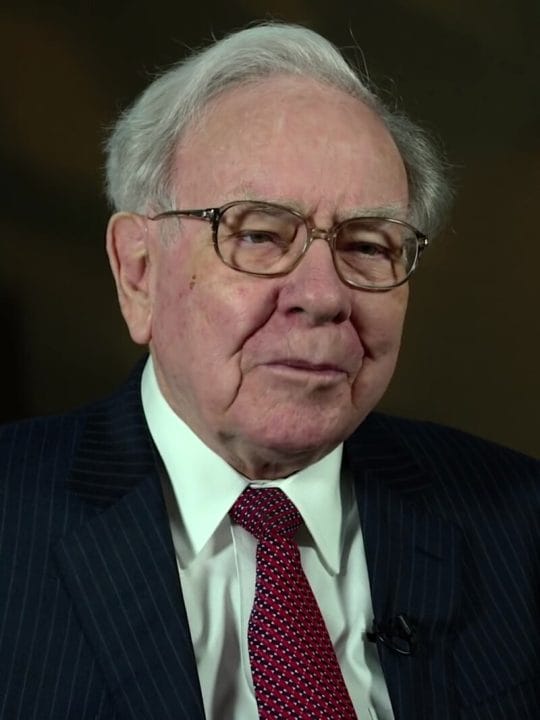
Warren Buffett
Buffett's approach is simple to describe and almost impossible to copy. He buys great businesses at fair prices and then just...
holds them. Forever.
He calls it "buy and hold" but that undersells it — he means hold until the sun burns out. He looks for companies with a real unfair advantage over competitors.
Something that protects them from being wiped out. He calls it a "moat" — like the water around a castle.
Think Coca-Cola. Everyone knows it.
Nobody can replicate it. He puts a LOT of money into a small number of bets — usually his top five holdings make up over 70% of everything.
Most fund managers would have a panic attack at that level of concentration. Buffett calls it being convicted.
His old mentor Graham taught him to hunt for cheap, beaten-down companies and flip them fast. Charlie Munger, his business partner for 45+ years, talked him out of that.
Munger said: just buy the best businesses you can find and never sell. Buffett admits that shift made him hundreds of billions of dollars.
Stig Brodersen
Pure value investing in the Buffett-Graham tradition. Stig looks for companies trading below intrinsic value with strong competitive advantages, honest management, and a margin of safety.
He takes a concentrated approach — he'd rather own 10-15 well-understood positions than 50 diversified ones. He does deep fundamental analysis: reading annual reports, understanding unit economics, and calculating intrinsic value using discounted cash flow models.
He has an international perspective that most American value investors lack — he actively looks at companies in Europe, Asia, and emerging markets. He believes international markets are less efficiently priced than US markets, creating more opportunities for value investors.
FINANCIAL PHILOSOPHY
Warren Buffett
Rule No. 1: Never lose money.
Rule No. 2: Never forget Rule No.
1. Buy businesses, not stocks — the distinction matters more than most investors realize.
Let compounding do the heavy lifting and get out of its way. Never use debt to invest.
Be fearful when others are greedy, greedy when others are fearful. Time in the market destroys timing the market in every long enough data set.
For most people, a low-cost S&P 500 index fund will outperform almost any active strategy, including most professional money managers — including, he's said, what most of his estate will go into after he's gone.
Stig Brodersen
Stig believes that investing should be approached with intellectual humility and continuous learning. His core philosophy: understand what you own, buy it at a price that gives you a margin of safety, and be patient.
He thinks most investors trade too frequently and react too emotionally to short-term market movements. He values international diversification more than most American investors, arguing that US-centric portfolios miss significant opportunities.
He also believes strongly in the democratization of financial education — TIP was built on the principle that world-class investing knowledge should be free.
RISK TOLERANCE
Warren Buffett
Buffett's whole thing is: do so much homework that the risk basically disappears. He doesn't diversify across 500 stocks to protect himself — he researches 10 companies so deeply that he's more confident about those 10 than most people are about anything.
He never borrows money to invest. Ever.
He keeps a mountain of cash at Berkshire — north of $300 billion sitting in Treasury bills — specifically so he can swoop in when everyone else is panicking and selling cheap. He once called derivatives "financial weapons of mass destruction" back in 2002.
Wall Street laughed. Then 2008 happened and Wall Street stopped laughing.
He doesn't predict where the stock market is going. He predicts whether a business will still be dominant in 20 years.
That's it.
Stig Brodersen
Moderate. Stig is concentrated but disciplined.
He won't buy something unless his downside analysis shows limited risk of permanent capital loss. He's willing to hold cash when he can't find cheap stocks — sometimes 20-30% of his portfolio.
He's less speculative than Preston and has stayed closer to the original value investing framework. He manages risk through deep understanding of each position rather than through broad diversification.
THE PLAYBOOK
Warren Buffett
Despite a $149B net worth, Buffett still lives in the same gray stucco house in Omaha he bought in 1958 for $31,500. He drives himself to work.
Breakfast is McDonald's — he orders based on his mood: $2.61, $2.95, or $3.17. He plays bridge obsessively, often online with Bill Gates.
He drinks multiple Cokes a day (Berkshire owns a large stake in Coca-Cola. Coincidence is left as an exercise to the reader).
He has pledged to give away more than 99% of his wealth, primarily to the Bill & Melinda Gates Foundation and his children's foundations. He takes a $100,000 annual salary from Berkshire.
He carried a $20 Samsung flip phone until 2020, when he finally switched to an iPhone. He mostly uses it as a phone.
Stig Brodersen
Stig is methodical and disciplined. He reads extensively — annual reports, investing books, economic history, and academic research.
He maintains a structured process for evaluating potential investments and doesn't deviate from it based on market emotions. He lives in Denmark and maintains a lower public profile than many financial media personalities.
He reinvests podcast income into both his business and his personal investment portfolio.
BIGGEST WIN
Warren Buffett
Apple. Berkshire started buying Apple in 2016 — late by any tech investor's standard, from a man who spent decades insisting he didn't understand technology.
By 2023, the position had grown to over $170 billion, returning more than 800%. Buffett called it the best business he'd ever seen and admitted he should have bought it earlier.
Honorable mention: American Express in 1963 during the Great Salad Oil Scandal, when he put 40% of the Buffett Partnership into AmEx at distressed prices while the rest of Wall Street was running away.
Stig Brodersen
Co-building The Investor's Podcast Network into a global phenomenon. The show's reach — 100 million+ downloads — means Stig has directly contributed to the financial education of millions of people across dozens of countries.
His interviews with top investors have created a free archive of investing wisdom that rivals any MBA curriculum. On a personal investment level, his consistent application of value principles across international markets has produced solid long-term returns.
BIGGEST MISTAKE
Warren Buffett
Buying Berkshire Hathaway. He bought it in 1962 as a cigar butt — a cheap, dying textile company — and then kept it instead of winding it down into a clean insurance holding company.
The C-corp structure meant decades of tax drag. He has estimated this single mistake — triggered partly by spite after the owner tried to lowball him on a buyout — cost Berkshire and its shareholders roughly $200 billion over 50 years.
He also admits missing Google and Amazon, both of which he understood well enough to buy and simply didn't.
Stig Brodersen
Stig has been open about early investment mistakes where he bought companies that were cheap for a reason — value traps where the low price reflected genuine business deterioration rather than market mispricing. He's talked about the importance of distinguishing between "cheap" and "good value," which is one of the hardest lessons in value investing.
He's also acknowledged that running a media business while managing a personal portfolio creates time allocation challenges.
CAREER HIGHLIGHTS
Warren Buffett
Warren Buffett was born in Omaha, Nebraska in 1930. He bought his first stock at age 11 — three shares of a company called Cities Service.
He paid $114. He was eleven.
By 14, he owned a 40-acre farm and had filed his first tax return. He applied to Harvard Business School and got rejected.
Best thing that ever happened to him, honestly. He ended up at Columbia instead, where he met Benjamin Graham — the guy who basically invented the idea of buying undervalued stocks.
He graduated in 1951, worked for Graham in New York, and in 1956 started his own investment partnership in Omaha with $105,100 from family and friends. He turned that into something much bigger, compounding at around 30% per year for over a decade.
Along the way he bought into a dying Massachusetts textile company partly out of spite, taking control in 1965. In 1969 he shut the partnership down and kept the mill.
That company was Berkshire Hathaway. What happened next is the greatest investing run in history — and it started with a grudge.
Stig Brodersen
Stig Brodersen grew up in Denmark and studied business and finance. He earned his MBA and worked in corporate finance before deciding his real passion was investing education.
He connected with Preston Pysh online through their shared love of Warren Buffett and Benjamin Graham, and they launched The Investor's Podcast in 2014. The concept was brilliantly simple: read the classic investing books that every successful investor recommends, break them down chapter by chapter in plain language, and give them away for free as a podcast.
It worked beyond anyone's expectations. The show grew into The Investor's Podcast Network, now hosting multiple shows including We Study Billionaires, Millennial Investing, and Bitcoin Fundamentals.
The network has surpassed 100 million total downloads. When Preston shifted his focus to Bitcoin, Stig took the lead on We Study Billionaires, conducting in-depth interviews with legendary investors.
He's interviewed Howard Marks, Mohnish Pabrai, Guy Spier, Tobias Carlisle, and dozens of other investing heavyweights. He also co-authored books with Preston on Buffett's investment methods.
COMPANIES & ROLES
Warren Buffett
His main vehicle is Berkshire Hathaway — a company he took over in 1965 when it was a dying textile mill. He basically gutted the textile business and turned the whole thing into a giant money machine that owns other businesses.
Today it's one of the most valuable companies on earth. On the stock side, his biggest bet is Apple — worth over $175 billion at its peak.
He also owns huge chunks of Bank of America, Coca-Cola (since 1988 — he really doesn't sell), American Express, and Chevron. Then there are the companies Berkshire owns outright.
GEICO, one of the biggest car insurers in America. Burlington Northern Santa Fe, a massive railroad.
Dairy Queen, See's Candies, Duracell. Basically a random collection of boring, cash-generating businesses that he loves precisely because they're boring.
His first fund — Buffett Partnership Ltd. — ran from 1956 to 1969.
He returned around 30% per year while the market did 8.6%. Then he shut it down, said he couldn't find enough cheap stocks, and walked away at the top.
Stig Brodersen
The Investor's Podcast Network — co-founded with Preston Pysh, one of the largest financial media networks in the world. We Study Billionaires — the flagship podcast, now primarily hosted by Stig.
He co-authored books on Warren Buffett's investment frameworks with Preston Pysh. He also runs his own investment portfolio following value investing principles.
EDUCATION
Warren Buffett
University of Nebraska–Lincoln (B.S. in Business Administration, 1950).
Columbia Business School (M.S. in Economics, 1951) — the only school that mattered, where he studied under Benjamin Graham and got his only A+.
He also spent two years at the Wharton School before transferring. Harvard Business School rejected him.
He's described that rejection as one of the luckiest things that ever happened to him.
Stig Brodersen
Stig earned an MBA with a focus on finance and business. His academic background in business gives him a structured analytical framework for evaluating companies.
He's also self-educated through hundreds of investing books that he's read and discussed on the podcast — the show itself has been his ongoing graduate education in investing.
BOOKS & RESOURCES
Warren Buffett
As an Amazon Associate, Netfigo earns from qualifying purchases. Book links above may be affiliate links.
Stig Brodersen
The foundation of Stig's entire investing approach
The more technical deep-dive that Stig considers essential for serious investors
A book about unconventional CEOs that Stig frequently recommends
As an Amazon Associate, Netfigo earns from qualifying purchases. Book links above may be affiliate links.