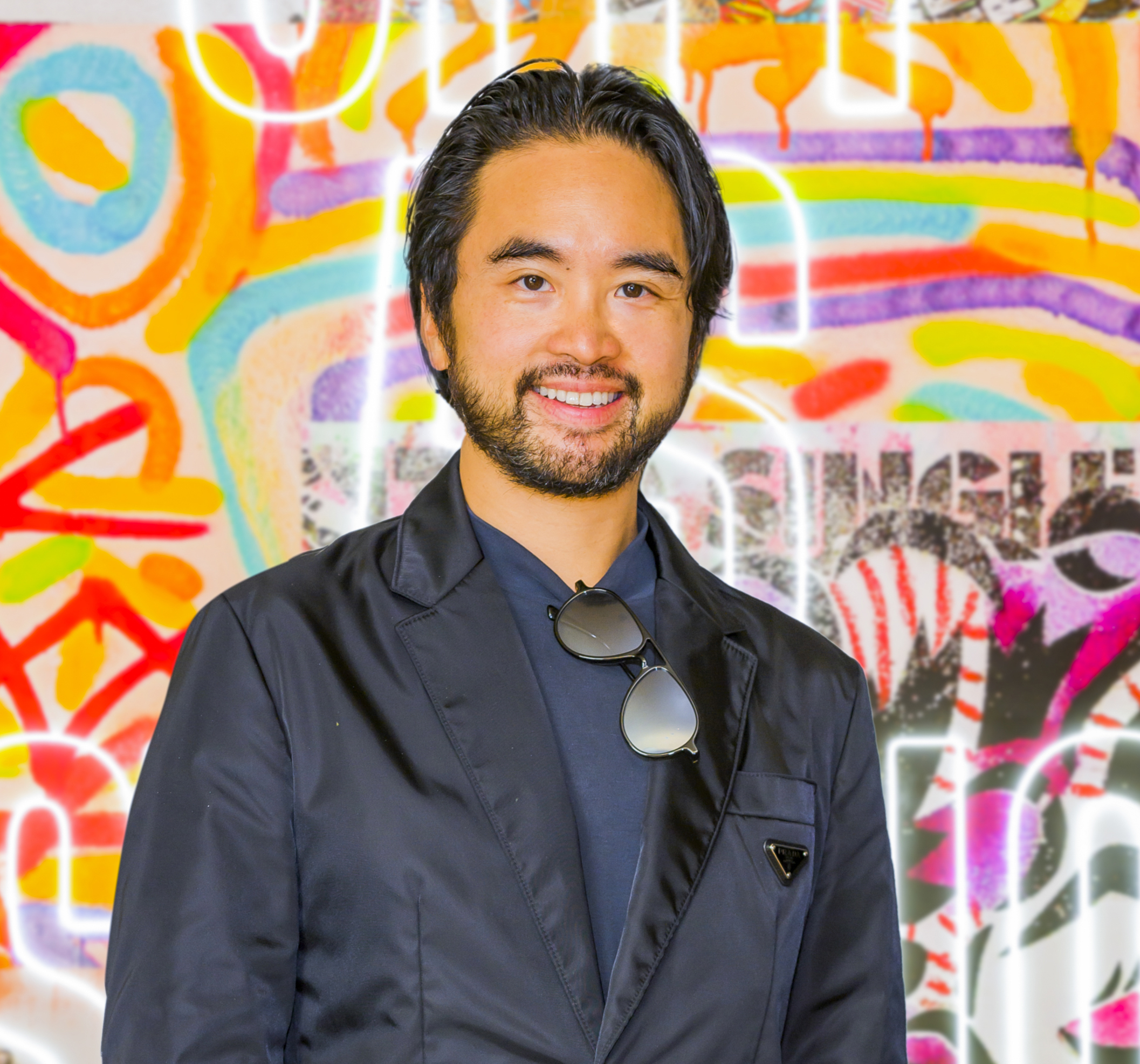
ADRIAN CHENG
K11 Art Mall concept, blending luxury retail with culture, leading Chow Tai Fook and New World Development
Adrian Cheng turned a family jewelry empire into a cultural institution. K11 was the first art mall concept in the world, and he opened one in Hong Kong in 2008 when everyone thought fine art and shopping malls belonged in different universes. It worked. He expanded across mainland China, from Shanghai to Beijing, and proved that Chinese luxury consumers want an experience, not just a product. At 44, he runs two of Hong Kong biggest companies and still has real estate to build.
Net Worth
$5.5B
Nationality
Hong Kong / Chinese
Time Horizon
Long-Term
Risk Appetite
5 / 10
Net Worth Context
- · Still a billionaire — just the quiet kind at the end of the table.
CAREER & BACKGROUND
Adrian Cheng was born into Hong Kong royalty — his grandfather Cheng Yu-tung founded Chow Tai Fook Jewellery in 1929, building it into one of the world largest jewelry chains. Adrian studied East Asian Studies at Harvard, graduated in 2004, and returned to Hong Kong to join the family business with a different plan.
He became Executive Vice Chairman of Chow Tai Fook, now with over 7,000 retail outlets globally. He also became CEO of New World Development, the family property conglomerate with assets across Hong Kong, mainland China, and internationally.
But his real project is K11. He founded the art mall concept in 2008 in Tsim Sha Tsui, Hong Kong.
It was the first mall in the world to integrate contemporary art directly into the retail experience — not as decoration, but as the main draw. Shanghai K11 opened in 2013 and became one of the most-visited malls on the mainland.
He was named to TIME Magazine 100 Most Influential People list in 2018. C Ventures, his early-stage VC vehicle, has backed fashion and culture brands globally.
COMPANIES & ROLES
Chow Tai Fook Jewellery Group (Executive Vice Chairman) — 7,000+ retail outlets, listed on the Hong Kong Stock Exchange. New World Development Company (CEO) — one of Hong Kong five major property developers with HKD 300B+ in assets.
K11 Group (Founder and CEO) — art mall concept with flagship locations in Hong Kong, Shanghai, Beijing, Guangzhou, Wuhan, and Tianjin. C Ventures (Founder) — early-stage VC backing fashion tech, culture, and consumer brands globally.
INVESTING STYLE & PHILOSOPHY
Cheng bets on cultural consumption. His thesis: the next wave of Chinese spending is driven by identity and experience, not just status.
He saw this coming before most Western analysts did. K11 is the proof — it monetizes culture at scale.
Through C Ventures he backs early-stage brands that have a cultural edge: fashion, art, media, consumer tech. His retail investments are vertically integrated experiences, not just real estate plays.
THE PLAYBOOK
Risk Approach
Medium risk. He operates with the safety net of two multi-billion-dollar family businesses, which allows him to take genuine creative risks with K11 and C Ventures.
The art mall model looked like a rich kid vanity project in 2008. It turned out to be a decade ahead of the retail innovation curve.
His biggest bets have been conceptual rather than financial — he risked his credibility on the K11 idea more than he risked capital.
Money Habits
Invests heavily in art collection — he holds works by major contemporary Chinese and Western artists. Donates through the K11 Art Foundation to support emerging Chinese artists.
He is known for hosting cultural events rather than flashy personal displays. Drives the family businesses hard on reinvestment.
BIGGEST WIN
K11 Shanghai. Opened in 2013, it attracted 30,000 visitors a day within its first year and became one of the most photographed retail spaces in China.
Luxury brands that initially hesitated to appear next to art installations came begging to join within two years. The model validated everything he had argued: culture sells.
BIGGEST MISTAKE
The mainland China expansion timing ran into COVID-19 and the subsequent property market slowdown. New World Development has faced significant pressure on its Hong Kong development pipeline, and some K11 locations have had to manage lower foot traffic through 2022-2023.
The bet on mainland Chinese luxury consumption was right in direction but the timing of late-stage expansion hit a macro wall.
FINANCIAL PHILOSOPHY
He believes commerce and culture belong together. His framework: if you control the cultural narrative around a product, you control the brand forever.
That is why K11 shows Ai Weiwei next to Dior. He also believes deeply in the rise of Chinese consumers who want their own cultural reference points, not just imported European luxury.
His long play is building Asia-native luxury infrastructure.
FAMILY & PERSONAL LIFE
Third-generation heir. Grandson of Cheng Yu-tung, son of Henry Cheng (current Chairman of New World Development and Chow Tai Fook).
Adrian has publicly spoken about the pressure and opportunity of inheriting a family business of this scale, describing his role as transforming it rather than just maintaining it.
EDUCATION
Harvard University, AB in East Asian Studies, 2004. He was raised between Hong Kong and the US, which gave him fluency in both cultural contexts — something rare among Hong Kong business heirs.
BOOKS & RESOURCES
Cheng has cited design thinking as a core influence on how he built K11
Luxury: Fashion, Lifestyle and Excess by Michael Sheringham and others who study luxury as culture. He has also pointed to studying what Colette did in Paris as a reference for retail
Culture integration long before the concept became mainstream
As an Amazon Associate, Netfigo earns from qualifying purchases. Book links above may be affiliate links.
QUOTES (5)
The next generation of Chinese consumers does not want to copy the West. They want to define their own version of success.
Artists and entrepreneurs are the same. They see what does not exist yet and make it real.
I believe that culture is the new luxury. If you own the cultural conversation, you own the brand.
Retail is dead only if you do not reinvent it. We chose to reinvent it around art and human experience.
Being a third-generation entrepreneur is not about protecting the legacy. It is about transforming it.
NETFIGO SCORE
Proprietary 5-dimension investor rating
Risk Appetite
Contrarian Index
Track Record
Accessibility
Time Horizon
Related Profiles
Investors
Li Ka-Shing
Li Ka-shing is the most influential Hong Kong business patriarch. Cheng operates in a similar world of family conglomerates spanning real estate and consumer brands, but Cheng is betting on culture where Li built on port logistics.
Masayoshi Son
Both are Asian business visionaries making enormous bets on the future of consumption and technology in Asia. SoftBank and K11 operate at different scales but share the same conviction about Asian consumer transformation.
Head-to-Head
Compare Adrian Cheng vs another investor.