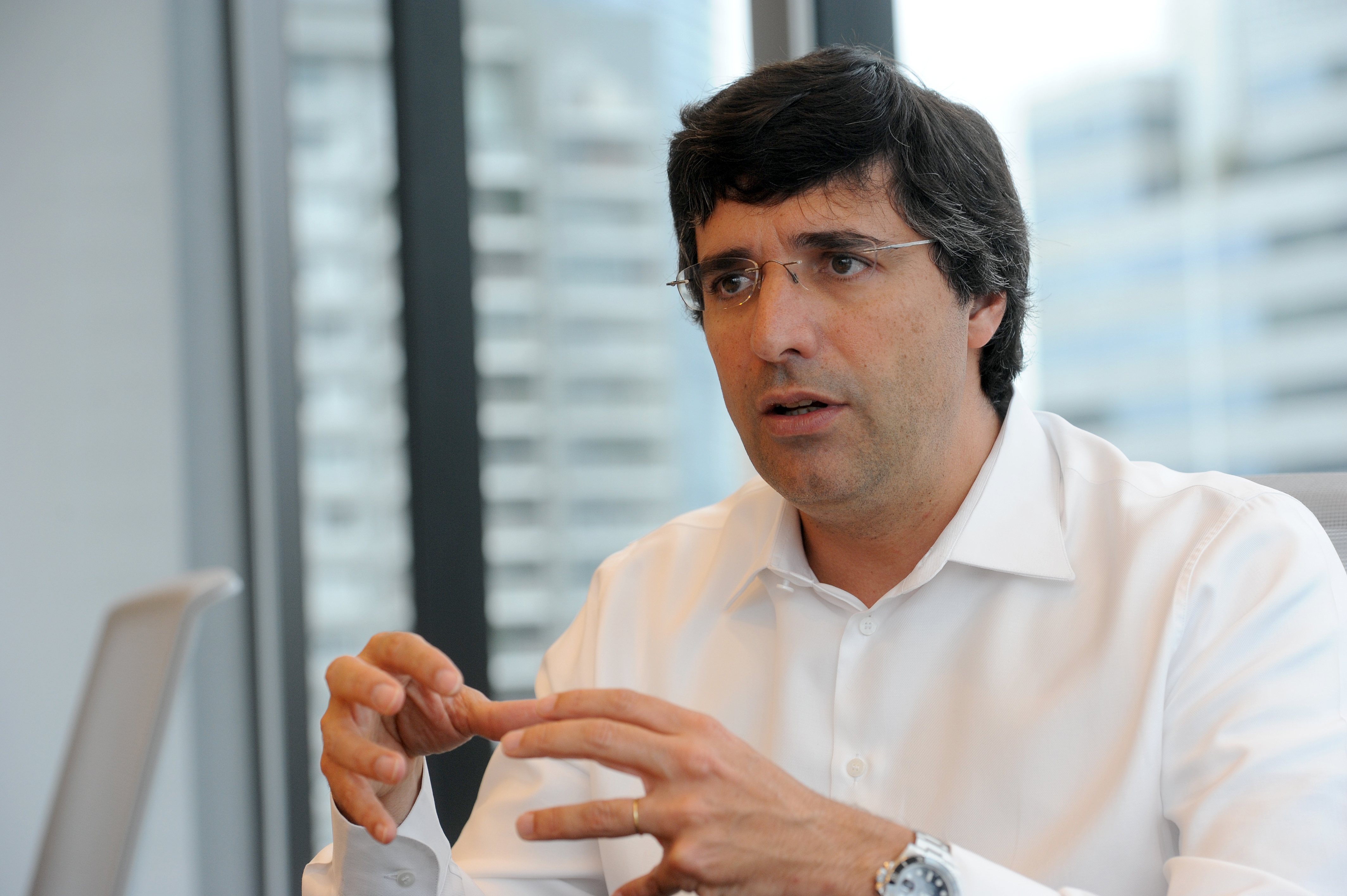
ANDRÉ ESTEVES
Turning a sold bank into Latin America's largest independent investment house and navigating brutal macroeconomic cycles.
He sold his bank to UBS for $3.1 billion. He hated the corporate bureaucracy. He bought the same bank back three years later for $2.5 billion. That move alone would secure his legacy. Instead he rebuilt it into BTG Pactual and turned it into a regional powerhouse spanning three continents. He survived a high-security prison stint, got fully acquitted in federal court, and walked right back into the chairman seat. You do not get that kind of resilience by playing it safe.
Net Worth
$19.4 billion
Nationality
Brazilian
Time Horizon
Long-Term
Risk Appetite
8 / 10
Fund
BTG Pactual
Net Worth Context
- · That's the GDP of a small country — around the size of Greenland.
- · Enough to buy an NBA team and keep $15B for snacks.
CAREER & BACKGROUND
André Esteves started in 1989 as a tech intern at Banco Pactual. He quickly jumped to the foreign debt trading desk.
His math and computer science background gave him a massive edge during Brazil's brutal hyperinflation era. He helped his desk deliver a 59 percent return on capital in 1992.
The market paid attention. By 1993 he made partner.
Over the next decade he navigated the 1998 currency crisis and the Argentine collapse without taking the firm down. In 1999 he and four junior partners wrested control of the bank from its founder.
Five years later he became CEO. At 38 he orchestrated a $3.1 billion sale to UBS.
That deal made him a billionaire. It also made him miserable.
He lasted two years at UBS dealing with European red tape. He left and started BTG from scratch with $1.5 billion in assets.
In 2009 he leveraged UBS's post-crisis weakness and bought Pactual back for $2.5 billion. The bank went public on the Brazilian exchange in 2012.
He grew it into a regional giant operating in New York, London, and Asia. Then came 2015.
Federal police arrested him at his Rio home on obstruction charges tied to the Petrobras scandal. He spent 23 days in a crowded high-security prison.
Funding dried up. Clients fled.
A Brazilian court acquitted him completely in 2018. He returned as chairman in 2022 and resumed building the empire.
COMPANIES & ROLES
BTG Pactual is the crown jewel. It started as a boutique asset management shop and morphed into the largest independent investment bank in Latin America.
It handles M&A advisory, wealth management, corporate lending, and trading across emerging markets. The firm manages over 1.85 trillion Brazilian Reals.
The GEMM Fund serves as the flagship vehicle. It focuses on macroeconomic positioning and emerging market debt.
It currently manages $22 billion globally. Esteves also owns Argiano.
It is a historic winery in Tuscany. He also owns Quinta da Romaneira in Portugal's Douro Valley.
Both operate as long-term value assets while he pushes sustainable agriculture practices.
INVESTING STYLE & PHILOSOPHY
He treats emerging markets like a giant pricing mismatch detector. When capital flees Latin America due to panic, he buys.
When everyone runs toward safety, he looks for where the money overreacted. He builds his approach around deep macroeconomic cycles and currency dynamics.
Think of it like surfing. You do not fight the wave.
You read the swell, position yourself ahead of the break, and ride the momentum down. His computer science roots mean he leans heavily on quantitative models and rapid data processing.
He believes emerging market banks can beat Wall Street giants by moving faster and using better tech. He does not chase trends.
He waits for dislocation. Then he steps in when everyone else is too scared to move.
THE PLAYBOOK
Risk Approach
He tolerates massive institutional volatility but demands structural safeguards for himself. The 2015 arrest proved that.
When regulators froze his leadership overnight, his pre-approved contingency plan kept BTG Pactual breathing. He built that plan into the IPO structure exactly for this kind of black swan event.
He understands that trading emerging market debt means accepting sudden liquidity crunches and political interference. He mitigates it by diversifying geographic revenue streams and keeping partnership voting rights tightly controlled.
He never panics when markets sell off. He prices the panic and buys the dip.
He knows that in Brazil, political risk is just another line item on the balance sheet.
Money Habits
He manages hundreds of billions in assets but drives the same Mercedes pickup for years. He takes two weeks of vacation a year.
That is it. He does not buy yachts to park in Monaco.
He does buy a $50 million Falcon jet. He will tell you the private plane is a business efficiency tool.
He needs to move between São Paulo, Rio, New York, and London without wasting twelve hours on commercial terminals. He owns a sprawling gated community stake in São Paulo and a beachfront house in Ipanema.
He gives away serious money but always expects a return in national productivity. He donated $38 million to launch Inteli, a tech university designed to produce coders faster than traditional schools.
He treats wealth like oxygen. You use it to keep moving.
You do not hoard it on a shelf.
BIGGEST WIN
He bought back his own bank for $2.5 billion after selling it for $3.1 billion. The 2009 financial crisis left UBS desperate for cash.
Esteves recognized the window. He pooled his partners together, raised the capital, and merged Pactual with his new BTG platform.
The move reset the bank to a partnership model. BTG Pactual immediately started dominating IPOs in Latin America.
They raised $24.5 billion from just 11 deals in the early years after the merger. The stock went public in 2012.
It appreciated over 300 percent in the following years. He took a bank that everyone said belonged to the Swiss and turned it back into a Brazilian empire.
The discount alone added billions to his net worth.
BIGGEST MISTAKE
He underestimated how fragile political optics were in Brazil during the Petrobras investigation. In November 2015, federal police arrested him on obstruction charges.
His firm lost its CEO overnight. Unsecured funding collapsed by 16 percent in one quarter.
The GEMM fund shrank by 85 percent in weeks. BTG Pactual needed a $6 billion government bailout line to avoid freezing.
His personal reputation took a massive hit. He sat in a crowded prison cell for 23 days.
Stock dropped 39 percent in a single day. The court eventually cleared him completely in 2018.
The judge called the lack of evidence undeniable. Even full exoneration cannot erase three years of operational drag and client flight.
He learned that in Latin America, perception kills faster than fundamentals.
FINANCIAL PHILOSOPHY
You only create wealth if you work early and work hard. Government does not hand it out.
Luck matters, but only if you are already at work when it shows up. He believes in concentrated ownership.
He keeps over 70 percent of BTG in partner hands so long-term alignment outweighs quarterly pressure. He treats emerging markets like secular growth engines rather than speculative bets.
Capital flows where it gets treated with respect and returns. He refuses to diversify just for optics.
He bets on what he understands. He understands Latin America, he understands currency swings, and he understands human behavior during crises.
The rest is just noise.
FAMILY & PERSONAL LIFE
He is married to Lillian Esteves. They have three kids together.
The family stays tightly separated from the public finance noise. He funds educational initiatives with his wife.
He renovated Esteves Hall at Harvard Business School. He sits on boards focused on conservation and corporate citizenship.
He treats family time as highly scheduled downtime. He keeps his business and home circles distinct.
He prefers quiet dinners over charity galas.
EDUCATION
He studied computer science and mathematics at the Federal University of Rio de Janeiro. He graduated in 1989.
He skipped the traditional MBA route entirely. That turned out to be his advantage.
He understood models before finance understood models. He applied quantitative thinking to debt trading when most people still used gut instinct and phone tips.
BOOKS & RESOURCES
He does not write trading manuals
He builds institutions. If you want to understand his market, read about emerging market macroeconomics
Explains the capital shifts Esteves has been banking on for twenty years
Captures exactly what his team felt when they watched UBS bleed out in 2008. You need to understand institutional panic to understand his timing. Both books provide the necessary framework for reading his moves in volatile markets
As an Amazon Associate, Netfigo earns from qualifying purchases. Book links above may be affiliate links.
QUOTES (5)
You only create wealth if you work very hard, wake up very early in the morning. And you don't need government for that.
Our corporate sector needs coders, programmers, data scientists, and we need to help provide this kind of qualified labor force.
Emerging market exchanges are performing better than the economic reality of the American economy.
You always need luck, right? But it's important that when luck appears you are there working, right? If you are at home, you probably cannot benefit from the opportunities.
NETFIGO SCORE
Proprietary 5-dimension investor rating
Risk Appetite
Contrarian Index
Track Record
Accessibility
Time Horizon
Related Profiles
Head-to-Head
Compare André Esteves vs another investor.