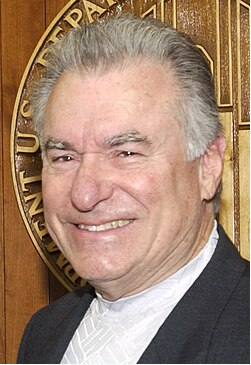
DAVID SIEGEL
Co-founded Two Sigma with John Overdeck, building a $60 billion quant fund that runs more like a tech company than a hedge fund.
David Siegel is the other half of Two Sigma — the computer scientist to Overdeck's mathematician. He built the firm's technology infrastructure from scratch, creating a platform that processes petabytes of data daily. Two Sigma has more PhD engineers than most tech companies and more computing power than most universities. Siegel proved that the future of Wall Street runs on code, not on gut feelings.
Net Worth
$7 billion
Nationality
American
Time Horizon
Medium-Term
Risk Appetite
5 / 10
CAREER & BACKGROUND
Born in 1961. Studied computer science at Princeton, then earned a PhD in computer science from MIT, where his research focused on distributed computing and programming languages.
Joined D.E. Shaw in the 1990s, where he met John Overdeck.
In 2001, Siegel and Overdeck co-founded Two Sigma. Siegel brought the computer science and engineering vision — he designed the firm's technology stack, which processes massive amounts of structured and unstructured data to generate trading signals.
Under his technical leadership, Two Sigma has built one of the most sophisticated computing infrastructures in the financial industry.
Two Sigma manages approximately $60 billion and has expanded beyond hedge funds into venture capital (Two Sigma Ventures), insurance (Two Sigma Insurance Quantified), and private credit. Siegel has been a vocal advocate for using technology and data science to solve problems beyond finance.
COMPANIES & ROLES
Co-founder and co-chairman of Two Sigma Investments (2001-present). Previously at D.E.
Shaw. PhD from MIT in computer science.
Two Sigma manages ~$60 billion across hedge funds, venture, insurance, and private credit.
INVESTING STYLE & PHILOSOPHY
Technology-first quantitative investing. Siegel's contribution to Two Sigma is the engineering infrastructure — the computing systems that ingest, process, and analyze data at scale.
He views investing as fundamentally an engineering and computer science problem.
THE PLAYBOOK
Risk Approach
Managed through automated systems. Two Sigma's risk controls are built into the technology platform.
The firm monitors thousands of positions in real-time and adjusts exposure automatically. Siegel's engineering background means the risk management is systematic, not discretionary.
Money Habits
Lives in the New York area. Philanthropically focused on education, particularly computer science education.
Co-chairs the NYC Economic Development Corporation. Not a flashy personality — more engineering mindset than hedge fund showmanship.
BIGGEST WIN
Co-building Two Sigma into one of the top 5 hedge funds in the world. The firm's technology platform is a competitive moat — it would take years and billions of dollars for a competitor to replicate the infrastructure Siegel designed.
BIGGEST MISTAKE
The venture capital arm (Two Sigma Ventures) has been less consistently successful than the core hedge fund. Applying quantitative methods to early-stage startup investing has proven harder than applying them to public markets.
FINANCIAL PHILOSOPHY
Better data plus better technology equals better decisions. Siegel believes the firms that invest most heavily in engineering and data science will dominate the next era of finance.
He has pushed Two Sigma to expand beyond trading into any domain where data-driven decisions create value.
FAMILY & PERSONAL LIFE
Lives in New York with his family. Active in civic technology and urban planning through his work with NYC Economic Development Corporation.
Has advocated for using data to improve city services.
EDUCATION
Princeton University (BS in Computer Science). MIT (PhD in Computer Science, focused on distributed computing).
His MIT research directly informed the distributed computing architecture that powers Two Sigma.
BOOKS & RESOURCES
And Sussman — the foundational CS text
And Tom Griffiths — the intersection of computer science and decision-making
The history of information theory
As an Amazon Associate, Netfigo earns from qualifying purchases. Book links above may be affiliate links.
QUOTES (5)
I studied distributed computing at MIT. Now I run one of the world's largest distributed computing systems — it just happens to trade stocks.
I want to use data and technology to make cities work better. Finance is just one application of these tools.
The best investment you can make is in the engineers who build your systems. Technology compounds the same way capital does.
NETFIGO SCORE
Proprietary 5-dimension investor rating
Risk Appetite
Contrarian Index
Track Record
Accessibility
Time Horizon
Related Profiles
Head-to-Head
Compare David Siegel vs another investor.